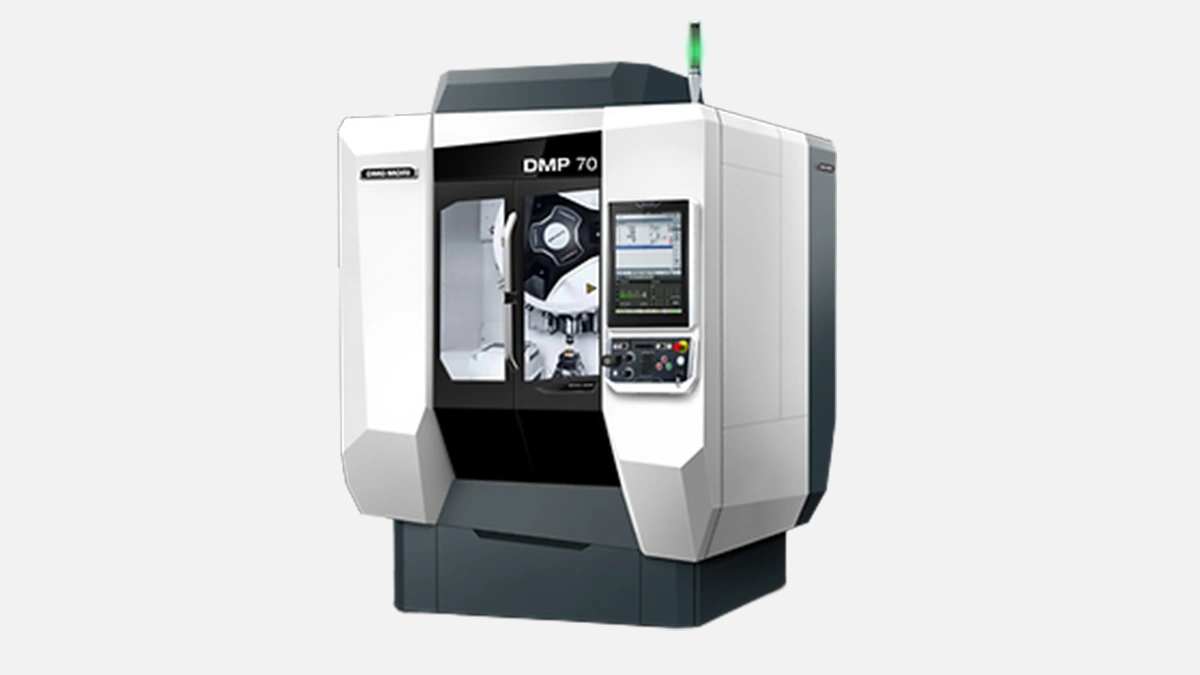
 DMG MORI – DMP 70
Compact 700 × 420 mm DMG MORI DMP 70: 20 000 rpm, 60 m/min rapids, perfect for tight UAE shops.
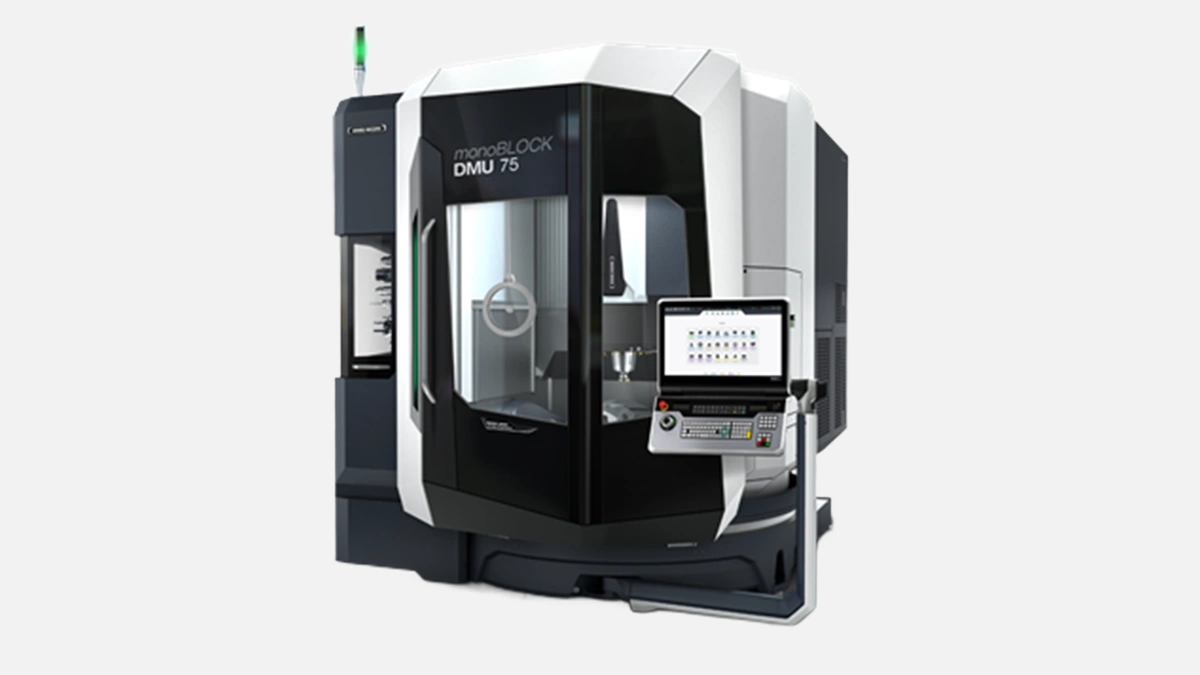 DMG MORI – DMU 75 monoBLOCK (2nd Gen)
DMU 75 monoBLOCK Gen 2 packs 750 × 650 × 560 mm travels and 20 k rpm spindle for single-setup 5-axis parts up to 600 kg.
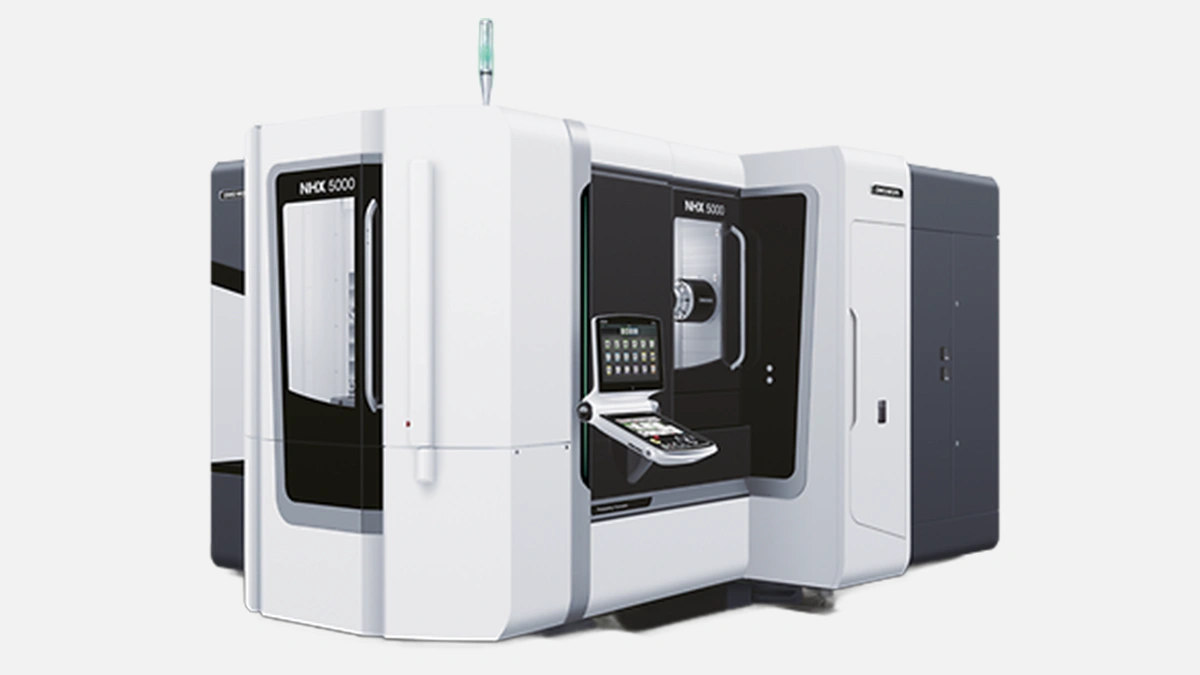 DMG MORI – NHX 5000 (4th Gen)
DMG MORI NHX 5000 4th Gen – 500 mm pallet, 15 000 rpm spindle, built for heavy cuts in UAE heat.
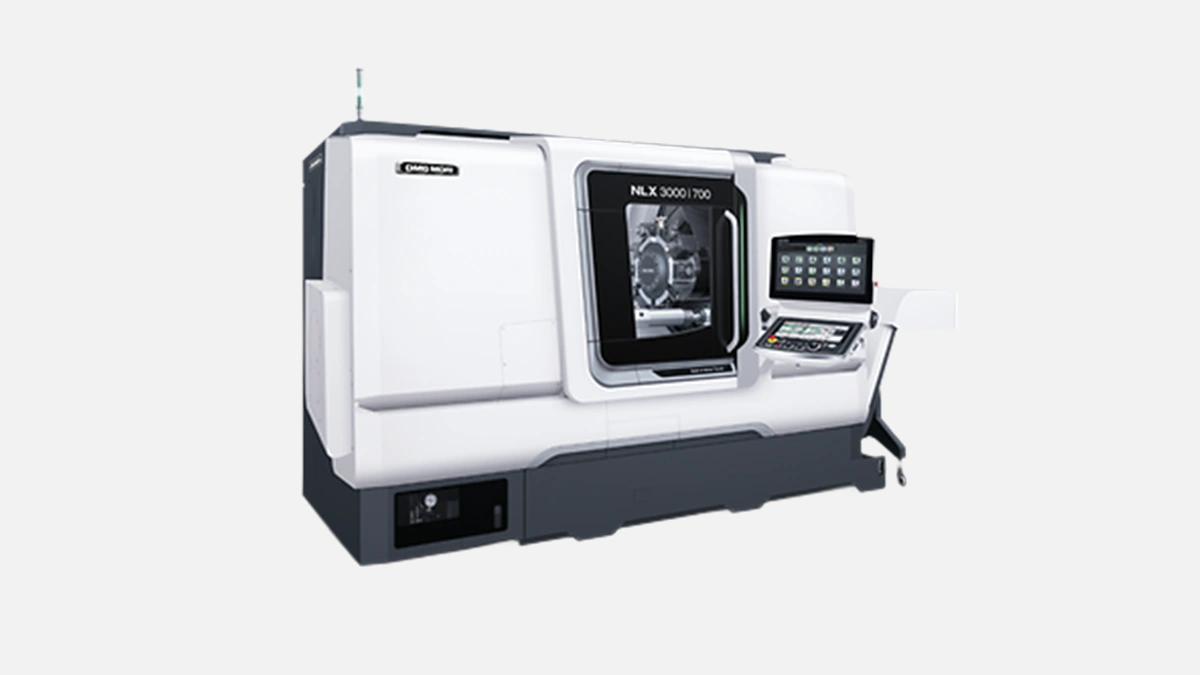 DMG MORI – NLX 3000
DMG MORI NLX 3000, 366 mm swing, 1250 mm length, 102 mm bar, tough choice for UAE oilfield work.
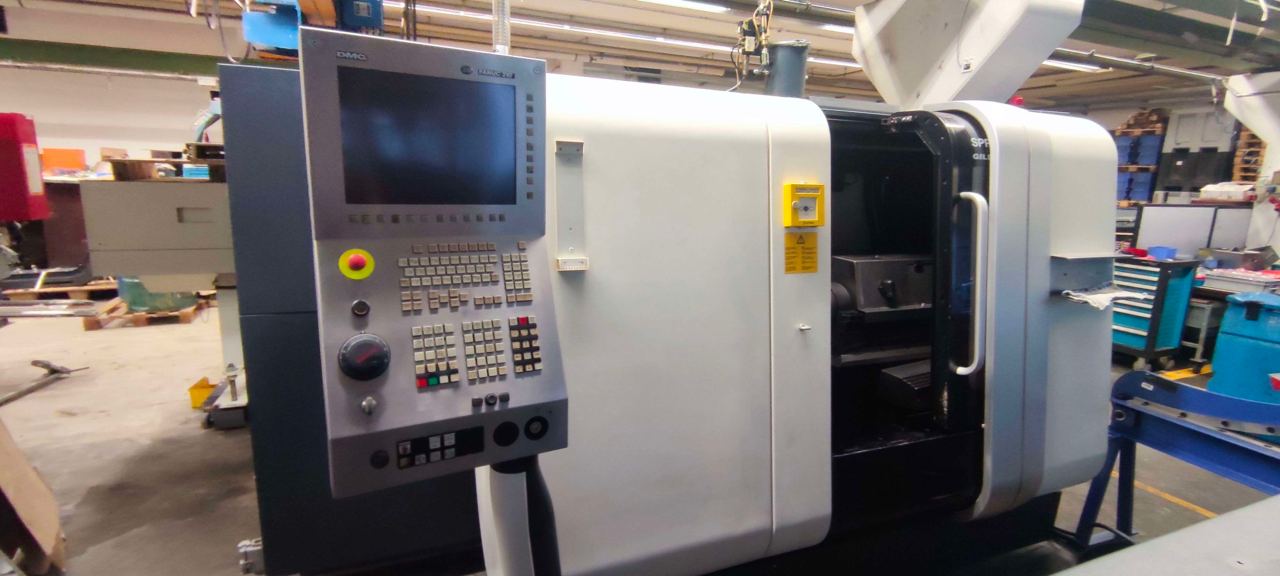 DMG MORI Sprint 20-8 Used Lathe Machine
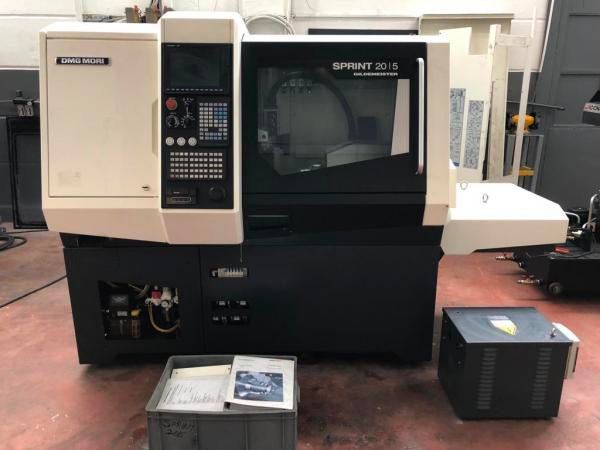
DMG MORI SPRINT 20-8: Efficiency and Precision in One Machine.
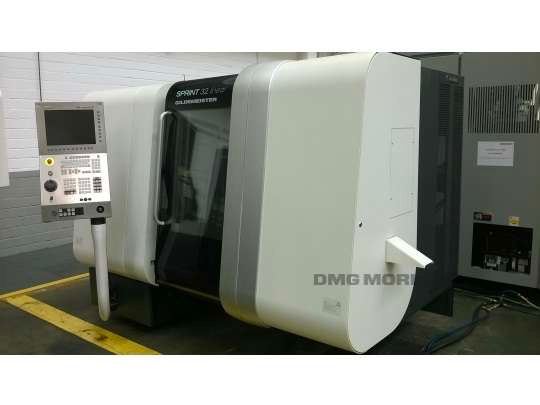 DMG MORI SPRINT 32 linear Used Lathe
DMG MORI SPRINT 32: Efficiency and Precision in Turning Operations.
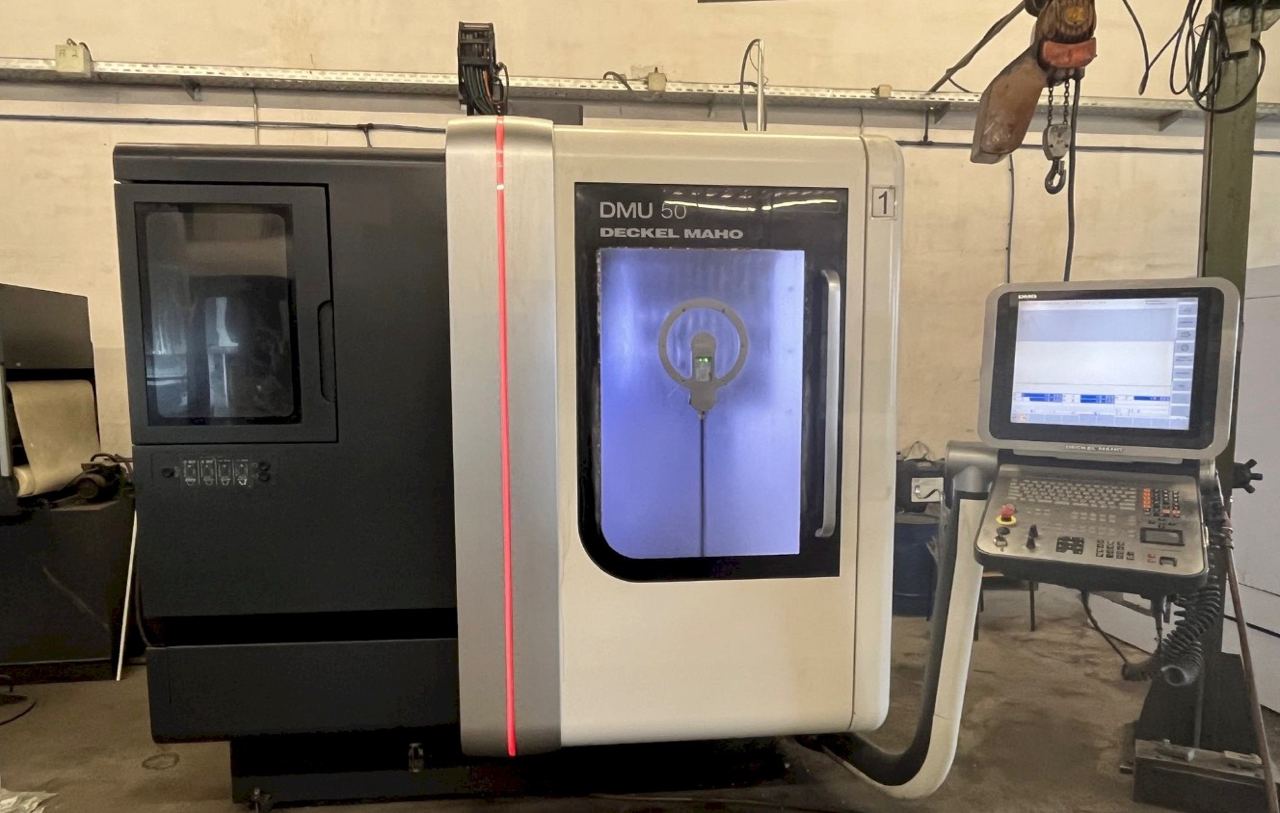 Used DECKEL MAHO DMU 50 Vertical Machining Center
Powerful machining center DECKEL MAHO DMU 50, manufactured in 2011.
DMG MORI unites the heritage of the German company Gildemeister founded in 1870 and the Japanese firm Mori Seiki started in 1948. The joint brand has been operating under the combined name since 2013 and, according to the official 2022 annual report, ships roughly 7 000 machines a year from plants in Germany, Japan, Italy, Poland and the USA. That volume places the group among the three biggest global suppliers of metal-cutting equipment. European job shops value the brand for its broad catalogue that covers almost every machining task while corporate users appreciate the uniform service network present in more than 80 countries.
DMG MORI offers more than 160 standard machine models. The line is traditionally split into turning, milling and mill-turn platforms, while special categories such as gear cutting and additive manufacturing complement the classic range.
The CTX family addresses universal turning from simple bar work to high-precision toolroom applications. In contrast, the NLX series is engineered for continuous production with 3-axis simultaneous control and integrated Y-axis milling.
Before looking at the detailed specs, keep in mind that both families share a common FANUC or SIEMENS control interface, making operator training straightforward.
Two paragraphs of context allow us to introduce a short list of popular turning models:
These figures help buyers match the machine to part size and cycle time targets. After installation, users typically note smoother surface finish on stainless workpieces thanks to the box-in-box bed casting that suppresses thermal drift.
The DMU line has been the flagship 5-axis solution of the brand for more than two decades, while the CMX V series acts as an entry point for 3-axis machining.
You will find a short yet informative list below, but first remember that every DMU is shipped with a 15 000 rpm speed-master spindle as standard, a figure rarely matched in this price segment.
After commissioning, many workshops identify the direct measuring systems on the DMU as the main contributor to repeatability within ±2 µm across an eight-hour shift.
Mill-turn machines are expected to combine the flexibility of a lathe with the productivity of a machining centre. The NTX series answers this demand by placing a B-axis milling head above the main spindle, whereas the CTX TC keeps the turret layout and adds a full milling spindle in place of the second turret.
Two sentences of background give context before a concise list:
Owners often highlight reduced set-up time as an immediate benefit because roughing, finishing and drilling become possible in one clamping.
All new DMG MORI machines ship with the CELOS ecosystem, an industrial PC layer placed on top of the native control. CELOS groups NC programs, tool data, maintenance intervals and ERP links into tile-based dashboards. Because the interface runs on Windows 10 IoT, third-party apps such as OEE monitoring tools can be installed without external gateways. For machinists, the most visible day-to-day gain is the Job Scheduler — a visual timeline that warns the operator if a tool life limit may interrupt an upcoming batch. According to an internal user survey published in 2021, shops running CELOS reported 12 % less unplanned stoppage compared with shops running standard controllers alone.
Robotic loading has become the norm even for mid-size lots. DMG MORI offers proprietary solutions like Robo2Go and PH Cell. Both systems arrive on a pre-wired skid, so installation is finished in under 8 hours after the base machine is levelled.
Two explanatory sentences are required before any list, therefore read the following to grasp the main variants: Robo2Go S is aimed at single spindle lathes, while PH Cell can feed pallets into horizontal mills.
Once the robot is in place, operators typically spend no more than 5 minutes on a new pick-and-place routine, because the teach panel reuses existing CELOS part data.
After deployment, customers report steadier utilisation of above 85 % on night shifts as measured by built-in spindle sensors.
Buyers often weigh DMG MORI against Mazak, Okuma and Haas. The short table below draws on catalogue data and field feedback. It is preceded by two sentences so that the reader understands the scope: the comparison focuses on mid-range 5-axis trunnion machines with 500 mm table size, a popular segment across Europe.
| Feature | DMG MORI DMU 50 | Mazak Variaxis C-600 | Okuma MU-4000V | Haas UMC-500 |
|---|---|---|---|---|
| Standard spindle | 15 k rpm | 12 k rpm | 12 k rpm | 12 k rpm |
| Linear scales | Yes | Option | Yes | No |
| Control language | Heidenhain/Fanuc | Mazatrol | OSP | Haas NG |
| Tool magazine | 30 pockets | 30 pockets | 32 pockets | 30 pockets |
| Price level (EU) | medium-high | high | high | low |
The numbers make it obvious why subcontractors looking for tight tolerances but still watching capital expenditure gravitate toward DMU 50. It sits between the lower priced Haas, which lacks linear feedback, and the premium Okuma, which carries a higher list price.
DMG MORI runs regional hubs in Pfronten, Bielefeld, Iga and Davis. Spare parts for current machines are kept for at least 10 years after the last unit leaves production. Response time for electronic tickets averages 4 hours inside the EU according to the 2022 service statistics. Preventive maintenance kits include spindle coolant filters, lubrication cartridges and wiper sets, all packaged by machine serial number so the buyer avoids part-number confusion.
Small batch suppliers appreciate the quick change tool systems and graphical probing cycles, while aerospace primes select the monoBLOCK series for its symmetrical gantry casting that limits thermal drift on long aluminium cuts. Medical implant manufacturers rely on NTX platforms to finish cobalt-chrome parts in one pass, thus eliminating secondary deburring. Finally, educational institutions invest in CMX mills because the CELOS interface can run in demo mode without machine power, allowing classroom training sessions.
DMG MORI supplies a wide catalogue that covers turning, milling and mill-turn tasks, and supports that hardware with the CELOS software layer and plug-in automation. The combination attracts workshops that need consistent precision, predictable uptime and straightforward operator training. In short, the brand provides a modern yet familiar path into high value machining without locking the user into exotic controls or accessories.