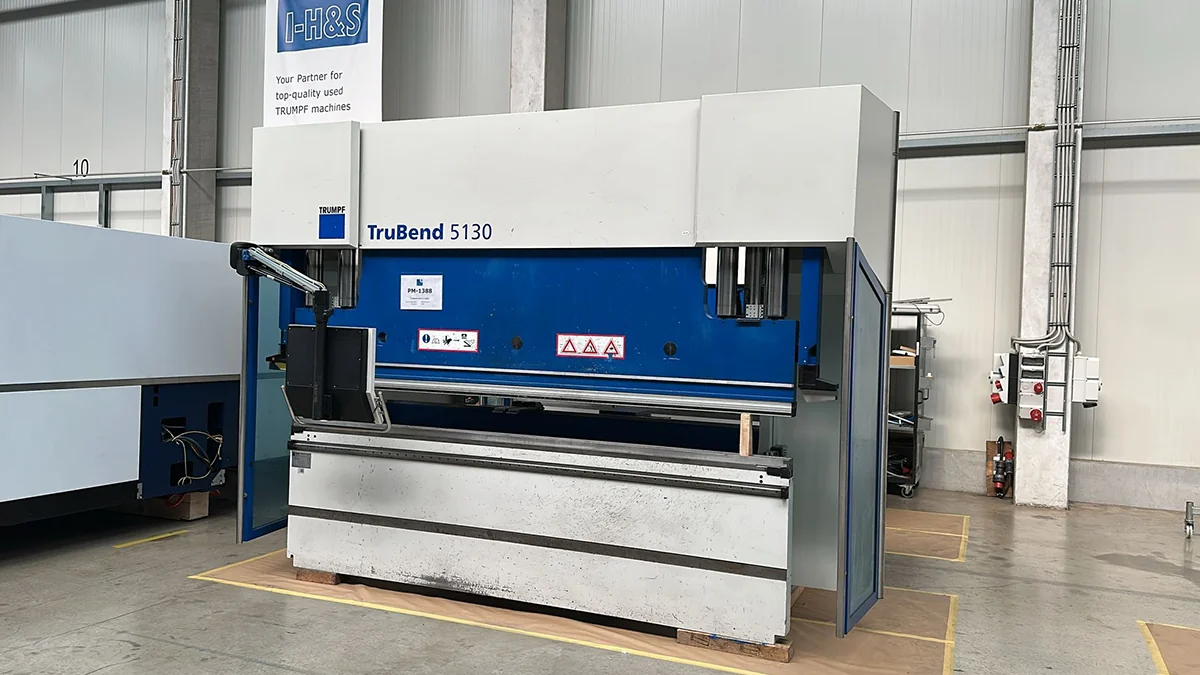
 TruBend 5130 refurbished
Refurbished TruBend 5130 press brake, 130 t force and 3230 mm length for precise, reliable sheet-metal bending.
 TruLaser 3030 fiber (L49) refurbished
Refurbished 3 kW TruLaser 3030 fiber, 3000×1500 mm table, low beam hours.
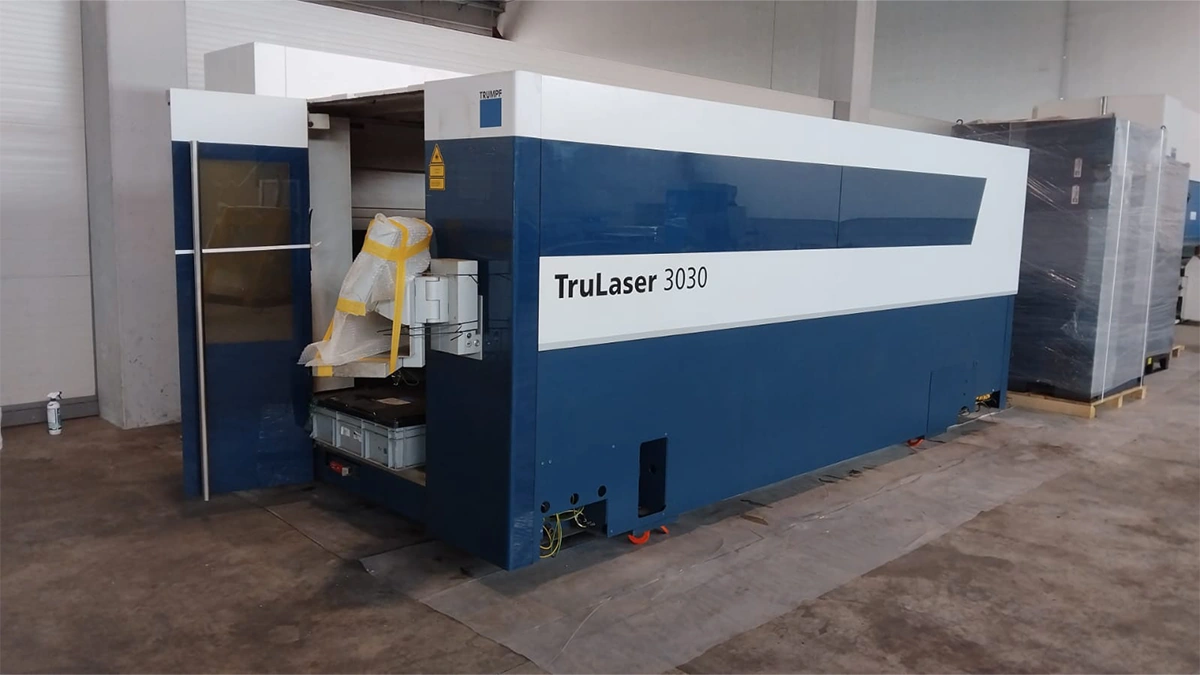 TruLaser 3030 fiber (L491) refurbished
Refurbished TruLaser 3030 fiber 4 kW — compact 3000×1500 format for 20 mm steel and 15 mm stainless
 TruLaser 3030 fiber (L492) refurbished
Refurbished TruLaser 3030 fiber (L492) 4 kW cutter, 3×1.5 m bed, low hours.
 TruLaser 3060 fiber (L66) refurbished
Refurbished TruLaser 3060 fiber 6 kW, 6000×2500 mm bed for high-speed sheet cutting.
 TruLaser 5030 fiber (L68) refurbished
Refurbished 6 kW TruLaser 5030 fiber, 3000×1500 mm bed, low hours, ready for production.
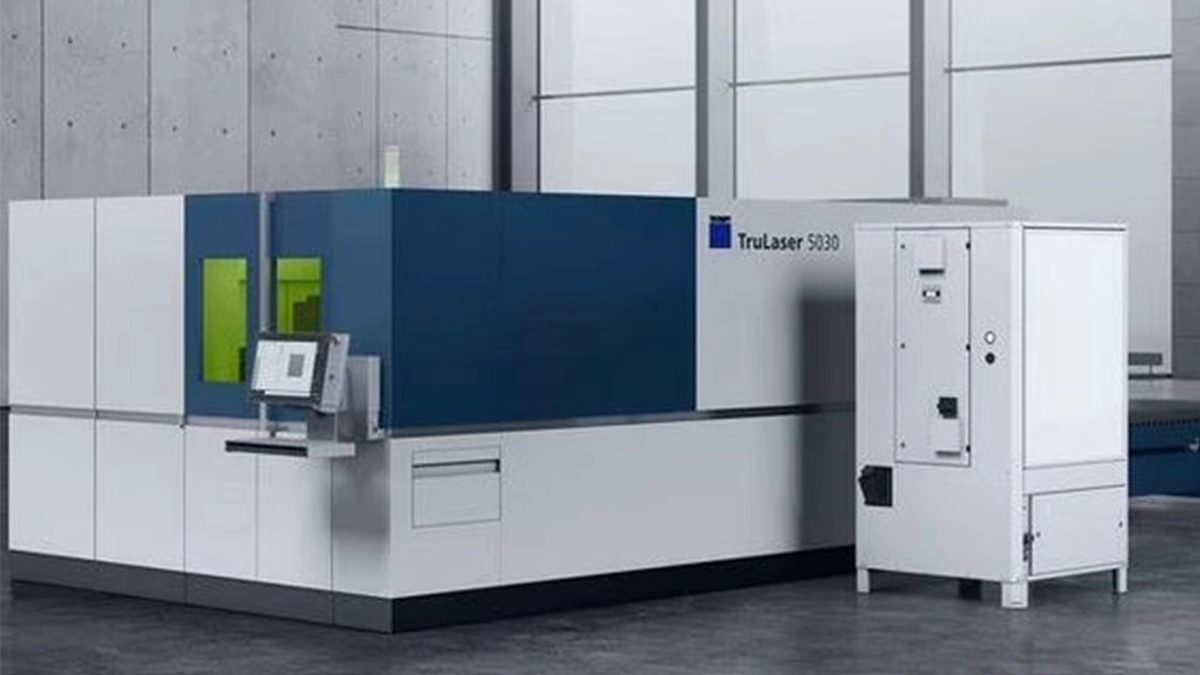 TruLaser 5030 fiber (L681) refurbished
Refurbished TruLaser 5030 fiber 8 kW cutter — full 3×1.5 m bed and low hours for budget-friendly high-speed sheet processing
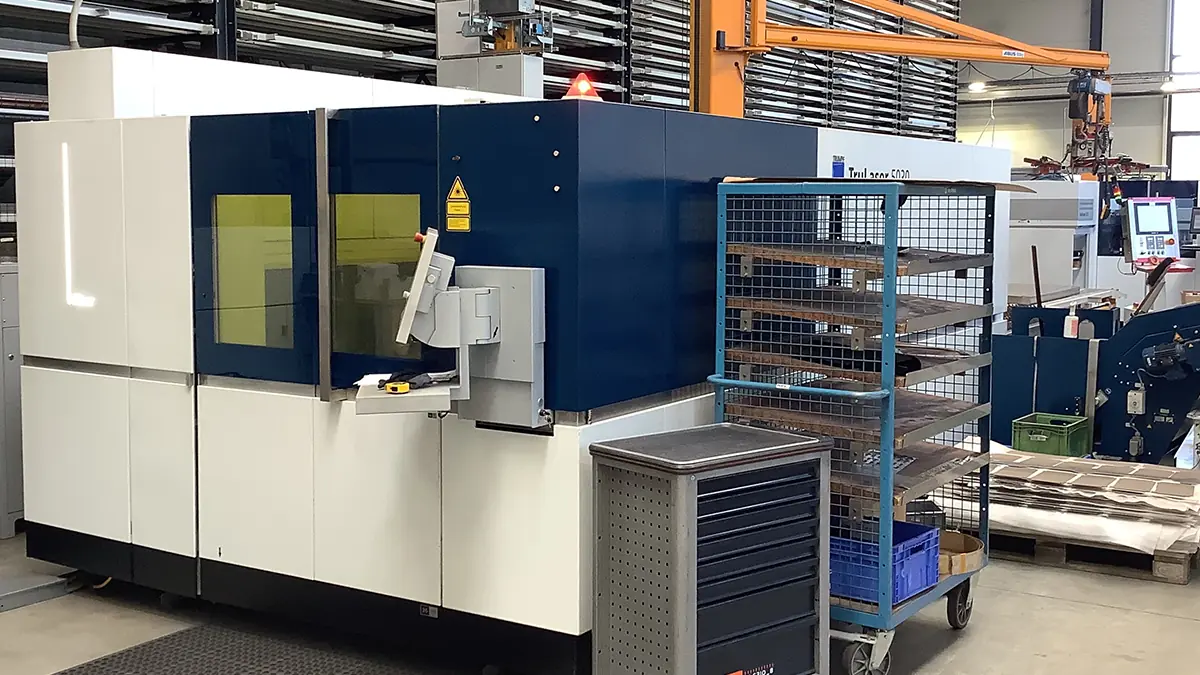 TruLaser 5030 fiber (L682) refurbished
Refurbished 6 kW TruLaser 5030 fiber cuts up to 25 mm steel on 3×1.5 m bed—ready for heavy daily use.
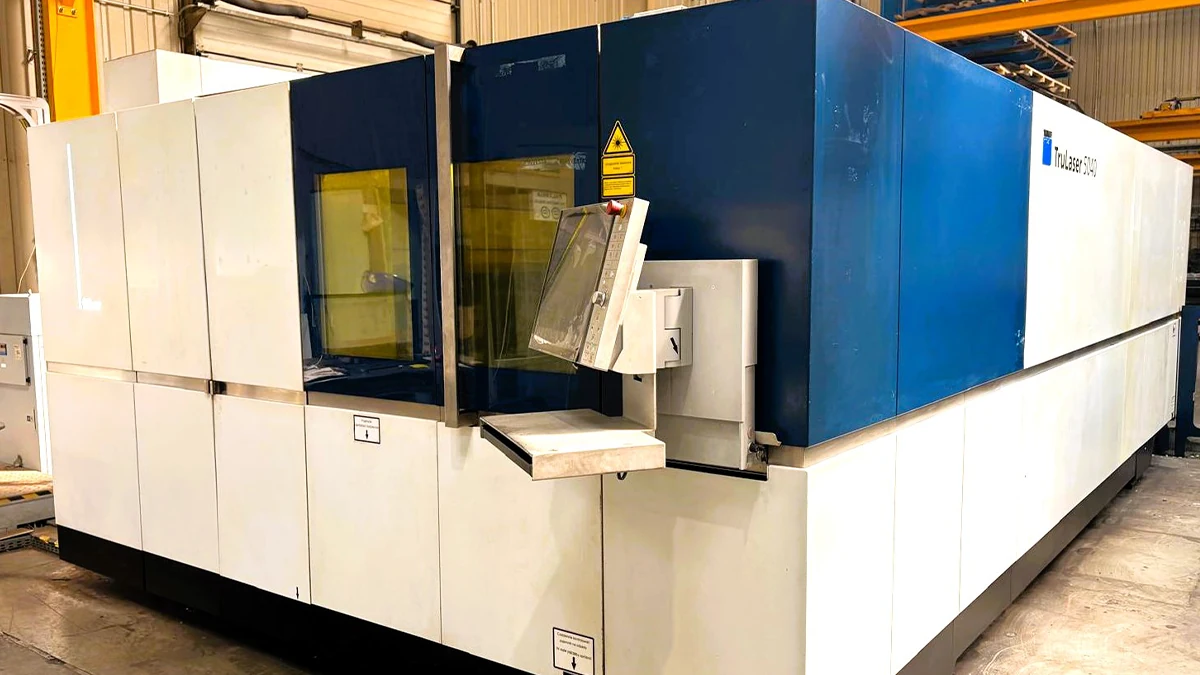 TruLaser 5040 fiber (L69) refurbished
8 kW TruLaser 5040 fiber 4×2 m cutter, refurbished, low hours, BrightLine ready.
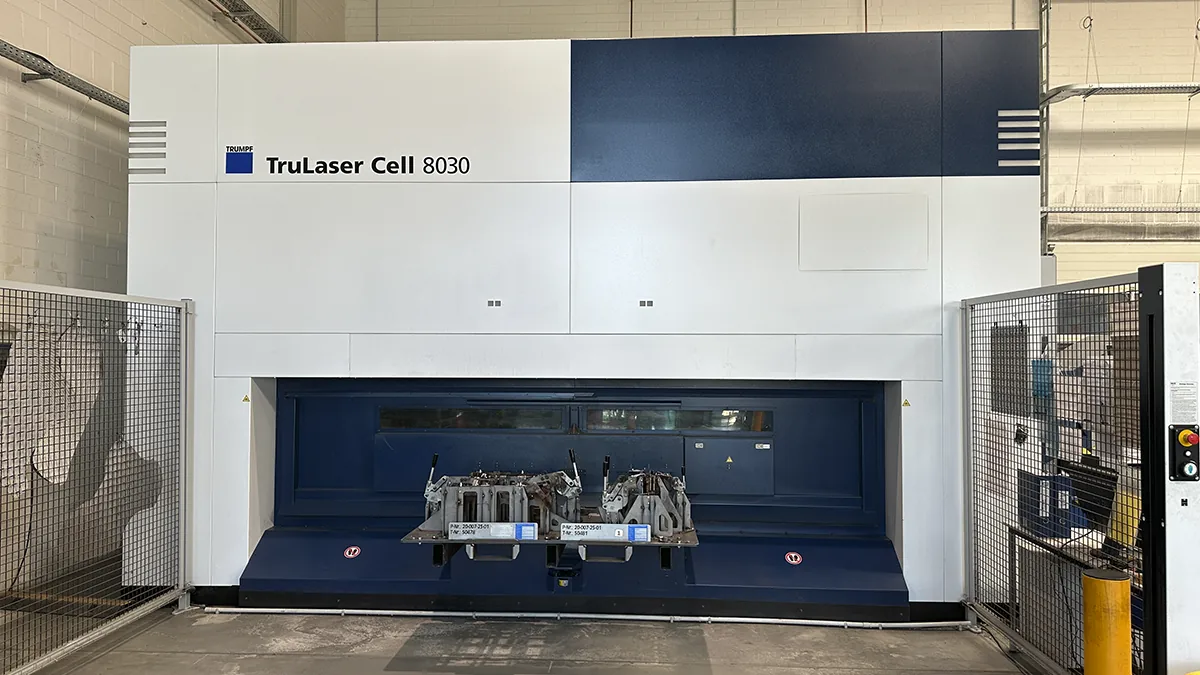 TruLaser Cell 8030 fiber (L60) refurbished
Refurbished 3 kW 5-axis TruLaser Cell 8030 cuts 3000×1300×600 mm hot-formed parts with low hours
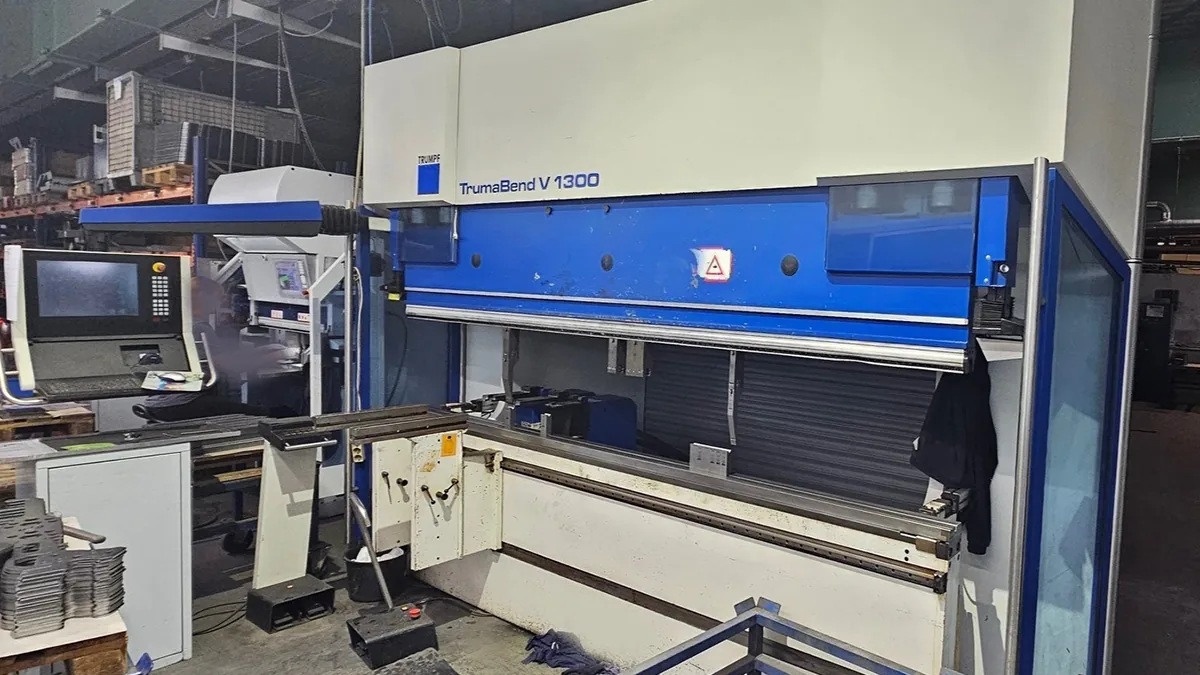 TrumaBend V 1300 X (B03) refurbished
Refurbished 3230 mm TrumaBend V 1300 X press brake — CNC accuracy with 1300 kN force, ready for shop floor
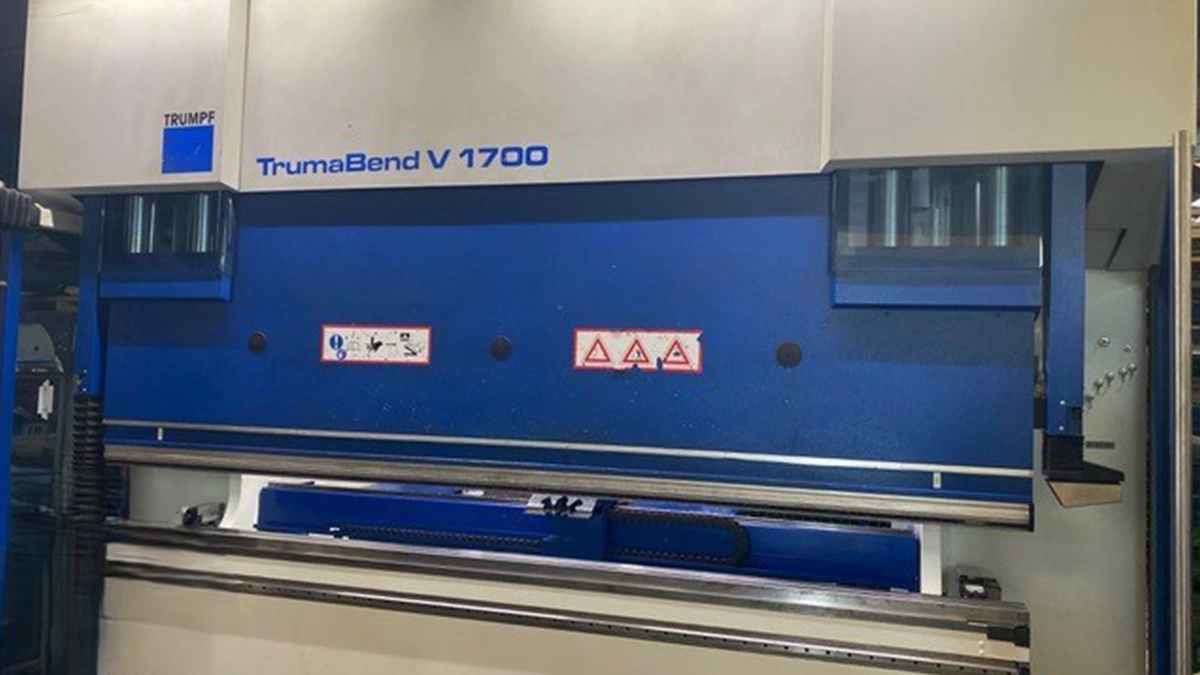 TrumaBend V 1700 (B03) refurbished
Refurbished TrumaBend V 1700 — 170 t, 3 m CNC press brake for cost-smart production.
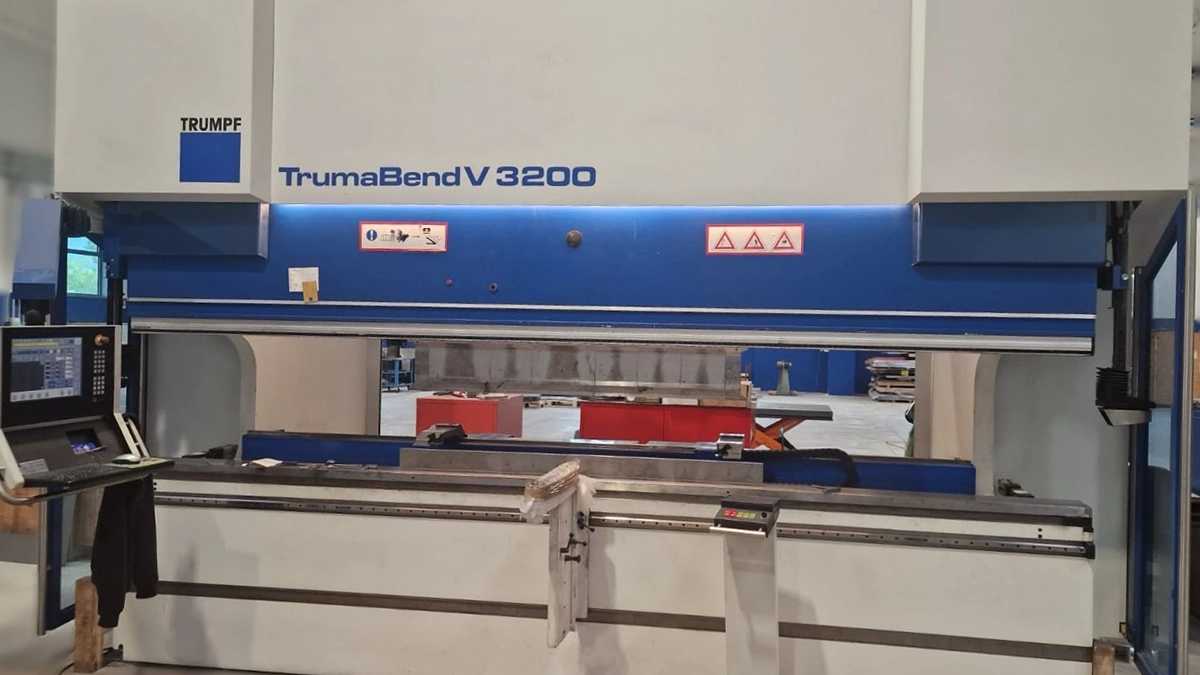 TrumaBend V 3200 refurbished
Refurbished TrumaBend V 3200 delivers 320 t over 4420 mm with 6-axis backgauge for steady batch bending.
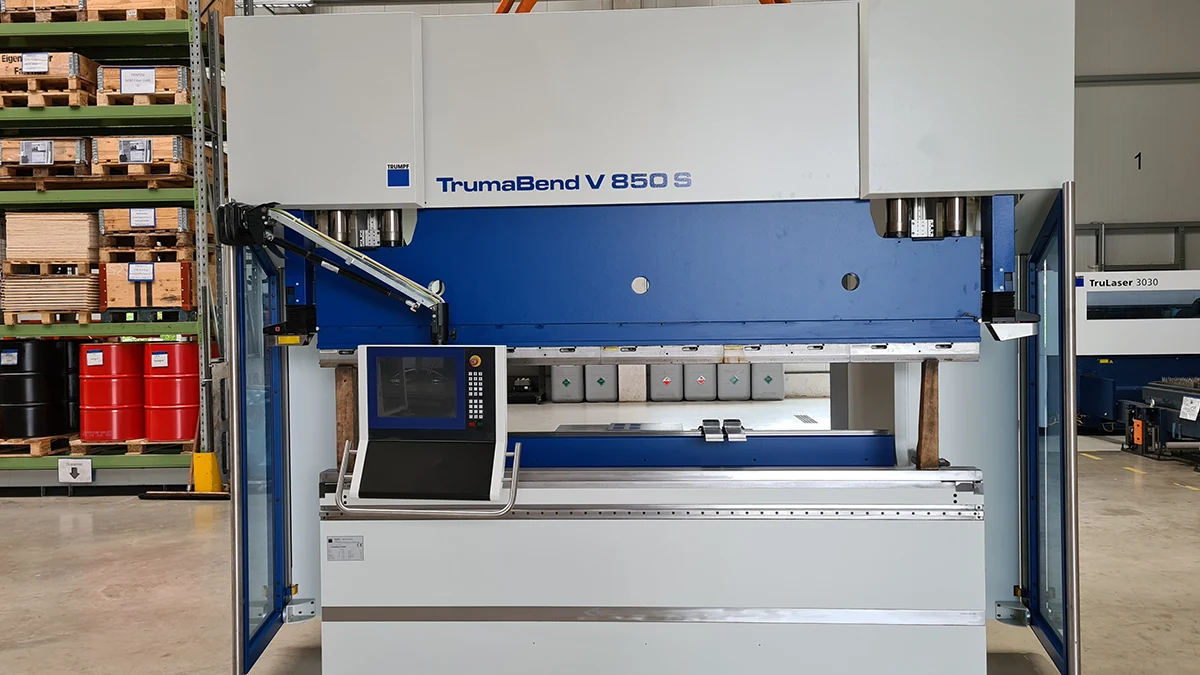 TrumaBend V 850SX refurbished
Refurbished TrumaBend V 850SX, 850 kN press brake, 2720 mm bed, Delem CNC, ready for heavy sheet metal tasks
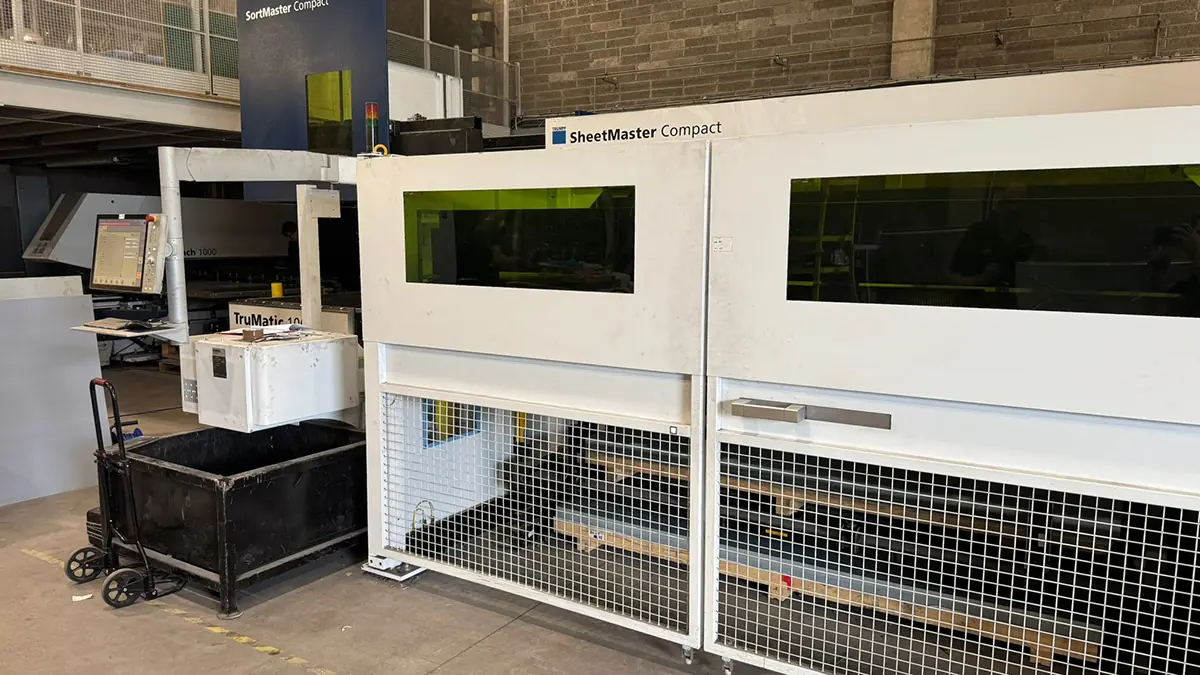 TruMatic 1000-1300 fiber (K07) (FMC) refurbished
Refurbished TruMatic 1000-1300 fiber — 3000 W laser plus 165 kN punch in a compact 2500×1250 mm footprint.
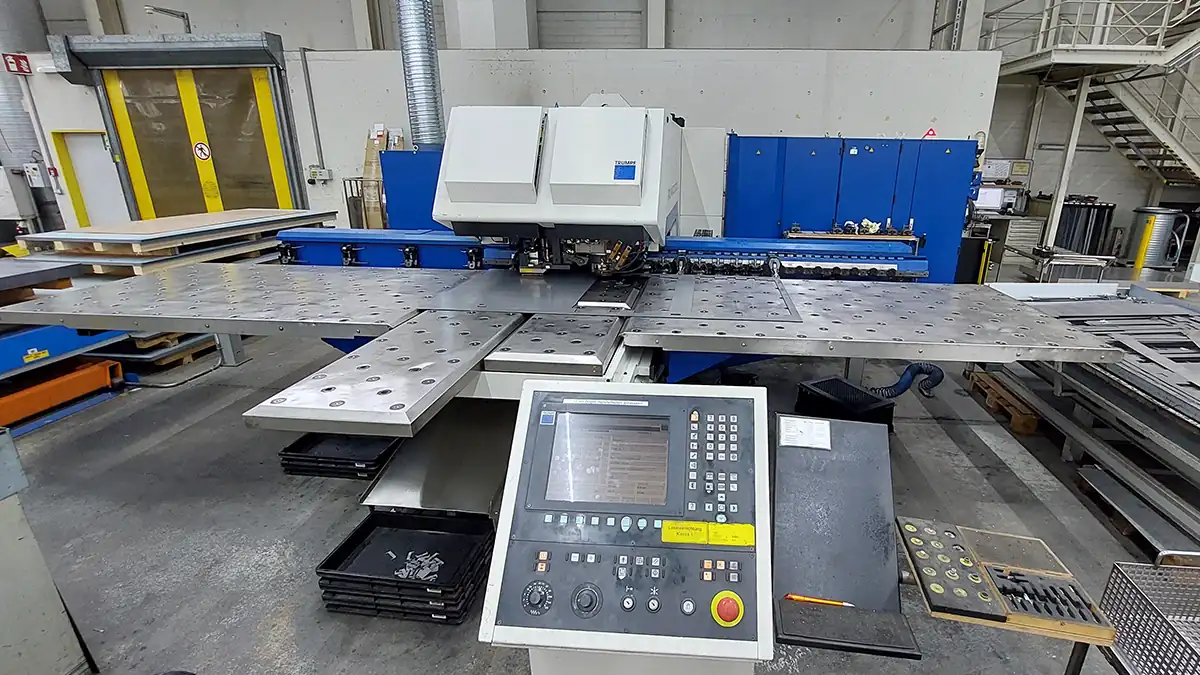 TRUMATIC 6000 L - 1300 (K01) refurbished
Refurbished TRUMATIC 6000 L hybrid punch-laser, 2585×1280 mm area, 3200 W power, low beam hours
TRUMPF is a German machine tool and laser manufacturer founded in 1923 and headquartered near Stuttgart. The company focuses on industrial lasers and sheet metal machines and reports revenues of 5,172.5 million euros with 19,018 employees in fiscal 2023/24. For metalworking companies in Europe, the brand is best known for 2D laser cutters, laser tube systems, punch and punch‑laser machines, press brakes, laser sources, and a mature automation and software stack that ties these assets together.
TRUMPF’s portfolio covers multiple machine families — TruLaser for flat sheet, TruLaser Tube for tubes and profiles, TruPunch and TruMatic for punching and punch‑laser combo, and TruBend for bending — plus TruDisk and TruFlow laser sources. These product lines are maintained with frequent technical updates that are documented in public brochures and the annual report.
“With an impressive 24 kW, the new TruDisk doubles the laser power of the TruLaser Series 5000.”
This quote from a TRUMPF brochure describes the current high‑power option for fiber cutting, which is relevant for shops that need speed in thick mild steel and stainless.
European job shops, OEM fabricators, and contract manufacturers judge machines by throughput, reliability, edge quality, and how easily one operator can run more than one asset. TRUMPF addresses those points with machine functions that are specific to its platform.
Before adopting any of these functions, a chief engineer will want to know the effect on cycle time and operator workload across a full shift. TRUMPF publishes application notes and provides live demos that show how the features behave on different grades and thicknesses, which makes it easier to validate on your own parts.
For flat sheet, the TruLaser Series focuses on nitrogen cutting speed, pierce reliability, and cut stability in mixed nests. The current TruDisk solid‑state lasers are offered up to 24 kW, and the brochures document gains in sheet throughput per hour versus earlier power levels. Users who cut a lot of stainless between 3 and 15 mm typically see the largest time savings from the high‑power fiber combined with high‑speed cutting nozzles.
Automation is available in building blocks. LiftMaster handles loading, unloading, and pallet changes with options for part separation, while SortMaster removes and stacks finished parts to more fully automate downstream handling. Both modules integrate with storage towers and can be added in stages as volumes grow.
Before adding automation, it is worth mapping current bottlenecks, because cutting alone rarely defines hourly throughput once the laser reaches double‑digit kilowatt power. With the right pallet routine and part sorting, one operator can supervise multiple cutting cells during a day shift without chasing skeletons or microjoint failures.
TRUMPF’s TruLaser Tube series covers round, square, rectangular, and open profiles, with bevel cutting up to 45° on equipped models. The TruLaser Tube 5000 fiber focuses on short cycle times across a broad tube range and supports in‑machine tapping to remove a secondary operation. For fabrication shops that weld frames and furniture, this consolidates setups and reduces fixture time.
A separate technical data brochure lists tube sizes and the availability of intelligent functions across the range, so you can match a machine size to your product mix rather than over‑buying.
Punching remains relevant for forms, louvers, and threaded features that are faster or cleaner than laser for certain geometries. The TruPunch 5000 lists 1,600 strokes per minute for punching and 2,800 strokes per minute for marking, with an active die for low‑scratch surfaces and ToolMaster Linear for rapid tool changes. If your parts have many formed features and threads, a punch‑laser machine in the TruMatic family may outperform a pure laser on total cost per part.
Shops that choose punch‑laser typically aim to combine processes in one clamping, keep edges burr‑free, and reduce deburring time. TRUMPF’s approach uses a shared control and tool automation to keep cycle time predictable across mixed operations.
Although TRUMPF is widely associated with lasers, TruBend press brakes are a core part of the brand’s sheet metal flow. For job shops, the decision is often about control usability and tool logistics more than raw tonnage. The value comes from combining accurate bending with laser cutting that already removes microjoints properly and rotates parts to the operator in a consistent orientation. Automation modules and offline programming streamline that hand‑off.
When you audit a potential cell, check how the control handles angle measurement, staged tool setups, and part rotation logic. This is where TRUMPF’s controls and shopfloor software tend to reduce variation between shifts.
TRUMPF offers a modular path from manual machines to an automated cell, then to storage‑connected production. LiftMaster covers sheet flow, SortMaster stacks finished parts, and both can connect to storage. This staged approach matters for European SMEs that scale in steps rather than in one large leap.
For daily work, the benefit is simple — fewer touches per part, fewer skeleton issues, better material traceability, and more predictable schedules around welding and paint. Operators also spend less time freeing microjoints or sorting mixed nests, which reduces fatigue late in the shift.
TRUMPF’s own laser sources are a notable part of the value proposition. TruDisk is the house solid‑state laser used for cutting and welding, matched with the company’s cutting data and nozzles. TruFlow is the CO₂ platform still used for certain applications. When paired with functions like BrightLine fiber or Highspeed Eco, the result is higher feed rates in nitrogen cutting and better edge quality in thicker sections, depending on material and gas.
For maintenance teams, having the laser and the machine from the same brand reduces finger‑pointing and shortens troubleshooting because drive, optics, sensors, and laser diagnostics are integrated in one service environment. This is practical rather than theoretical on a Monday morning when a production line is waiting for cut parts.
Procurement teams often shortlist TRUMPF alongside Bystronic, Amada, and Mazak for laser cutting cells. The differences are less about headline wattage and more about the surrounding package.
Before the table below, keep in mind that the numbers and features are pulled from public pages and brochures so you can verify them during your RFQ process. The goal is to highlight where TRUMPF’s approach may match your part mix and staffing model.
| Aspect | TRUMPF | Typical alternatives |
|---|---|---|
| Real‑time feed regulation | Active Speed Control adjusts feed during cutting based on sensor feedback, aimed at consistent parts on variable stock. | Competitors focus on process monitoring and nozzle centering, but comparable closed‑loop feed control is less common in published specs. |
| High‑power fiber options | TruDisk up to 24 kW documented in brochures for TruLaser Series 5000. | Bystronic, Amada, and Mazak offer high‑power fiber options as well, often up to the high teens or 20 kW depending on model and year. |
| Bevels on 2D laser | EdgeLine Bevel creates chamfers and countersinks in the flatbed process, reducing secondary beveling. | Most alternatives rely on separate bevel heads or secondary machining, with fewer published examples of automated bevel features on 2D flatbed. |
| Sheet handling | LiftMaster for loading and unloading, SortMaster for part removal and stacking, storage integration available. | Competitors offer similar modules, but naming and integration depth differ, which affects retrofit paths in brownfield plants. |
| Tube processing | TruLaser Tube models include bevel up to 45° and options for tapping. | Others offer bevel and tapping options on selected models, so evaluation should be done on your exact tube sizes and material mix. |
These points do not make one brand universally better, they show fit. If your typical nest has many small internal bevels and countersinks, EdgeLine Bevel is attractive. If you cut a lot of mixed stock quality, Active Speed Control deserves a look during a live demo. If you need a staged path to automation, having LiftMaster and SortMaster as add‑ons reduces risk compared with an all‑at‑once rebuild.
In discussions with European shops, three themes come up repeatedly. First, the operator experience — clear controls and predictable pierce behavior reduce training time. Second, service and parts availability — a Europe‑wide service network matters when downtime is measured in hours. Third, the ability to expand — many buyers want to start with a single cutting cell and add sorting and storage later without replacing the base machine. TRUMPF’s public documentation and product structure align with these priorities and make phased investment practical.
TRUMPF has been on the market for over 100 years. The portfolio spans dozens of machine configurations across 2D laser cutting, tube cutting, punching, punch‑laser, and bending, with laser sources designed in‑house. The company’s annual reports describe strong investment in development and an installed base that supports a wide service organization in Europe. While the company reports revenue in euros rather than unit counts, industry interviews and public case studies point to yearly deliveries in the thousands of machines globally, supported by multiple plants and expansions in recent years. For a buyer, the takeaway is supply security and an ecosystem with long‑term updates, not a one‑off platform.
To match a TRUMPF machine to your workload, start with three checks. First, material and thickness distribution, since this drives the choice between moderate and very high laser power. Second, geometry mix, which indicates whether punch‑laser or pure laser is better. Third, staffing model, which determines when to add LiftMaster and SortMaster. A short on‑site time study plus a demo on your real parts will usually reveal whether features like Active Speed Control, BrightLine fiber, and EdgeLine Bevel deliver savings that you can bank on.
The brand is common among subcontractors that run mixed materials and frequent changeovers, automotive and machinery OEMs with structured production, and engineering firms that value in‑house laser and control technology from the same supplier. TRUMPF’s longevity and breadth give purchasing teams confidence in parts, service, and future updates. For many European factories, that stability is the deciding factor when machines are expected to run three shifts for a decade.
TRUMPF combines sheet metal machines, in‑house laser sources, and stepwise automation that you can add as volumes grow. Features like Active Speed Control, EdgeLine Bevel, BrightLine fiber, and CoolLine are practical shop tools rather than buzzwords, and they are documented with clear application ranges. That is why the brand shows up in shortlists for factories that value consistent parts, predictable schedules, and a path to gradually scale capacity without rewriting the entire layout.
