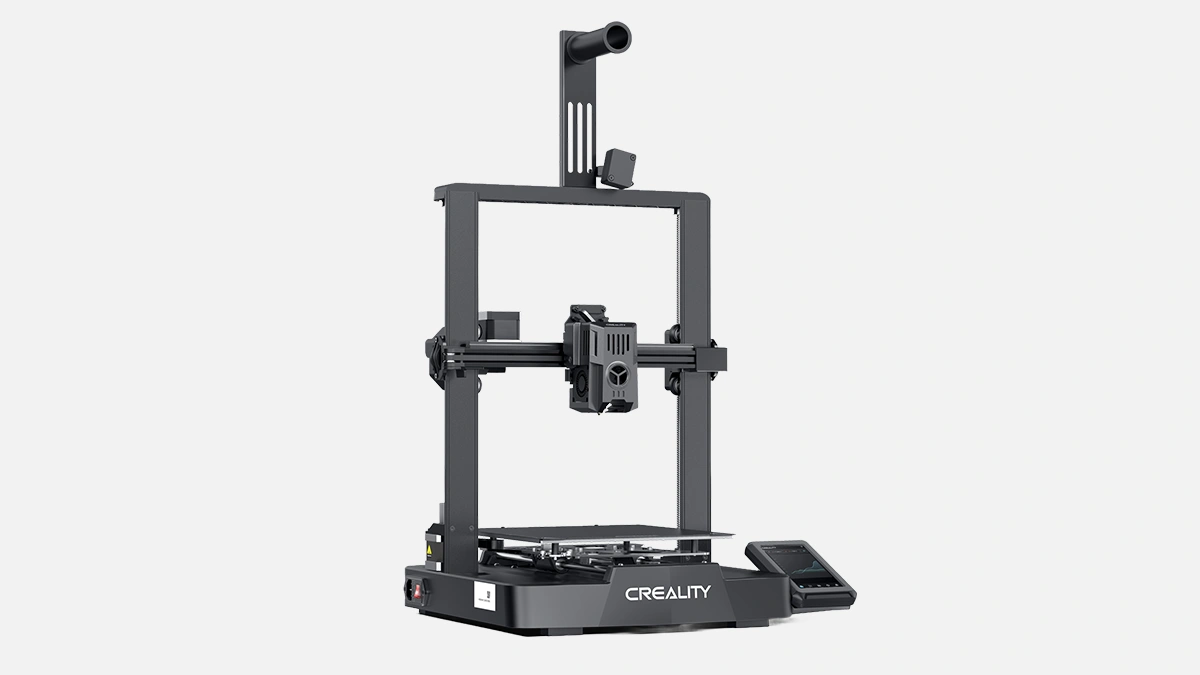
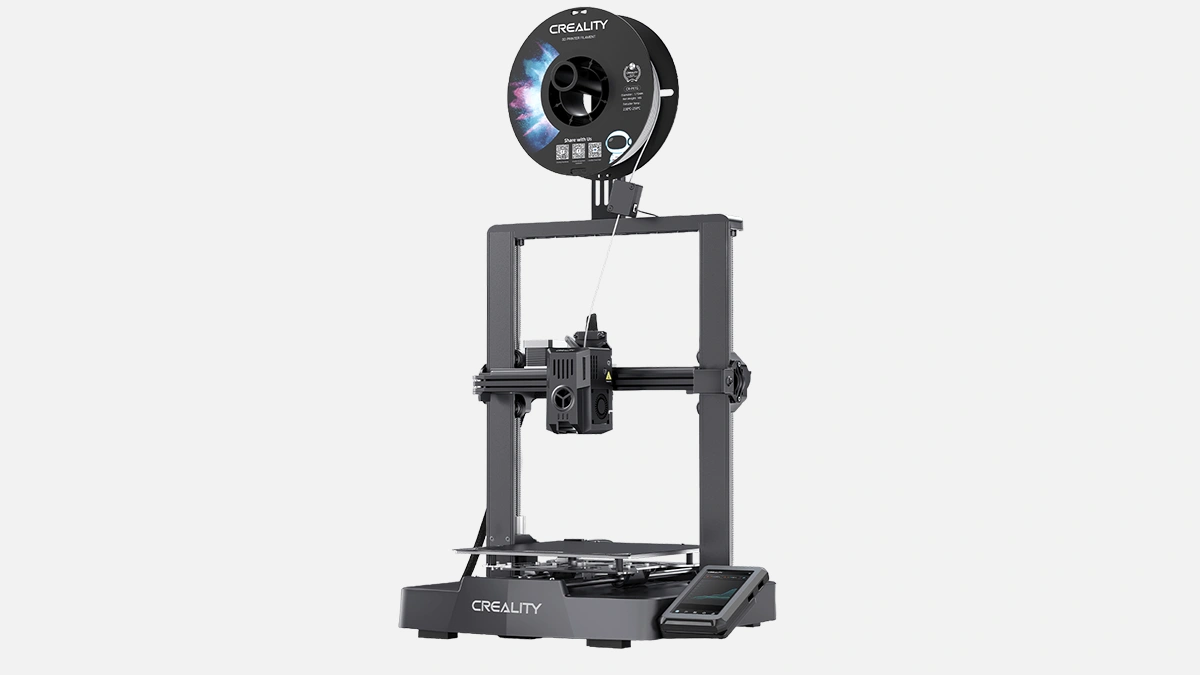
Ender 3 V3 KE: compact FDM workhorse, 500 mm-s speed, 300 °C hotend for on-demand shop fixtures.
Snappy intro, yeah. The V3 KE looks tiny on the bench yet inside it sits a heart that does not procrastinate. 220×220×240 build space, you blink, carriage is already at the far corner. I fired it up last night, the gantry started humming, neighbors probably thought I bought a small drone, not a printer.
Steel rails, well, technically they are hardened rods with linear bearings, not the old wheels on aluminum slots that came with the older Ender 3 batches. Acceleration numbers? Creality prints on the box 20000 mm-s², but firmware caps it lower so the frame does not go salsa dancing on the desk. Direct drive Sprite extruder keeps the filament path short, means TPU does not spaghetti. Bowden tubes, goodbye.
Before diving deeper, a tiny reference table is handy.
| Section | Spec | Field note |
|---|---|---|
| Motion | 500 mm/s max | Realistic at 250 with PLA, hotter plastics need 150 |
| Hotend | 300 °C peak | Works fine at 280, fan noise climbs |
| Bed | 110 °C peak | First layer sticks at 60 for PLA |
| Power | 350 W PSU | Internal, low hiss |
The numbers above sit between entry FDM kits and heavyweight CoreXY rigs. Not record breaking, yet perfectly suited when the workshop needs a jig today, not next week.
Creality kept the familiar cube minus Z pillar blueprint. Frame footprint is 433×366 mm so it shares shelf space with an A4 paper stack, more or less. Z height touches 490 mm. On my work cart it slides right under the mezzanine rack, convenient. Powder coated sheet metal panels, no plastic shrouds that snap if you over tighten.
My old Ender 3 Pro rattled a lot above 120 mm/s, but the V3 KE sits calmer, maybe the stiffer Y base helps. Still, you should park rubber feet under the frame if the shop floor vibrates from CNC mills.
Creality’s 32-bit silent board, stepper drivers run at 64 microsteps by default so the steppers whisper. Screen, 4.3-inch color touch, UI updated, icons not stuck in early Android era anymore. Wi-Fi chip right on the board, no dongle. I tossed a sliced file from the office PC, printer picked it up in 7 seconds, started heating automatically after I tapped go. OctoPrint optional, but many just keep the native Creality Print app, good enough.
Bullet recap for electronics:
– 32-bit ARM MCU, faster menu response
– Firmware open to Klipper swap, community already posted configs
– Dual coolers on stepper drivers reduce thermal drift at 45 °C ambient, relevant in UAE summers
PLA, PETG, ASA, TPU up to 95A shore, even small PP rolls if you swap to textured PEI spring plate. The hotend is all metal, so no PTFE wear above 250 °C. For carbon fiber filled nylon you must add a hardened nozzle though, stock brass erodes after 1 spool.
Look, when a metal-working plant in Sharjah needs a soft jaw insert or a sensor bracket, PLA is fine. For cap parts that live near hydraulic oil, PETG holds. If the component sees hot coolant, ASA becomes friend. Quick list of shop examples:
* Gauge spacer for milling vise, printed in 50 minutes, force fit, no burrs
* Custom dust shoe for handheld grinder, PETG, lasted 3 weeks with no crack
* Soft cover for probe cable, TPU, absorbed vibration nicely
Auto bed leveling, click one button, wait 45 seconds, done. Z offset wizard pops up, you slide a paper under the nozzle, tap plus minus. That is it. Filament load, extruder jogs 20 mm at 8 mm/s, you see clean flow, tap finish.
Maintenance rhythm, every 70 hours of runtime I wipe rods with isopropyl, drop a tear of light oil. Belts hold tension for roughly 300 print hours, after that half turn on the knob, good.
Just to visualize why a printer that costs less than a new indexable face mill still makes sense in a metal shop.
| Item | Lead time via supplier | Lead time in house using V3 KE | Comment |
|---|---|---|---|
| Pneumatic fitting bracket | 4 days | 2 hours | No courier fees |
| Soft jaw insert | 3 days | 1.5 hours | PLA prototype first, then machine aluminum if needed |
| Coolant splash guard | 6 days | 3 hours | PETG handles shop chemicals |
Two hours of operator wage in Dubai roughly equals coffee run for the team, so the printer repays itself faster than an ERP license.
I stacked prints from the V3 KE next to ones from Prusa Mini and Anycubic Kobra 2. Layer lines at 0.2 mm looked similar, but at 0.12 the KE stayed smoother, probably tighter belt loops. Kobra 2 reached 600 mm/s on paper yet the corners bulged. Prusa Mini solid but slower, cap at 200 mm/s. Ender hits a sweet mid ground, more punch than Mini, less noise than Kobra.
Heat and dust, normal here. The KE survived 42 °C ambient afternoon with shop doors open, just keep filament in dry box. I mounted a small 24 V blower to vent PETG fumes towards an improvised hood, the control board did not complain.
Short list of tweaks I actually did, nothing exotic:
– Printed tool drawer that slides under the frame, uses 73 grams PLA
– Added PEI flex plate, first layer sticks at 55 °C, pops off when cool
– Firmware swap to community Klipper build, now acceleration limits set to 8000 mm-s², prints finish 18 percent quicker
Creality released the first Ender 3 back in 2018. Since then around 10 minor and major revisions rolled out. The V3 KE sits between the budget V3 SE and the premium V3 HE. Compared to SE, KE gets direct drive and higher temp hotend. Compared to HE, KE skips linear rails on Z but keeps fast board. For most shops the KE means pay moderate, still get speed, so it steals the limelight from both siblings.
Yeah, plastics will not replace steel jaws inside a machining center. Yet a half day delay on a simple bracket can halt production more than once, and that is where a fast FDM box like the V3 KE earns its keep. Creality ships about 1.2 million printers a year according to their 2022 report, they know volume. This model already on third firmware iteration, bugs squashed quickly. Operators enjoy the touch screen, engineers appreciate the speed, finance likes the low entry ticket.
Bottom line, the Ender 3 V3 KE offers a modest footprint, swift moves, friendly price tag, so small and mid machine shops in the GCC pick it up for rapid jigs, sensor mounts, protective caps, even educational demos during apprentice training. There, circle closed.