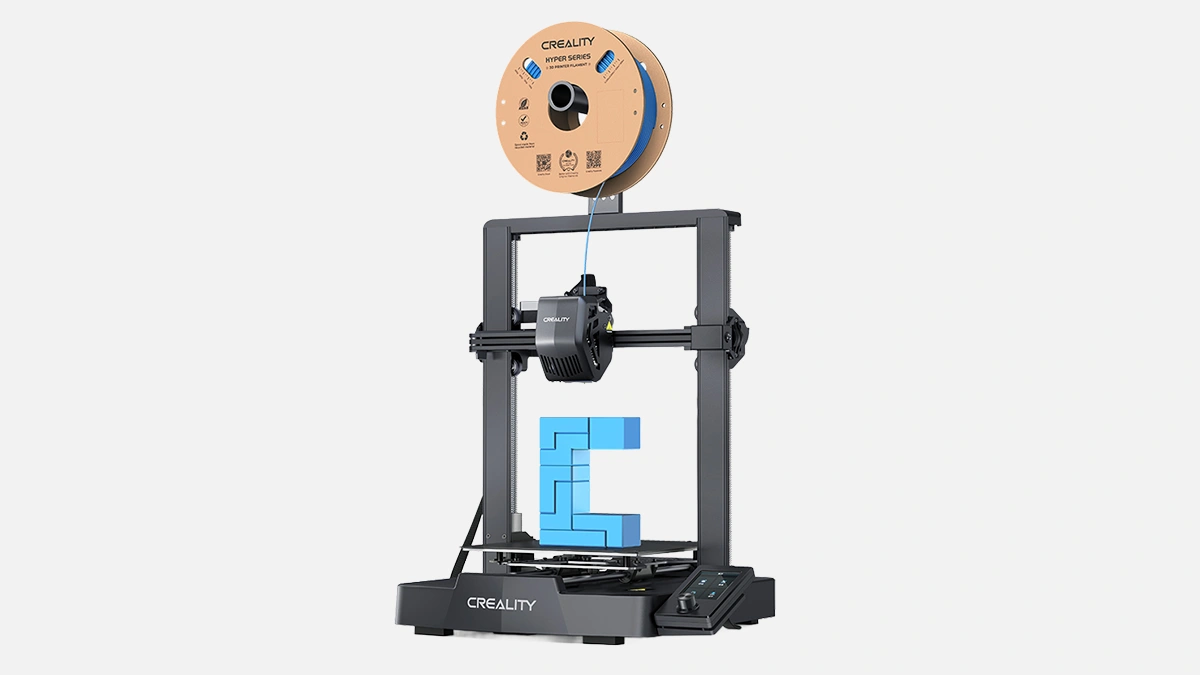
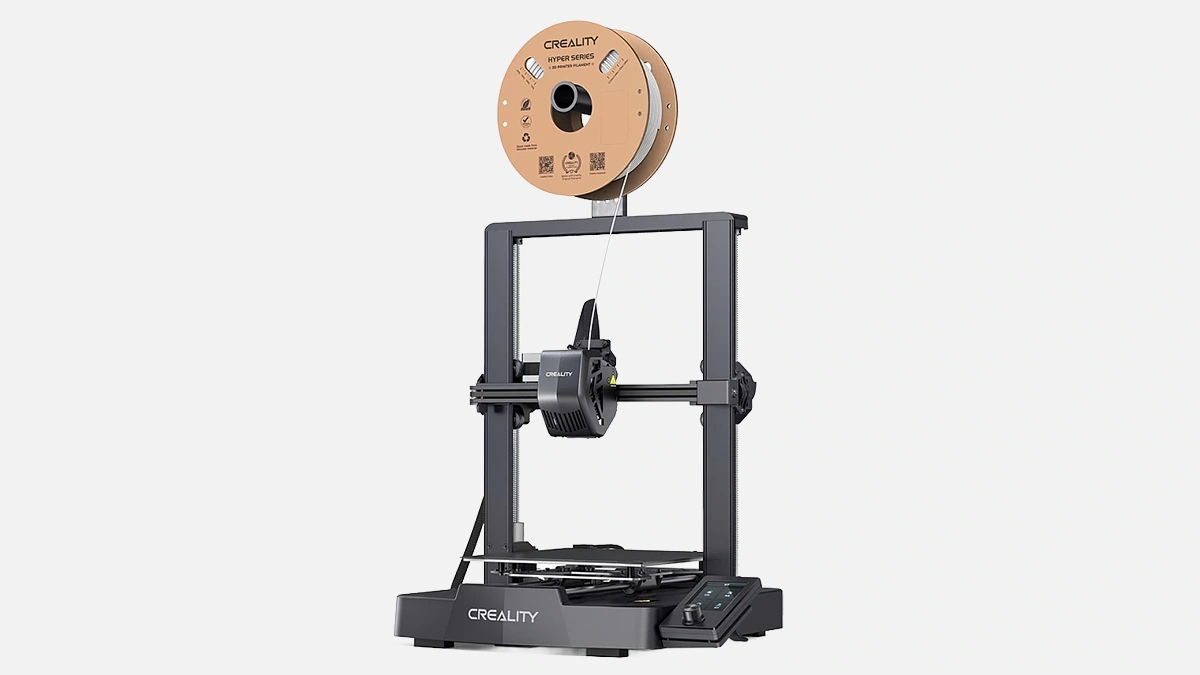
Direct-drive Ender 3 V3 SE prints up to 250 mm/s on 220×220×250 mm bed with auto-leveling.
Fast glance, wow, the frame is still that classic open gantry, only stiffer, thicker, feels like it wants to sprint. Blink, you may miss it.
Yet stay, take a breath, the Ender 3 V3 SE is not trying to pretend it is a hulking industrial giant, it simply puts everyday FDM chores on rails, literally, with dual Z motors and a compact direct drive that skips the old Bowden lag.
Before diving into chatter let us shoot the dry data, because production managers in Abu Dhabi do not have time to read poetry.
| Key metric | Figure |
|---|---|
| Build volume | 220 × 220 × 250 mm |
| Max nozzle temp | 260 °C |
| Max bed temp | 100 °C |
| Rated speed | 250 mm/s |
| Power input | 350 W |
| Bed material | PEI spring steel |
| Firmware | Creality OS 5.x |
Tables are nice, they stop arguments. Operator can print a quick ABS jig at 100 °C on the bed during the lunch break and the numbers do not lie.
Short sentence. Another. Then a long winding one that points out how the switch to dual linear rods on the Y axis keeps the bed from rocking when the planner asks for 200 mm/s infill, while the dual Z leadscrews collaborate to keep the X cantilever level without the annoying manual gantry sync dance engineers had to perform on the original Ender 3 a few years back.
See, a short list, nothing fancy, but plenty of relief for a shift supervisor who hates hunting down ghosting defects.
Direct drive, compact, less retraction stringiness on TPU. Yes, TPU, people are finally using flexible filament for seals inside pump housings around Jebel Ali. The Sprite Lite unit holds 1.75 mm filament tightly, rated for 260 °C, so PETG and ASA walk in easily.
Why it matters
The nozzle sits closer to the gears, less hysteresis, corners stay sharp.
Onboard part cooling runs twin blowers, meaning bridges over 50 mm survive without sag.
* Creality kept the hotend mostly metal, spare parts are stocked in many hobby stores, you do not get locked in.
The bullet list ends, we move on.
Some old-school machinists still trust a sheet of paper. Fine. But hit the CR Touch button once, the probe taps 16 points, writes an offset map to EEPROM, and you suddenly have evenings free. That is not marketing fluff, users on forums like r/ender3 posted screenshots of first layers staying perfect after three weeks of nonstop PLA runs.
The screen is a basic color UI, knob driven, no touch, which sounds dated, however it boots in five seconds, nobody complains during a rush job. The latest Creality OS 5.x brings input shaping, yes, that fancy algorithm borrowed from Klipper, so vibrations at 40–50 Hz get cancelled. Results, less ringing, decent even at 250 mm/s.
Summer workshop in Ajman hits 45 °C ambient, bed heater still reaches 100 °C because the 350 W power supply is overspecified. PSU fan does whistle though, keep earplugs ready.
Operators in Ras Al Khaimah shared these settings as working out of the box:
– PLA 205 °C nozzle, 60 °C bed, 150 mm/s perimeter
– PETG 235 °C nozzle, 85 °C bed, 120 mm/s perimeter
– ASA 250 °C nozzle, 100 °C bed, chamber improv with cardboard shroud
TPU, yes it feeds, just slow to 60 mm/s.
Creality sells roughly 1.2 million Ender units per year, half of them various V2 or Neo editions. The V3 SE slots below the still compact V3 KE and above the plain V2 Neo.
| Model | Speed spec | Build volume | Price bracket | Note |
|---|---|---|---|---|
| V3 SE | 250 mm/s | 220×220×250 | low | cheapest with input shaping |
| V3 KE | 500 mm/s | 220×220×240 | mid | requires closed source board |
| Ender 3 V2 Neo | 120 mm/s | 220×220×250 | low | Bowden tube, no shaping |
| Bambu A1 mini | 500 mm/s | 180×180×180 | mid | proprietary AMS, smaller volume |
The table shows it clearly. If a workshop just needs the familiar 220 mm bed and wants to double throughput over a V2, the V3 SE is the calmer and cheaper path compared with Bambu or Voron kits that need tinkering.
Creality released three firmware branches for the V3 line in the last 6 months, all flashable over USB Type-C. Early units shipped with a belt tension knob that cracked, later batches fixed the mold. Spot differences by checking whether the Y idler plate has two or four mounting screws.
Unbox, four bolts, plug ribbon cable, that is it. Yet read this, tighten eccentric nuts on the X wheels, because factory torque feels sloppy on at least 30 % of crates that reached Dubai according to user polls.
Monthly wipe rails with ISO, lube Z screws with lithium, purge nozzle with cold-pull. Takes 15 minutes, cheaper than ordering a clogged hotend every quarter.
Lightweight jigs for aluminum extrusion lines, ABS positioning blocks for CNC fixturing, disposable sand casting patterns for jewelry sector in Sharjah, plus hobby drones parts because every operator has a side hustle.
They need volume now, do not want another machine that sits idle until a specialist configures Marlin macros. The V3 SE boots, probes, prints. If demand spikes, you buy 10 of them, rack them on a shelf, network through OctoPrint, and still spend less power than one large CoreXY.
Still, for a starter farm or auxiliary line beside a CNC cell, the balance is acceptable.
Creality has been pushing FDM gear since 2014, lineup spans over 15 consumer and professional platforms. The Ender 3 lineage alone counts 11 major revisions. That maturity bleeds into spare part availability across GCC, which quietly reduces downtime more than any flashy spec.
If your workshop outputs small batches of functional polymer parts and you want something that arrives Friday and starts earning Monday, the Ender 3 V3 SE fills that gap. Not magic, just predictable, serviceable, quick on its feet.