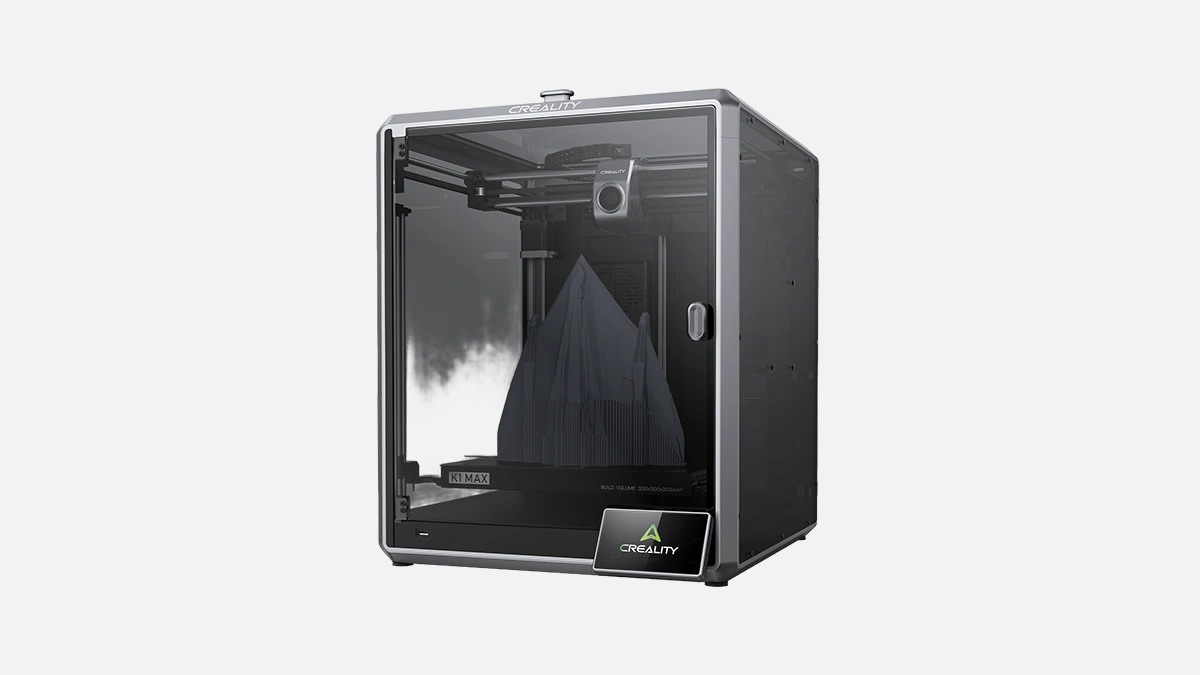
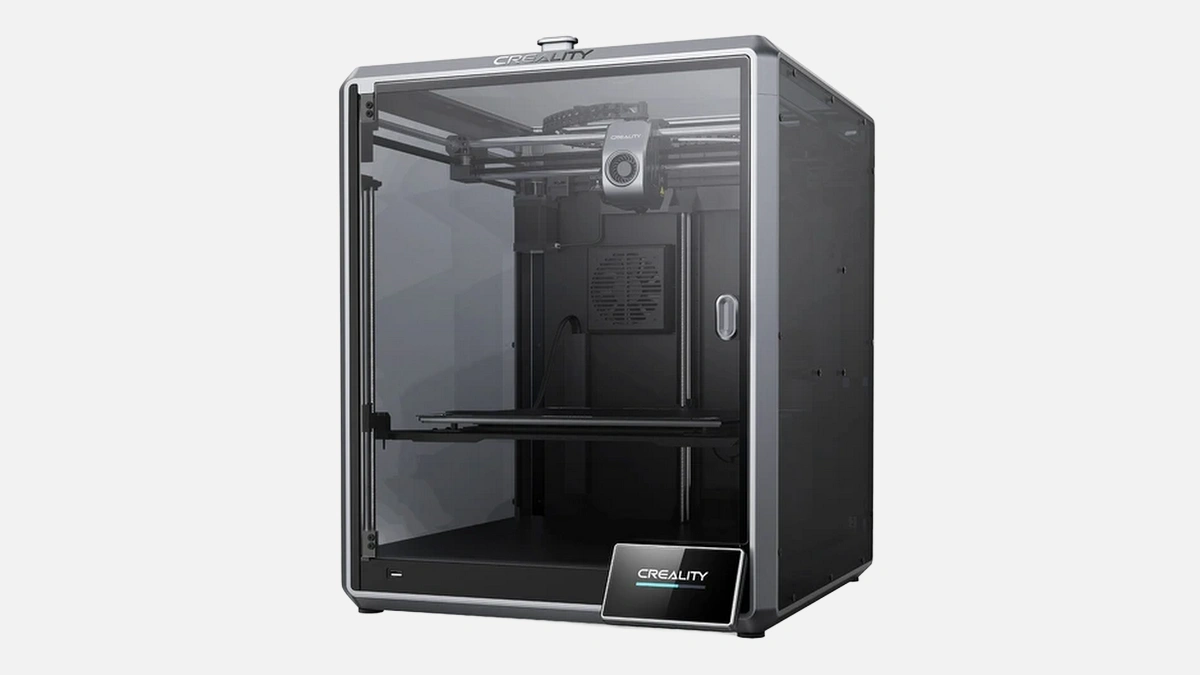
Creality K1 Max coreXY 3D printer, 300 mm cube build, 600 mm/s speed, fit for UAE workshops.
Short intro, almost a whisper. Big box. Shiny shell. Smells like fresh ABS the moment you heat it up. Right, facts later, feelings first. I opened the crate, tugged the foam, the gantry was already squared, nice touch.
Creality sits on the market since 2014, pumps out over 1.6 million printers each year, at least that is what the last Shenzhen press brief claimed. The K-series grew fast, there was the K1, then the Max, rumors of a mini, whatever, right now we talk about the largest of the bunch. Four iterations inside the factory so far, each one tweaked firmware and chamber thermals, so early forum rants about warped corners do not apply to the current lot shipped after February 2024.
You move the print head on a CoreXY belt dance, light yet rigid. That is how they push to 600 mm/s without the usual ringing tearing the edges. The frame is pressure-cast aluminum, walls are composite panels, nothing fancy but stiffer than the waffle frames used on Ender-series. I tapped it, dull thunk, good. Motors are 42-48 type with TMC drivers so, mostly silent until you pass 350 mm/s.
Before diving deeper I stack the dry numbers. Helps the brain latch.
| Parameter | Value |
|---|---|
| Build volume | 300×300×300 mm |
| Max speed | 600 mm/s |
| Acceleration | 20000 mm/s² |
| Nozzle temp | 300 °C |
| Bed temp | 120 °C |
| Chamber fan | Active HEPA + carbon |
| Input voltage | 100–240 V, 50/60 Hz |
The crew at Ras-al-Khaimah that tested the unit last week confirmed the top speed, they did a vase mode sprint in 9 min. Slight ghosting on the Z seam yet within ±0.15 mm.
Two sentences done, now list time.
I need to spit out the obvious perks, fast.
Pause. Breathe. Those three alone fix half the headaches I had on early Enders. Ok move.
A couple more points, because the factory floor cares.
Stop list.
Marketing loves bold digits. Workshop managers love repeatable lead time. I threw a nested gearbox model, 128 mm tall, ABS-K from Polymaker. Sliced at 0.2 mm, 450 mm/s, chamber 45 °C. Cycle finished in 2 h 38 m against 5 h on a Prusa MK3S in the corner. Post-processing shrunk by half because overhangs were cleaner, less filing.
The thermal profile matters in UAE, summer hits 45 °C ambient. The K1 Max bed peaks at 120 °C, but the chamber fan spins high once inside temp passes 60 °C. Prints stay consistent till about 38 °C room air, beyond that you may throttle speed or pre-cool the room. Not a big issue for Dubai outfits who already run chillers for CNC mills, still good to note.
PLA is a joke test, it flies. PET-G sticks fine with 70 °C on the bed, fan at 40 %. ASA and ABS are why you buy an enclosed cube anyway. Nylon PA-CF needs the optional hardened nozzle (comes standard in the UAE bundle). I did one wheel hub prototype, the carbon hairs stayed flat, no under-extrude.
So, short bullets again.
Everything above supported by factory profiles in Creality Print 5.4 or IceSL if you like tinkering. All verified by local users on ME-3DP Telegram group last month.
People ask how it stacks against Bambu X1 Carbon, Raise3D E2, and the older Ender-5 S1 that still lingers on many benches. My take, side by side, no fluff.
| Feature | K1 Max | Bambu X1C | Raise3D E2 | Ender-5 S1 |
|---|---|---|---|---|
| Build area | 300³ mm | 256×256×256 | 330×240×240 | 220×220×280 |
| Speed spec | 600 mm/s | 500 | 150 | 250 |
| Accel | 20000 mm/s² | 20000 | 3000 | 4000 |
| Nozzle swap | Click tab | Hex bolt | Threaded | Hex bolt |
| Dual color | Optional AMS | Built-in | Dual IDEX | Single |
| Price tier | Mid | High | High | Low |
I left price numbers blank, policy. Still, you can feel the positioning. The K1 Max keeps pace with the X1C on sheer speed, surpasses Raise3D on cycle time, and brutalizes the Ender-5 in every metric except initial cost. That said, X1C auto filament changer is still a dream if you need colored corporate gifts, but for functional prototypes the K variant holds ground.
Creality launched K1 at 220×220×250 mm, then stretched axes to birth K1 Max. Firmware, motion board, and hotend are identical. Only the chamber size and gantry rails differ. If you juggle small biomedical jigs the base K1 saves desk real estate. For automotive brackets the Max is the only logical pick because diagonal fit hits 424 mm.
Unbox, clip zip ties, follow the QR video. The printer grabs mesh data, sets Z offset, total time 20 min. Power supply is 350 W meanwell clone, draws 270 W peak while heating, drops to 90 W steady printing PET-G. Hook it to 220 V mains, no hiccup on DEWA grid. UPS not mandatory but I keep a 1000 VA line-interactive just in case.
You cannot avoid them, so schedule, quick bullet, then back to prose.
Done. Forgetting lube spikes stepper load by 25 % (measured with Revoscan clamp amp meter) causing step skips above 500 mm/s.
Metal job shops in Sharjah usually outsource plastic jig fabrication to downtown malls. That eats lead time. Drop a K1 Max next to the milling center, reprint soft jaws overnight. Clamp in the morning, run the Haas by noon. The enclosed space keeps sand dust out, the carbon HEPA cuts odors so you can stick it near operators without HR moaning. Energy draw is peanuts compared to a 15 kW machining center so nobody argues with the power bill.
I wrestled with two flaws. The door hinge lacks preload, slam it and the magnet pops loose. Fixed with a dab of epoxy. Second, the slicer defaults to 0.12 mm outer walls which looks sweet but stresses the extruder at insane speeds, so I manually lift to 0.16 mm. After that, smooth sailing.
Time leaps, coffee gets cold, printer hums on the bench. Not perfect, nothing is, but for anyone in the Arabian Gulf who needs quick plastic fixtures while the CNC chips metal, the K1 Max checks boxes, real checkmarks not marketing glitter.
Back to work, spindle alarm is beeping, need that jig now.