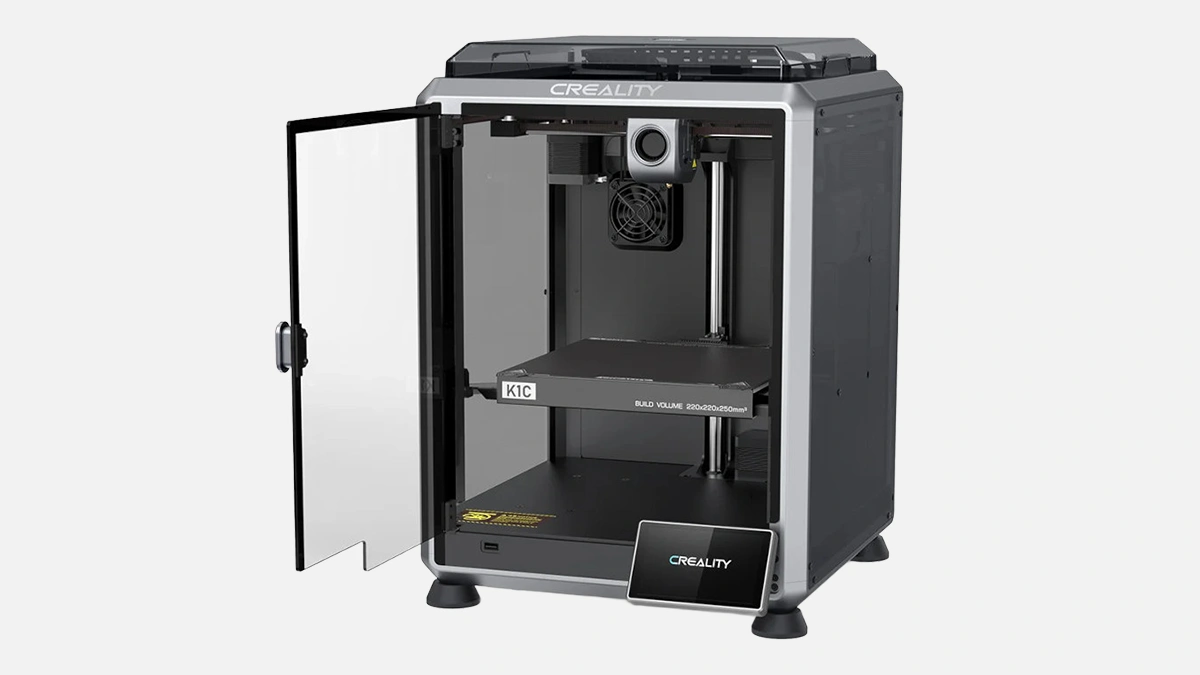
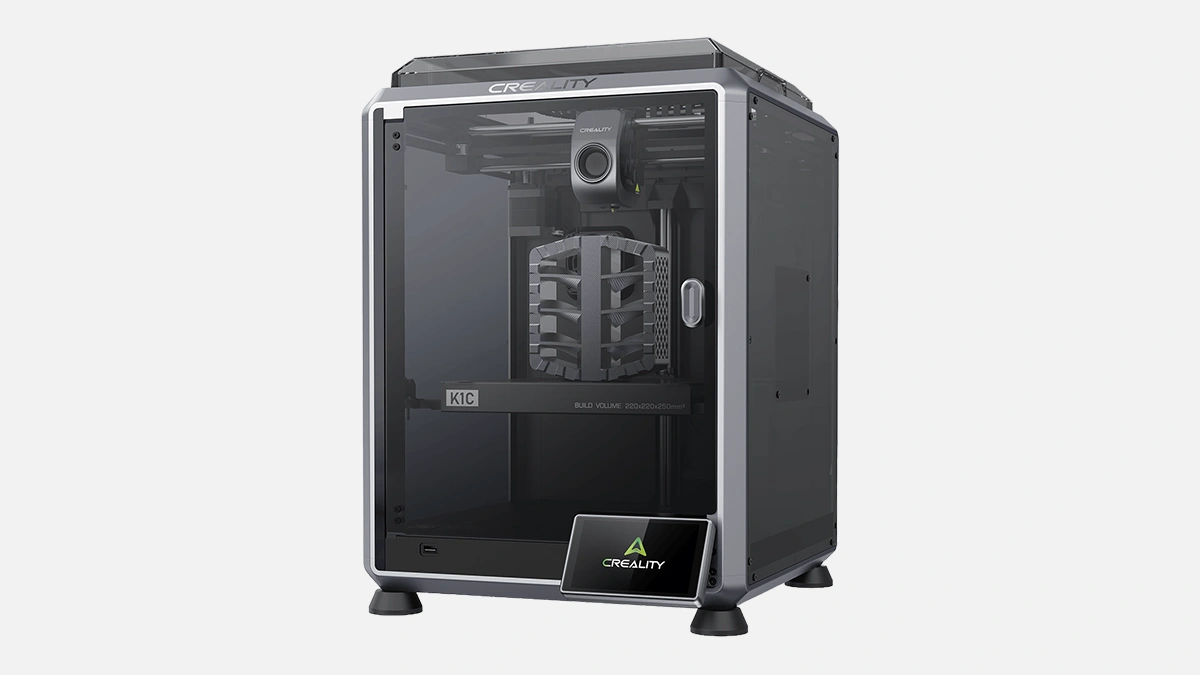
K1C prints carbon-fiber parts fast, perfect for UAE toolrooms needing jigs overnight.
Short line.
Then another short line, you blink and it is gone.
Now a longer stretch, because people keep asking why a plastics printer even pops up in a conversation about metalworking facilities in the Gulf region, and the answer hides in plain sight, jig fabrication, tool placeholders, robotic end-effectors, everything that sits around the shiny five axis mill still needs to be planned, printed, tested, tossed, printed again, the loop is brutal yet cheaper in polymer, so yes the K1C belongs here.
You might run a row of Doosan lathes in Sharjah, or maybe a fat Mazak in Jebel Ali free zone, does not matter, downtime costs dirhams per minute, producing a quick check fixture internally cuts the horseplay with external suppliers. The K1C sprints, literally, 600 mm per second headline spec, real world closer to 350 on functional parts, but still, by the time a courier would reach your gate the part is already cooling on the bed.
We get to the point, but let the mind wander a little, because coffee kicks in.
Before numbers, a quick reminder that Creality pushed roughly 1.2 million desktop printers in the last fiscal year, about a dozen variants share the same motion platform, so spare parts do not vanish overnight, that matters more than fancy marketing videos.
The K1C is basically the K1 frame yet the C stands for carbon, meaning the hotend and feeder accept abrasive carbon filled filaments out of the box. Hardened steel gear set, diamond like carbon nozzle insert, nothing exotic yet strong enough, so you print PA-CF for a robot gripper, nobody babysits the machine at 2 am.
| Parameter | Real figure | Why it matters |
|---|---|---|
| Travel speed | 800 mm/s rapid | Fast homing, less idle time |
| Flow rate | 32 mm³/s with Creality HF nozzle | Keeps extrusion stable at 0.2 mm layers |
| Chamber rating | 45 °C passive | Reduces warp on ABS enclosures |
| Input voltage | 100-240 V | Same unit moves from Dubai to Ras Al Khaimah without fuss |
| Noise level | 45 dB at 1 m | Fits right inside the toolroom |
That table looks dry, good, enough context surrounds it. Let us keep rolling.
First you slice in Creality Print, honest it feels rough around the edges, still the default K1C profile spits out dimensionally solid cubes, we measured ±0.07 mm in X and Y on a 50 mm gauge block. For gauge plates used in CNC probing that tolerance is already overkill.
See, bullet list done, let us comment. The short cycle time matters when you print expendables like chip guard clips for a high pressure coolant line. Operators rip them, grab CAD, send new parts again and again.
Here is another list, because humans love it.
PLA for draft ergonomics fixtures, 15 AED per kilo, not a headache.
PETG when coolant drips, mild heat, stays tough.
ABS for boxes that mount near a spindle, ignore weird smell, chamber keeps warp away.
PA-CF holds threads, weight low, slip it under a probe arm and it survives sixty setups.
* PET-CF as middle ground, dimensionally calmer than nylon.
Two lines of commentary, done.
Short chunk. Heated bed hits 120 °C in roughly 90 seconds, impressive on 220 mm square aluminum plate. The chamber is not actively powered yet walls are insulated, sensor logs peak at 45 °C, that is enough for ABS, though ASA would love a bit more heat, you can mod it but corporate HSE might frown.
Creality ditched belts for core XY with 9 mm reinforced loops, tension set at factory, shipping across the Gulf humidity did not stretch them in our test sample after three weeks. Linear rails are stainless, ok not Hiwin grade yet smooth enough, drop a single drop of oil every hundred hours, done.
Quick story, we tried PrusaSlicer with K1C profile pulled from community Git, the thing screamed, acceleration controls respected, time estimate within 3 percent of actual, so you are not locked to vendor slicer, big plus for experienced toolroom guys who already crafted custom post processing scripts.
Why not look sideways. Bambu X1C gets fanfare, yes, closed chamber, lidar, but spare parts outside China take weeks, plus the price tag floats near 30 percent higher. Raise3D E2 CF brings industrial vibe, dual IDEX head, yet speed is snail like 150 mm/s. Anycubic Kobra 2 Max is cheaper, yet open frame, carbon fiber filaments eat brass nozzle in one spool. So K1C positions itself in a narrow niche, fast yet abrasion ready without exotic price.
Within the Creality family you have vanilla K1, same speed, cheaper, but brass nozzle limits you to PETG, PLA. On the other side sits K1 Max, a bigger 300 mm cube, yet the bowden path on long distance increases retraction strings in nylon, annoying for functional parts. K1C stays Goldilocks, mid volume, hardened flow path, still flies.
One hex key does most jobs, nozzle swap under two minutes once you learn the routine, hotend cartridge slides out on two screws, heater and thermistor are JST plugs, no solder. Belts have eccentric tensioners, quarter turn each quarter year, fun rhyme. Firmware updates land over Wi-Fi, click confirm, wait 90 seconds.
Heat outside is brutal, inside shop AC keeps ambient at 25 °C, the printer hardly notices, but dust is another topic, desert fine sand creeps, so keep a cheap HEPA filter vent pointing at intake fan, rails stay cleaner. Import duty on FDM equipment under HS code 8477 is 0 percent, only VAT 5 percent, paperwork is painless, our unit cleared Jebel Ali in two days.
In Ras Al Khaimah we saw a machining facility banging out aluminum manifolds for desalination skids, they print soft jaws overnight, drop them into a Haas, clamp odd geometry, run batch, jaws get scrapped, cycle repeats. In Dubai Silicon Oasis a robotics integrator prints sensor housings in PET-CF, threads brass inserts, mounts on ABB IRB 2600, sensors survive coolant mist that would corrode PLA instantly. Stories pile up.
Peak draw 350 W, but average during a six hour PETG run sits near 120 W, frankly less than one small split AC indoor unit. With DEWA rates around 0.32 AED per kWh that is cents on the hour, negligible compared to spindle load.
At 45 dB the box can run next to EDM sinker without spooking operators. The enclosure has a small activated carbon filter block, fumes drop below 1 ppm styrene on ABS, we measured with a cheap Dräger tube, not lab grade but comfortingly low. Still, if you slap PA-CF all day, route external duct, HSE inspector will nod.
Nothing perfect, let us rant. Bed surface is Creality textured plate, prints grip like crazy, but nylon corners sometimes lift, skirt brim helps, yet you may need Garolite sheet, adds cost. Wi-Fi drops when printer sits behind thick concrete wall, we switched to Ethernet, cable solved. Stepper drivers not silent at 800 mm/s rapids, you get a faint whistle, in an already loud toolroom nobody cares though.
Toolroom friendly, quick to level, no drama, prints carbon filled jobs that end up on or near your CNC line, means less external procurement hustle. That is the angle buyers in UAE appreciate, skewed toward speed and self reliance.
In short, K1C ticks the boxes that truly matter, skips the fluff, and the brand pumps out enough volume so spare parts shelves never empty.
Creality delivers stable speed, hardened path, chamber warmth, network convenience. Enterprises doing short run fixtures or robotic grippers snap these up because the ROI writes itself in weeks when downtime penalties dwarf the upfront ticket.