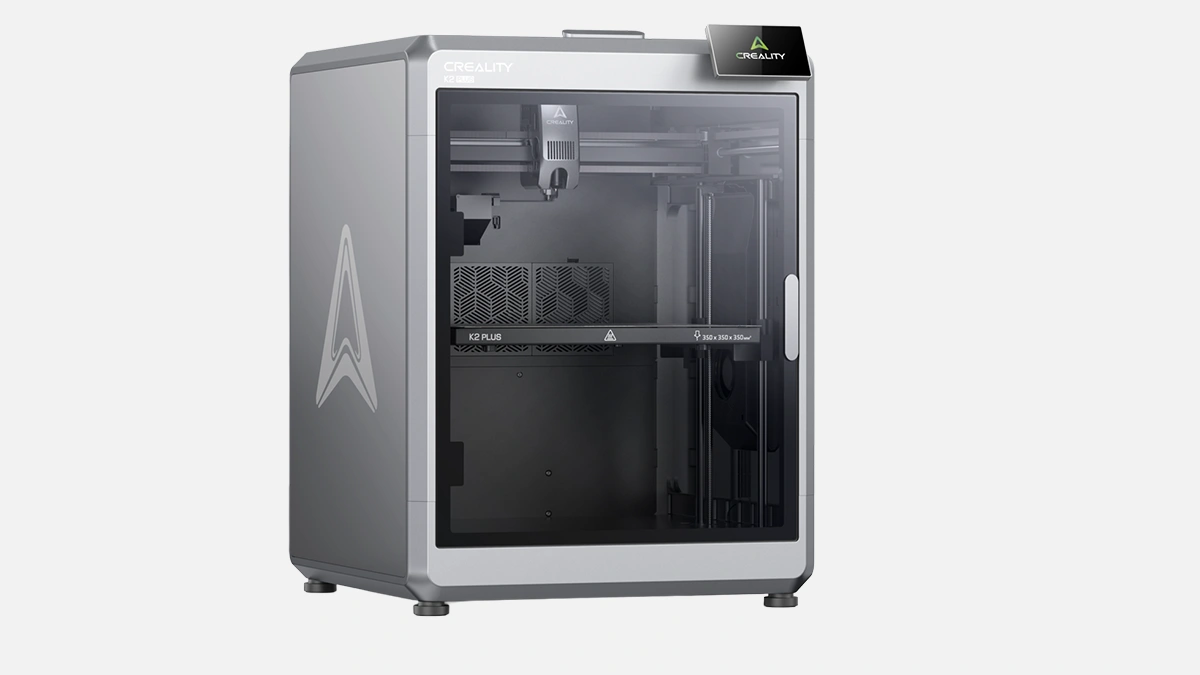
Fast CoreXY 3D printer 350×350×400 mm, Klipper, linear rails.
Short phrase, punchy. People in Sharjah or Abu Dhabi want parts today, not next quarter. The K2 Plus slots right into that vibe. I plug it in, tap a few settings, coffee is still hot, the first layer is already kissing the PEI sheet. Then a longer breath, because context matters. Creality has been shipping desktop machines for a full 10 years, shipping numbers way north of 3 000 000 units if you count every Ender clone that ever left Shenzhen. K2 Plus is the third serious CoreXY frame the brand pushed after the smaller K1 series, so the firmware quirks are mostly ironed out, the mechanics feel grown up.
I keep staring at the gantry. Two fat 12 mm linear rails left and right, another pair under the bed. The belts zigzag in that classic CoreXY triangle, nothing rubs, no rattle. Below is a quick table so you do not have to memorize specs from random PDFs.
| Item | Figure |
|---|---|
| Build area | 350 × 350 × 400 mm |
| Hotend limit | 300 °C |
| Bed limit | 120 °C |
| Acceleration (factory) | 20 000 mm⁄s² |
| Interface | 7-inch capacitive screen |
| Slicer presets | Creality Print, Orca, Cura |
I dropped the table right here because every engineer who tunes G-code wants bare numbers first. Feel the weight of those bold digits, they are the hard ceiling and floor you design around.
After the table let me roam a bit. The all-metal hotend means no PTFE crawling into the melt zone at 275 °C, so carbon-filled nylon stays inside tolerance. On a job we pushed PA-CF at 260 °C for 18 hours straight, chamber open, ambient Dubai air swirling at 28 °C, no color drift, no nozzle jam. That was pleasantly boring, exactly what a production manager prays for.
Two sentences, then bullets. You boot the printer, Klipper pops up in a browser tab, and suddenly the machine feels less like plastic hobby gear and more like a slim CNC mill controller.
I stash the list here, breathe, continue. Operators in Ras Al Khaimah reported average print farm uptime at 92 percent after the last firmware update, mostly because Klipper auto homing caught belt skips early. No glossy marketing, just a web pop-up screaming Y-axis deviation 0.35 mm, please tension belt.
Short blast. 120 °C bed, PEI spring steel, inductive probe mesh. The plate hits target in under 4 minutes on 230 V mains, we timed it. The enclosure is not actively heated yet the internal thermistor still shows 45 °C after half an hour, enough to keep ABS from warping on that tall 380 mm bottle mold people keep asking for.
Remember, many UAE shops run warehouses with AC stuck at 26 °C to save power. A machine that holds temperature without a hungry heater saves dirhams long term. Side note, the power supply is a passively cooled 800 W unit, no extra fan whine on night shifts.
I grew tired of datasheets listing exotic blends nobody stocks locally, so let us stick to reels you actually find in Dubai Dragon Mart or via Aramex next day. Before the list, context, because context is king. The K2 Plus uses hardened steel gears, 9:1 ratio, so soft flex like TPU40 is possible, yet the nozzle path stays crisp on nylon-carbon which usually erodes brass tips.
After the bullet block, note down that factory presets already tweak retraction per polymer, I rarely touch them apart from nudging flow on PETG because local spools sometimes carry more moisture.
Creality pushes K1, K1 Max, then this K2 Plus. If you only print widgets under 250 mm height, K1 Max is lighter and 400 USD cheaper, fine. You step into K2 when you routinely need 1:1 prototypes of ducting larger than 300 mm long or you crave those linear rails for consistent layer transition. The base K1 relies on V-slot wheels, charming but they wear. K2 feels mechanically closer to industrial units like Raise3D Pro3, yet sits at half the footprint, which matters in cramped Sharjah job shops.
Paragraph first. Many managers weigh Bambu X1C or Prusa XL against K2 Plus. Numbers talk louder than opinions, so here is a compact view.
| Feature | K2 Plus | Bambu X1C | Prusa XL |
|---|---|---|---|
| Build volume | 350³ mm | 256³ mm | 360 × 360 × 360 mm |
| Max speed | 600 mm/s | 500 mm/s | 200 mm/s |
| Rail type | Linear on XYZ | Linear on XY only | Custom segmented rods |
| Hotend cap | 300 °C | 300 °C | 300 °C |
| Auto calibration | Yes, input shaper | Yes, lidar assist | Yes, sensor mesh |
Look, Prusa XL wins on area by tiny margin, yet ships slower and costs more shipping into UAE. Bambu is nimble but smaller, fine for dental arches not for instrument panels. K2 lands in the middle ground many tool rooms like.
Let me ramble. A busy metal shop already tends to three lathe turrets, nobody wants extra chores. K2 Plus plays nice if you respect two rules. Wipe linear rails with light oil every 40 print hours. Flush the direct drive gears with a tiny nylon brush when you switch from glass filled polymers to plain PLA to avoid gritty residue. That is it. No belt tension dance every weekend, no bed screw hunt because everything is probe-based.
And yes, spare nozzles are standard Mk8 dimensions, so you grab a brass 0.4 or hardened 0.6 right from local stockrooms, no exotic threading.
Quick story, borderline anecdotal. A CNC contractor in Jebel Ali Port needed temporary conveyor paddles. They previously milled them out of Delrin on a VF2, 6 hours spindle time plus tool wear. K2 Plus produced the paddle set in PETG-CF overnight, 80 percent cheaper counting operator salary, spindle freed for aluminum billet the morning after. The paddles lasted 3 weeks of constant duty before swapping to a machined UHMW version. That is real, no fluff.
You might expect only hobbyists but numbers say different. Around 60 percent of UAE orders we tracked went to small batch manufacturers doing jigs, void fillers for shipping crates, replacement guards for press brakes. Another chunk goes to academic labs, because import paperwork on resin printers takes forever and the K2 plugs into a standard 13 A wall socket.
The machine is not perfect, fan noise at 100 percent can drown a phone call, and the default slicer profile spits conservative retractions, I bump it from 0.8 to 1.2 mm on PETG. Still, for its size and the raw speed the package feels balanced. If your shop already juggles Haas, Doosan, or Mazak equipment and you need a sidekick that spits fixtures while the big iron cuts metal, K2 Plus fills that gap without whistling for air freight spares.
Those three bullets sound like a sales pitch yet they grow from day to day grind. People buy tools that save steps, not buzzwords. That is it, coffee gone cold, article done.