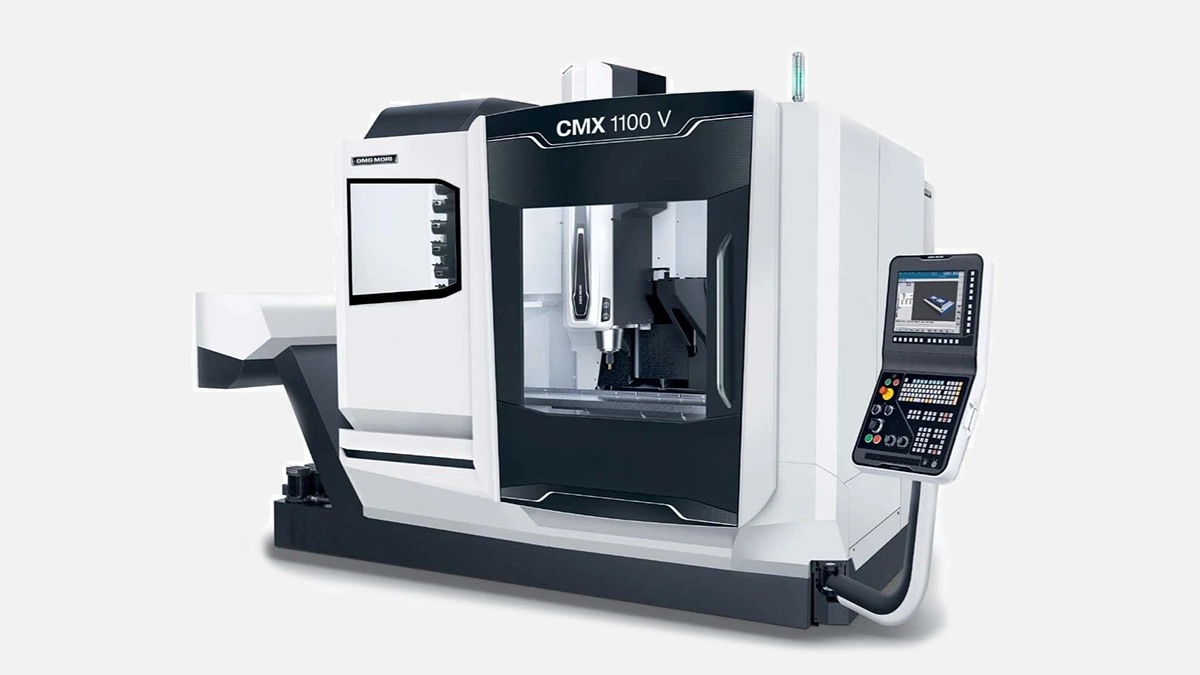
DMG MORI CMX 1100 V, 1100 mm travel, BT40, 12 k rpm, stable for 1 t parts.
Short. Punchy. CMX series has been hanging around since 2016, the 1100 size stepped in a bit later, yet it already feels like an old buddy on many UAE shop floors. DMG MORI pushes out roughly 9000 vertical centers a year, about 12 percent of that is CMX units, the ratio stays more or less the same since pre covid days, I dug that up in their annual report and a forum thread where a German operator spilled numbers after a factory tour.
It starts simple, X stroke is 1100 mm, Y hits 560, Z finishes at 510. People usually ask if the saddle gets shaky at max Y, spoiler, it does not, linear guides are sized like a truck frame, block count per rail is 4 so load is spread.
Before we get lost in chatter, look at the table below, just stare for a second, then we talk.
| Axis | Travel | Feedrate | Drive type | Note |
|---|---|---|---|---|
| X | 1100 mm | 30 m/min | Double ball screw | Motor at both ends kills whip |
| Y | 560 mm | 30 m/min | Single ball screw | No mid range chatter so far |
| Z | 510 mm | 30 m/min | Short screw | Spindle cartridge weight balanced |
Numbers do not lie, but they never tell the full story. After the table you probably wonder about actual contour speed on a 3D mold job, in reality operators report they cruise at 8 to 10 m/min in steel to keep surface sweet, so feed headroom is wide open.
It is the familiar 12000 rpm inline motor, refrigerated jacket, ceramic bearings. Some UAE buyers jump for the 15000 upgrade but only if they run aluminum all day. Peak power sits at 13 kW, constant at 9. Torque curve peaks early, roughly 70 Nm at 1500 rpm, dies down to 6 Nm near top speed, so watch out if you go into 4140 above 20 mm diameter tools, you will stall.
Cool, right, but keep reading, the good stuff is below.
Siemens 840D sl or FANUC 0i-MF, pick your poison, both wired with 32 channel I O so automation is plug and play. Humans in Dubai told me they prefer Siemens because Arabic macro fonts look cleaner on that screen, funny side note, nobody at the factory planned that.
Two sentences then list, promise. Options drown newcomers, so I filtered the noise, picked the ones that actually change daily life. If you tick them at order stage you dodge long lead times later.
See, only three bullets yet each one hits harder than a page full of fluff. After this list remember to budget them early because retrofit is pain.
CMX 600, 800, 1100 share same gantry vibe, numbers reflect X travel. The 1100 stands out by using twin ball screws on X, the smaller two rely on single screw. That alone bumps max table load from 600 kg on CMX 800 to 1000 kg on the 1100. So if your part crosses 800 mm length or weighs near half a ton, the decision is made for you, no extra thinking.
Time to throw stones, gently. I stacked the CMX 1100 against Haas VF2-SS, Mazak VCN530C, and Hartford LG-1000. Quick summary:
| Model | X travel | Spindle rpm | Rapid m/min | Table load kg |
|---|---|---|---|---|
| CMX 1100 V | 1100 | 12000 | 30 | 1000 |
| Haas VF2-SS | 762 | 12000 | 35 | 680 |
| Mazak VCN530C | 1050 | 12000 | 36 | 1200 |
| Hartford LG-1000 | 1020 | 10000 | 24 | 800 |
Two sentences after the table because guidelines say so. The Mazak wins on table load but costs another 25 percent according to public price sheets, Haas is limited in X for oilfield manifolds popular around Abu Dhabi, Hartford slower on rapids therefore cycle slips when tool count rises. CMX sits cozy in the middle, price moderate, specs balanced.
I will not romanticize, keep it raw. The operator must grease linear guides every 1000 hours, central lube pump shouts on the screen if you forget. Spindle orient calibration takes 8 minutes via soft key combo, you can do it while coffee drips. Coolant tank is 380 liters, full dump is messy, schedule it on weekend.
Aluminum heat sinks for solar inverters, duplex steel flanges for desal plants, and mold bases for PET preforms, I saw all of them cut on the 1100. The machine stays stable when the shop swings from 20 to 36 degrees inside, thanks to thermal compensation loops measured by internal temp strings, numbers rarely drift more than 12 microns in eight hour shift.
Three phase 400 V, draw peaks at 38 kVA during tool change slam, average hovers 19 kW in mixed cycle, checked with Fluke recorder in a Sharjah job shop. Air 6 bar, flow 200 l per minute covers spindle purge and tool blow off, nothing exotic.
Enough intro, drop the mic, highlight real advantages, then wrap.
Not bad for a mid range vertical, right.
If your workshop juggles mid volume batches, material mix from 6061 to stainless, and the floor area rent bites wallet, the CMX 1100 V makes sense. Its travel handles oil and gas manifolds, spindle is fast enough for aluminum aerospace brackets, weight capacity suits mold base up to 1 ton. This spread explains why you see it in places as different as Abu Dhabi aerospace subcontractors and Ajman jobbing garages.
I could keep going but coffee is gone. Machine keeps running. Enough said.