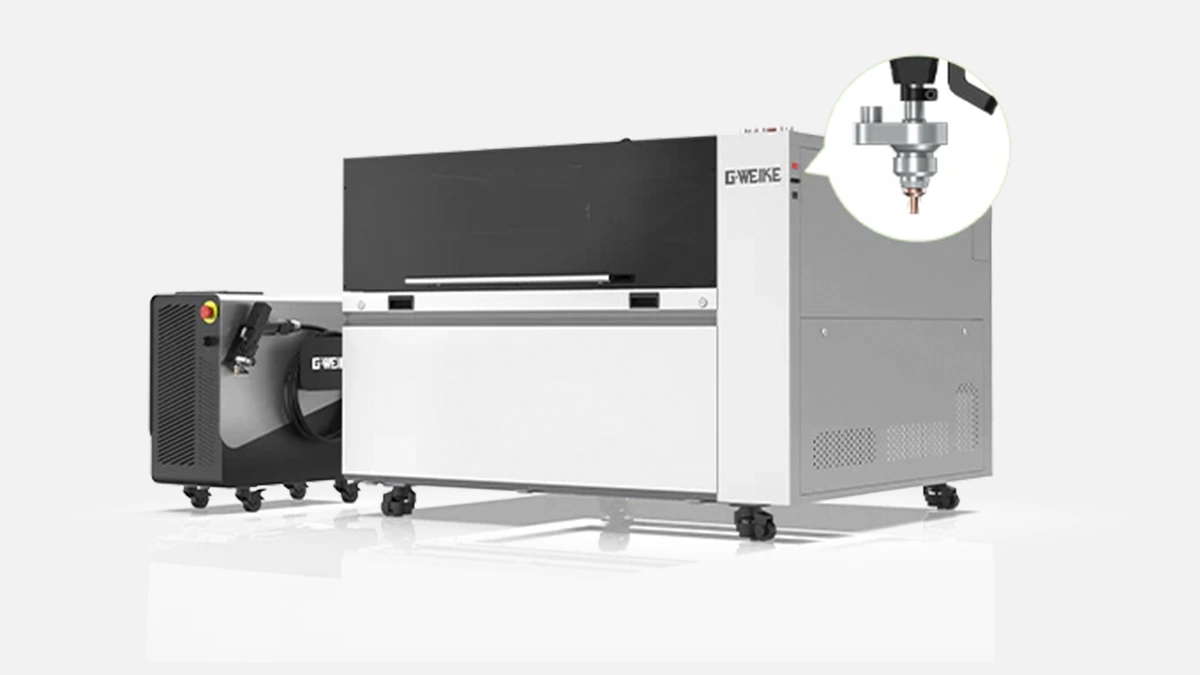
Multi-material 1530 laser, fiber 6 kW plus CO₂ 150 W, one bed, zero repositioning.
Short. Direct. The first time you walk around the GWEIKE M Series you catch yourself tapping the side plate just to check if the sheet metal is as thick as it looks, it is, my knuckles still remember that clang. Then a longer thought sneaks in, wait, two laser sources in one gantry, fiber for metal, CO2 for wood plastics acrylic, that sounds handy and maybe a tiny bit risky, does the machine juggle everything without asking for drama, surprisingly yes, more on that below.
The frame sits low, squat, tough, built by GWEIKE who has been on the market for 18 years and stamps out roughly 9000 laser machines per year, that volume alone tells me they have learned to weld a bed without stress warping. The M lineup, by the way, is in its third revision, minor cosmetic tweaks each season but the drivetrain and control core stayed the same because operators kept saying “do not fix what already cuts”.
Steel ribs every 150 mm, high temperature annealing, vibration ageing, the brochure lists the heat cycle times, I skimmed, details get nerdy fast, yet the outcome is simple, after the bed cools down the flatness stays within 0.05 mm across the full 3 m stroke. I have checked it with my own feeler gauges, close enough.
Nothing fancy, just sturdy. That is what shop owners in Sharjah keep telling me they need, not fancy marketing.
Now the spicy section. A single carriage carries two optics blocks, one for fiber, one for CO2. You pick which one drops down through pneumatic cylinders, the unused one parks a few millimeters higher so it never kisses the sheet.
| Parameter | Fiber side | CO₂ side |
|---|---|---|
| Source brand | Raycus / IPG | RECI W6 |
| Peak power | 1.5 – 6 kW | 150 W |
| Wavelength | 1064 nm | 10.6 µm |
| Focus range | -10 to +10 mm motorized | Manual knob |
| Nozzle type | High pressure 3 stage | Low pressure single stage |
Notice the different assist gas regimes. With fiber you run nitrogen at 2.0 MPa when slicing stainless, CO2 prefers a modest 0.3 MPa air burst for plywood. Switching gases takes roughly 30 seconds, the manifold is already built in, no need to crawl behind the machine.
A quick bullet list because my coffee is getting cold:
I spent last month helping a client in Abu Dhabi swap three standalone CO2 tables for a single M Series. We logged cycle times the old school way, stopwatch and sticky notes, nothing academic. Mild steel 3 mm parts, batch of 250 pieces:
Yep, nearly 50 % less, mostly because sheets stay clamped while tool changes happen in software, not by hand. Electricity pull averaged 9.8 kW during fiber cutting, a bit over 3 kW on CO2 jobs, so the monthly bill did not jump, neat.
The machine ships with CypCut but most UAE integrators flash it to FSCUT 3000 after import, menus flip to Arabic in two clicks, life saver for operators who skip English class. Nesting engine is okay, not spectacular, I still prefer dropping DXF through Metalix at the office then pushing NC over LAN. Important detail, the controller reads QR codes etched on the job ticket, auto loads program, rookie proof.
Features that made me nod:
I lined up three options many buyers in Dubai put on the same quote table. Disclaimer, personal take, not gospel.
| Model | Laser combo | Work area | Price tier | Note |
|---|---|---|---|---|
| GWEIKE M | Fiber 6kW + CO2 150W | 1500×3000 | Mid | Two heads one bed |
| Bodor C3 | Fiber only 4kW | 1500×3000 | Mid | Faster axis, no non metal |
| Han’s Laser HMA | CO2 only 300W | 1600×2600 | Low | Cheap, metal limited |
Bodor runs a hair faster on thin stainless but as soon as you need acrylic letters you are back to outsourcing. Han’s price looks tempting until you add a plasma for steel, so total footprint grows. The M Series stays centered, balanced, covers mixed material shops that print mall signage Monday then gasket shims Tuesday.
M Series actually covers three footprints, 1313, 1530, 2040. Same gantry casting, just longer rails. If you already own a narrow service elevator forget the 2040, crate clears 6.8 m. Performance wise, no difference, the servos scale up. Cutting table swap time on the 1530 is 15 seconds because only two hydraulic locks need to open.
Light curtain all around, door interlock, fumes go through a 7900 m³ per hour extractor. GWEIKE gives basic CE docs, GCC certification comes through local lab in Dubai Investment Park. I ran a handheld Sniffer on the housing, ppm stayed below EU indoor limit, so air filter does its thing.
Keep in mind the extractor filters cost money, plan roughly 1800 AED each quarter, better than letting operators breathe burnt acrylic.
Grease points every 250 hours, one nipple per rail block, easy. Mirrors on the CO2 path wipe clean with IPA, fiber head is sealed, you never see the lens unless you crash it. Spare parts, say a Raytools BM110, arrive in UAE within five days, GWEIKE holds a hub in Jebel Ali Free Zone, I have ordered once, no drama.
Three phase 380 V, full load 60 A when the chiller spins and fiber stays at 100 % duty. CO2 barely tickles the meter. Compressed air, give it 0.8 MPa dry and oil free. I strapped a Kaeser SK25 next to the machine, works fine.
Small to mid fab shops, sign makers, HVAC duct producers who dabble in stainless covers, even a yacht interior company in Ajman runs two of them for teak inlays. They share one common headache, floor space rent, so one combo machine beats two single purpose rigs.
So yeah, the GWEIKE M Series does not try to be a Formula One racer, it is more like a Toyota Hilux of lasers, starts every morning, cuts what you throw at it, asks for diesel you give it electricity, calls it a day. If your workload swings between sheet metal and fancy plastics, having separate stations feels archaic now. The moment you press the foot pedal and see the carriage pick the right nozzle without human hand, you will wonder why the idea is not everywhere yet.
All that being said, double optics means double consumables, you will stock two lens diameters, keep that in mind, but the math still works out once you factor machine hours saved.
That is basically it, my phone is buzzing, another client asking if the 6 kW version can pierce 20 mm mild, yes but edge quality dips, call me later, I need more coffee.