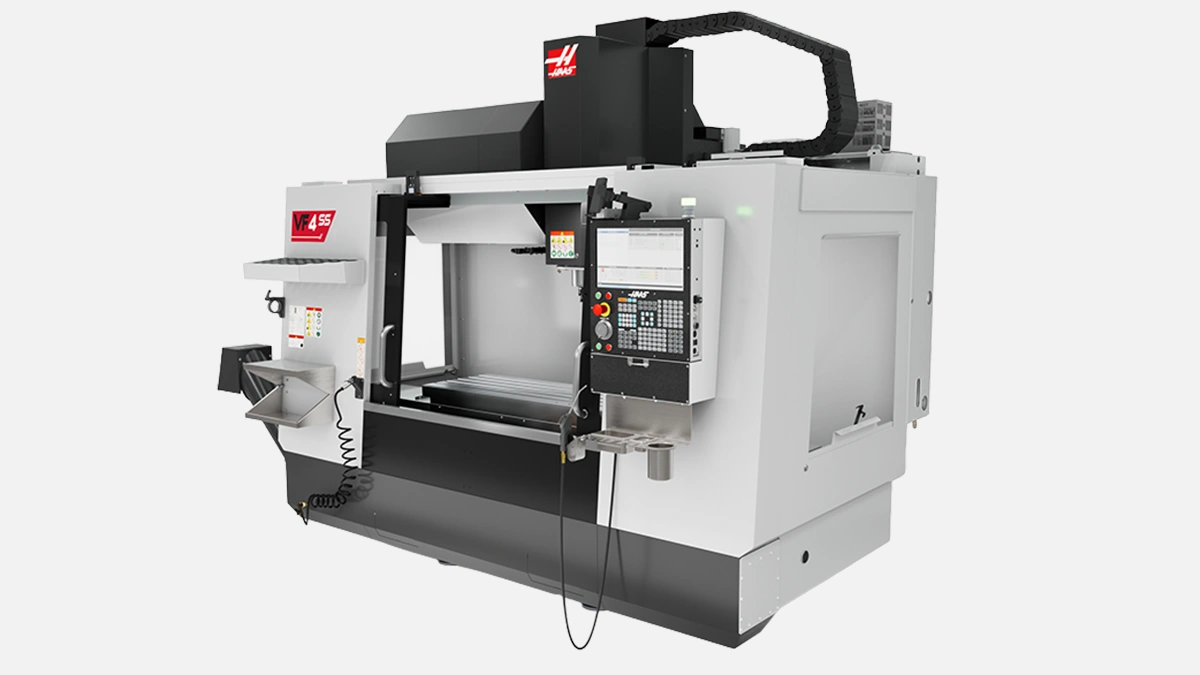
Mid-size Haas VF-4, 1270 mm X travel, 30 hp spindle, 30+1 tools, perfect for mixed-batch UAE shops
Short thought, right away. Big iron. Then a flood of details starts spinning in my head and I keep typing because somebody in Sharjah will surely ask why the VF-4, not the VF-3, and I better be ready.
Haas has been shipping vertical mills since 1988, pushing out roughly 18 000 machines per year these days, and the VF-4 sits in that sweet mid-sized pocket. Not tiny, not a floor-eater. Kind of the Corolla of machining centers, but way louder, coolant everywhere.
Numbers first, because the foreman always asks. X goes out to 1 270 mm, Y to 508 mm, Z hits 635 mm. On paper that feels boring, in the shop it means you can clamp a 450 mm tall manifold, skim the face, drill 200 holes and still have clearance for the probe. I saw a guy in Abu Dhabi loading a full differential housing, he still had 40 mm to spare under the spindle nose.
Below is the dry facts table. Skim it, screenshot it, stick it on the WhatsApp group.
| Item | Figure | Why it matters |
|---|---|---|
| Axis travels | 1 270 × 508 × 635 mm | Fits gearbox housings, valve blocks, food-grade molds |
| Table size | 1 321 × 457 mm | Two vises side by side, or a 4th-axis plus vise |
| Max part weight | 1 588 kg | Cast iron base plates without drama |
| Rapid traverse | 25.4 m min | Less dead time between ops |
| Spindle power | 22.4 kW peak | Push a 63 mm facemill in stainless |
| Tool pockets | 30+1 | Most jobs stay loaded for weeks |
| Machine mass | 6 804 kg | Sits stable on shop floors in Dubai heat |
That table barely scratches it. What matters is how the machine feels at the control when the clock is ticking and the operator has four pallets to run before iftar.
The standard 8 100 rpm spindle is fine for 18 mm end mills in tool steel. If you chase aluminum impellers, tick the 12 000 rpm option and ignore anyone who says it is overkill. Torque peaks at 122 N m around 2 000 rpm so roughing Inconel does not feel like torture. Belt drive, yes, but Haas finally fixed the whine on the last generation and the new vector drive keeps amps in check.
Two lines above are bragging numbers yet people keep asking for proof so there. After the bullet list, let us return to something less macho.
Biggish surface, 1 321 mm long, and the T-slots are aligned with the X axis so tramming a rotary is a half-hour job, not an afternoon. Weight rating, 1 588 kg, looks huge until you stick a plain 900 kg fixture and realize you already ate half the allowance. Common workaround? Spread the load, use aluminium subplates, breathe.
Here is what typically lands on that table in UAE job shops:
See the pattern, right, medium-batch, weird variety, the VF-4 handles all without complaining. That list over, back to prose.
Rapid at 25.4 m min is not Mazak-level lightning but feels snappy enough. Cutting feed tops at 15.2 m min. The control does not stall on 40 000 line programs if you switch to Dynamic Look Ahead 200 blocks. Old timers hated the early Haas Mocon loops, the Gen 4 drive smoothed it out.
Haas Next-Gen control is everywhere, which means operators who ran a VF-2 back in 2018 can press cycle start here with zero panic. Arabic, English, whatever, language pack loads in 90 seconds. USB in the front door, Ethernet on the side, DNC over Wi-Fi if you like living dangerously. The rotary wizard finally supports G93 inverse feedrate, hooray.
Important part, because every salesman will wave a catalog in your face. I cherry picked the ones that actually get ordered in the Gulf.
Yes there are more toys, but these four are the bread and butter. List done, moving on.
The VF line today counts 16 sizes. Think of them as S, M, L, XL. VF-2 is the pocket rocket, VF-4 the middle child, VF-7 the big guy. Compared to the VF-3, the VF-4 adds 200 mm X travel for roughly 350 kg extra mass. Against the VF-5 it loses a touch of Y reach but fits under lower ceilings, a big deal for older workshops in Deira where cranes stop at 3.8 m.
That question never stops. So a quick side by side, straight talk.
| Feature | Haas VF-4 | Doosan DNM 5700 | DMG Mori CMX 1100 |
|---|---|---|---|
| X travel | 1 270 mm | 1 050 mm | 1 100 mm |
| Spindle base speed | 8 100 rpm | 8 000 rpm | 12 000 rpm |
| Tool pockets | 30+1 | 30 | 30 |
| Control familiarity Gulf region | High | Medium | Low |
| Typical lead time UAE | 6 weeks | 14 weeks | 20 weeks |
| Upfront training cost | Zero for ex Haas users | Moderate | High |
Noticed the lead time row, right, Haas stocks frames in Oxnard and ships containers to Jebel Ali every month, that alone wins deals.
Heat, dust, sudden voltage dips, no drama here. The electrical cabinet has a derate curve up to 55 °C ambient, still passes load tests. Coolant system runs a plain 20 µm bag filter, cheap and everywhere in Dubai. Spare parts? The courier run from California lands in 3 days if you pay DHL, less downtime, less yelling from production.
Bullet points on what owners in Sharjah told me last Ramadan:
Again, anecdotal, yet real. And now back to wrapping up.
I could keep babbling but here is the gist. The VF-4 blends a roomy envelope, a gutsy spindle, and uncomplicated control. It rarely surprises you, which in machining is a compliment. That explains why furniture fittings, aerospace brackets, oilfield prototypes, all roll off the same casting. Companies picking the VF-4 are the ones juggling medium batches, quick changeovers and mixed materials. Aluminum this morning, 17-4 PH after lunch, no problem.
In short, you hit power on, wait 40 seconds for the control to boot, jog to home, load a program, coolant splashes, parts happen. End of story.