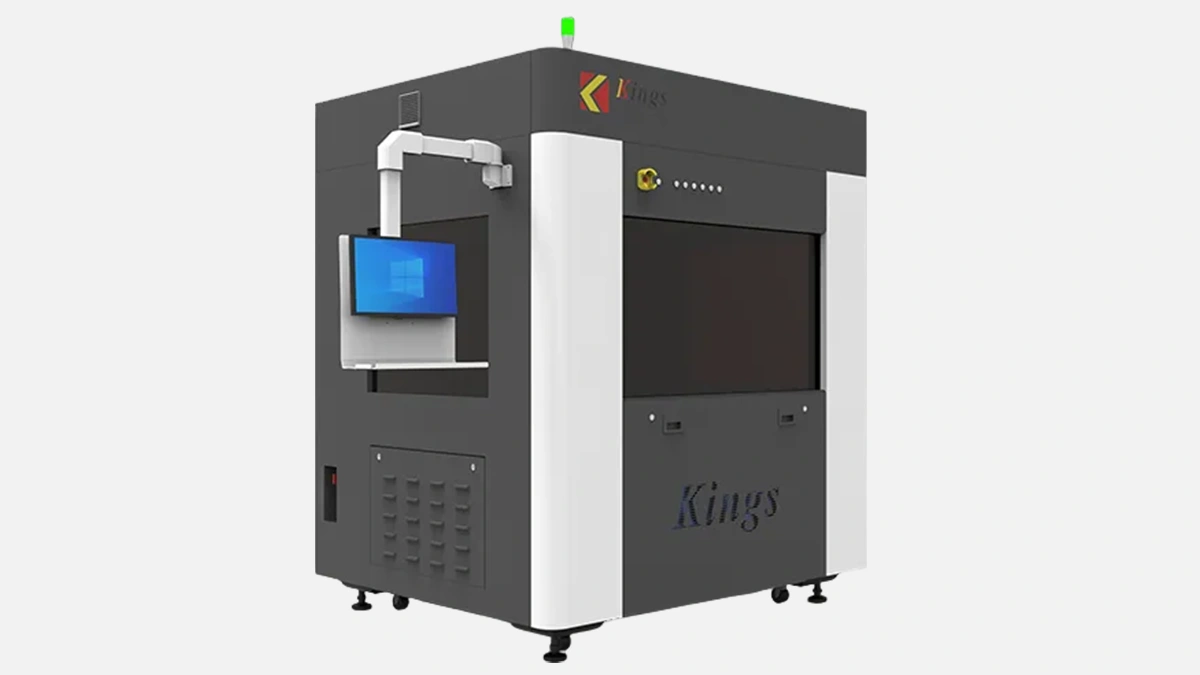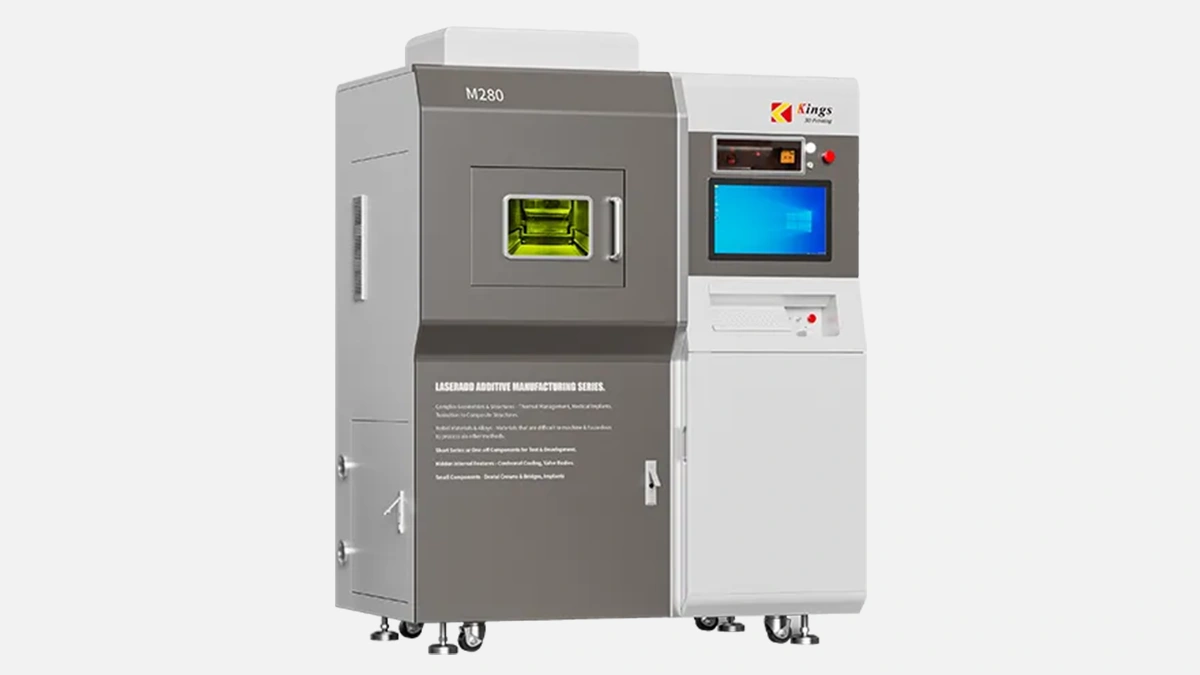
Kings SLM250 metal 3D printer, 250×250×300 mm build, 500 W laser, compact footprint for UAE production lines.
Short line, sharp. Kings SLM250, metal powder bed fusion rig straight from Shenzhen, takes space in the shop like a mid-size CNC mill. Then a much longer thought pops in, wandering through humidity in Sharjah warehouses, the smell of fresh powder, the soft hum of inert gas pumps and, right, the feeling that this box might finally let you print Ti64 brackets without subcontracting to Europe, saving weeks, saving nerves, probably saving that customer who always calls on a Friday.
Before diving into dusty anecdotes, a tidy table helps keep the brain focused.
| Spec | Value |
|---|---|
| Build envelope | 250 x 250 x 300 mm |
| Laser source | IPG YLS 500 W fiber |
| Layer height | 0.02–0.05 mm |
| Peak scan speed | 8 m/s |
| Recoater stroke | 250 mm/s |
| Oxygen level | < 0.02 percent |
| Footprint | 1500 x 900 x 2000 mm |
| Net weight | 1200 kg |
| Power draw | 7 kW |
| PLC | Siemens 840D based |
The digits look dry, sure, yet every one of them matters when the CFO asks why the power bill jumped last month.
People read 250 x 250 x 300 and instantly imagine solid blocks occupying the whole cube, but real life, as usual, is messier. You lose some height to support removal, you might rotate a part to dodge spatter, you may even split geometry to avoid warping. Still, compared with the smaller SLM150 sibling, the freedom feels luxurious.
Stacking brackets three high, counting the recoater sweeps, you grasp how the calendar shrinks.
Sentence snapped, new track. Warping, the eternal enemy, sneaks in after 200 layers. Pre-heat the plate to 200 °C, slow the contour, watch the thermal camera, curse politely, move on.
Kings claims they ship the machine with an IPG unit rated at 500 watts, single mode, 1064 nm. Some shops in Ras Al Khaimah swap to 700 W aftermarket heads, warranty gone, productivity up, choose your poison. What truly counts is the galvanometer set, sitting above, flinging the beam across the powder at up to 8 m per second. Mirrors stay water cooled, a small chiller sits behind the left panel, pushes 3 liters per minute of glycol mix. Ignore it for a week, sludge builds, focus drifts, part density drops, you learn discipline quickly.
Titanium alloys, maraging steel, Inconel 718, AlSi10Mg, even copper if you babysit the atmosphere. Argon is the default shield gas, nitrogen falls back for cheaper steels, UAE suppliers truck both in 50 liter bundles every morning. A friend at Dubai Investments Park runs Ti64 exclusively, uses 45 microns median grain, replaces sieves every 300 hours. He swears porosity stays under 0.3 percent if oxygen never crosses that 0.02 threshold.
Two lines after the list, the story keeps rolling, because numbers without context feel like cold oatmeal.
A quick side by side helps boardrooms.
| Model | Build volume mm | Laser W | Footprint mm | Weight kg |
|---|---|---|---|---|
| Kings SLM250 | 250 x 250 x 300 | 500 | 1500 x 900 x 2000 | 1200 |
| EOS M290 | 250 x 250 x 325 | 400 | 2500 x 1300 x 2200 | 1700 |
| Renishaw AM400 | 250 x 250 x 300 | 400 | 2200 x 1200 x 2200 | 1550 |
| Farsoon FS271M | 275 x 275 x 340 | 500 | 2140 x 1200 x 2100 | 1650 |
Kings lands lighter, sips less power, yet matches laser grunt. For shops where floor space costs dirhams by the square meter, that matters more than marketing gloss.
The manufacturer sits on the market since 2013, sells roughly 600 metal systems a year, at least per trade-show chatter. The SLM line offers three sizes: SLM150, SLM250, SLM500. The 150 gives a 150 mm cube, mostly for dental labs. The 500 boasts a monster 500 mm square plate, but needs a ceiling crane and a dedicated transformer, not realistic for many SMEs. SLM250 therefore feels like the middle child everybody secretly likes. Firmware identical across the trio, spare parts overlap around 60 percent, meaning your maintenance shelf stays sane.
No babying, no machine survives Dubai dust storms without filters. Monthly routine, swap HEPA, vacuum the overflow hopper, calibrate the oxygen sensor, run the laser alignment jig for 15 minutes. Quarterly, pull the recoater blade, check flatness, if the silicon edge wears more than 0.05 mm replace, costs pocket money compared to a failed build.
Still, things break. A customer in Abu Dhabi reported a stuck build plate lift after 1800 hours. Culprit, a cheap limit switch. They replaced it in half a day, machine back online before Iftar. Stories like that remind everyone the hardware is mechanical first, electronic second, mystical never.
Energy tariffs stable, yet argon runs heavy on the bill, the closed loop recirculation inside SLM250 cuts consumption roughly in half versus older open systems. Heat exchangers rated at 3.5 kW keep the chamber under control even when ambient climbs to 42 Celsius, typical August in Jebel Ali. That alone convinced one marine repair yard to add two units, printing propeller blades on night shift when grid demand softens.
Kings SLM250 brings a balanced envelope, solid 500 W laser, compact footprint, lower maintenance headaches, a combo that clicks with job shops tired of shipping parts abroad. The machine does not promise miracles, it simply works, layer after layer, if you feed it clean powder and do not ignore the checklists.
Two hundred words later, breath out, coffee cools, file saved.