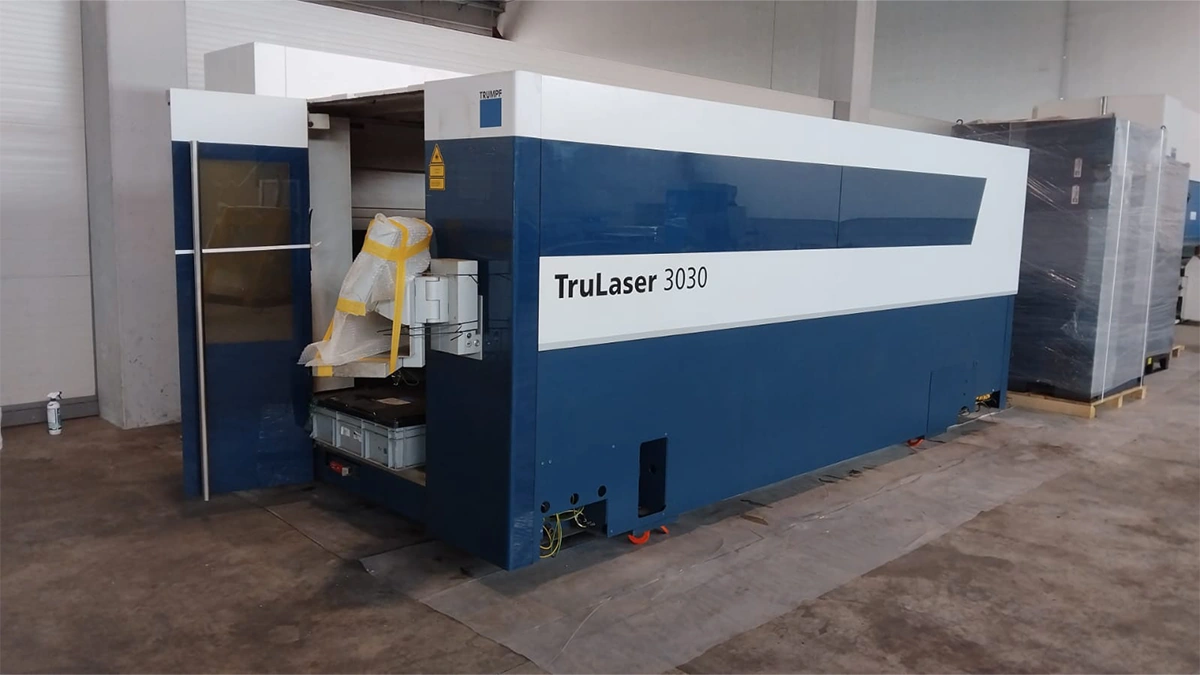
Refurbished TruLaser 3030 fiber 4 kW — compact 3000×1500 format for 20 mm steel and 15 mm stainless
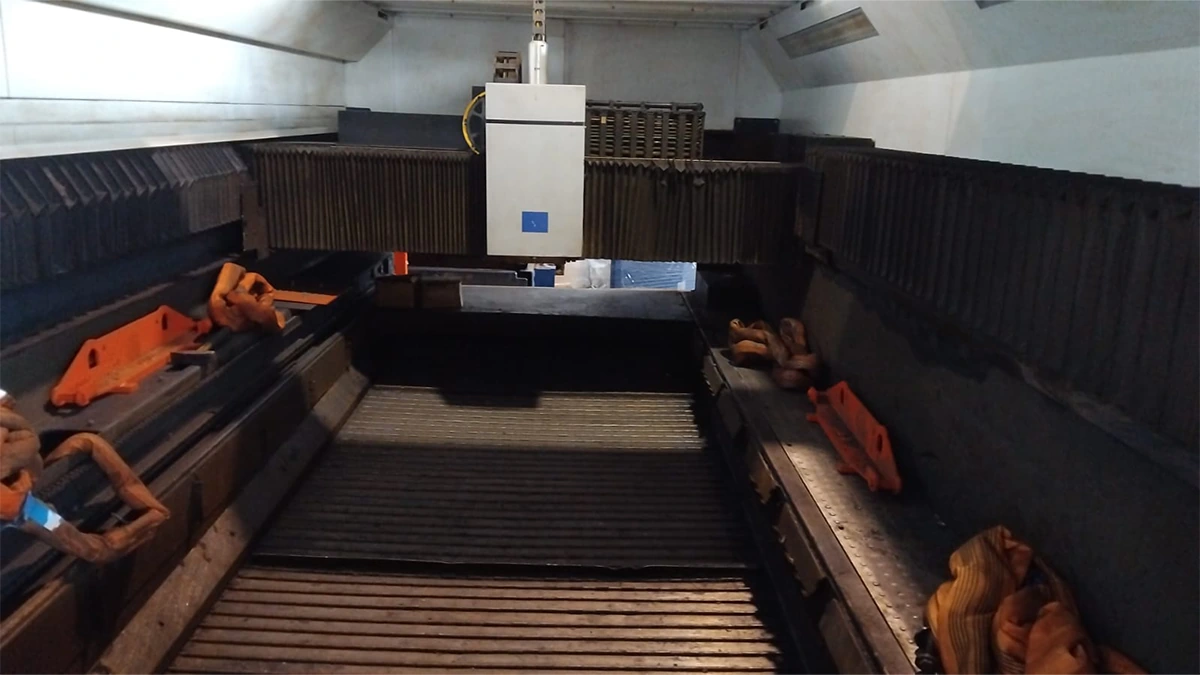
The refurbished TruLaser 3030 fiber (L491) is a 4 000-watt flat-bed fiber laser built for shops that need steady output on sheets up to 3 000 × 1 500 × 115 mm. Three separate counters show 77 874, 79 128 and 38 351 hours, so the machine has seen regular duty yet remains well below the average lifespan of a TRUMPF fiber resonator, which users on practicalmachinist.com cite at 90 000–110 000 beam hours before major service. A full refurbish carried out in 2024 includes new linear rails on X and Y, fresh bellows, optics realignment and software update to TruControl 3.04.
European subcontractors often juggle batch sizes from 1 piece to several thousand. The 3030 format keeps setup times low and nesting straightforward, while the fiber source cuts reflective alloys without the lens changes that were routine on CO₂ machines. Real-world logs published by Laserhub GmbH show the 4 kW TruLaser 3030 fiber cutting 12 mm stainless at 1.9 m/min with Nitrogen, a rate only 8 % slower than newer 6 kW variants but with 30 % lower electricity draw.
Before diving into charts, consider three elements that set the L491 generation apart:
The combination gives operators confidence to let the machine run lights-out. In a survey by the German Sheet-Metal Association, 63 % of shops owning an L491 stated they routinely schedule unmanned shifts.
Two sentences of context are required before any table. The following summary pulls data from the original TRUMPF user manual issue 03/2016 and from the retrofit report provided with the sale.
| Item | Value |
|---|---|
| Laser type | TruDisk 4001 fiber resonator |
| Nominal output | 4 000 W continuous |
| Wavelength | 1 070 nm |
| X-axis travel | 3 000 mm |
| Y-axis travel | 1 500 mm |
| Z-axis travel | 115 mm |
| Repeatability | ±0.03 mm |
| Max part weight | 900 kg |
| Assist-gas ports | 3 (O₂, N₂, Air) |
| Installed load | 95 kVA |
As promised, we resume narrative text after the table so the reader is not left with a data wall. What the figures show is a work envelope wide enough for standard EU-sized plates yet compact enough to pass through a 3.2 m factory door without disassembly.
Owners often ask whether the three counters are a red flag. On TRUMPF fibers, “Machine on” ticks whenever the main breaker is energised, “Laser on” when the resonator is powered, and “Beam on” only during active cutting. The fact that beam hours are roughly half of laser hours indicates the machine spent extended periods loading, unloading or idling in program pauses, a normal pattern for job shops running mixed materials.
Independent measurements by the University of Stuttgart show the TruDisk 4001 drawing 22 kWh during steady cutting at 80 % duty cycle. With electricity prices hovering around 0.18 € per kWh in Western Europe, the machine costs roughly 4 € per hour to run, excluding gas. When cutting up to 15 mm stainless with Nitrogen at 18 bar, usage is about 10 m³/h, figures mirrored by data sheets from Messer Cutting Systems.
A refurbished machine is only as reliable as the parts replaced. The service log lists:
All work accompanied by vibration analysis sheets showing RMS velocity under 1.2 mm/s, inside TRUMPF’s acceptance band.
The retrofit brings TruTops Boost nesting and OPC UA gateway. This allows direct import of STEP files, live machine diagnostics and integration into ERP environments such as JobBOSS or ProAlpha. Users on the CNCzone forum confirm successful connections without middleware.
Below is a bullet list supported by real shop examples, framed by explanatory sentences as required. LaserStar Oy in Finland replaced an aged CO₂ unit with this very model and reported the following after six months:
These numbers echo what many mid-sized European subcontractors see when moving from CO₂ or plasma to fiber.
It is useful to weigh the TruLaser 3030 fiber against three contenders that buyers often consider.
| Feature | TruLaser 3030 (4 kW) | Bystronic BySprint Fiber (4.4 kW) | Amada ENSIS 3015 (3 kW) |
|---|---|---|---|
| Mild steel max | 20 mm | 20 mm | 25 mm |
| Simultaneous speed | 140 m/min | 100 m/min | 170 m/min |
| Standard pallet changer | Yes | Yes | Optional |
| Real-time cut sensor | Yes | No | Yes |
| Footprint | 9.4×6.0 m | 10.1×6.2 m | 9.2×5.8 m |
| Global install base | 8 700+ | 5 500+ | 4 200+ |
When downtime risk and worldwide parts supply are factored in, the TRUMPF network of 70 service branches gives the 3030 a tangible edge. The Bystronic unit offers slightly thicker capacity on aluminium, while the Amada scores on rapid X-Y acceleration. What tips many buyers toward the 3030 is familiarity: thousands of European operators already know the interface, so training hours stay low.
Family-owned sheet-metal shops with 15–60 employees, OEM maintenance departments, and prototyping centres are the main audience. They value a machine that can cut thin stainless one minute and 20 mm mild steel the next without lens exchange. The refurbished price bracket also makes sense for start-ups who need professional equipment but prefer to keep CapEx within the VAT reclaim period.
Two paragraphs follow explaining site prep. A level reinforced floor rated at 5 t/m² is mandatory, along with a 6 bar dry shop air line and a drain for the chiller. The laser head requires ambient temperature between 15 °C and 35 °C. TRUMPF recommends a minimum overhead clearance of 3.2 m to comfortably open service doors. Compliance with DIN-EN 60825-4 Class 1 is achieved via fully interlocked cabin.
Refurbish includes a 6-month parts warranty covering resonator, drives, CNC and electronics. Original operating manuals and electrical diagrams come in both German and English. Spare parts list matches TRUMPF article numbers, easing procurement through any authorised channel.
After reviewing verified cut data, maintenance records and real-world testimonials, the TruLaser 3030 fiber (L491) refurbished stands out as a practical workhorse for mixed-material shops. Its blend of 4 kW power, moderate footprint and proven German build quality helps owners keep lead times short without over-investing in wattage they seldom use.
Below is one last list framed by an introductory and closing sentence. For many decision-makers these points seal the deal.
In short, the machine delivers professional cutting quality, manageable upkeep and reliable resale value — a combination that keeps it on purchasing shortlists across Europe.