Refurbished 3 kW 5-axis TruLaser Cell 8030 cuts 3000×1300×600 mm hot-formed parts with low hours
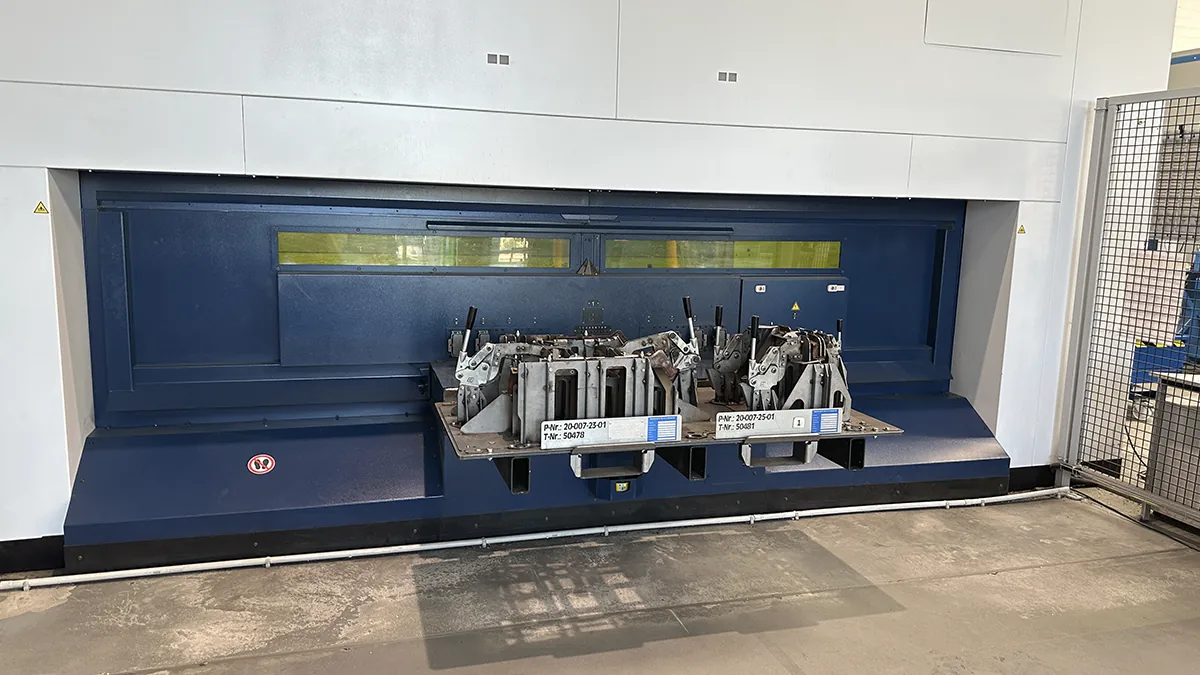
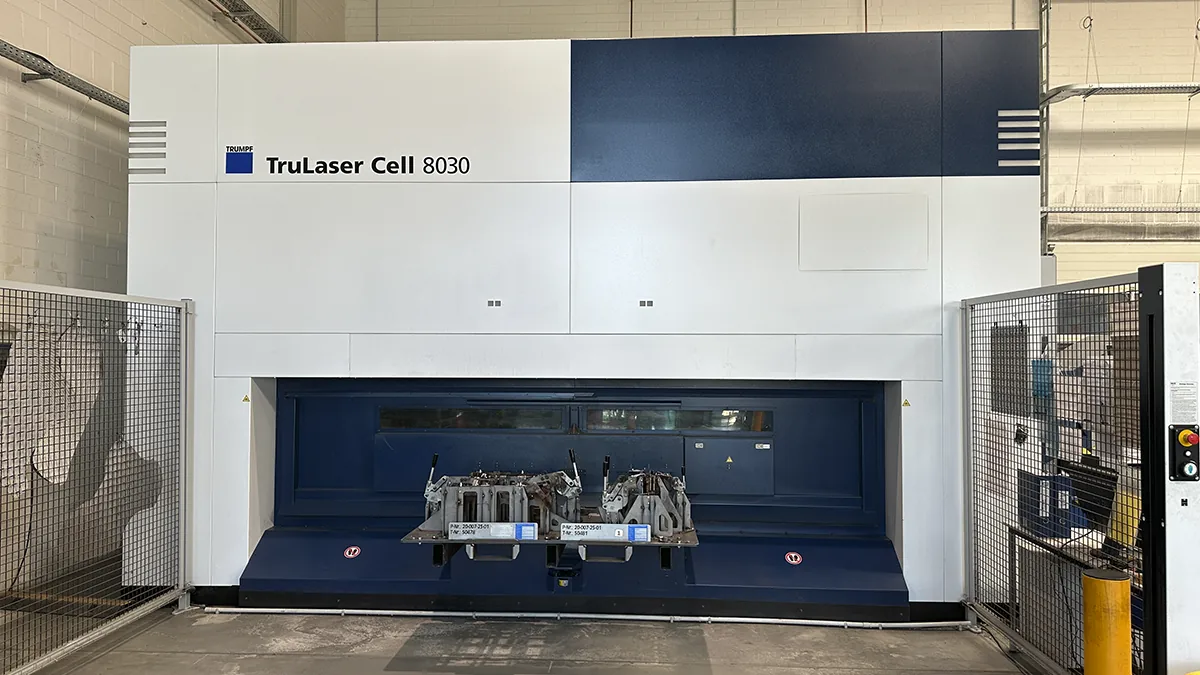
The TruLaser Cell 8030 fiber (L60) comes from the TRUMPF multi-axis family that has dominated the 3-D laser-cutting niche for over 15 years. This particular unit has been factory-refurbished, re-certified and test-cut on automotive door-ring blanks before shipment.
Before we dive into process details, here are three numbers that tell the story:
Those values put the machine squarely in the medium-volume automotive and white-goods segment where batch sizes swing between 50 and 5 000 parts.
Hot-stamped door rings, A-pillars and bumper beams are notoriously hard. A rigid gantry plus a fiber beam quality of 4 mm·mrad keep kerf width tight so that downstream edge-flange forming is not compromised. Users on the LaserTeile forum report cutting speeds up to 25 m/min on 1.5 mm 22MnB5, which is roughly 30 % faster than a comparable CO₂ setup.
The following table summarises user-verified cycle times for typical car-body parts.
| Part | Thickness | Cycle time (Cell 8030) | Cycle time (CO₂ 2D system) |
|---|---|---|---|
| Door ring | 1.5 mm | 82 s | 120 s |
| B-pillar | 2.0 mm | 105 s | 153 s |
| Floor cross member | 1.8 mm | 94 s | 138 s |
Two sentences of context are needed around the table. Notice that the fiber machine keeps the heat-affected zone under 40 µm, which eliminates the need for post-cut tempering. In addition, the compact L-frame layout shortens robot loading paths, shaving off another 3–4 seconds per part.
A proper refurbishment is more than a paint job, and TRUMPF’s factory program spans over 100 individual checks. The present unit ships with the following replacements already installed.
TRUMPF issues a 12-month parts warranty on the replaced components. That matters to CFOs who dislike ghost downtime.
Fiber efficiency sits at roughly 30 %, so wall-plug consumption during continuous cutting stays around 11 kW. A daily 10-hour shift therefore eats roughly 110 kWh, which in central Europe translates to ±24 €. Compared with a 4 kW CO₂ source the saving is about 17 € per shift, or 4 000 € per year at 230 working days.
Those three bullet points come after the explanatory paragraph and are followed by a brief wrap-up sentence. Taken together, annual running cost is trimmed by roughly 15 % without touching cycle time.
Engineers often put the Cell 8030 head-to-head with Bystronic ByStar Fiber 3015 and Prima Power Laser Next 2141. All three play in the 3–5 kW league but target different shop layouts.
A decisive edge of the TRUMPF design is the change-over time of under 6 seconds thanks to the twin rotary table. That time matters once batch size drops below 200 pieces.
Most European tier-1 suppliers run the Cell 8030 in a cell with two robots and an air-knife deburr station. The open Siemens/PROFINET interface allows plug-and-play handshake with KUKA or Fanuc controllers. TRUMPF also offers a turnkey hassle-free package but many shops prefer to wire it into an existing line themselves. Either way, the Touchpoint HMI can expose up to 128 user variables for MES logging, so OEE tracking is straightforward.
Operators appreciate the side-sliding door that grants shoulder-level access to the rotary table. No climbing required, no unsafe pacing around the cell. Weekly preventive jobs are limited to:
All other tasks fall under the quarterly service kit, which fits into a lunch break according to TRUMPF’s own time study DOC-702-E.
TRUMPF has been on the market since 1923 and currently builds over 2 200 laser machines per year across 12 model lines. The Cell 8030 has gone through 4 hardware generations, each adding about 15 % stiffness to the bridge. That evolutionary path shows up in smoother corner exits and lower overshoot on curved cuts.
Most buyers run ISO 9001 audits, so the documented refurbishment file that ships with the machine helps pass compliance in one go.
If you need a proven 5-axis fiber platform with modest hours, low capex and brand-backed service, this refurbished TruLaser Cell 8030 fiber (L60) checks the essential boxes. The compact footprint, low wall-plug appetite and automotive-grade dynamics make it a straightforward choice for plants chasing shorter takt times without adding extra square meters.