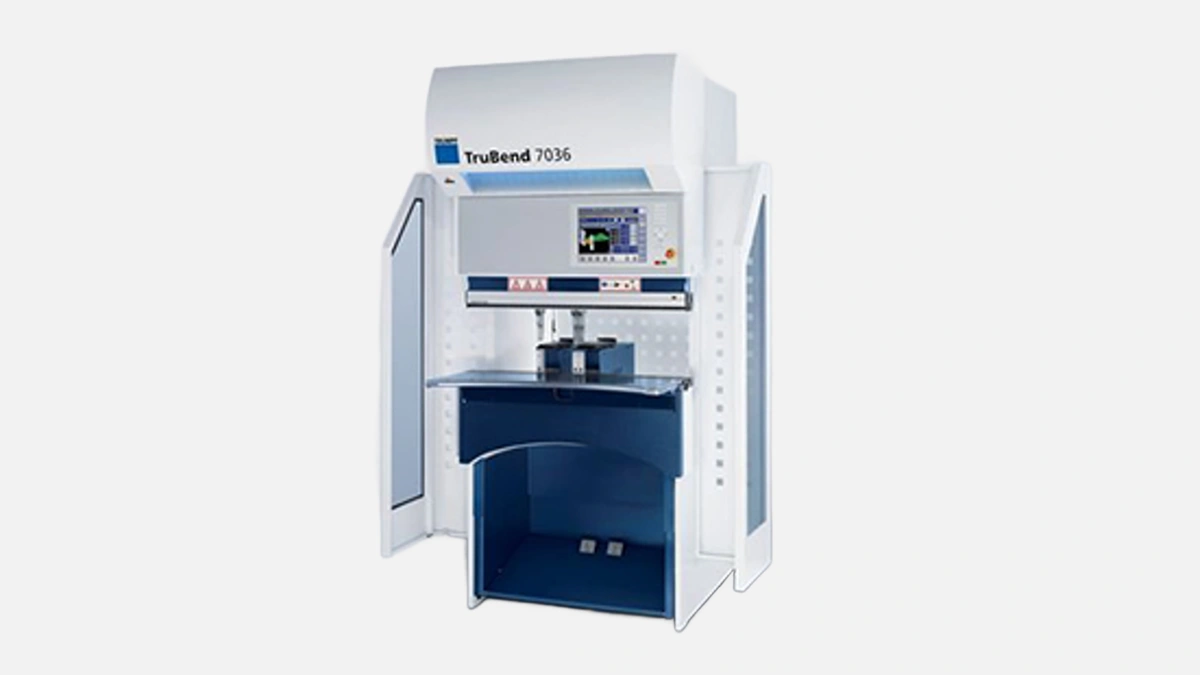
Compact 360 kN press brake, 1020 mm length, fast 220 mm/s approach, ideal for small sheet parts
Quick glance, sharp edges, compact body. You blink, it is already bending a stainless 1 mm blank, crisp radius, no fuss, no smell of burnt hydraulic oil. Then a longer stare, the sticker says TruBend 7036, the plate tells a story that started back in 2005, updated almost every two years, now the fifth iteration stands in front of us.
People keep asking me why this particular press brake pops up in so many job shops around Dubai and Sharjah. I usually shrug, but inside my head a list unrolls, sometimes loud, sometimes muddled. The brand, sure, Trumpf has been building forming machines for more than 60 years, pushing roughly 2000 press brakes out of the factory annually. Yet numbers alone never bend a panel. Feel matters.
The first thing operators mention is the seating option. A weird detail maybe, but sit-down bending means less fatigue on long shifts, especially with tiny parts. The narrow ram, the LED illumination, the foot pedal that glides on magnets so you kick it where it feels natural, everything screams let me stay here a bit longer, I am good.
Before chewing through deeper tech we need to park an obvious fact, the machine is small, just 1650 mm wide and about 1900 mm tall, still it punches 360 kN into the die like it owns the steel. That combo suits elevators, switch-gear boxes, decorative aluminum trims for hotel lobbies along Sheikh Zayed Road.
We have talked enough air, time for digits. The sheet below is nothing fancy, still it grounds the conversation.
| Metric | Value |
|---|---|
| Nominal force | 360 kN |
| Free bending length | 1020 mm |
| Y-axis accuracy (repeat) | ±0.005 mm |
| Machine weight | 4.9 t |
| Motor rating | 8.5 kVA max |
Two remarks before we move on. First, the weight surprises newcomers, under 5 t means a regular four-ton forklift will not cry when unloading at Jebel Ali port. Second, the ±0.005 mm figure is not marketing glitter, measure it with a ball bar and you will hover around that region, provided the workshop floor keeps still.
Hydraulics but not classic. The OnDemand Servo Drive kicks only when cylinders ask for motion so the pump sleeps most of the day, you pay fewer dirhams to DEWA, the fluid remains cooler, seals last longer. Some folks call it quasi-electric because noise resembles a sewing machine more than a press brake, their night shift staff loves that silence.
Under the table two linear guides stack, preloaded, so lateral float during quick returns drops to negligible. Sounds small yet when you set up a 0.8 mm copper part with a 0.8 inside radius every tenth of a millimeter counts.
Touchpoint shows the part like a phone game, pinch, rotate, ok done. The wizard autocalculates crowning, selects the V opening, warns if punch will collide with backgauge fingers. Offline you push the same file into TruTops Boost, nest a kit of brackets on a single 1000 × 2000 mm sheet, the bend data flies back through OPC UA, no USB sticks floating around, less chance of wrong revision hitting production.
Operators swear at many CNC dialogues, here they barely mutter. That tells more than brochures.
Picture a batch of 4000 small Z-brackets, 1 mm stainless, 90 mm long. Old workshop near Ras Al Khor ran them on a generic Chinese press brake, cycle took 10 seconds, mostly waiting on slow approach and sluggish return. Same part on the 7036 clocks 3.8 seconds average, do the math, you shave half a shift off every day. Not a lab anecdote, real shop floor chat over karak tea.
Now yes, speed alone is hollow if setup drags hours. Here clamp system is tool-less, spring loaded, punch snaps, LED strips switch from white to blue when position correct, so a one-man crew swaps a 30 mm V die in maybe 50 seconds.
Two lines before the list. People forget these but they add up.
Funny thing, each perk alone looks cosmetic, chain them, you get smoother evenings.
Back to narrative.
Friends keep tossing names, Amada EG-6013, Bystronic Xpert 40, SafanDarley E-Brake 35, which one to pick. I lined them up on a whiteboard last week, scribbled force, stroke, speed. Quick verdict, Amada matches speed, slightly lower force, purely electric so higher sticker. Safan is electric too, quiet, but backgauge still 4-axis, limits tricky geometries. Bystronic offers beefy software though service center in UAE handles fewer spare parts.
Trumpf slides ahead on three fronts, 6-axis gauge, global plus regional spare part hub in Dubai South, and the seat-friendly frame that no rival copies yet. Not monumental differences, nonetheless real.
The 7000 series spans 7036, 7050, and 7085. Force jumps, 360 to 850 kN, length stretches to 2040 mm. Architecture identical, so if you buy the baby today and land contracts for escalator sidewalls tomorrow, upgrade path feels familiar. Travel logs from shops in Abu Dhabi show they often pair two 7036 units for light brackets and keep a 7085 for structural channels, flexibility over sheer tonnage.
Not massive shipyards, more like HVAC panel builders, kiosk fabricators, kitchen appliance outfits. They chase volume yet space in Musaffah or Al Quoz is pricey, so a compact footprint matters. Banks ask for ROI spreadsheets, you hand them numbers from the speed case above, deal closes, machine ships.
Again, a preface, bullet list, closure, we stay disciplined.
No need to glorify, those are day to day users sending photos on WhatsApp groups.
And we continue.
Trumpf maintains a bigger service crew in JAFZA than any other premium press brake vendor, at least 14 certified engineers, I counted on LinkedIn. Response time inside the Emirates often under 24 hours, spare parts overnight from Ditzingen if local shelf empty. That peace of mind outweighs marginal speed decimals when deadline is Expo pavilion opening.
Machine feels almost casual, yet stack the traits and you realise it punches above its size. Energy sipping, nimble, friendly interface, plus brand muscle for parts and upgrades. So we see a pattern, enterprises that invoice small yet frequent batches gravitate toward the 7036, they value time more than raw tonnage, they value operator comfort because staff turnover in GCC can hurt deeper than any capital expense.
Wrap up, if your factory folders show thousands of formed pieces under 1000 mm length and material under 3 mm, this press brake will probably live on green status most of the shift, leaving the big hydraulic monsters free for heavier chores.
And that, really, is the whole vibe.