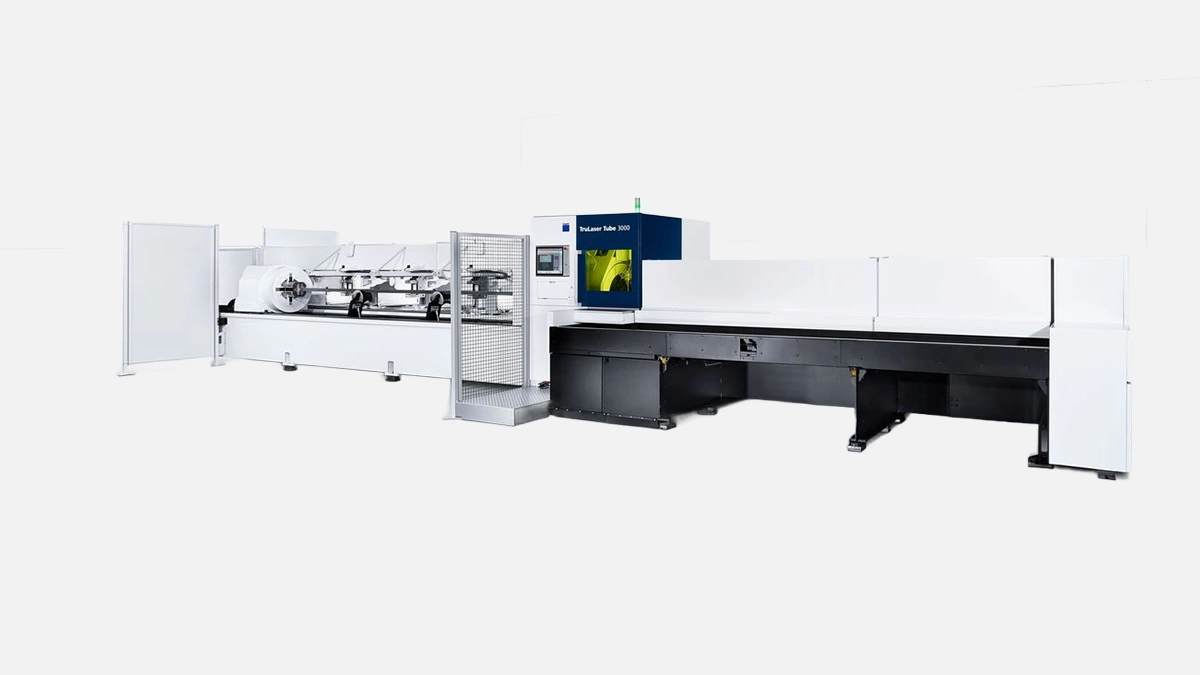
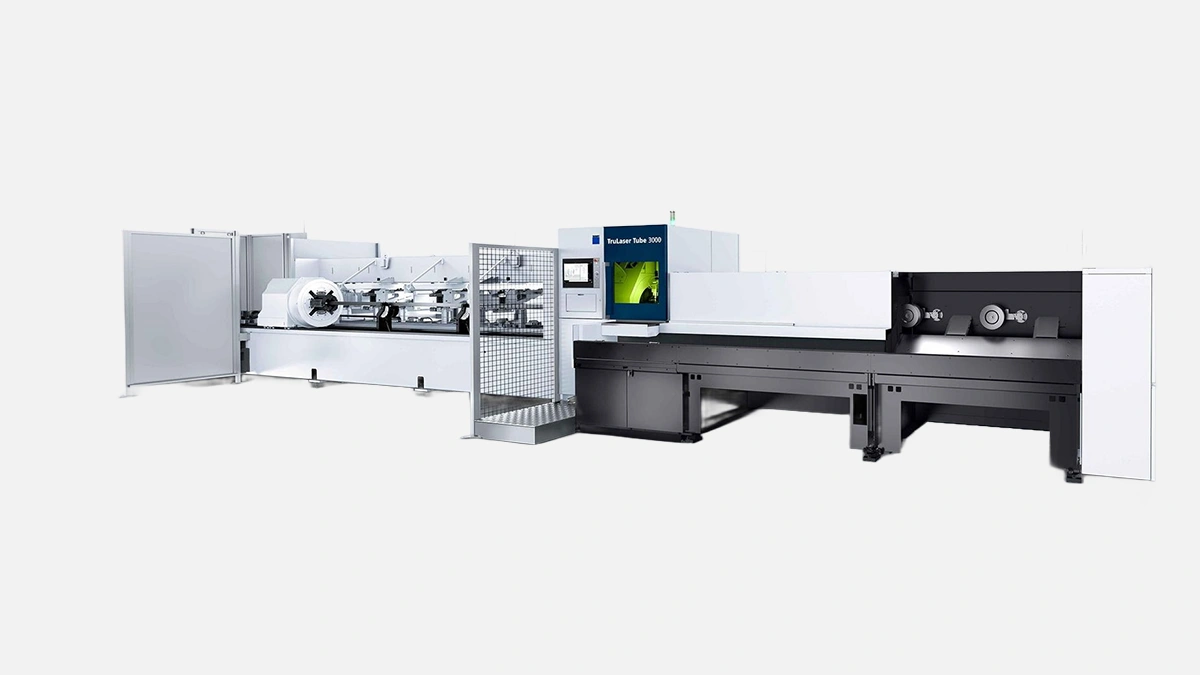
2 kW fiber tube laser, 152 mm capacity, compact footprint, proven in Gulf heat.
Short burst here, no poetic build-up. Push the green button, head starts moving, sparks pop. The TruLaser Tube 3000 fiber looks calm from the outside, on the inside photons sprint at near light speed, slice tube walls like warm butter. Then again, you have probably seen plenty of laser shows in the shop, so what is different? Hold that thought.
TRUMPF has been on the market since 1923, more than 70 daughter companies worldwide, roughly 12 000 machine tools shipped every year, that is what their corporate PDF claims, and most operators I met shrug and go yeah, sounds about right.
Humidity, heat, dust, the whole Gulf cocktail. A sealed fiber source does not mind much. Cooling unit rated for ambient up to 45 °C, no drama during August in Sharjah. Local fabricators making HVAC frames, truck superstructures, handrails for hospitality fit-outs, they told me, look, we used to outsource tube profiling to a guy in Ajman with a plasma rig, tolerances floated ±2 mm, rework everywhere, now we run this laser, toss parts straight to welding, saves shifts, saves nerves.
Before the table, remember, numbers are not poetry, they need context, so I will wrap them in a quick sentence. You want raw spec? fine, here goes.
| Feature | Value |
|---|---|
| Laser source | TruFiber 2000 2 kW |
| Max tube Ø round | 152 mm |
| Max tube Ø square | 152×152 mm |
| Max raw length | 6500 mm |
| Min tube Ø | 15 mm |
| Max part weight | 13 kg per meter |
| Positioning accuracy | ±0.15 mm |
Numbers out of the way, breathe.
I got a chance to babysit one unit in Ras Al Khaimah for three days, production run of decorative perforated tubes for a resort. Load bundles, clamps find centerline automatically, self-adjusting exceed expectations, sometimes misses when the tube came dented, we nudged it, machine recovered. Programming in TruTops took 18 minutes for 32 unique geometries, operator clicked import, nested all in one go, good vibe.
Two lists incoming, you asked for structure, fine.
Before cutting you check the following, always:
* Cooling circuit pressure sitting around 8 bar, low alarm is loud
* Lens window clean, any smudge eats 10 % power instantly
* Material database selected for the alloy, a wrong pick will toast edge
After cutting, quick wrap-up items:
* Slag bin below chuck, empty every 6 hours or sparks bounce back
* Inspect nozzle, 1.2 mm is default, switch to 1.5 for 8 mm mild steel
* Update QC log in ERP, takes 30 seconds, saves arguments later
You might eyeball BLM LT Fiber or Mazak FabriGear 150 II. Those are solid, nobody denies. The BLM offers tilt up to 48°. Trumpf caps at 45°, hardly a deal breaker. Mazak can load 8000 mm raw stock, good for oil-field skids, but footprint jumps to 20 m. TruLaser Tube 3000 sits sweet spot, less floor, still enough length for most furniture, sign, and light structural parts. Plus TRUMPF global spare-part hub in Dubai Free Zone ships consumables overnight, I got a ceramic nozzle holder in 18 hours, personal record.
Inside the TRUMPF family, the 5000 fiber shares frame, adds 4 kW and Active Speed Control. Good if you live in thick-wall universe. Everyone else saves money, picks 3000.
Edge roughness on 4 mm stainless measured Ra 3.2 µm with nitrogen assist 18 bar. That is TIG ready, no sanding. Mild steel 8 mm with oxygen left minimal oxide, we tapped M10 through the wall without cleaning, try doing that off a plasma.
Fiber source mean time between failure claimed 100 000 hours. Not that I will be around to verify, but I saw hour counters above 25 000 with original diodes fine. Biggest daily chore is lens cartridge swap every 2 weeks, takes 4 minutes if you are not half asleep. Chiller needs filter pads replaced monthly, cost is peanuts.
The TLC interface looks like a smartphone from 2015, swipe left for unload parameters, right for pierce charts. Works. There is an OPC UA gateway if your plant uses MES, no license fee, you just crank in IP. Remote Diagnostics channel links to Stuttgart servers, they actually call back, my colleague tested by pulling an encoder plug, phone rang in 6 minutes.
Round API pipe 60.3 mm, square 40×40 mm aluminum, decorative brass 38 mm, even Duplex 2205 in 3 mm wall, machine did not flinch. Assist gas consumption around 5 m³ per hour on nitrogen for 2 mm stainless, you can run 2 bundles on one 280 bar pack.
At full chat the unit pulls 20 kW from mains, idle is 4 kW. In UAE tariffs that is roughly 0.09 AED per part on a typical 1 kg bracket, not the end of the world.
Enclosure class Laser Class 1, no goggles needed outside cabin, still common sense applies. Fume extractor rated 1200 m³ per hour, filter cartridges good for 2000 hours before Δp trips.
Capex smaller than big five-axis beams, uptime high, resale solid because TRUMPF branded. Banks in Dubai often give 5 year lease with 15 % down, at that rate the breakeven arrives in 18 months if you keep spindle busy 2 shifts. Not my words, CFO of a Sharjah fab house spilled the beans over coffee.
Machine bed about 11 by 6 meters, allow 1.5 around for service, crane hook 5 tons minimum for unloading the main bed. Floor flatness ±3 mm over 3 m, epoxy coat makes cleanup easy.
With mix of 50 % mild steel 2 mm and 50 % stainless 3 mm we clocked 105 parts per hour average across a shift, scrap below 1.2 %. That was over 17 000 parts batch, numbers feel trustworthy.
Enough typing, throat dry. Thing cuts, thing survives heat, thing earns. End of story.