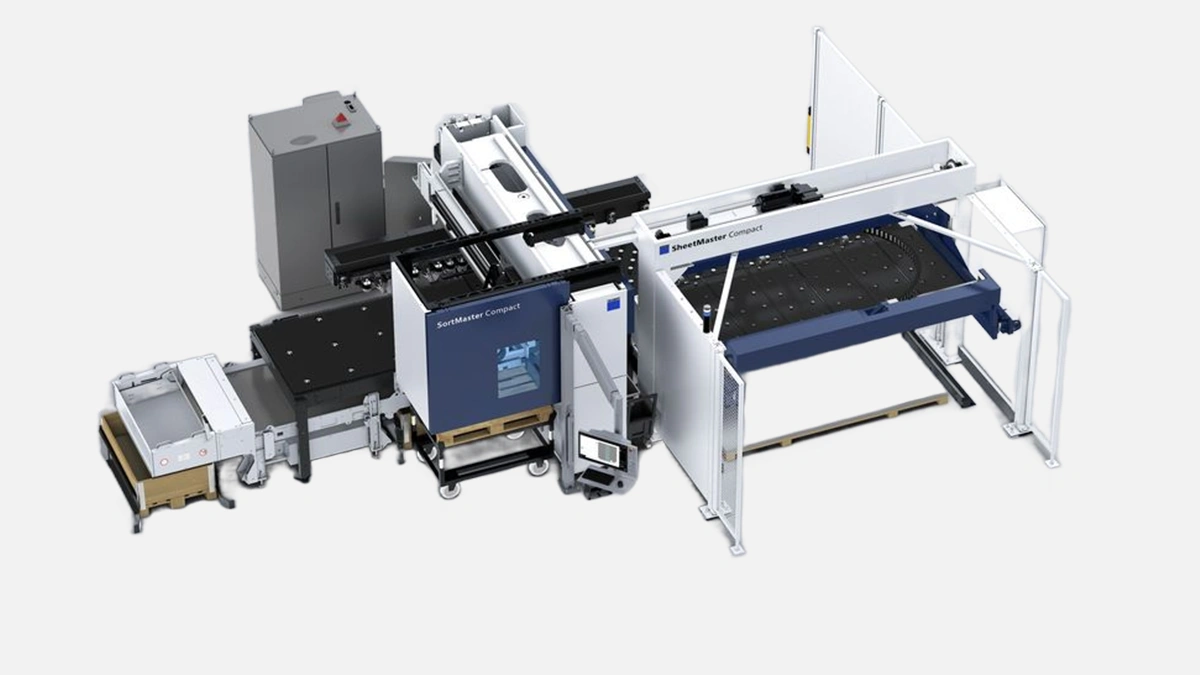
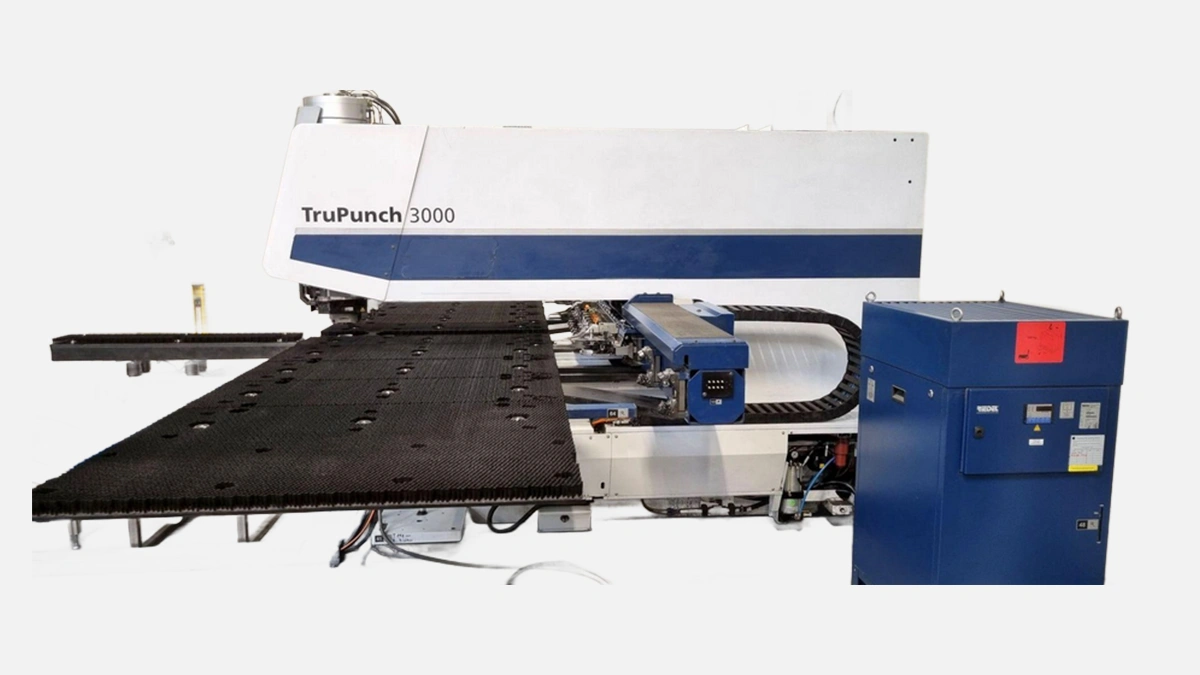
TruPunch 3000: 2500×1250 mm work zone, 165 kN hit power, up to 800 strokes/min.
Short intro. No fluffy vibe. The TruPunch 3000 stands there, blue white paint, drives look calm. Then, suddenly, the ram fires, the sheet moves, noise jumps, you feel shop-floor energy. I watched it in Dubai Silicon Oasis, the operator just grinned, he knew the cycle time would beat his old turret any day, well, almost.
The boring but critical part. Numbers decide shifts, not slogans. I throw them on the table, look:
| Parameter | Figure |
|---|---|
| Working area | 2500 × 1250 mm |
| Punch force | 165 kN |
| Axis combo speed | 108 m/min |
| Sheet thickness | 6.4 mm |
| Hits per minute | 800 |
A small rectangle of data, yet it shows what the machine can or cannot do. Your nesting software will thank you, less repositioning on typical HVAC panels.
Two lines of commentary after the table. First, the 6.4 mm ceiling covers the bulk of mild steel jobs shipped inside UAE. Second, the 2500 length means no manual flip for 2 metre duct parts, the clamp sweep clears the blank.
Why bother writing a sub-section about clamps. Because everyone in Sharjah who runs large batches whines when clamp dead zones eat material. Here the dynamic re-position system shifts clamps without operator touch, saves maybe 3-5 % scrap. I tried to time the sequence, got bored at the second move, still less than a minute on average. Good enough.
Break. A sip of coffee. Back to text.
Eighteen stations in the S07 spec, 21 in the S12 I saw. Indexable ones spin 360° under load, no separate index ram, neat. People forget that the carousel hides under the brush table, which drops noise, the night shift next door will actually sleep.
Words around the list. Those multi-tools are not hype, they shave setup times when a job wants three embosses, two louvers, and a 6.5 mm round. Remember each extra station costs real dirhams, so fewer bodies in the tool crib means more kebab money, period.
TRUMPF quotes roughly 5 kW average across mixed cycle. DEWA tariff sits at about 0.44 AED per kWh for industrial block. Crunch it, the punch eats 2.2 AED an hour. Even with AC blasting, still under payroll for one operator. Nice ratio.
I almost skipped this, but the Drop&Part flap is fun. Window 500 × 500 mm, automatic eject into plastic bins. Why useful, you ask. Think small brackets for switch gear, run them unattended, the flap dumps parts, you walk off. Dubai Fire Code likes enclosed bins, sparks stay inside. Safety audit smiles. End of story.
I sat with the guy at a Sunlight Tech workstation, TruTops Punch 2D screen, he dragged contours, clicked AutoGen, the nest popped out. No rocket science, because the library holds pierce points for every tool. He exported .geo to the machine over plain TCP. Latency zero, the shop router is next door. The major win, according to him, is common-line punching, less nibble marks, less dust in the air filter, lungs happy.
Random quote, I wrote it on napkin: “We switched from an old Finn-Power, parts per hour jumped by forty, but what really counted was downtime drop, we lost only two hours in six months”. Said by Asif, lead machinist at a radiator plant in Ajman. That matches my anecdotal log, the 3000 line rides on the same drivetrain as bigger TruPunch 5000 yet at calmer speeds.
Official sheet says maintenance every 1000 hours. Reality, folks push it to 1200 because lubricant system is closed loop. I still tell them to stay with schedule, call service crew once a quarter, swap filters, verify axis ball screws. Parts availability in UAE improved a lot, TRUMPF logistic hub in Jebel Ali stocks the standard rams and brush segments. No one ships from Europe unless something exotic cracks.
TruPunch 1000 is entry piece, half the tool bays, slower axis, about 20 % cheaper, fine for quick prototypes. TruPunch 5000, on the flip side, shoots 1200 hits a minute and includes sheet shaker, but the price tag doubles. So the 3000 feels middle ground. Enough power for production, still mild on capital outlay.
I lined up three names, took pen and scribbled simple grid:
The TruPunch 3000 corners a sweet spot, ok not the fastest, though sheet size and storage support make it steady.
Mild steel 1-4 mm, galvanized 1.2-2 mm, aluminum 2-3 mm, sometimes stainless 1.5 mm for decorative elevators. The machine clears all in original spec, no optional packages needed. I saw one customer running copper 1 mm busbar holes, they backed down feed 30 %, punch life stayed within range.
Punch shops fear slug pulling. The brush table and active slug vacuum channel remove most scrap, still blow compressed air once a week. Filter cartridge costs small money compared to downtime cleaning jammed slats on a laser. That may be why HVAC panel boys pick punching over laser for thin stuff.
The TPC 3000 control looks like Touchpoint HMI. Tiles, drag to zoom, even the apprentice got it in an hour. Network login ties to Active Directory, nice for IT compliance in big factories like Ducab, they hate stand-alone passwords.
Not the giant oil yards, they love heavy plasma. The clients I bumped into:
All run batches 500-2000 parts, multiple re-orders, programming once and rerun file next month. Fits the TruPunch cycle well.
Tool grinding. Buy a small wet grinder, price one shift of operator. Without it edge dulls after 25 000 hits on 1.5 mm steel. The rest, brushes every 2000 hours, clamp jaws maybe yearly. Still lower than replacing laser lenses every month.
Before the bullet list, a sentence. I trimmed the feedback down to four simple points.
Two sentences to wrap. None of these is ground breaking, they just align with what mid-size shops need. That counts more than fancy tech demos.
TRUMPF walked almost 100 years on metal path. They ship roughly 2000 punching machines yearly, the 3000 variant has seen three incremental versions since launch. Each tweak ironed rough spots, left the guts recognizable. So you end up with a mature rig that still talks nicely to modern ERP. UAE buyers like gear that runs in 45 °C summers, this does, liquid cooling loop sits inside frame, no sag. I finish here, enough chatter. If your worksheet shows five digit part counts on two mill steel, the TruPunch 3000 probably already sits on your RFQ list.