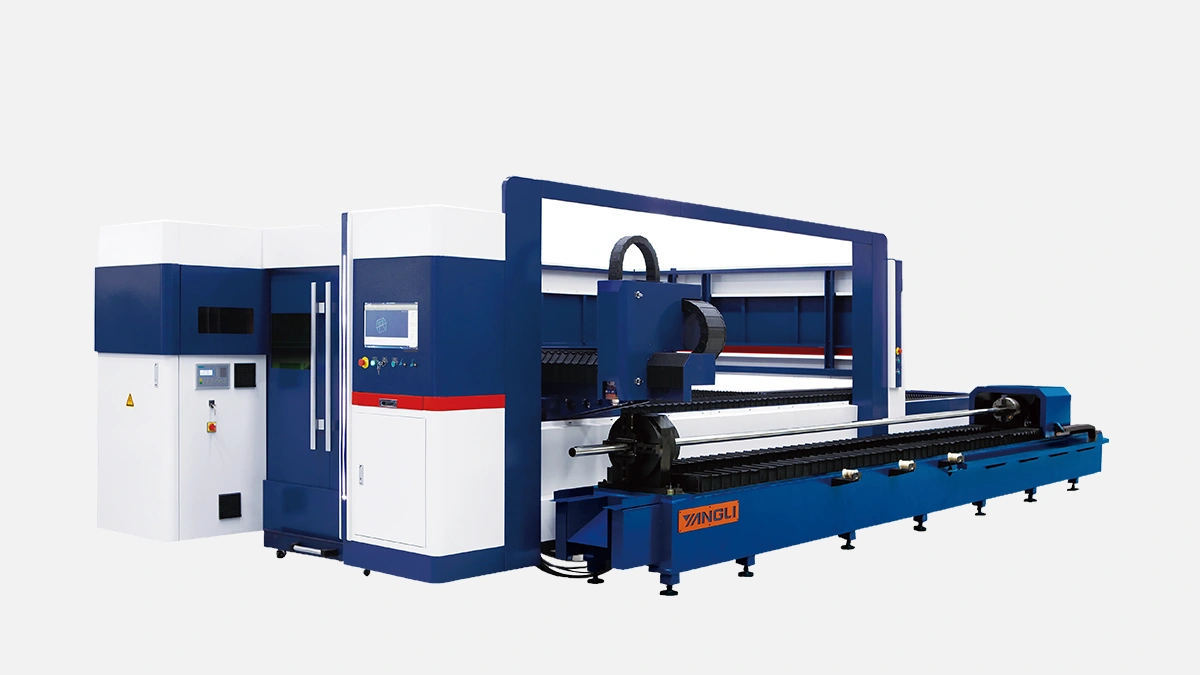
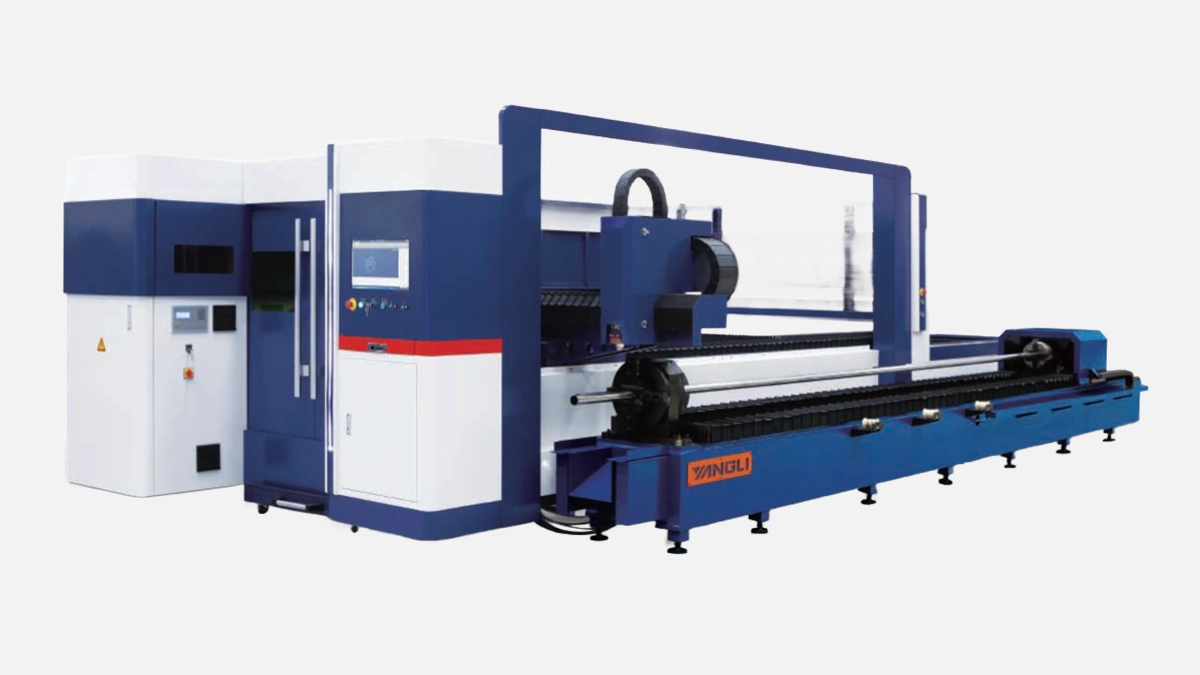
Yangli GL3015FT cuts 3×1.5 m sheet and 6 m tube in one frame, 1–6 kW fiber source, ±0.02 mm repeatability.
Short phrase, blunt. You walk into the shop, there it is, a blocky steel island with the “Yangli” badge and that long code – GL3015FT. Looks like any other fiber laser, you think, but then the operator fires it up and the shuttle table slides out in under 15 seconds, sheet already clamped, ready for the next run. The hum, the green beam behind the safety glass, small arcs of molten metal popping, you know the drill.
The bed feels solid. Not marketing fluff, just cast and stress-relieved steel, weight a bit over 9500 kg. Yangli has been building presses and lasers since 1966, exporting for almost 15 years, turning out roughly 2000 fiber machines a year according to their 2022 annual report. GL3015FT sits mid-range in their GL line, above the entry GL3015E and below the bigger GL4020FT. Version three of this model, they tweaked the gantry ribs, swapped to dual-servo Y axis, added extra fume ducts. All that to keep the cut head exactly where the G-code thinks it is, no surprises on thin SS artwork or on 20 mm mild-steel flanges.
Before you scroll away, here is a quick list of things you notice in the first hour of running the rig. Keep in mind, bullet points never tell the whole story, but they help the memory.
Three points, done, back to sentences. The tube module is why many UAE fab shops pick the FT suffix. Small jobbers hate dedicating floor area to a separate tube laser, margins are thin, rent in Sharjah is brutal, so folding both tasks into 1 footprint makes a lot of sense.
We could drown in paragraphs, but sometimes a table slaps you awake. Still, let me frame it. Numbers alone are useless if you forget the units, so every cell below sticks to SI, none of that imperial confusion. Ready?
| Parameter | GL3015FT | Typical 3015 competitor |
|---|---|---|
| Max sheet size | 3000 × 1500 mm | 3048 × 1524 mm |
| Power range | 1 – 6 kW | 1 – 8 kW |
| Rapid traverse | 120 m/min | 100 m/min |
| Acceleration | 1.2 G | 1.0 G |
| Repeatability | ±0.02 mm | ±0.03 mm |
| Tube length | 6000 mm | Option on request |
See the last line. Sheet lasers that also take 6 m tube still feel rare in the mid-price bracket. Yangli bakes it in.
Two sentences to close the table story. Values are lab data, yes, you will not hit 1.2 G while cutting 20 mm plate, servo limits drop, still the margins help when you blast through thin gauge jobs all day.
Raytools BM110 with motorized lens, auto focus range from -10 to +10 mm, nozzle change by hand in under 30 seconds. If you spec IPG 4 kW, you get the YLS with 100 µm core fiber, for 6 kW they switch to 150 µm, less sensitive to dust. Gas train is SMC, nothing exotic, spare parts cross-match in Dubai pretty easy.
Operators on the UAE Metalworkers Telegram chat keep nagging about edge burn on 12 mm SS. I asked Rashid from Ajman last week, he runs two GL3015FTs, said the trick is argon assist at 10 bar for finishing passes. He posted photos, edges looked satin, no post grind. Not a brochure quote, just a shop floor snapshot.
GL3015E – entry, no tube, single table, body weight around 6 t. GL3015FT – what we talk about, dual table plus tube. GL4020FT – bed grows to 4000 × 2000 mm, gantry beefed up, everything else same. So if your parts never exceed 1.5 meters in width, grabbing the 3015 format saves space and a few dirhams on assist gas per cycle.
You are bored of reading, but this short list might spark a use case image.
Bullet list out of the way. Each of those tasks ran in actual Gulf shops, not demo lab talk. Chatting to them confirmed repeat accuracy sticks within spec even after the summer heat pushes shop floor to 42 °C.
Random monologue. You, me, everyone hates downtime more than the accountant. The GL3015FT ships with a predictive counter, every 500 hours controller asks to check linear rails, not just grease them. Yangli’s service hub in Jebel Ali stocks the complete Z axis in a crate, no waiting on sea freight. Mean Time Between Failure on laser source, based on three IPG units logged by clients, sits around 65 000 hours, textbook stuff really.
Need context. Amada ENSIS 3 kW? Nice variable beam, but no tube option unless you buy an FOL. Bystronic BySmart 4.4 kW? Swiss badge but single table unless you add the LiftMaster which costs half the machine again. Trumpf TruLaser 3030 fiber? Solid, yet their tube module is external and asks for separate operator. GL3015FT squeezes sheet and tube in one invoice, one learning curve, that is why many startups in Ras Al Khaimah lean this way.
I promised no dry theory without payoff. Look at this mini table, values averaged from three UAE workshops, power 0.37 AED per kWh, nitrogen bulk at 0.9 AED per Nm³.
| Item | GL3015FT 3 kW | 3030 fiber 3 kW |
|---|---|---|
| Power kWh per hour | 16 | 18 |
| Nitrogen Nm³ per hour 6 mm SS | 140 | 150 |
| Annual preventive spend AED | 22 000 | 28 000 |
Two sentences for balance. Savings look minor per hour, yet across 2500 spindle hours a year they add up to a new forklift or a month of factory rent.
Nobody enjoys reading manuals that smell of legal disclaimers. This condensed list hangs on the cabinet door in one Abu Dhabi fab shop.
Three rules, obey them, machine keeps breathing.
Patterns emerge. Small job shops up to 25 employees, project based, and surprisingly, bespoke car modifiers who slice tube chassis brackets. Large OEMs still lean toward German iron for brand equity when tendering with oil majors, but subcontractors see no issue shipping GL parts upstream as long as cut certs match.
GL3015FT delivers a mix of sheet and tube capability, solid frame, decent speed numbers, and a service warehouse inside the country. Put bluntly, you get one chassis doing two jobs while paying for one foundation. That is why it sneaks into so many quotes right now.