Micro-SLA ProJet 1200 prints 56 µm parts fast, perfect for UAE toolrooms.
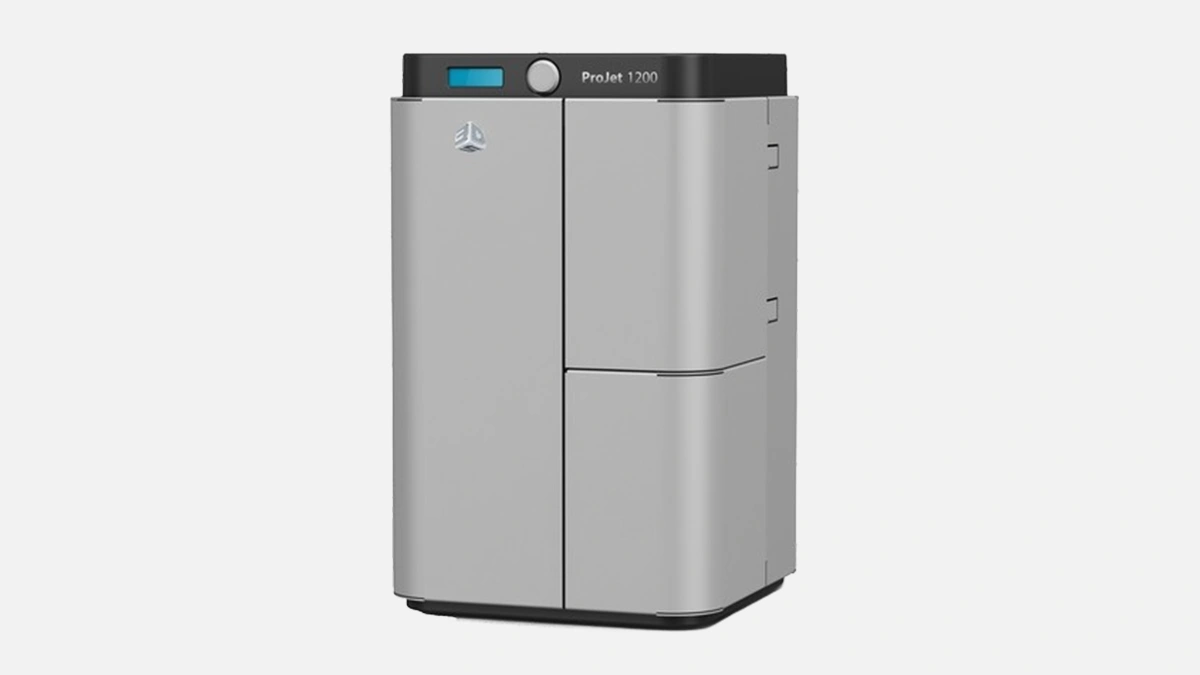
Tiny box, bright green lid. You plug it in, it hums, the projector flashes and a minute later the first shiny layer is already floating on top of the vat. That is the whole vibe. Fast, almost impatient. The machine has been on the market for 10-plus years, 3D Systems keeps shipping cartridges, so parts support is still alive, which is more than can be said for many hobby printers.
The ProJet 1200 sits in the corner, no drama. Micro SLA means a solid-state 405 nm projector pushes an image through a glass window onto the resin. Every new slice cures at once, so the Z-axis only moves when a full layer is done, not like the old laser-trace systems that paint one pixel at a time and make you wait. In numbers the light spot is 56 µm across, layer drops down to 30 µm, so threads on an M2 screw actually show up. Uneven surface? Sure, it happens, but the ridges are finer than most people’s fingernails.
Before jumping to the meat, look at this quick table, it sums up the items the operator cares about first week on the job.
| Item | Value | Why it matters |
|---|---|---|
| Build volume | 43×27×150 mm | Enough for dental arches, watch gears, tiny hydraulic inserts |
| Layer range | 30 µm fixed | One setting, less human error, consistent finish |
| Material | VisiJet FTX Green | Mechanical strength close to ABS, easy burnout for casting |
| Typical part yield | 30 dental crowns per run | Makes the night shift worth it |
| Post-cure | 5 min in UV oven | Same room, no extra gear |
| Maintenance cycle | 1 filter swap every 250 layers | Takes two minutes, no tools |
You see, no crazy numbers, just plain day-to-day stuff, still it saves headaches.
Two remarks before moving on. First, the machine likes room temp under 28 °C, a UAE shop can hit 45 °C by noon, so keep it near the chiller or at least an AC vent. Second, the network jack is 10⁄100 only, gigabit switches will down-shift automatically, but the cable needs to be shorter than 30 m to avoid drops.
People read spec sheets then forget what half of the items do. Let’s unpack three that affect real machining workflows. Build speed, cartridge system, projector lifespan.
Notice there is no heated build chamber, none is needed. The small volume lets the projector itself warm up the resin a little, viscosity sweet spot, done.
Most machine shops in Dubai or Sharjah juggle a tight dance between CNC mills and EDM lines. Tiny jigs hold weird shaped implants, miniature collets cost a fortune. A micro SLA printer drops the price of custom nests to coffee-money level, plus you get the part same shift. Humidity sits at 60-80 % half the year, the ProJet enclosure keeps moisture out better than open-frame hobby rigs. Also, resin bottles ship as ID8000 non-hazmat, so air freight into Jebel Ali passes customs faster.
Before we dive deeper, here comes a bullet list with plain use cases, every single one pulled from local users around the Gulf.
The list could go on, but you get the picture.
Now a few lines after the bullets, because the work never stops. Operators in Musaffah noted something odd, they leave the printer idling during sandstorms and the seal around the lid keeps the dust out just fine, try that with an open DLP kit.
Competitors? Sure, Formlabs Form 3, B9 Core 530, Anycubic Photon Mono X. Each has its charm, each trip you if you are not careful.
| Feature | ProJet 1200 | Form 3 | B9 530 | Photon X |
|---|---|---|---|---|
| Footprint | 230×160 mm | 405×375 mm | 380×300 mm | 270×290 mm |
| Sealed cartridges | Yes | Yes | No | No |
| XY accuracy | 56 µm | 25-85 µm | 30 µm | 50 µm |
| Industrial CE mark | Yes | Yes | No | Rare |
| Post-cure in-box | 5 min | 15 min external | 10 min external | 10 min external |
What jumps out is size. Machine shop floors are packed, so the smallest box often wins. The ProJet also sticks with ethernet, not Wi-Fi, which IT managers actually prefer, less attack surface.
3D Systems shipped four versions of this platform. v1 in 2013, v2 added a quieter Z-motor, v3 bumped projector lumens, v4 (current) changed only firmware to accept FTX Cast, still same hardware. All share parts, you can swap vats between them, handy if you find a used unit in Abu Dhabi and need a quick donor.
After the list, note that shops usually run mixed fleets, one old v2 grinding away on gauges, one shiny v4 for dental work, all cartridges fit them all.
Accuracy keeps popping up, but there is more. Low smell, low power draw 120 W, safe to run off the same UPS that backs the CAM workstation. Cleaning is dish soap and warm water, no crazy solvents.
Another bullet list incoming, because why not.
Lines after bullets, done.
Not everybody needs micro-SLA, fair. If you push kilogram aluminum billets through your HMC all day, a resin printer sounds like a toy. Yet the moment you start chasing inspection fixtures or need a batch of custom seals by noon, the ProJet 1200 stops looking like a toy and starts looking like a ticket out of overtime. 3D Systems has been around since 1986, ships over 200 000 printers a year across the range, so the supply chain is stable. That confidence shows, small UAE outfits pick the model because it works, larger plants grab a couple more because the first one never complains.
Bottom line, the machine stays busy, the shop keeps its lead times, everybody moves on to the next job.