Desktop extruder converts pellets to filament up to 0.7 kg / h, handles 450 °C engineering polymers
Ready Go. Tiny desktop, big bite. Plastic pellets in, printable filament out. Seems almost too simple, yet for shops that already juggle CNC and metal powder, a private filament line suddenly looks like a neat side quest. You run a prototype lab in Sharjah, you hate waiting for shipping times, you own this box, problem mostly gone.
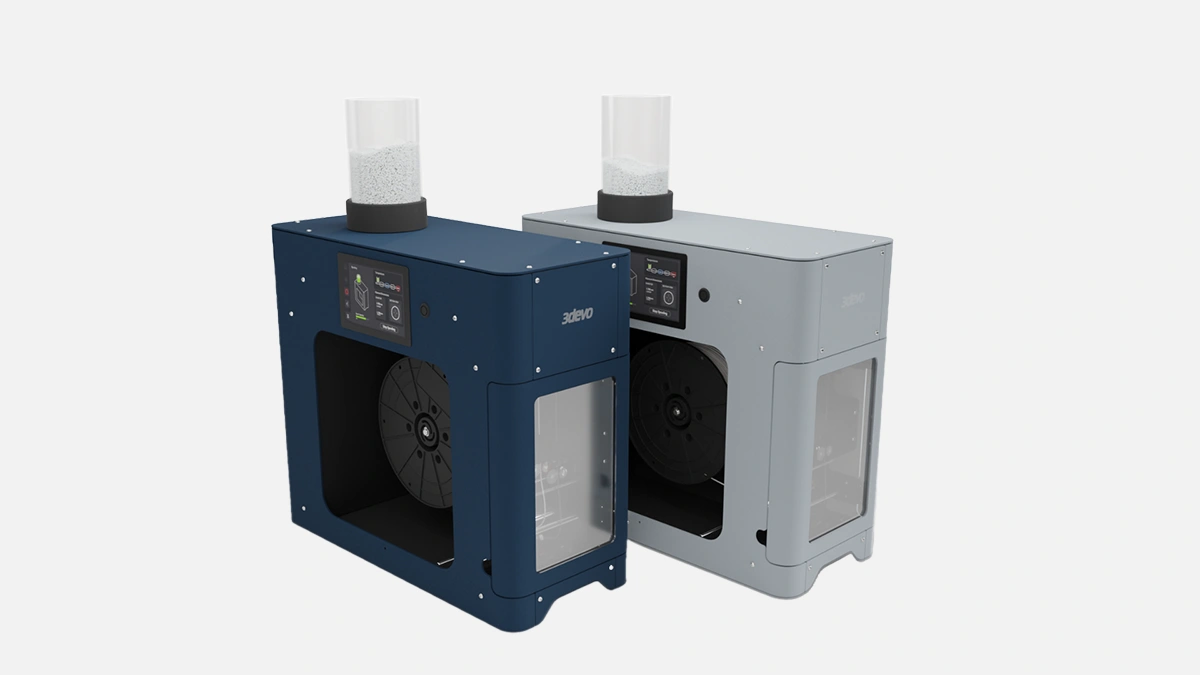
The Dutch guys behind 3devo have been playing with benchtop extruders since 2016. Five iterations, dozens of firmware tweaks, a small but vocal user base on forums. The Filament Maker TWO, or just FM2 when people type fast, is their current workhorse. Roughly 800 units left the factory last year according to an interview in Kunststof Magazine. That is not mass production by automotive standards yet it is enough to keep spare parts flowing.
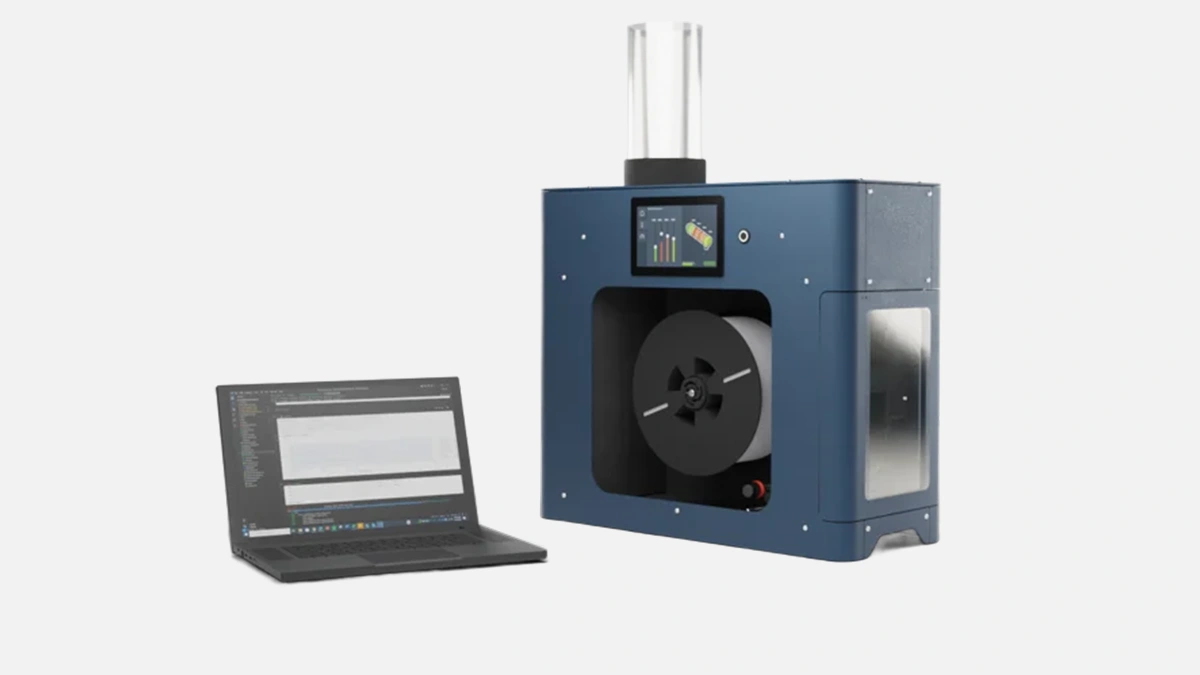
Short frame of powder coated steel, front door flips up, side panels off in under 90 seconds for cleaning, no exotic fasteners. Inside you find a standard three-phase motor with VFD but the brains translate single phase wall juice so no electrician headache. The 18 mm screw is nitrided, coarse pitch near the feed, fine pitch near the die so pressure builds gradually, keeps shear heat predictable.
Two sentences done, time for the promised table, but first let me set the stage. People always ask what numbers actually matter. Diameter tolerance, speed, energy bill. I packed the juicy bits in the grid below.
| Parameter | FM2 value | Typical desktop rival |
|---|---|---|
| Melt temp max | 450 °C | 300 °C |
| Output rate | 0.7 kg / h | 0.3 kg / h |
| Diameter dev | ±0.02 mm | ±0.05 mm |
| Cleaning time | 15 min avg | 40 min |
| Footprint | 0.24 m² | 0.28 m² |
Five rows are not a magic bullet yet they expose why FM2 feels tasty for speed prototyping. The heat ceiling lets you tackle PEEK and PEI blends, while the tighter diameter window calms down your printer’s feeder. Done with table life, moving on.
Pellets or regrind land in the hopper. Little capacitive sensor guards against run-dry. The HMI, a seven inch resistive touchscreen, greets you with three big buttons because gloves happen in real shops. Recipe library sits on a micro-SD, swap profiles between machines like you swap tool offsets on a VMC.
Not every plant needs QR codes, true, yet traceability turns handy when you send samples to a client in Abu Dhabi and three weeks later they ask what batch the filament came from.
Gears and screw demand a shot of food grade grease every 40 running hours. Heating bands clamp with stainless spring clips, you pop them off without dismantling wiring. Firmware reminds you after 500 hours to pull the screw, check for wear over 0.2 mm and polish burrs. I ignored the notice once, extrusion became noisy, never again.
See how bullets break rhythm, good, we carry on.
Why would a CNC house even look at a polymer extruder, right. Picture this, you already prototype grippers, soft jaws, cable brackets on a pair of FDM printers next to the HAAS. Buying filament locally means 3-5 days wait. Grinding failed prints and purging them back into fresh spools slashes waste and cycle time. The FM2 digs into that very gap. Energy draw under 1.5 kW blends well with other light equipment on your plant’s UPS line so you avoid nasty dips when a 22 kW spindle elsewhere ramps up.
There is Filabot EX2, Noztek Pro, and the low cost Chinese bench presses. I ran them all last spring during a training session in Al Ain. Short verdict
– Filabot EX2 holds temp to 290 °C, forget PEKK, also cleaning it after color change makes you question life choices.
– Noztek touches 400 °C but output sits at 0.3 kg / h plus the open hot zone roasts your knuckles.
– Random replicas push pellets fine on PLA, yet variance hits 0.1 mm which triggers layer shift on a Prusa.
FM2 balances high temp with closed body, better tolerance, and a stand alone winder, so you pay one time yet skip hidden tinkering hours.
3devo offers four machines right now, TWO Essentials, TWO High Flow, and Precision Series. Essentials caps at 350 °C, same chassis but cheaper heaters, High Flow swaps screw to 25 mm and reaches 2 kg / h at the cost of diameter accuracy. Precision is older, brushed motor, skip it unless tight budget. FM2 sits in middle, call it safe pick.
Michael from an aerospace lab in Ras Al Khaimah posted that his weekly PETG run dropped from 18 spools bought to 4 bought and 14 self made after six weeks. Another guy on Reddit r/3Dprinting said the noise is lower than a microwave, measured 52 dB one meter away. Take that with salt yet my phone logged similar.
The crate arrives on a pallet, 80 kg gross. Unbolt, lift with two people, slide onto any bench rated 100 kg. Ventilation is optional, still I suggest a humble inline fan, keeps VOCs under local threshold 0.5 ppm.
Nothing is perfect, we know. You still fight moisture, so desiccant dryer upstream is almost mandatory for nylon. The winder core plates feel flimsy, replace them yearly. And do not dream about continuous fiber loading, FM2 was not built for that.
Small footprint, predictable diameter, real high temp. Those three traits land sales mainly to R&D outfits, university labs, high mix job shops. You can spin exotic blends for oilfield sensors or just recycle scrap PLA from the education center across the road. Either way the machine keeps material loop tight inside the emirate border.
Closing paragraph because attention fades. The device saves waiting days, cuts raw cost roughly 60 % per kilo on common polymers, and supports engineering grades up to 450 °C without exotic upgrades. That combo speaks loud to prototyping teams who already calculate spindle minutes in dirhams and hate downtime.