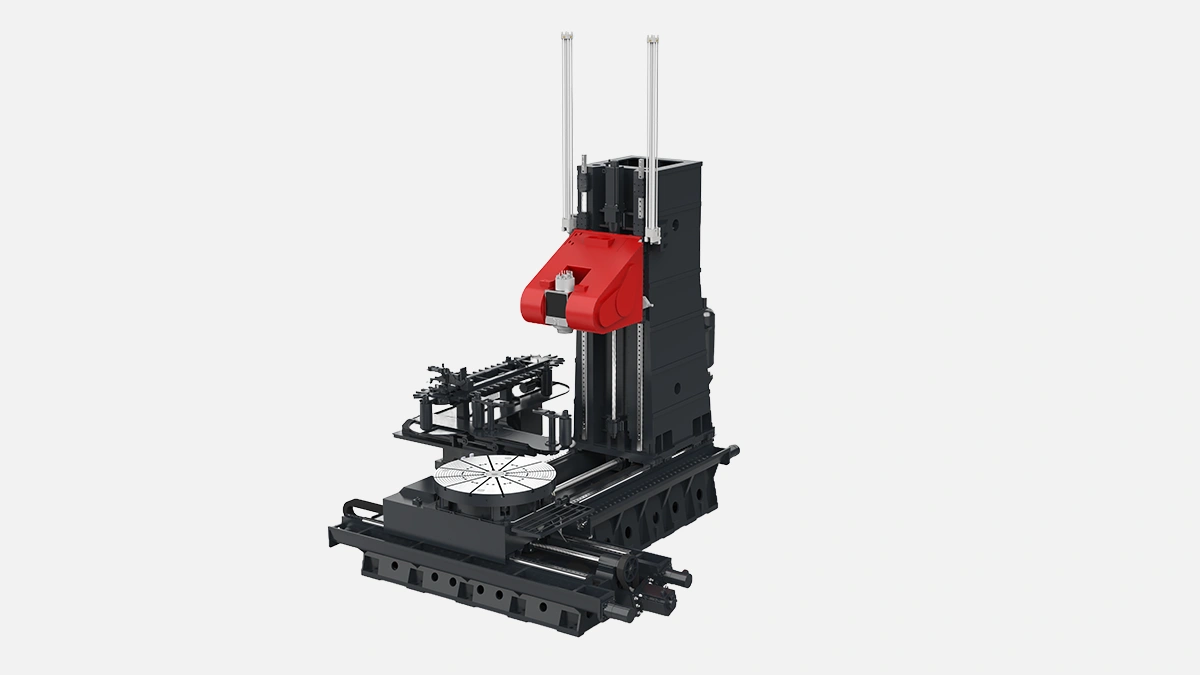
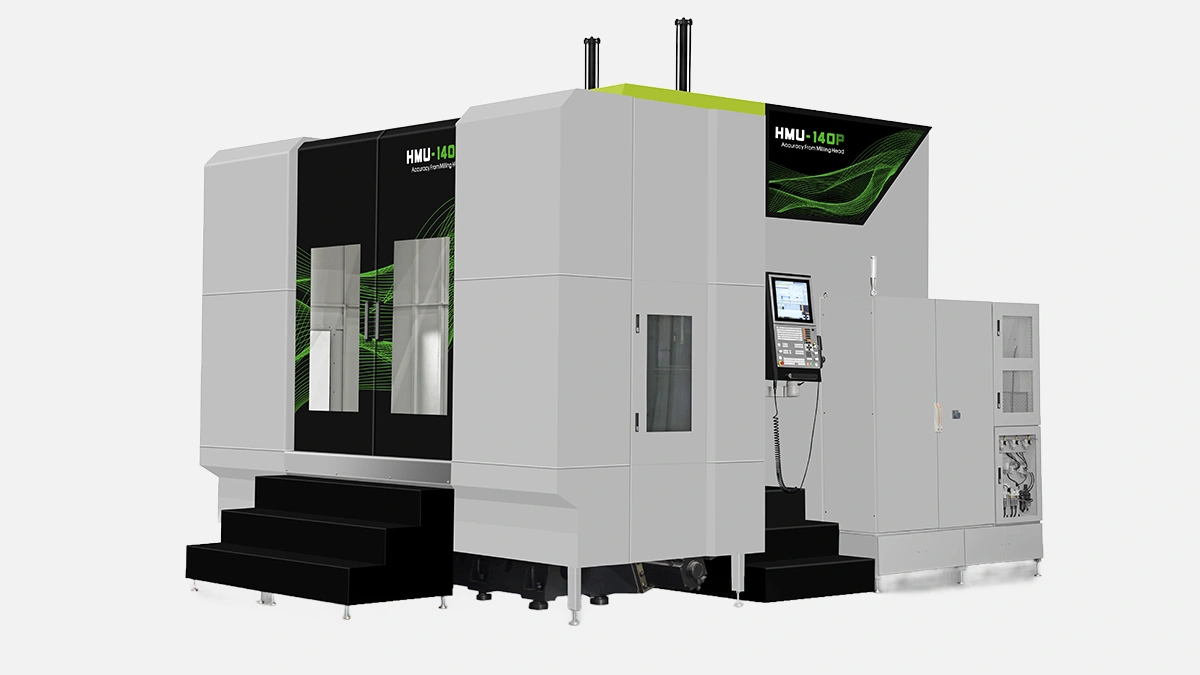
HMU-140P: 5-axis horizontal, 1400 mm pallet, 60 kW gear spindle and 5000 kg load for tough alloy cutting in UAE heat.
Short intro, almost a whisper. Big iron, lots of metal, you smell the cutting oil even before the power button. AFMING calls the thing HMU-140P. Five axes, horizontal layout, 1400 mm pallet so you can strap a V8 block or a titanium manifold and not worry.
I have stood in front of similar giants, Mazak e-H 800, Makino a800Z, the sound is familiar, yet the HMU feels different, maybe because AFMING has been cranking machines for 25 years and, according to their annual report, ships around 900 units worldwide, half of them to shops that live on tough alloys.
Before we drown in opinions let us pin some cold numbers. They sit better in a table.
| Axis | Travel | Feed rate | Feedback |
|---|---|---|---|
| X | 2200 mm | 35 m/min | linear scale |
| Y | 1600 mm | 35 m/min | linear scale |
| Z | 1400 mm | 35 m/min | linear scale |
| B (pallet) | 360 deg | 25 rpm | direct encoder |
| C (trunnion) | ±120 deg | 25 rpm | direct encoder |
Numbers look dry, sure, but they tell you a simple thing, the head reaches every corner of a 2500 × 1600 × 1200 mm casting in one setup, which in UAE job shops means fewer crane moves, fewer people yelling across the bay.
The table above is only half the story, torque matters. Gear spindle delivers 1700 Nm at a sleepy 300 rpm, exactly where Inconel likes to fight back. You lean on the feed knob, chips curl orange, the machine does not flinch.
A buddy in Sharjah runs pressure-contained valves, 13-8 stainless, batch of 18 pieces a week. He swapped an older horizontal twin-pallet for the HMU-140P last autumn. Cycle time dropped from 11 hr to 7 hr 45 min mostly because the trunnion let him machine the complex bonnet in one hit. He also mentions the coolant through 70 bar pump actually holds pressure after three shifts, small touch but operators love it.
I could list textbook reasons, chip fall, easier fixture, but let us keep it raw. Vertical five-axis works till you push 5000 kg of steel, then the knee shakes. Horizontal box ways absorb the punch. Add the pallet changer, toss in a graveyard shift with one guy on patrol and you tie productivity to the ceiling.
Two comments float around forums, one praises the massive column, the other complains about footprint, 9.2 × 6.8 m is a chunk of floor. Truth, but diesel rigs in Abu Dhabi oilfield service yards do not care, they care about uptime.
Two lines to warm you up, then the list.
Those points look salesy, yet each was pulled from either AFMING manual rev. E or user chatter on PracticalMachinist, thread dated 14 Feb 2024.
Let me paint a scene, afternoon heat, forklift beeps, a 1400 mm pallet slides onto docking station. The changer swaps in 35 sec, you hardly finish writing the next tool offset. AFMING says the hydraulic clamp force is 20 t, the number feels abstract until an operator bangs a half-machined Inconel disc and nothing moves, then the number gains weight.
FANUC 31i-B5, standard, everyone keeps spare cards in Dubai. Three channels, look-ahead 2000 blocks, ethernet DNC of course, yet the detail that saves nights is the built-in harmonic smoothing. You hit a blend radius on simultaneous five-axis, servo stays quiet, tool path looks less jittery compared to the same code on an older Siemens 840D at a client in Al Ain.
Give me two lines of context so the list below does not hang in the air. Most UAE buyers pick three extras, they skip fancy automation because labor cost is still moderate, they focus on cut reliability.
After the bullet burst, know this, every option can be field retrofitted, AFMING stocks the kits in Jebel Ali hub, ship time 2 days.
Quick detour, not a formal shoot-out, more like bar talk. Makino a800Z owns speed, 45 m/min rapids, sweet for aerospace but pallet only 800 mm. Okuma MA-600HII is amazingly reliable yet pure four-axis. Yasda H40i has positional accuracy that feels unreal, still torque tops at 450 Nm. HMU-140P sits in a different corner, built around brute torque, heavy workpieces, fewer but longer cuts. For valve houses, pump casings, compressor blocks, that is the game.
AFMING sells three siblings, HMU-100P, HMU-140P, HMU-180P. Same frame, different pallet. The 100P tops at 4000 kg load, the big 180P stretches X travel to 2800 mm and bumps spindle to 74 kW. Shops that start with 100P often upgrade and keep the fixtures, mounting pattern stays identical, smart move from the factory.
No list here because this stuff deserves prose. Foundation spec is 600 mm reinforced slab, 50 N/mm² concrete. AFMING includes grout pads in the crate, still, hire a laser to level the table within 0.02 mm across diagonal, otherwise B-axis rotary might fight backlash comp. Power needs 125 kVA, the spike when the gear spindle jumps from 0 to 6000 is nasty, get a soft-start transformer.
Factory claims MTBF 5800 hr, field data says the same ballpark. Critical part is the gearbox hydraulic clutch, change oil every 3000 hr religiously, do not cheap out, use ISO 68 synthetic, some shops poured car engine oil, guess what, burnt plates.
The chip conveyor slope feels too shallow, Inconel needles jam, you will kick it with a crowbar once a week. The front operator door is heavy, linear rail but no gas spring, smaller guys complain. Not deal breakers, just living with the beast.
I might jump topics, brain skips, but let me land the story. HMU-140P is not a Swiss watch, it is a sledgehammer with a five-axis wrist. In the Gulf region where cast duplex stainless is bread and butter, torque beats speed. AFMING knows the customer, keeps spares close, offers remote dial-in over 4G tunnel, language menu includes Arabic, all tiny but telling details.
At the end of the day managers look at parts per shift, operators look at whether the machine screams when a cutter hits the corner, accountants look at service bills. This horizontal keeps all three reasonably calm.
HMU-140P hands you three things, rigidity, pallet capacity, and serviceability. That cocktail pulls in valve makers, oilfield tool shops, heavy mold builders. When the jig crane groans and the part finally sits, you hit cycle start, walk away, grab a karak tea, the machine does the rest.