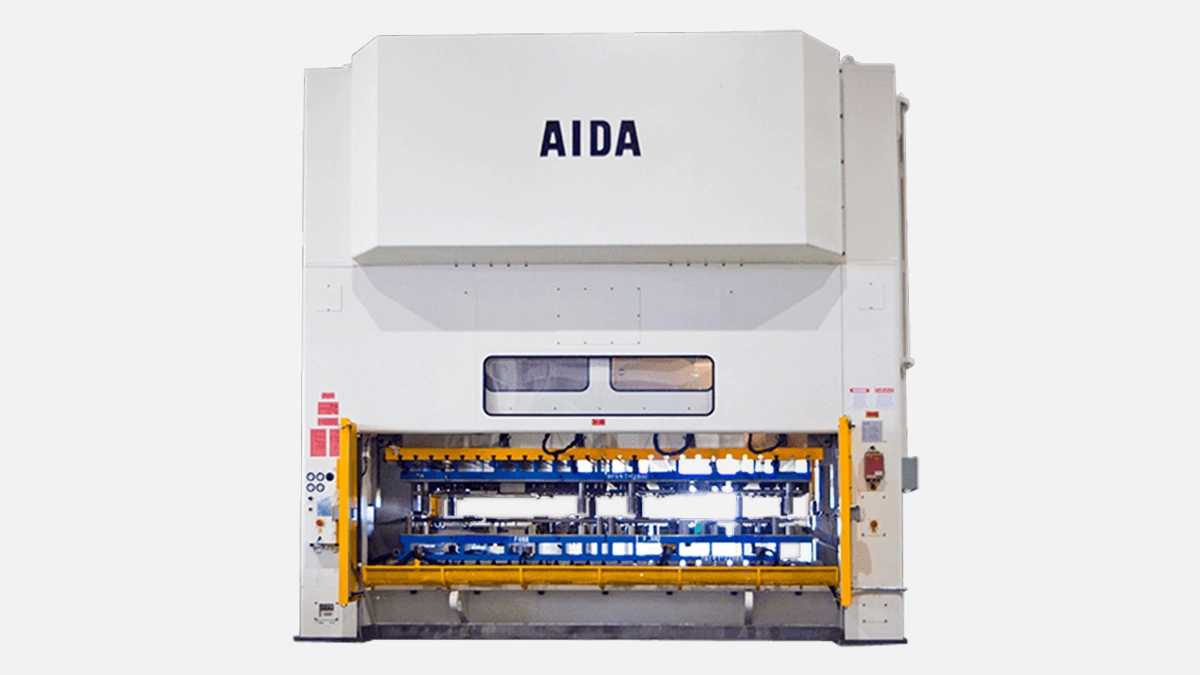
2000 kN direct-drive servo press with flexible stroke profiles for agile forming.
Fast line, no fuss.
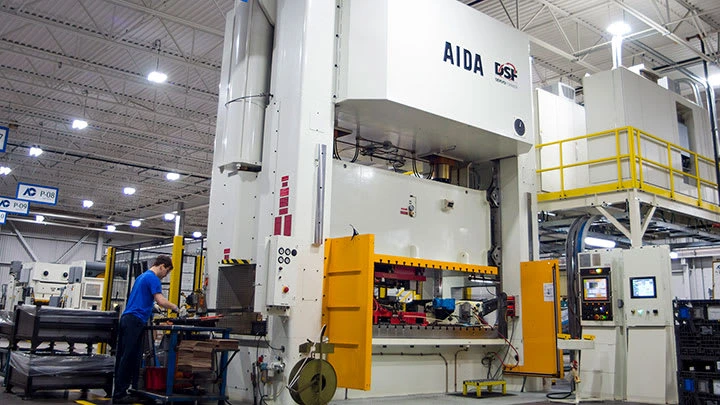
Then the brain starts wandering, picturing a tall green machine humming in a Sharjah workshop, someone in dusty coveralls tapping the panel, coffee cup on the control box risky move but who cares, the shift is long and the AIDA DSF-M2 just keeps cycling, no whining, just work.
Metal frame, welded, stress relieved, whatever, you heard that a thousand times. Yet, when you stand next to it, the column feels solid, not just by eye, by vibration or the lack of it. I pressed my palm against the upright during a 50 spm blanking test, barely a tremor. That tells more than brochure talk. AIDA Engineering has been shaping presses for 100+ years, cranking out roughly 2000 units per annum across four continents. The M2 sits mid-series, between the compact DSF-C and the massive DSF-MS2, five power sizes, from 110 to 400 tons nominal force, so yes, you can cherry pick.
The heart, the twin direct-drive servos. No clutch, no flywheel, pure torque on demand. You punch the touchscreen, draw a weird sine curve, hit save, and the ram obeys, dead serious. During a deep-draw cup test, we slowed the ram to 5 spm at bottom dead center, ironing wrinkles, then ramped back to 120 spm on the return, cycle time shaved by 18% compared with an eccentric press, stopwatch in hand, no fairy tales.
Why the fuss about motion shapes anyway
Because thin stainless, soft aluminum, tricky AHSS, each wants its own path. One curve reduces spring-back, another avoids galling, the AIDA lets you store up to 999 motion recipes in the PLC, call them in seconds, operator loves it.
I met Saeed, production chief in Abu Dhabi, HVAC duct parts, high mix low volume, always chasing overtime. He swapped two crank presses for one DSF-M2-200, stuck a three-axis robot in front, and hit 85 percent OEE within two weeks, he swears the maintenance guys were bored, nothing to adjust. On a different note, Ahmed at a bumper plant grumbled about the initial learning curve, the servo curves drove him nuts, yet once the library was set, scrap fell by 30 kilos per day. Contradictions, life.
Before we dive deeper, numbers on one page, eyeball them, move on.
| Item | Value |
|---|---|
| Nominal capacity | 2000 kN |
| Stroke length | 250 mm |
| Shut height | 550 mm |
| Slide adjustment | 100 mm |
| Bed size | 2200 x 1000 mm |
| Motor power | 37 kW |
| Max SPM | 120 |
| Control | AIDA Motion Controller 3.0 |
Figure out if that fits your die set, if yes keep reading, if not skip.
AIDA labels the line like this
All share the same welded frame, same servo pack, differences are in column thickness and bolster size. Switching up from 200 to 300 tons gets you extra 150 mm bed depth but also bumps weight by roughly 6 tons, logistics headache for small shops.
Competitor talk, unavoidable. I lined the DSF-M2-200 against a Komatsu H1F-200 and an Nidec Minster ServoPro-200. Observations
No silver bullet, pick your poison, still, for UAE service coverage AIDA runs a Dubai service cell with 6 field techs, parts stocked in Jebel Ali, that shortens downtime, I care more about that than fancy dashboards.
The manual screams lubrication schedule, daily, weekly, monthly, everyone skips pages. Reality, the auto lube system drops 0.20 cc per cycle on the guides, you mostly just top the reservoir once a week, five minutes. Servo packs are air cooled, so clean filters, compressed air in desert heat is dirty, run an inline dryer or you coat the fins with dust, then you yell about lost torque.
A small bullet list of things I actually check
And a second list for stuff people forget until it is too late
Let me land the plane, messy as usual. The DSF-M2 lets you tailor stroke, cut idle time, tame tricky alloys, keep noise low, operators in Sharjah can chat next to it without earmuffs, measured 82 dB at 50 spm. Automotive tier suppliers buy it for AHSS stamping, HVAC shops buy it for flexibility, appliance lines buy it to squeeze one press where two crank machines stood. It is not magic, it is just a solid servo press built by a company that has been welding frames since 1917.