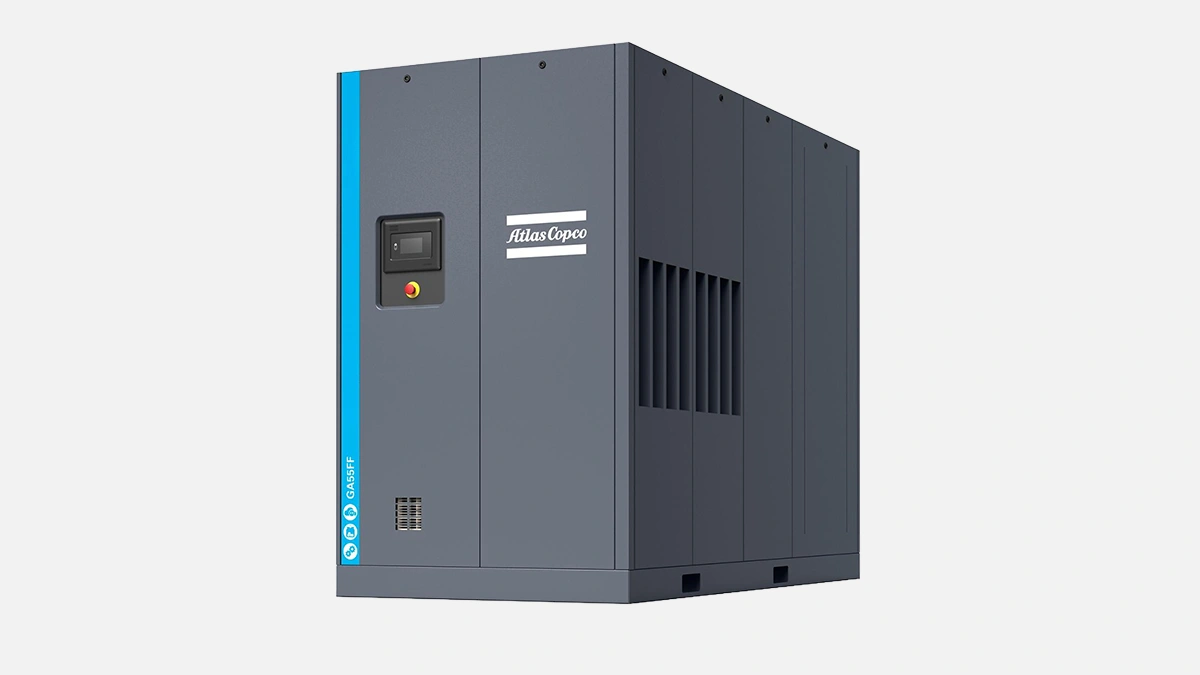
Steady GA 37-90 screw compressor delivers quiet airflow up to 19.5 m³/min at 13 bar for hot UAE shops
Stop for a second. Smell the warm workshop air, that mix of cutting fluid and hot aluminium chips, the stuff that sticks to your boots.
Now, picture the Atlas Copco GA 37-90 sitting in the corner, humming, not shouting, just a steady low-key rhythm. It feels almost domestic until you remember the airflow figures and your jaw goes a bit slack.
Two sentences first, because tables dropped without context look naked. The GA family sprawls from 37 to 90 kilowatts, and the jump in flow is not linear, it ramps fast. Check the snapshot, stare as long as you need.
| Parameter | GA 37 | GA 55 | GA 90 |
|---|---|---|---|
| Motor power | 37 kW | 55 kW | 90 kW |
| Max working pressure | 13 bar | 13 bar | 13 bar |
| FAD @7.5 bar | 7.3 m³/min | 12.4 m³/min | 19.5 m³/min |
| Noise level | 66 dB(A) | 68 dB(A) | 71 dB(A) |
Numbers tempt you to scroll on, but hold up. Those dB values matter if your office is two metres away. Nobody wants to yell at visitors.
Heat. Dust. Voltage dips around lunch when half the estate cranks up chillers. In Sharjah last July the shop I visited clocked indoor ambient at 48 °C, sweaty misery for people and bearings alike. GA packages ship with oversized coolers, and the Elektronikon controller will derate only after 55 °C inlet, leaving a useful margin. I have seen them ride through brownouts down to 360 V without tripping, the phase-loss relay twitches but keeps the motor engaged.
Before listing perks, a quick reminder that your parts list only shrinks when the compressor stays on spec. Consumables are simple here: element air filter, oil filter, separator cartridge, a few O-rings. Nothing exotic.
Two sentences to close the list. The point is transparency. Operators know what is next and plan shutdown windows instead of firefighting.
A lot of manuals preach, let us keep it blunt.
Three short tasks, done under 3 minutes, make the difference between five-year peace and sudden element seizure at 2 am.
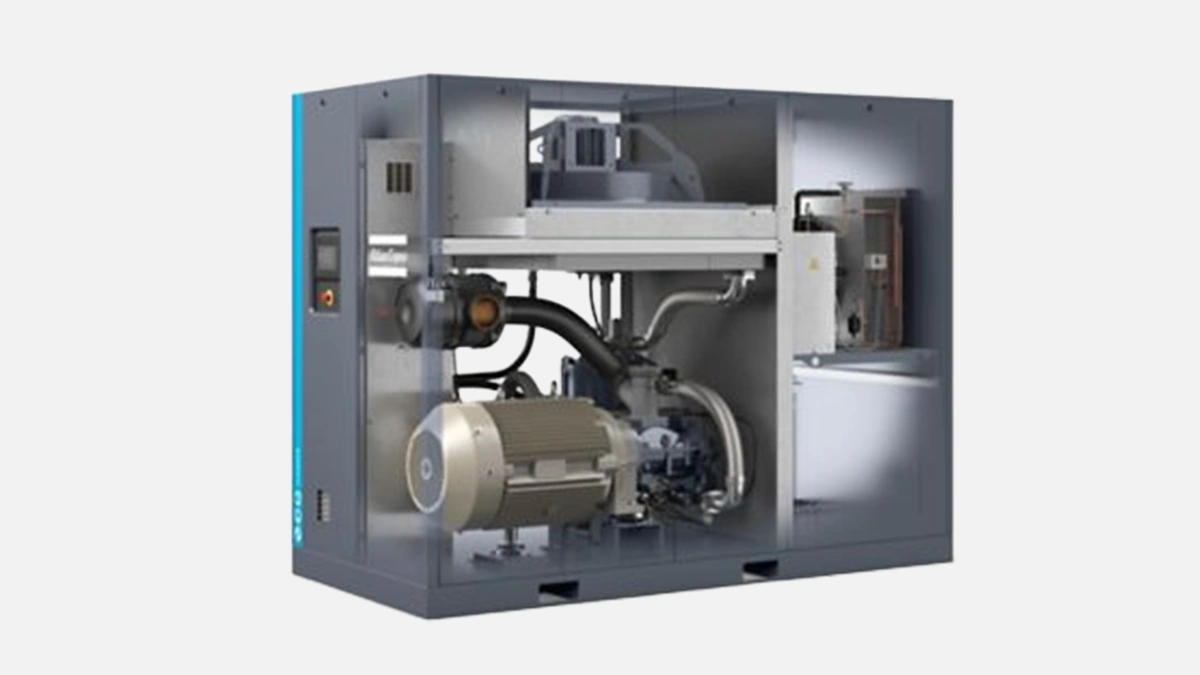
Long sentence coming, buckle up. The GA shaft couples straight into a two-stage helical gear train, backlash factory-set, no fiddling allowed, splash lubrication shoots oil onto the mesh, then the integrated pump pushes it through a 3-micron full-flow filter before the fluid dives back to quench the rotors, and yes the viscosity spec is ISO VG 46, the synthetic blend survives 8000 running hours easily, I have stretched it to eleven thousand once but would not brag about that publicly. Short pause. Catch breath.
Competitors circle close, everyone claims the same stuff, let us slice it.
Kaeser BSD 75
– Adds a belt stage, easier to swap ratio
– Belt dust in the enclosure means extra vacuuming, minor but real
Ingersoll Rand RS 75
– Variable speed standard, nice for lightly loaded lines
– Bearings a bit noisy, measured 3 dB higher at ear height
Atlas Copco GA 75
– Direct gear, less maintenance
– Elektronikon touchscreen shows trend graphs, no laptop needed
The takeaway, at least for me, is that GA runs quieter and asks for fewer spares. Not a knockout punch, yet in the Gulf where service techs drive three hours one way, fewer interventions equal sanity.
The spread 37 / 45 / 55 / 75 / 90 looks straightforward, but air demand curves rarely are. A CNC job shop with four VF-4 mills and one laster cutter sat happily on a GA 55 until they added another shift. Pressure at end of line dipped to 6.5 bar and tool change alarms went berserk. Upgrading to GA 90 felt overkill, so they kept the 55 as trim and rented a GA VSD 22 for night duty, problem solved. Moral, mix and match, the Elektronikon can do network control out of the box.
Stick a refrigerant dryer after the compressor, or even better the GA FF version, factory-mounted dryer inside the same canopy, footprint barely grows. For those running abrasive waterjet, throw in a 0.01-micron coalescing filter and you will stop blaming nozzles for what oily condensate did. Remember, every bar of pressure drop upstream robs roughly 7 percent of energy, so sizing filters one class bigger pays back fast under Dubai tariffs.
I hate buzzwords, so here is the raw bit. A fixed speed GA 55 pulling 110 amps full load eats about 85 kWh each hour, toss in power factor correction and you shave a little, but the heavy punch sits in leak management. Patch leaks down to 5 percent and you may avoid the capital spend on extra capacity. Atlas Copco’s smart air audit quoted me 14 percent leaks in a small fab, we killed half, deferred the second compressor purchase by a year. Numbers printed, boss happy.
The brand has factories running since 1901 if you dig Sweden history, nowadays over 180 production units worldwide, compressors form a big slice. Rough math puts annual output above 70 000 screw packages, not niche by any stretch. Stock of GA series spares usually lives in Jebel Ali, truck arrival under 24 hours across emirates, I have tested that claim twice.
You pull the trigger when hiring another technician costs more than the kilowatts saved by a newer machine, when vibration at the old belt drive rattles pipe anchors loose each quarter, and when local legislation starts murmuring about noise caps below 72 dB(A). The GA 37-90 line hits those three boxes for many shops between Ras Al Khaimah and Abu Dhabi, not all, but many.
End of rant. In one breath, the compressor delivers steady air, stays quiet, drinks moderate electrons, and does not turn daily maintenance into a marathon. That mix, mundane as it reads, is why you find GA canopies painted that familiar blue in so many Gulf workshops.