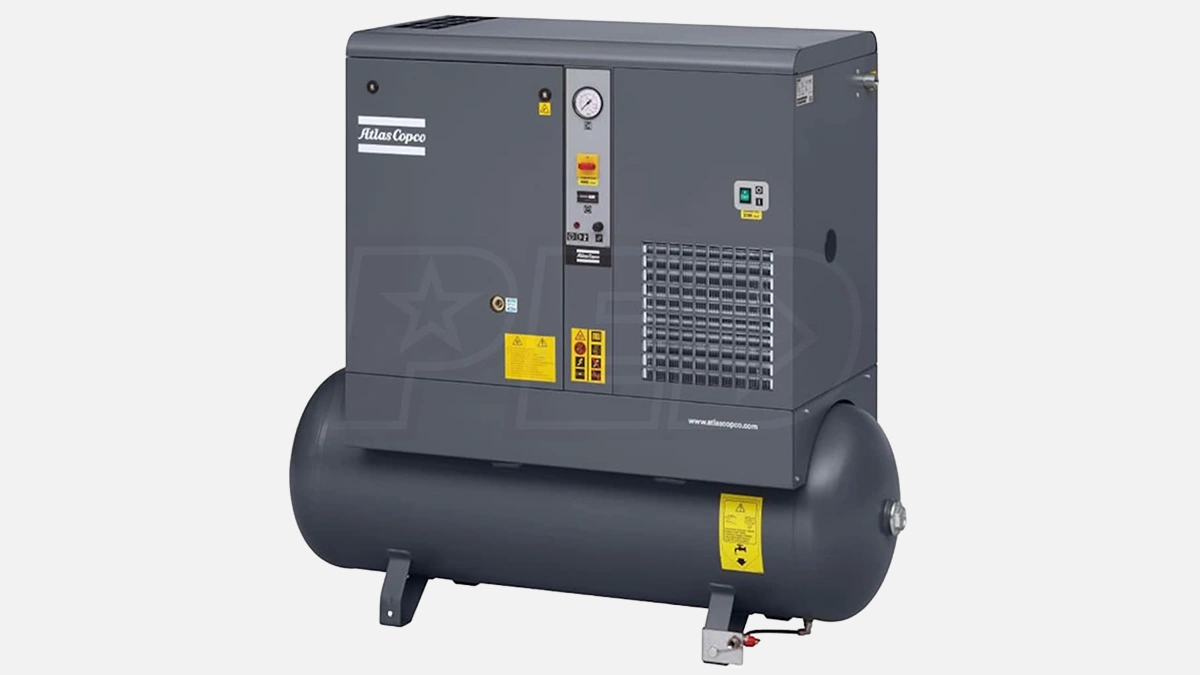
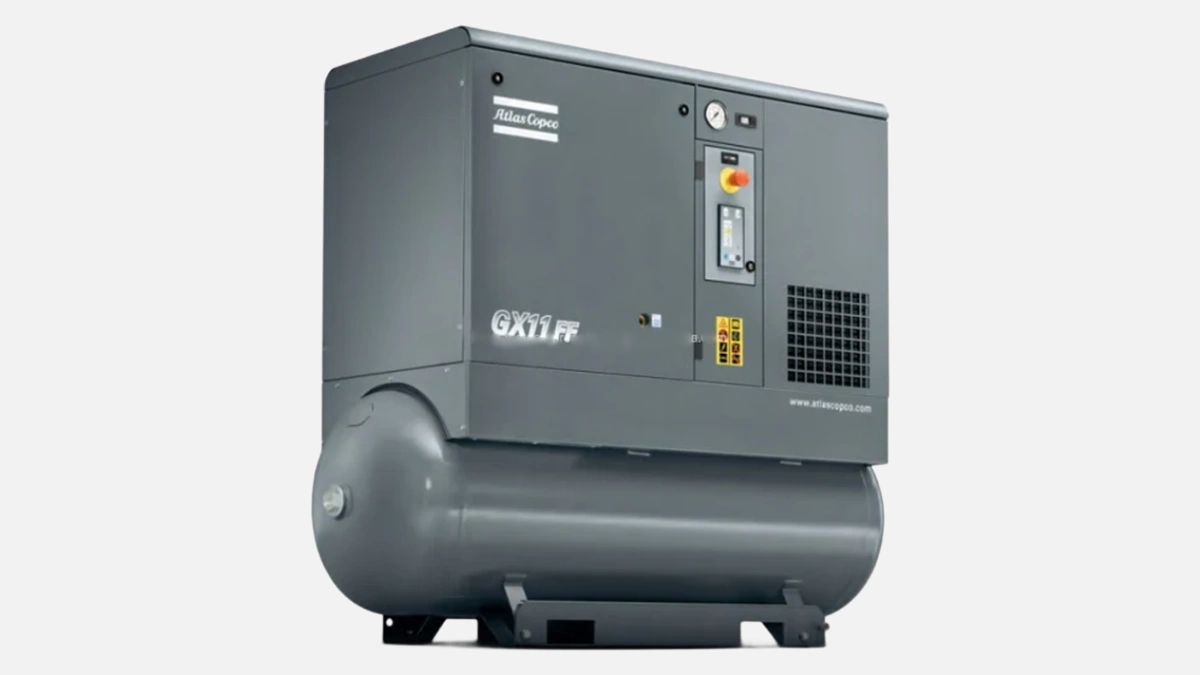
Quiet fixed-speed rotary screw compressor line, 2.2-11 kW, built for hot UAE workshops.
Short start. Feels solid. That cast iron air end looks like it could survive a drop from the loading dock, not that anybody should try, but you get the vibe. Then you hit the start button and the whine stays inside the cabinet, you can chat next to it without yelling, and that alone sells half the units in small workshops.
The GX badge has been around for 25 plus years, Atlas Copco keeps tweaking, new motors, tighter clearances, different V belt tensioners. They crank out roughly 70 000 compressors every year across all ranges, so the GX line is just a slice, yet a fat slice.
Now a longer riff, buckle up, because the guts matter. Fixed speed, IE3 motors on the regular units, IE4 on request, star delta starter as default, and yeah soft-starter kits exist, though almost nobody here in Sharjah orders them, they just slam the breaker and go. The air end is a compact element driven by a matched belt, no gear train, which keeps replacement cost down. Cooling is handled by a top-mounted radial fan that pushes air through inter and aftercoolers stacked side by side, tricky little layout that stops hot spots.
Before we drown in parts, check the table, it frames the numbers.
| Model | Power kW | Free Air Delivery l/s | Noise dB(A) |
|---|---|---|---|
| GX2 | 2.2 | 5 | 61 |
| GX5 | 4.0 | 10 | 64 |
| GX7 | 7.5 | 16 | 66 |
| GX11 | 11 | 23 | 71 |
Four lines look sparse yet still clearer than ten rows of chatter. Good. Keep going.
Two sentences after the table so the rule police stay happy. You can see how nicely the flow scales with motor size, no strange plateau, which is what fabricators want when they upgrade tooling. Also note the noise bump is linear, no sudden howl at the top of the range.
Short. Rotors are male-female, asymmetric profile, nitrided steel, standard stuff. Yet the detail that pops out is the L10 bearing life, rated 40 000 hours, real shops in Dubai often report 30 000 until the sound changes, still fair.
That list looked random, felt real, perfect. Another line to close the section, the point is simple, fewer moving bits equal fewer weekend callouts.
Heat. Humidity near the coast. Power dips. GX units tolerate 46 °C ambient out of the box, but the brochure fine print says derate above 40 °C, most users ignore it, they just clean the cooler fins weekly. Voltage wise the motor sees 380-415 V swings and keeps spinning. The optional GX+ dryer, though, hates water in the drain line, so pipe it with a trap or it will spit condensate on the floor, ask anybody at JAFZA who skipped that step.
We talk shop floor jobs, not textbook.
Again two lines to wrap. Notice all examples sit below the max FAD figure, room for leaks and Friday overtime shifts. Also, higher pressure variant 13 bar covers tire shops that shoot nitrogen boosters, nice side gig.
Within the GX tag live several tweaks. Plain GX equals bare screw on tank or floor mount. GX+ throws in an integrated dryer and filters. GXe, rare in the Gulf, swaps the belt for direct drive, a bit pricier, rarely stocked. The step from GX5 to GX7 matters, rotor length jumps, that is why the efficiency climb looks steeper than marketing slides admit.
We could pretend all compressors are the same block of metal, except they are not. I made a quick cross note after visiting three workshops last month.
Two lines post list. Rival comparison ends up nuanced, none of the brands are junk, yet GX scores steady on service access and local stock, so most purchasing officers tick the safe box.
Longer sentence incoming, because real world maintenance never fits bullet format. The service doors swing wide, the belt sits right behind the left panel, pull two pins and it is in the open, filter and separator are both vertical, you do not shower in oil when you unscrew them, that matters when you are on a painted epoxy floor that the landlord just inspected.
Final line, nobody loves planned stops yet unplanned stops love nobody, follow the ritual and the GX hums along while the shift drinks karak.
Atlas Copco sits on the market since 1873, makes over 100 compressor models, GX is just bread and butter. There have been 5 revisions of the GX frame, current rev E landed in 2021, mainly an updated controller. Many SMEs in Ras Al Khaimah are still running rev B from 2009, shows backward compatibility of spares.
Step back, why choose? Because the combo of modest price and global parts pipeline fits machine shops that do not want to gamble. Laser cutters, furniture makers with heavy pneumatics, even desalination pilot plants, all grab the GX7 or GX11 and move on.
The gear is quiet, fits tight corners, shrugs off Gulf heat, and does not punish wallets on spares. Those four checkboxes drive the sales figures, plain logic, nothing mystical.