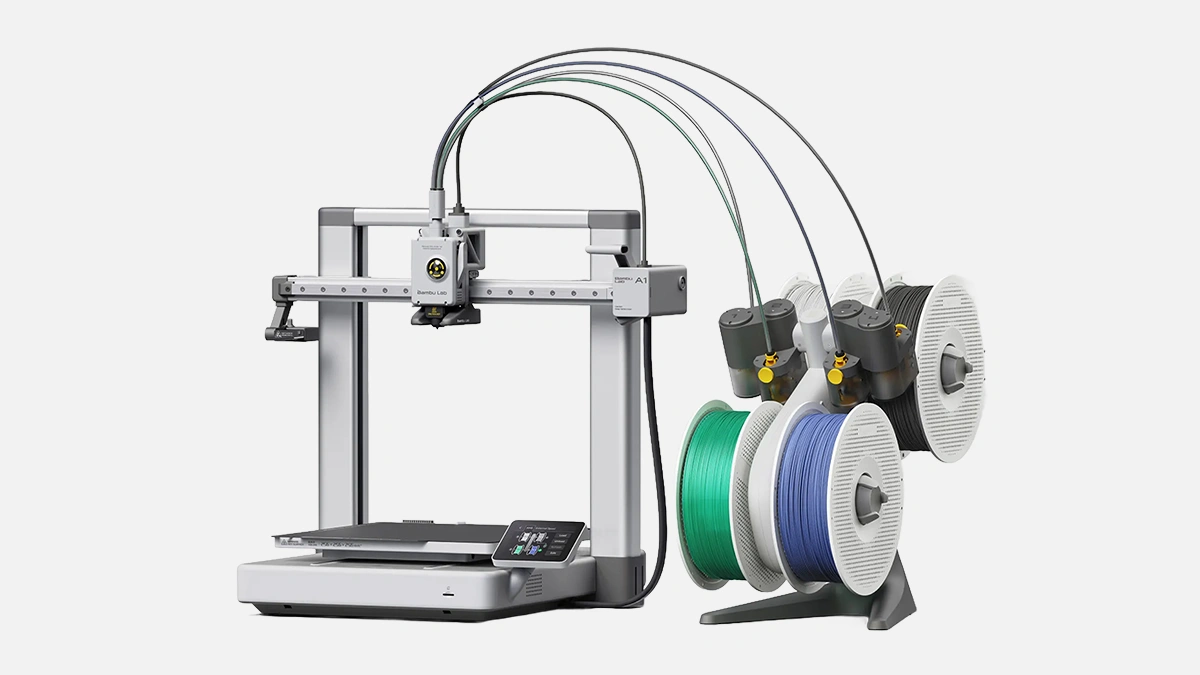
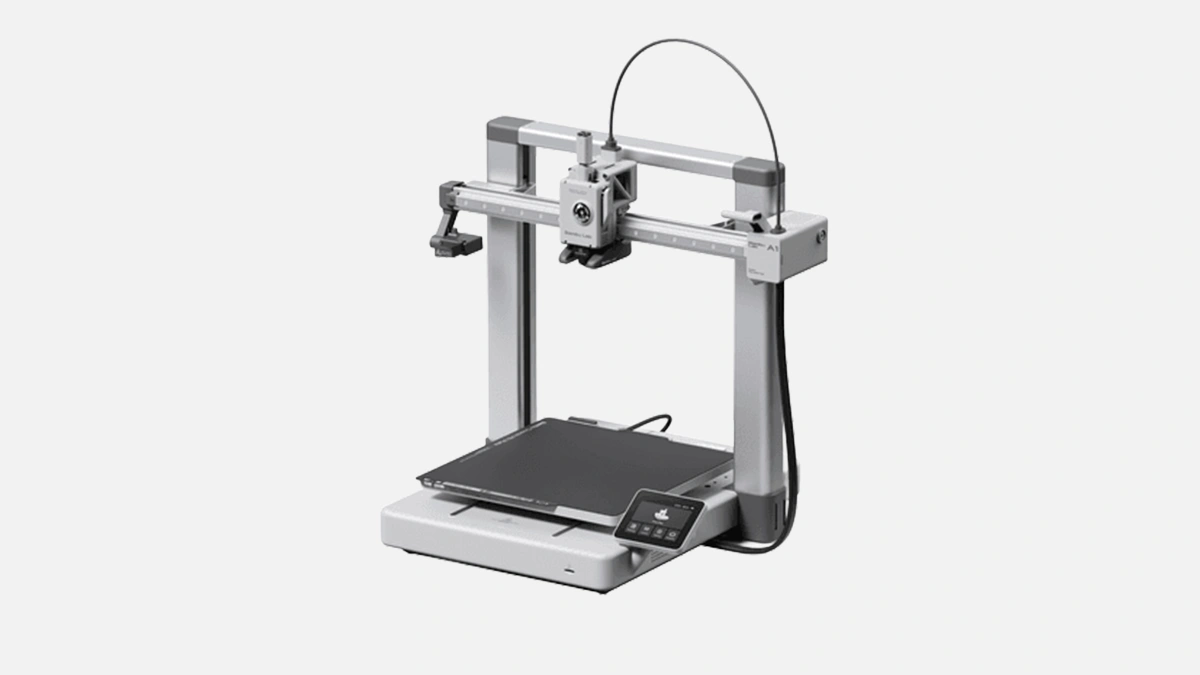
256 mm cube build, 500 mm/s, lidar auto leveling – Bambu Lab A1 for fast shop tooling.
Quick look, neat frame, low-key gray, nothing flashy. You press the power button, fans spin up, a short chime, that smell of fresh PCB varnish sneaks out, and right away your brain starts mapping out where to put it in the shop. Fixture room, maybe. Or right next to the Mazak because you are tired of waiting three days for a simple ABS soft-jaw prototype.
Odd mix at first sight, agreed, yet it pays off. UAE outfits burn hours outsourcing jigs that could have been printed overnight. With A1 you slice in Bambu Studio, hit send over WiFi, lock the door, grab karak tea, come back in the morning to a finished gauge. No need to tie up a milling center for trivial jobs.
The bullet list above looks tiny, yet for shops wrestling with forty-plus jobs in WIP it is pure gold.
Before diving into chatter, here is a table, short and sweet, mixing factory data with field notes from guys on the forums who actually run the thing.
| Parameter | Factory spec | Real-world note |
|---|---|---|
| Build volume | 256×256×256 mm | full Z reachable even at 100 °C bed |
| Speed (default) | 250 mm/s | 200 safe for PETG |
| Speed (Sport) | 500 mm/s | only for rigid PLA style blends |
| First layer sensor | lidar | bed mesh auto fixes 0.02 mm tilt |
| Noise level | 38 dB idle | 50 dB at 500 mm/s, still phone-call friendly |
| Repeatability | ±0.05 mm | holds gauge blocks after 300 hrs |
Tables sometimes feel cold yet numbers shut down myths fast, so there it is. Right after the table the conversation picks up again, mingling shop gossip with spec sheet reality.
The frame is die-cast aluminum, gantry rails are hardened steel, belts come pretensioned from the factory, you tweak nothing. Good, because nobody in Sharjah has time to fiddle with Y-axis belt tension at 2 AM when PO-0078 is already late. Direct-drive extruder, dual gear, 9.5 kg of grip they say, and it shows, TPU 95A feeds without bird-nesting. Heatbreak is all-metal, max 300 °C, so PA-CF prints for lightweight robot fingers are on the menu.
32-bit STM32, stepper drivers with silent current shaping, lidar sitting on the toolhead reading the first layer height every millisecond, then telling the firmware to nudge Z. That tiny sensor saves you the classic paper-under-nozzle ritual, you know, the one that ruins coffee cups because you hold them with one hand and twist the knob with the other and spill.
You model a locating fixture in SolidWorks, export STL, drop into Bambu Studio, pick profile, done. The slicer auto-orients, inserts tree supports only where really needed. File size? 30 MB tops. Push via WiFi, printer receives, checks filament color, preheats, probes bed, prints.
Those three banter lines above form a second list, see, lists help the brain organize random chatter.
PLA runs default, PETG needs slight z-hop because it strings in Dubai humidity, ABS benefits from a draft shield, nylon likes a dry box. Bambu sells their own spools yet any 1.75 mm reel fits, code does not lock you out, open system, breathe easy.
Dual fans, one for part, one for cold-end, plus a radial booster kicking in past 150 mm/s. Noise still civilized. The shop compressor roars louder anyway.
Competitors? Prusa Mk4, Creality K1, Ultimaker S3. Quick rundown:
| Model | Volume | Peak speed | Closed chamber | Price tier | Note |
|---|---|---|---|---|---|
| Bambu A1 | 256³ mm | 500 mm/s | optional draft shield | mid | auto lidar |
| Prusa Mk4 | 250×210×220 mm | 250 mm/s | open | mid | proven ecosystem |
| Creality K1 | 220³ mm | 600 mm/s | closed | low | early firmware quirks |
| Ultimaker S3 | 230×190×200 mm | 200 mm/s | fully closed | high | dual extruders |
A1 stakes middle ground, more speed than Prusa, less than K1 on paper yet better accuracy beyond 300 mm/s, and cost far under Ultimaker while keeping lidar perks.
Right now A1 is youngest sibling to X1C and P1P. Same slicer, similar toolhead, but X1C owns a carbon shell and hardened gears built for abrasive CF filament. P1P strips panels for hackability. A1 targets plug-and-play crowd. If your shop plans high flow PA-CF every shift, X1C makes sense. For fixture duty three days a week, A1 is sweet spot.
Rashid from Abu Dhabi Aerospace printed conformal cooling inserts in PA12-GF, six hour run, no step loss. He tossed the inserts into a CNC milled mold next day, cycle time shaved 12 % off plastic shot, management happy. Another user, Anil at a Dubai job shop, swears by the resume function, lightning killed power twice in July, both prints finished regardless. Sure those are small samples yet they ring true.
Grease rails every 200 print hours, nozzle swap in sixty seconds, firmware prompts weekly for self check. Filter sponge behind electronics bay needs a blast of compressed air monthly, especially in dusty industrial zones around Jebel Ali.
Odd point yet relevant. Bambu Studio exports print time estimate as JSON which your ERP can parse, feed into job costing so accountants see real machine hours versus quoting. Not perfect but better than guessing.
Ambient 35 °C plus. A1 keeps stepper temps under 80 °C, fans ramp up sooner in hot rooms, no skipped layers noted at 37 °C ambient, though you should keep filament in a dry box, relative humidity hits 70 % summer evenings near the coast.
Peak 350 W during preheat, average 120 W printing PLA, chunk change compared to a Haas VF-2 spindle at 15 kW. Shops caring about DEWA bills will barely notice the bump.
CE, FCC, adding GCC mark this year per factory roadmap, grounded chassis, thermistor redundancy, thermal runaway cut at 310 °C.
Bambu Lab sits on the market since 2020, rolled out three major models, ships over 10 000 units monthly per Shenzhen trade filings. A1 got only one hardware revision so far, boards updated from v1.0 to v1.1 in March 2024, mainly better ESD shielding, nothing user visible. Short timeline yet solid velocity.
You want numbers plus seat-of-the-pants feel, you got both. A1 prints fast, accurate enough for gauges, cheap to run, eats regular filament, drops lead time on throwaway jigs. That is why midsize machining outfits from Al Ain to Ras Al Khaimah quietly stick one in the corner and stop bragging about it, because the competitive edge is too handy to share.
Speed, auto levelling, open materials, small footprint. Put it next to the VMC, let it churn non-stop, free up steel-cutting capacity. Simple as that.