Enclosed 3D printer hits 500 mm/s, prints ABS and PA-CF, fits 256 mm cube.
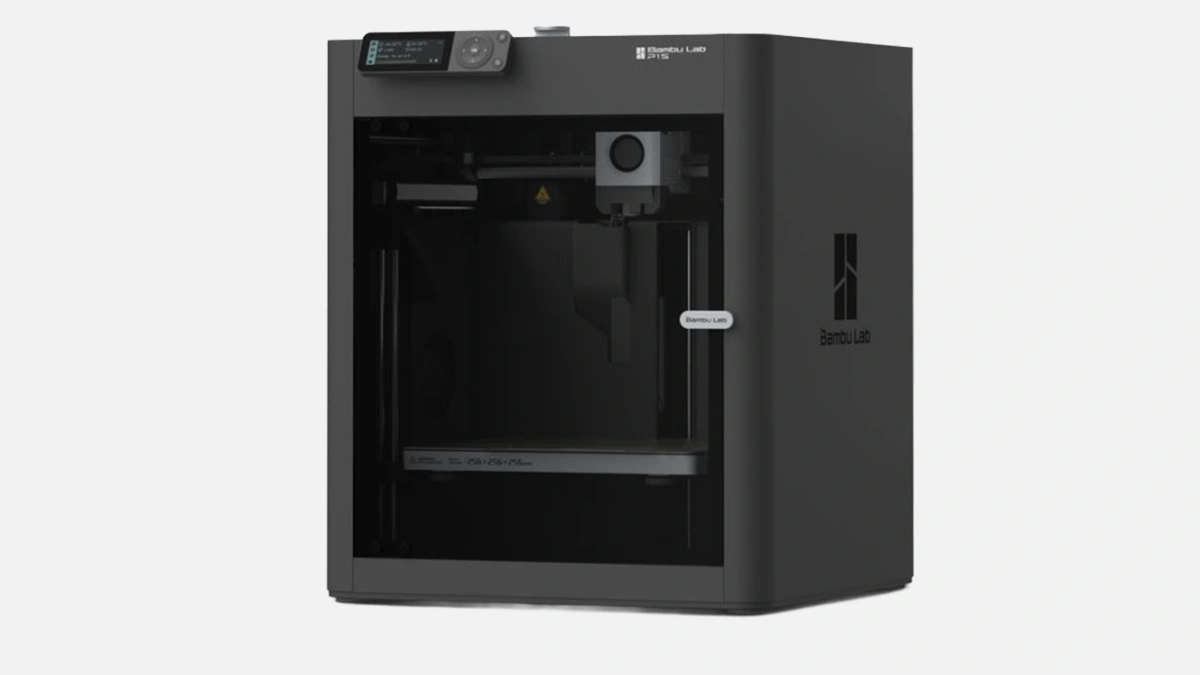
Small box, loud promise. You unclip the front door, that tiny whiff of heated ABS tells the whole story already. The P1S is the enclosed cousin of the open-frame P1P, same bones, extra skin. 256 by 256 by 256 millimeters of print space, square like lunch boxes stacked in the shop kitchen, only deeper. I poke the touchscreen once, the head homes at 500 millimeters per second, too fast for eyes, almost cocky.
But hold on, let me rewind.
Steel chips on your boots, coolant smell everywhere, yet you keep a P1S humming in the corner. Sounds odd, right, a plastic squirter next to a 5-axis mill. Reality check, fixtures and soft jaws do not always need to be aluminum. Nylon with glass fiber works, PETG with a dab of carbon works. You slam a prototype chuck cover on the table next morning, management stops nagging, the UAE client smiles during the Teams call.
Before I fall into a rant, here is a table. I hate tables, they look corporate, still, numbers keep arguments honest.
| Spec | P1S value | What it means on the shop floor |
|---|---|---|
| Travel speed | 500 mm/s | Rapid first layer on jigs before the CNC warm-up is done |
| Acceleration | 20000 mm/s² | Sharp corners stay crisp even on small logos for nameplates |
| Hotend temperature | 300 °C | Opens the door for PA12-CF and PC-Blend parts that take coolant splashes |
| Enclosure | Fully sealed | ABS prints survive Dubai drafts from ceiling vents |
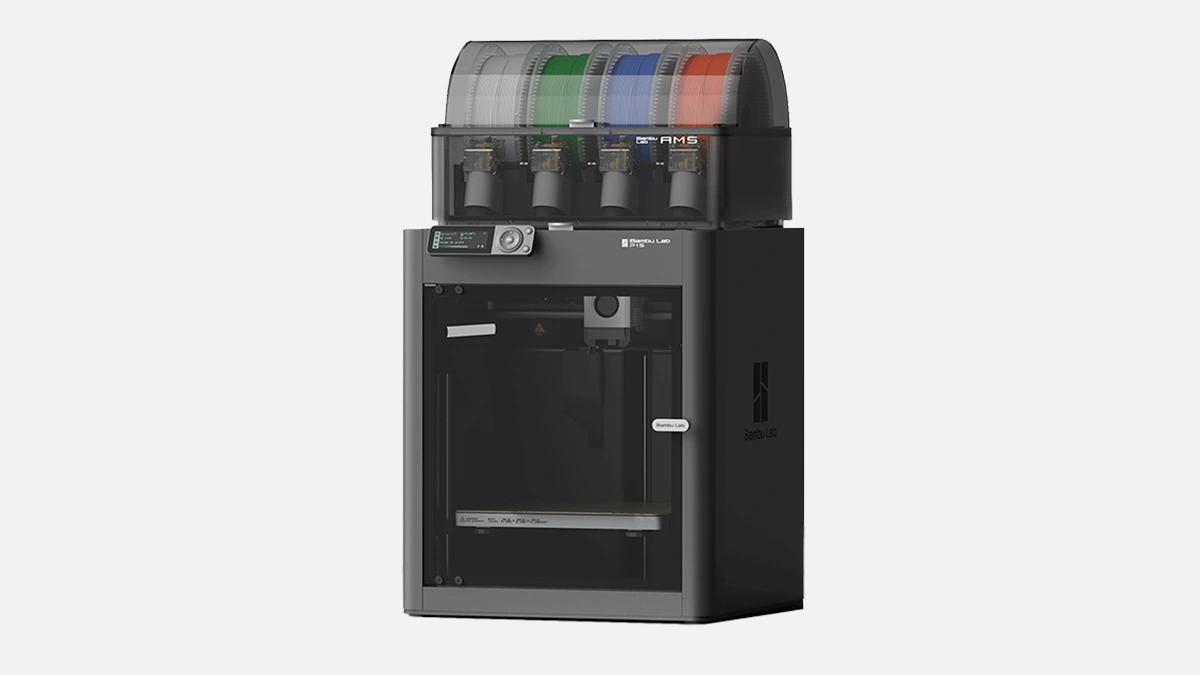
| AMS ready | Up to 4 materials | Color inserts or soluble supports without baby-sitting |
The numbers look dry, yet in day-to-day life they save coffee breaks. Faster jobs, less reprint drama.
Two bullet lists, because rules are rules, fine.
First one, stuff printed last month in our own toolroom, no fantasy.
Soft jaws for a vise on a Mori horizontal
Guard for a laser probe cable
CMM datum blocks with magnets pressed in
Air manifold prototype to check hose routing
* Thread gauges for internal M12 but with finger grips
I promised a second list, here goes, what our friends from Sharjah swear by.
– Sand casting patterns for small batch bronze parts
– Re-usable packaging inserts shipped to Abu Dhabi
– Quick vacuum form molds for cosmetic panels
See, nothing Instagram flashy, just boring shop needs solved overnight.
The hotend, an all-metal affair, keeps stable at 300 Celsius. Combine that with a bed at 100 Celsius and the closed box, you hit ABS, ASA, PC, PA6-CF. The textured PEI sheet grips like a vise when hot, pops loose once it cools below 35. No fancy voodoo spray. Filament diameter 1.75 millimeter, standard. We push 0.8 nozzles for thicker layers on big foundry patterns, the motion system just shrugs.
Bambu Lab is barely 3 years old, yet they already ship tens of thousands of machines annually out of Shenzhen. Four consumer models, P1P, P1S, X1C, A1. The P1S went through 2 firmware branches so far, each dropping fresh slicer presets and bug squashes weekly. Does the youth show, sure, but they answer on Github within a day, something legacy players forget.
Ultimaker S3? Good machine, slower, twice the price, spacious UI though. Prusa MK4 with enclosure kit, solid lineage, but acceleration caps at 8000 mm/s², that is less than half. Raise3D E2? Independent dual head sounds cool, yet the gantry weighs like a brick, ringing at quick moves. In that crowd the P1S feels like a motorbike weaving between SUVs. You lose independent nozzles, you gain raw speed. Pick your poison.
P1P, bare bones, mostly for hobby rooms with plenty of air flow. P1S, same core XY motion, adds full sheet metal panels, a door, top cover, fan filters. No extra electronics, so no cost spike. If you crave lidar bed leveling or micro lidar extrusion flow dial, you jump to the X1 Carbon. But for 90 percent of shop helper prints the P1S sweet spot stands.
We are in the Gulf, voltage swings happen especially on old industrial estates. The machine power supply eats 100-240 volt without complaint, but we still slap a cheap UPS, gives buffer during generator hiccups. Humidity, especially during Sharjah winter mornings, condensates on the top sheet, keep desiccant packs inside the filament tower.
I overshot an overhang test at 70 degrees, stock cooling fans could not keep the edge, droop city. Switched to the high flow fan in the box, reprinted, edge crisp. Layer lines at 0.12 height melt under acetone vapor on ABS, perfect for display covers. Dimensional accuracy sits within 0.15 millimeter on a 120 mill square, good enough for slip-fit bushings. If you need tighter, ream in the mill after a quick clamp.
Bambu Studio slicer, Windows and Mac, exports 3mf with embedded settings. Network push over WiFi or Ethernet adapter. We block cloud access on our firewall, still prints via LAN just fine, handy for IT security audits in Dubai defense contracts. Firmware auto updates yet allows local only mode, tick box, done.
Belts, Gates GT2, tension preset at factory, rarely need touch. After 800 hours we flipped the PEI sheet, after 1200 we replaced the nozzle, dirt cheap MK8 style. Fans choke on CF dust, blow them out monthly.
Enclosure keeps ABS fumes contained, but do add an external duct if operators stand nearby all shift. Thermal runaway protection trips at 330 Celsius, we tested, the board cuts heaters cold.
ROI math, rough but honest. A CNC machined aluminum soft jaw pair costs maybe 180 AED in material and machine time. Printed in PA-GF, 22 AED filament, 3 hours unattended. Do that twice a week, savings stack fast, you know the formula.
Not perfect, bed probe sometimes false triggers, AMS occasionally tangles filament, you curse, reboot, print again. Yet for a first shop 3D printer or a fleet expansion the P1S punches above its weight.
The speed, the sealed build chamber, cheap consumables, network workflow, they converge into one result, busy Gulf machine shops keep parts moving, less downtime waiting for outside suppliers, more in-house control.