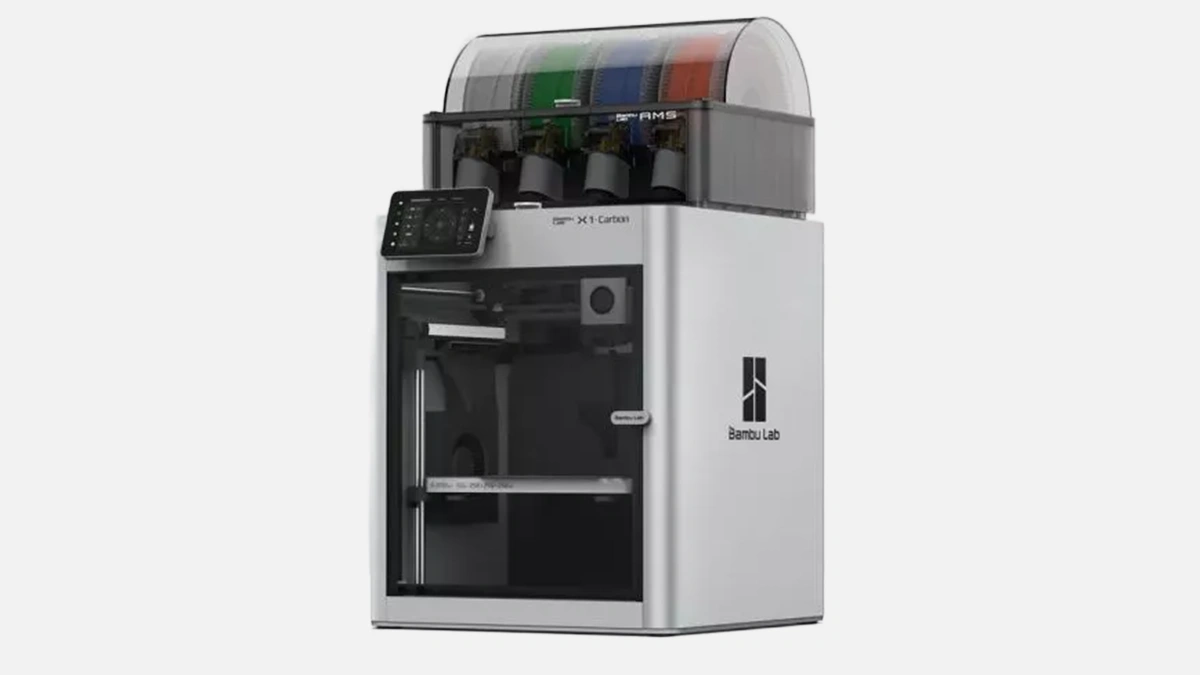
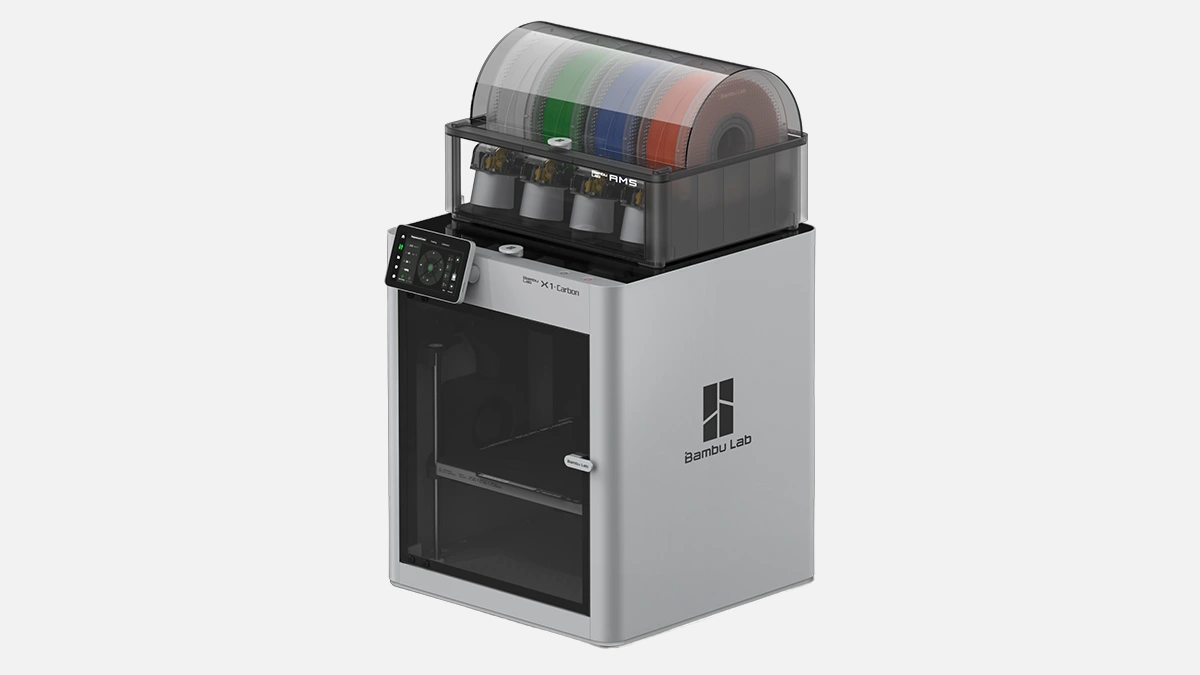
Fast CoreXY 3D printer, 256 mm cube build, lidar auto tune, fits Gulf workshop heat.
Short line, almost a whisper. Then a longer breath kicks in, because every workshop lead in Sharjah or Abu Dhabi wants to know whether this small cube on the bench can really push out functional parts during a scorching July shift, while the regular CNCs drone in the background and the operator watches both the DNC console and his phone for that WhatsApp from purchasing.
Cut. New thought. X1C looks neat, black shell, a bit stealthy.
Before we get lost in the vibe, a table keeps us grounded.
| Feature | Value |
|---|---|
| Build volume | 256 × 256 × 256 mm |
| Max speed | 500 mm/s |
| Acceleration | 20000 mm/s² |
| Nozzle temp | 300 °C |
| Bed temp | 110 °C |
| Camera | 1080p, night mode |
| Noise | 50 dB idle |
Numbers stare back, silent but firm. Now, two sentences to pull us out of grid mode. You see the speed, you see the heat reach, and you start picturing nylon filled with carbon fiber cooling evenly because the chamber fan actually does its job instead of just blowing for show. And yes, the noise rating matters when the QA office is three meters away.
Heat. No secret. Regular PLA loves to droop once the thermometer hits 45 °C on the factory floor. X1C ships with a carbon-reinforced frame that does not warp when ambient rises, and the closed chamber plus active filters keep dust from outsourced sandblasting bays out of the print path, practical.
The bullets stop, breathe. Those are real forum stories, not brochure talk.
First thing the machine does after power-on is a self test, nozzle tap on bed, lidar takes a snapshot, done. I remember the first week, the operator Ali kept staring at the lidar dot, thinking something was broken, funny moment. The test prints, a little tower full of squares, show flow deviation below 5 % on default profile, we kept it, never bothered calibrating again until a new batch of CF-PETG arrived from a supplier in Ajman.
Manual bed leveling? Forget it, screws are there yet you rarely touch them. The sensor grid builds a mesh every few jobs, adjusts on the fly. Contrast that with a Prusa MK4 where you still chase live-Z manually if humidity shifts. Not slagging Prusa, just saying daily routine differs.
A quick comparison helps procurement teams who keep scrolling spreadsheets. Text only here, no fancy charts.
X1C lands in the middle, keeps footprint small, still outruns most on speed, and the filtration is real HEPA not sticker marketing.
Bambu Lab popped up in 2020, not decades old yet already pushes out roughly 100 000 units a year, four main lines so far, P1P, P1S, X1, A1. X1C is the second revision of their flagship build, first batch shipped late 2022, firmware now on version 1.07. Updates drop monthly, over Wi-Fi, no USB juggling.
Lists are cool yet context matters. Remember many Emirati workshops already own Haas VF mills, they print soft jaws overnight, slip them into the vice at dawn, spindle time saved, aluminium chip load stays for actual revenue parts. X1C slots into that cycle smoothly.
The motion system rides on hardened rods, linear rails, CoreXY belts tightened using sonic method, factory spec 50 Hz resonance. We checked with a mobile phone vibrometer, close enough. Acceleration 20000 mm/s² sounds marketing heavy, in practice you hit 12000 on curved inner perimeter before jerk limit steps in, still blistering fast.
Nozzle swap simpler than E3D Revo, three screws, out. Spare hotend costs less than an average tank of petrol for a Hilux, just a relatable metric. The heat break is all-metal, so no creeping PTFE, means you push PC without smell of burnt Teflon.
Plate surfaces wear, we logged 600 cycles on textured PEI before tiny blisters formed. Replacement plate clicks in with magnets, calibration auto compensates, job continues, downtime 3 minutes. Filament runout sensor sits before AMS buffer, picks up end of spool, pauses print, so that half kilo spool of BASF Ultrafuse PAHT-CF actually empties to last coil, nice detail.
Once a week you vacuum the chamber, wipe the linear rods with PTFE oil, done. Fans pull composite dust onto the back filter, swap every 3 months, price negligible compared with HEPA sets on industrial Stratasys rigs. Firmware flashes over network, shop floor IT requires no special ports, easier than setting up a Siemens 840D patch.
The series has plain X1, this Carbon variant, and the X1C Combo that bundles AMS right from factory. Compared to P1S, X1C gets lidar, hardened nozzles, and reinforced frame. Price delta exists yet workflow peace covers it quickly, at least that is what finance told me after looking at scrap count drop.
A machinist in Mussafah posted that he printed a coolant manifold in PETG CF, bolted it on a Doosan lathe chuck guard, ran for 48 hours, no failure. Another guy from Ras Al Khaimah left a time lapse running for client demo, camera caught a stray strand on layer 312, the AI caught it too, paused, pinged his phone, he clipped it, press start, job salvaged. These anecdotes float in Telegram groups every other day, add up to a picture more honest than any brochure.
X1C is loud above 400 mm/s, about shop-vac level, headphones recommended. Flexible filaments through AMS still jam sometimes, you better side load TPU straight. Maximum part height remains 256 mm, so if you dream of printing a full longboard deck in one shot, look elsewhere.
The table near the top gave raw data, lists sprinkled around showed use cases, stories gave color, now one last batch of plain language. X1C sits on a steel rack, occupies less than half square meter, plugs into 220 V at 350 W average, prints parts strong enough to replace simple milled fixtures and light housings, and does it on a timeframe that matches Gulf market tempo, where quotes fly out before sunset and logistics race to deliver before the weekend starts on Friday.
Regular maintenance quick, learning curve friendly thanks to auto calibration, material range broad, speed relentless, that is why sheet-metal shops, HVAC installers, drone startups, even dentistry labs around UAE add at least one of these cubes next to the laser cutter.
It boils down to three things, really: speed you can trust, dimensional stability in hot climates, and cost per part that beats outsourcing. That triangle is the reason the purchase orders keep rolling.