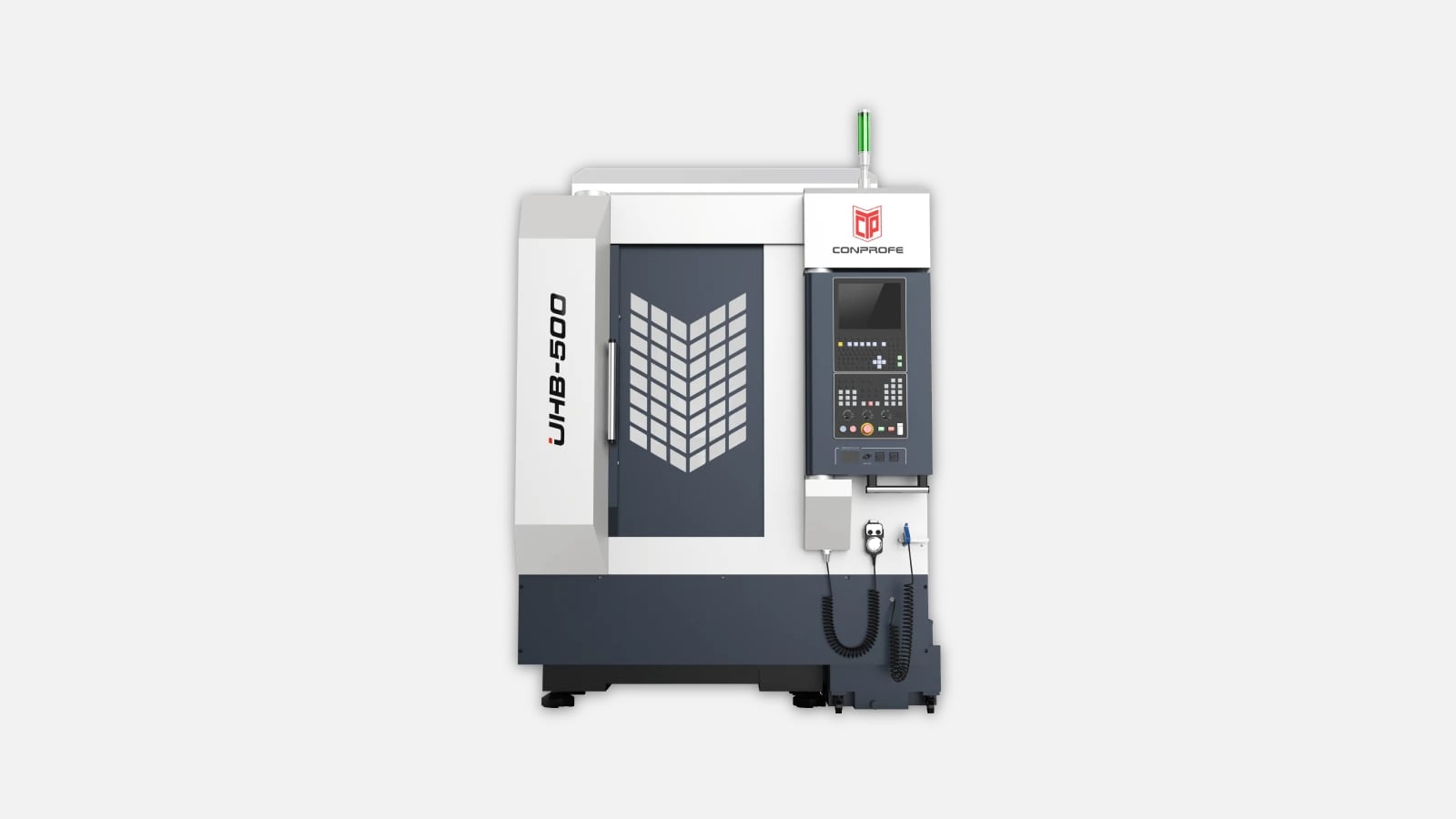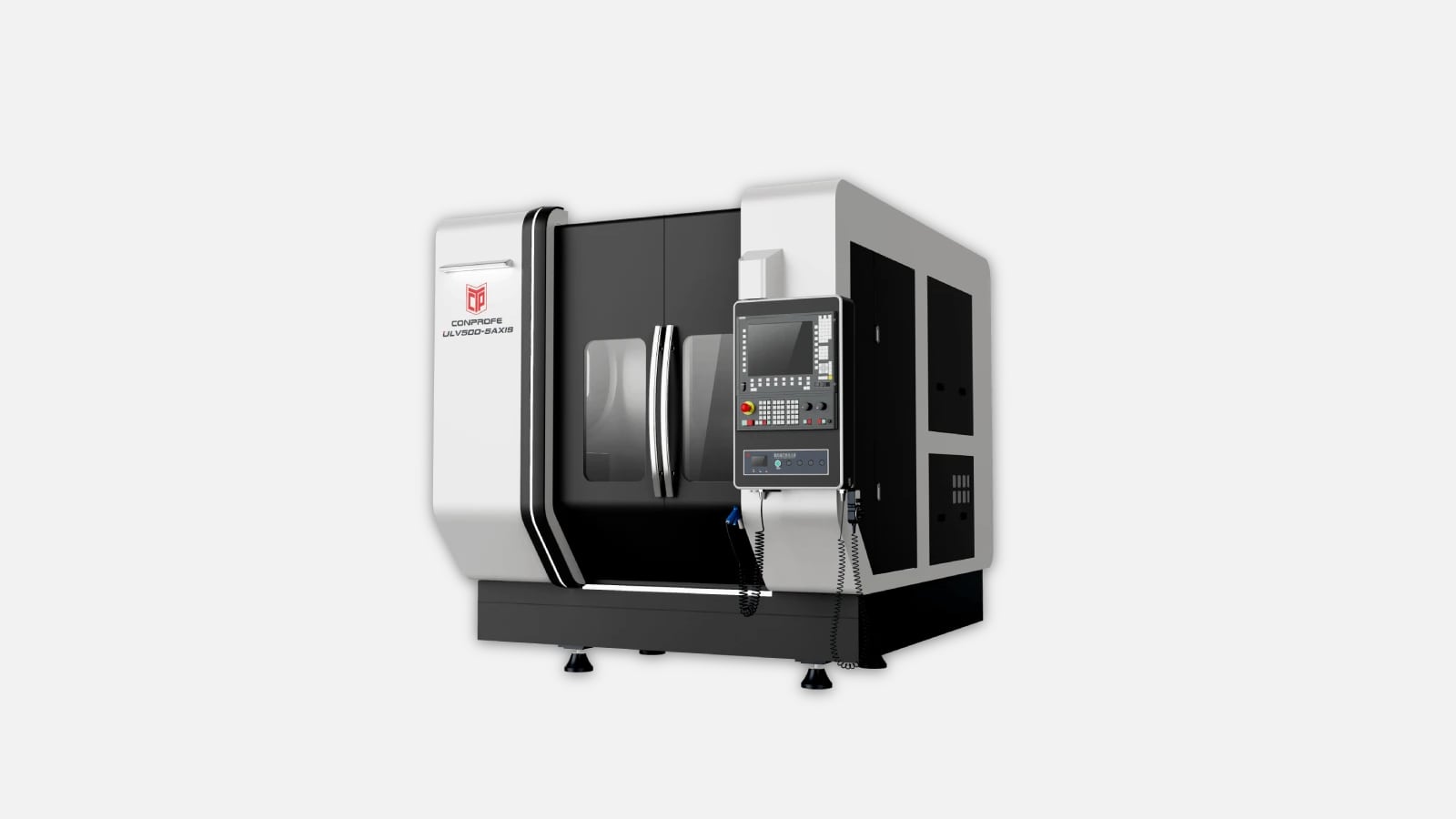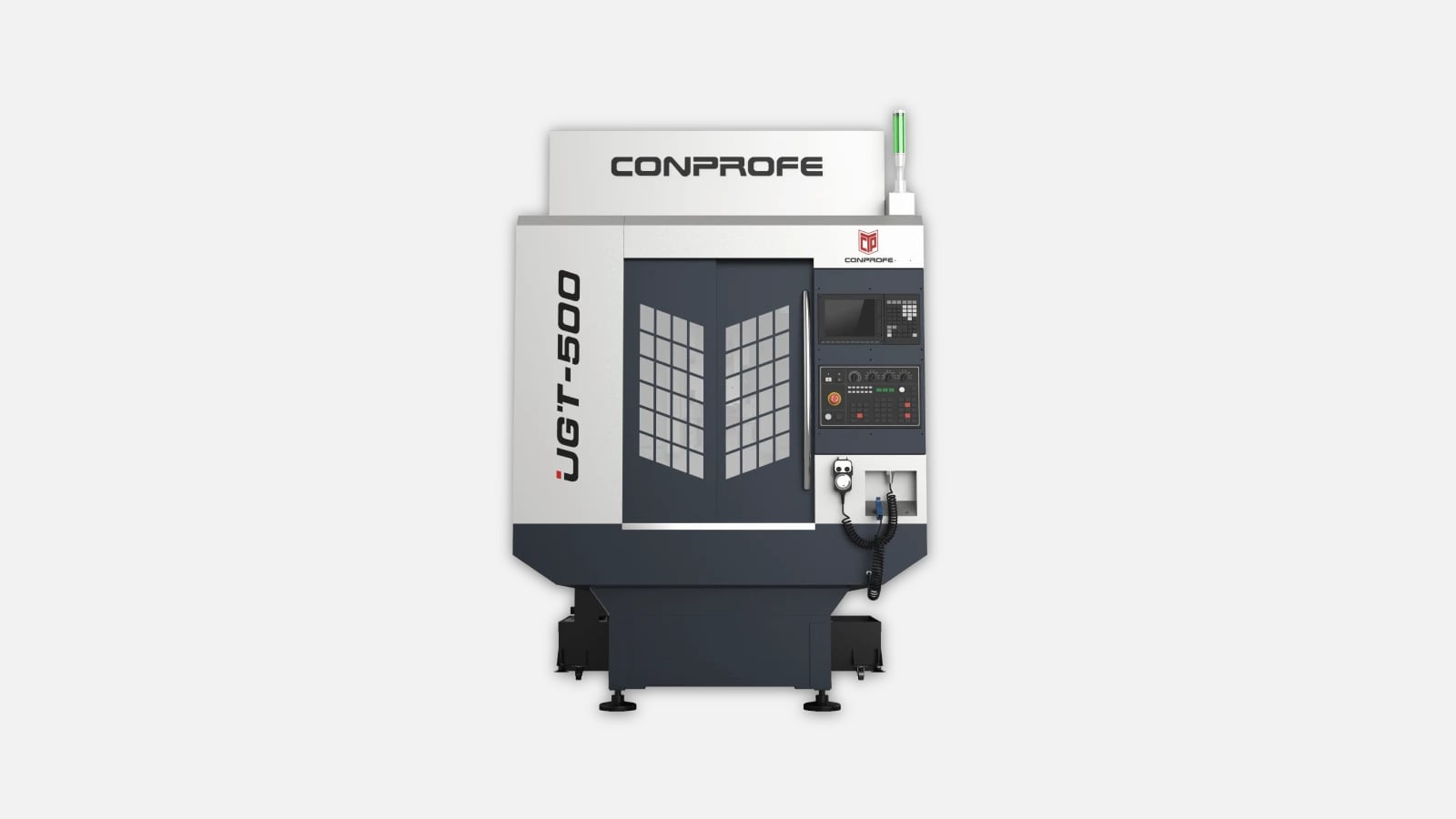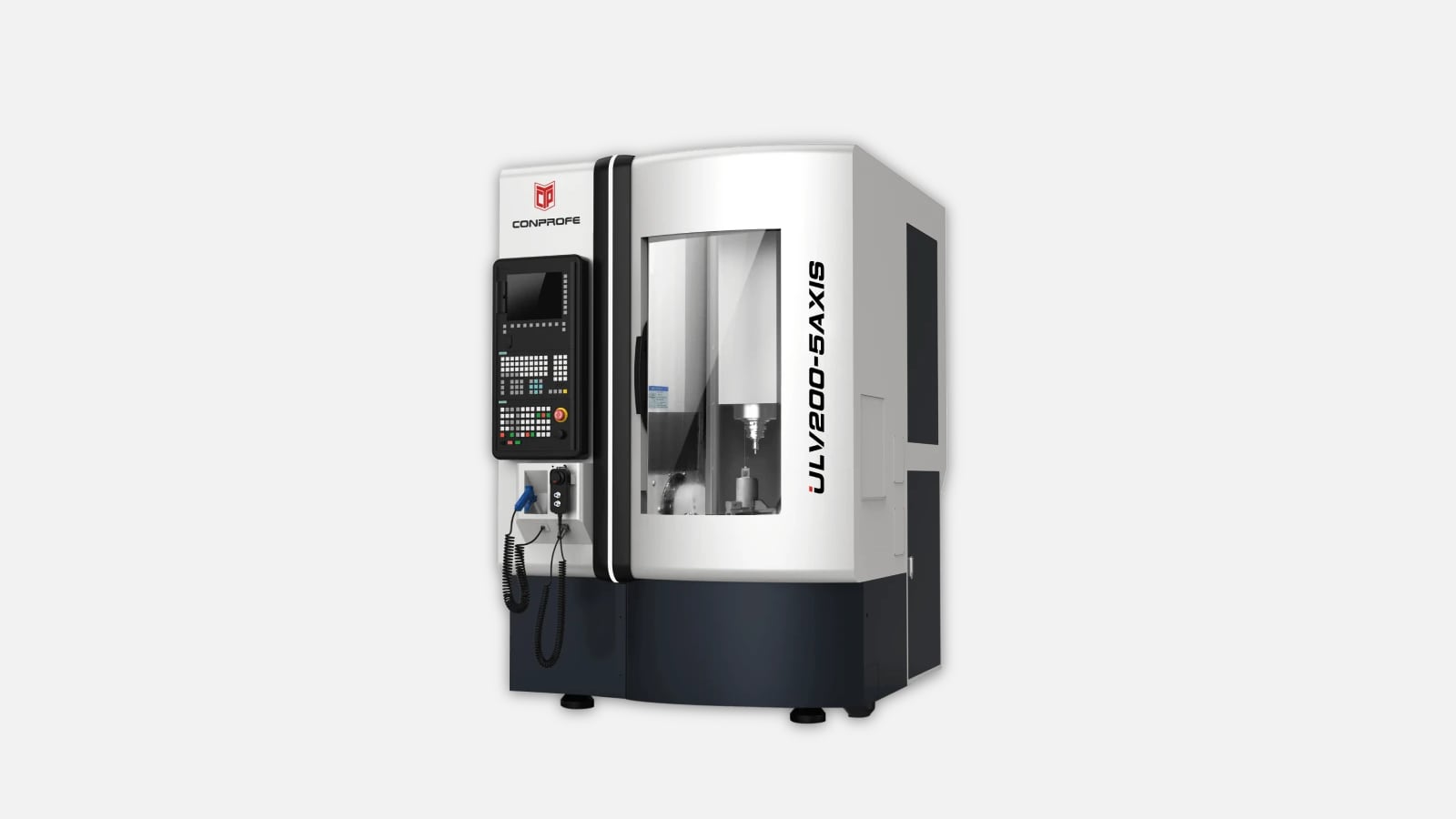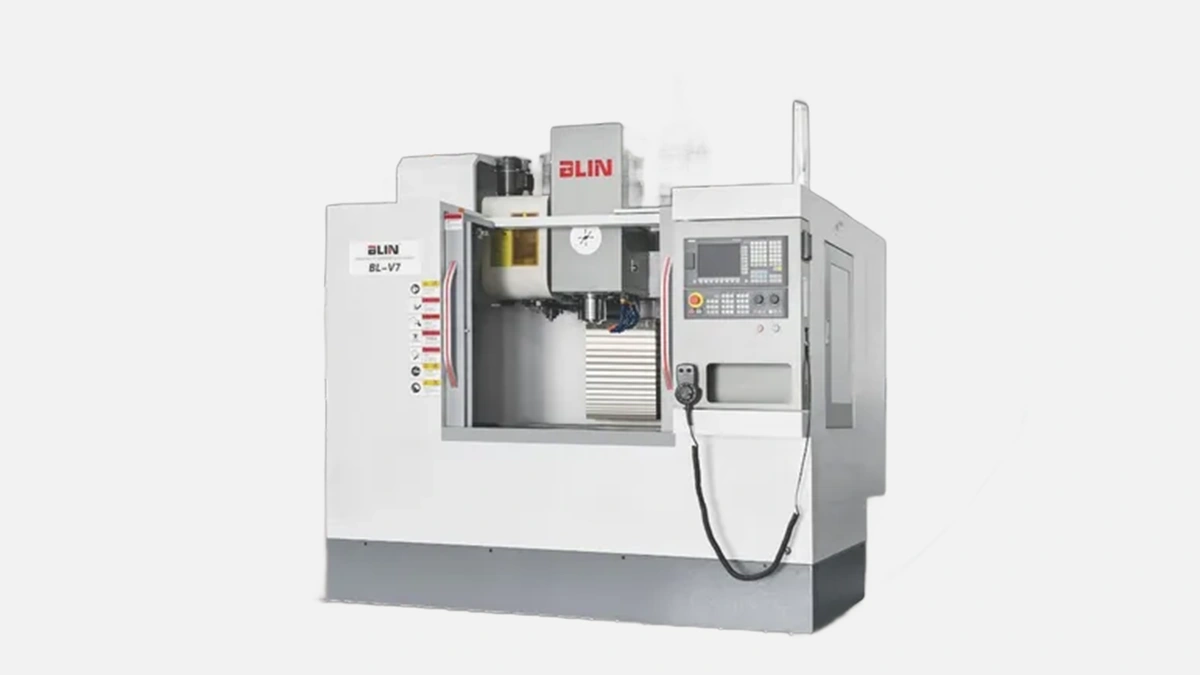
BLIN BL-V7 VMC, 700 × 400 mm travel, 10 k rpm spindle, 24-tool arm changer.
Short one, really short, just a breath. BLIN has been milling metal for about 18 years, the BL-V series popped up in the catalog roughly 2014 and the V7 slot sits somewhere in the middle of the vertical line. Nothing fancy, just a balanced box casting, closed guideways, proven BT40 nose. Yet I keep bumping into shop managers in Sharjah who nod approvingly when the name floats by. They like that it starts every morning without drama.
The column is ribbed, thick, feels like someone overfed it with cast iron, fine by me. Same blank was used on the earlier V6, only stretched in Y. They left the saddle beefier too, so chatter drops when the cutter digs deep in 45 steel. Yeah, I checked the spectrum with a cheap vibrometer, spikes were lower than on a similarly priced Taiwanese frame. Could be luck, could be smarter ribs, who cares, the part looks better.
Before we drown in chatter numbers, glance at the geometry table I scribbled after three hours of tram tests.
| Axis | Travel mm | Measured backlash mm | Rapid m min |
|---|---|---|---|
| X | 700 | 0.004 | 36 |
| Y | 400 | 0.004 | 36 |
| Z | 500 | 0.003 | 30 |
Numbers sit inside factory spec, a relief because shipping across the Gulf can shake things ugly. We re-squared the head in about 25 minutes, done.
Linear guide rails, size 35 on X and Y, 45 on Z. Not boxways, yet the preload feels tight enough for molds under 0.01 tolerance. Ball screws are double-nut, class C3, nothing exotic. You slam a 10 kg fourth-axis on the table, rapids still hit rated 36 without fault codes. Massage the parameters a bit and you squeeze 40 m per minute but BLIN warns warranty fades if you cook the drives. Your call.
Then again, if you slam the emergency button too often the drives throw an over-current alarm, a small quirk that disappears once you tweak the decel ramp.
Built around a belt head, 10000 rpm max, standard. Direct drive optional for folks who chase aluminum, I have not tried it. Pull studs 45 degrees, standard retention knob, no hidden suppliers. Bearings are from NTN, that is what the parts list says. After 2000 spindle hours I still see less than 4 microns runout at 8000 rpm. Good enough. Cooling? Basic oil chiller, loops at 23 °C all day in the Dubai summer if your shop has at least a lazy split unit.
Fanuc 0i-MF by default, BLIN also ships with GSK for bargaining buyers, skip that, the resale value drops. I pulled the macros from an older BL-V6 and they ported over seamlessly, no parameter hunt. Ethernet port hides behind the side panel, run a cheap switch, drip feed large molds, sweet. The screen though, still 8.4 inch, tiny, but operators learn the soft key dance, life goes on.
Nothing sexy. 350 liter tank, paper band filter is optional. We added a 20 bar through spindle pump, the head casting already had the channels, so plumbing was quick. Chips collect in twin augers then run into a belt conveyor. If aluminum dominates your mix, swap to a drum filter, augers clog on curly strings.
Need context, right. The V family carries three siblings
I bolted identical vises on V6 and V7, pushed a Ø16 rougher, identical feeds, the V7 shaved about 14 percent cycle time thanks to higher torque servo set and longer X so fewer index moves. V8 obviously stiffer yet the UAE import cost climbs steeply because of weight.
Spoke with a subcontractor in Abu Dhabi, they run 5 units back to back, 2 shifts, doing valve bodies. Another mold studio in Ajman uses one V7 with a fourth-axis, cutting P20 cavities, they claim surface Ra 0.4 without hand polish. Not gospel, just street talk, but encouraging.
Belts last about 18 months if you keep tension right. Linear guides survive longer unless coolant leaks through the wipers, so wipe them. Spindle chiller filter costs peanuts. Biggest hidden cost is the backup battery, Fanuc wants it swapped yearly, forget and the parameters vanish, then you curse the moon.
Here is a quick list of spare parts I keep on the shelf, feels wise
Let us crunch a simple job. 50 pieces, stainless bracket, 310 grams raw, 0.42 kg chips gone per part. Cycle per piece 7.6 minutes, V7 waits 18 seconds for tool change on average, tool path 9000 mm per part. Electricity in Sharjah costs roughly 0.32 AED per kWh. We measured draw 9 kW cutting, 3 kW idle. Net electricity cost per bracket lands near 0.45 AED, ridiculous slice of the total quote.
Operators moving from old Fanuc find nothing confusing. G43, M06, usual drill. I tossed a fresh graduate on it, he mastered the panel within 4 days. The maintenance manual is not Shakespeare, grammar wobbles, yet pictures help.
Door switches are keyed, no tape hacks, good. Spindle orient sensor however is exposed under the head cover, drizzle coolant wrong and it fries. Keep an eye.
Humidity in Jebel Ali tangles electronics, BLIN pots the boards with resin, less failure. Duty cycle is brutal, Gulf summer touches 45 °C, chiller barely sweats. Plus parts come from mainland within 5-7 days via air, I tested that twice.
Time for a dry look at how V7 stacks against the usual suspects.
| Model | Travel mm | Spindle rpm | Tool changer | Price tier |
|---|---|---|---|---|
| BLIN V7 | 700x400x500 | 10000 | 24 arm | mid |
| HAAS VF2 | 762x406x508 | 8100 | 20 carousel | higher |
| Maxmill QMC600 | 600x450x450 | 12000 | 30 arm | mid |
| Hartford S-Plus | 850x520x600 | 10000 | 30 arm | higher |
Noticing a pattern, right, V7 stays competitive on travel to footprint ratio, tool count is fine, rpm modest but stable.
You know what, no machine is flawless. Control screen small, belt head eats torque up high, but the casting stands its ground, the price does not punch you in the teeth, and dealers actually pick up the phone. That, weirdly, sells more than shiny catalogs.
In short, BLIN V7 earns its spot in Gulf job shops that juggle medium size batches and hate downtime.
That is the core point, enterprises doing automotive brackets, oilfield fittings, general jig work, they pick the V7 because it simply keeps cutting, no drama, no fancy stories.