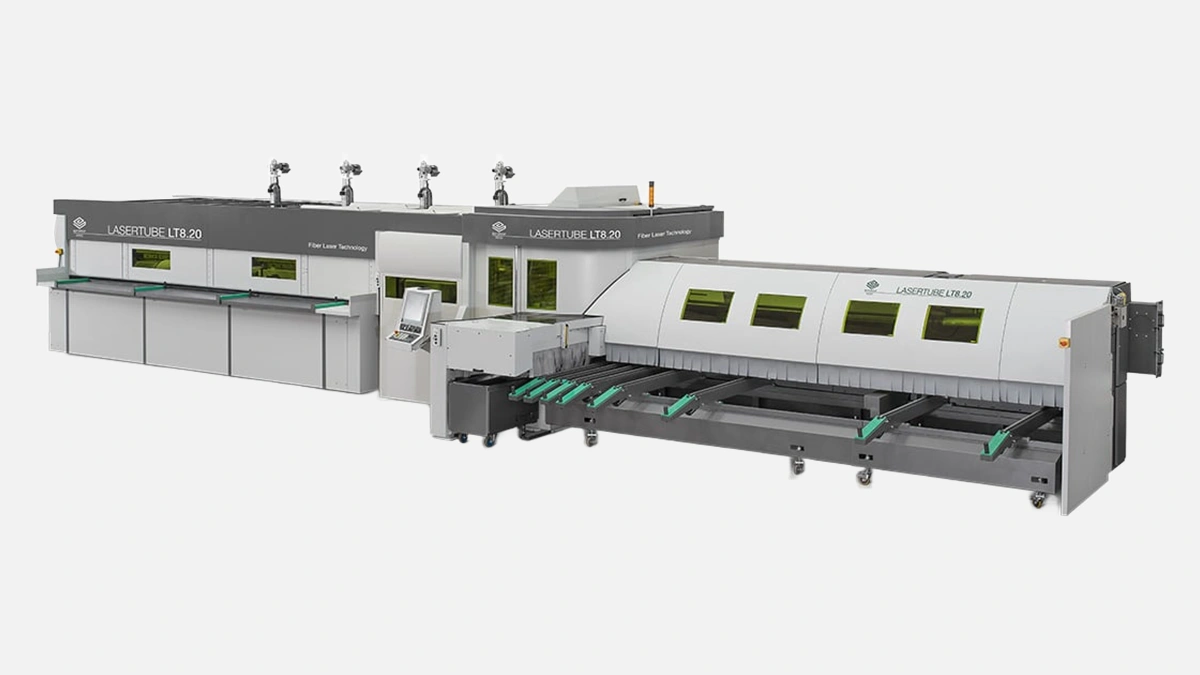
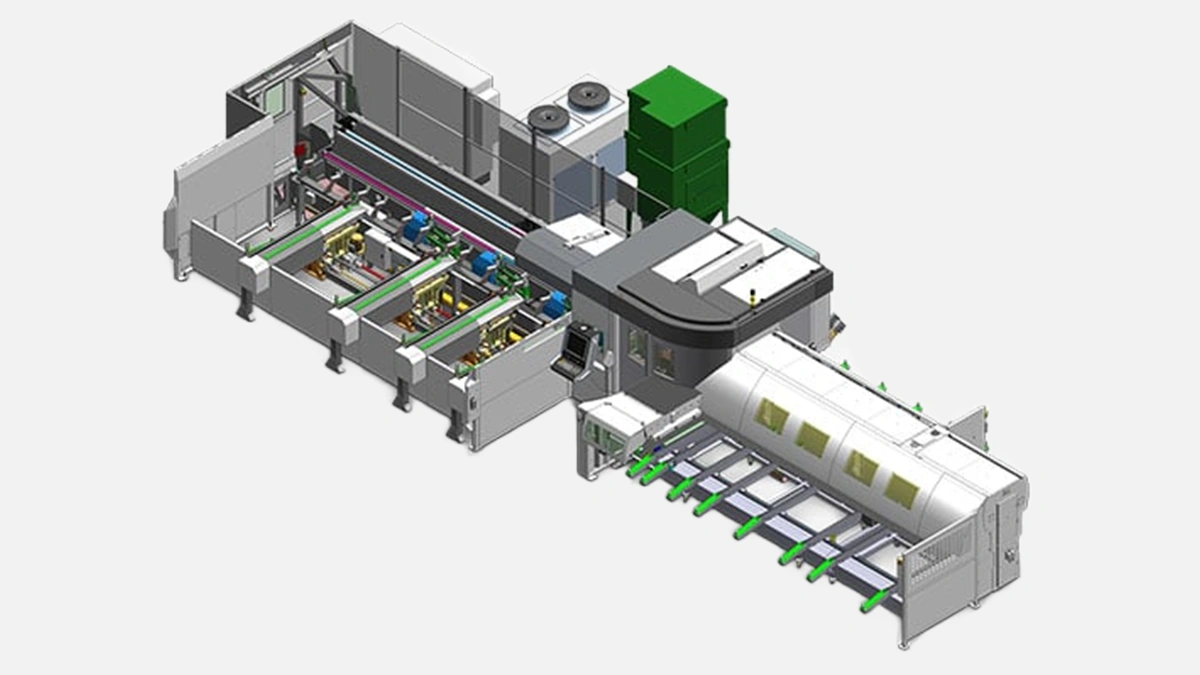
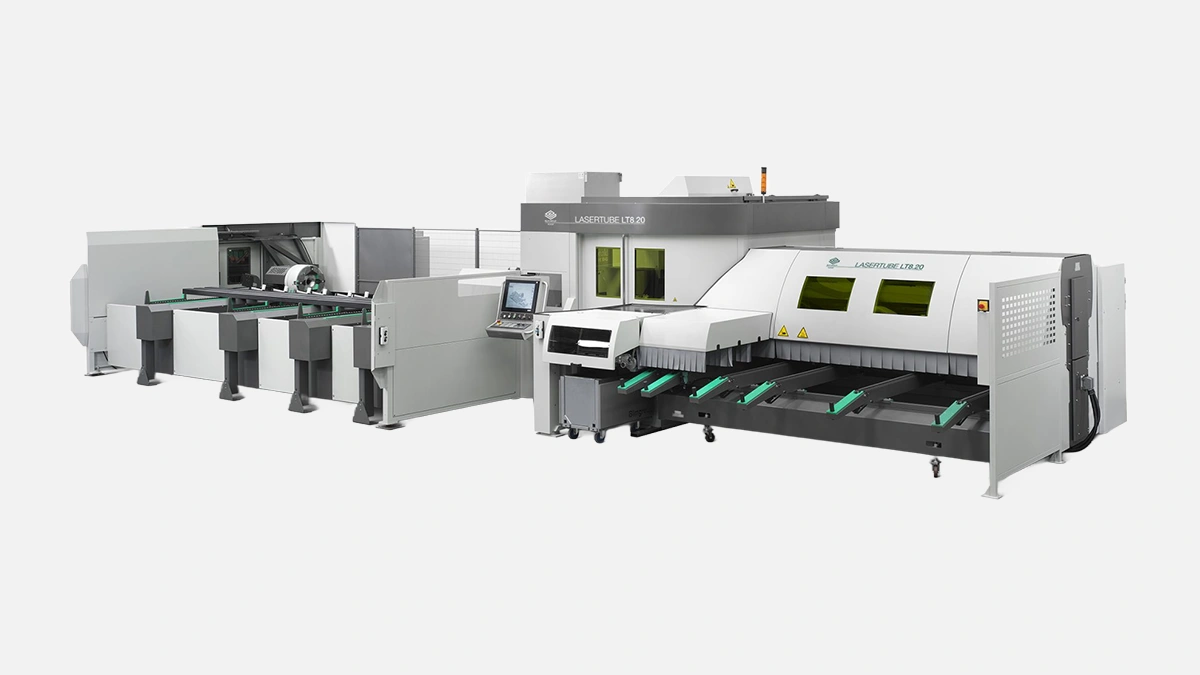
Fiber tube laser cuts up to 240 mm Ø, 8.5 m loading, bevel head standard.
Short intro, no fluff. Steel fabricator in Sharjah needs to slash cycle time. He hears about the LT8.20. Boom curiosity. Now a longer sentence kicks in because the machine has been floating around the market for roughly 10 years and every operator I met at Wetex or SteelFab keeps telling me the same thing, that it cuts square tube faster than their old CO2 rigs, they shrug, wipe coolant from the palms, and move on.
BLM Group stands on 60 plus years of tube know-how, pumps out roughly 700 tube lasers a year from the Levico facility, and currently keeps three versions of the LT8 platform in the catalog, each tweaked to different foot-prints. That matters, at least in my head, because parts support stays alive when the manufacturer ships volume. End intro.
Some specs look dry on the brochure, yet on the floor they decide if you hit delivery dates. Quick list first, then drill down.
Notice none of that screams marketing magic. Plain geometry numbers. They are what they are.
The automatic bundle loader holds roughly 4.5 t of stock, spits one tube at a time into the V-shaped cradle, the gripper pulls, the laser head aligns, job starts. You will hear claims of less than 90 s changeover between diameters. My stopwatch said more like 110 s on a rusty 150 mm pipe, still fine. If you run bespoke furniture frames, that delta hardly matters, but on HVAC runs of 5000 parts it stacks quickly.
The EVO III head carries an autofocus lens, the capacitive sensor tracks within ±0.05 mm even when the tube wobbles because the chuck isn’t perfect. By the way the head tilts 45° both sides, so chamfers come out neat, internal burring drops. Those small details influence weld prep cost later, you feel it in overtime sheets not in the press release.
| Axis | Stroke | Max speed |
|---|---|---|
| X | 8400 mm | 120 m/min |
| Y | 420 mm | 60 m/min |
| Z | 300 mm | 60 m/min |
| B (rotation) | 360° cont | 100 rpm |
| C (tilt) | ±45° | 60 rpm |
The table above looks dry, yet stare at the X stroke. That is how the system swallows an 8.4 m stick without trimming the ends outside the cell, saving one crane move per cycle.
Artube does the talking. Draw once, push to nest, post to the PLC. The post inside spits BLM internal language, but Protube hooks to your ERP via XML. I have seen a shop in Jebel Ali pushing 300 CAD items a day, they claim the nesting engine drops scrap by 4–6 % vs manual macros, maybe, maybe not, but they sounded happy.
These bullets look mundane, yet every fabrication crew I shadowed loves the label print, it kills that eternal Sharpie hunt.
Heat, fine dust, step voltage, you know the drill. The sealed fiber resonator inside the LT8.20 barely cares about ambient 45 °C peaks, while older CO2 cavities freak out above 35 °C. Also, electricity cost runs at roughly 0.32 AED per kWh today, fiber pulls down the meter by 30 % against equal watt CO2, so the night shift stays profitable even when the tariff bumps at 23:00.
BLM names feel messy, yet simple on paper. LT7 tops out at 152 mm Ø, steals less floor, cheaper. LT8.10 was the predecessor, same frame, shorter stroke and CO2 only. LT8.20 is today’s middle child, fiber, extended bed. Above it sits LT14, that beast handles 355 mm Ø but pushes the budget.
Trumpf TruLaser Tube 5000 fiber, Mazak Fabri Gear 220, Bodor T230. They all cut. They all cost. Where LT8.20 shines, in my blunt view:
Weekly tasks take roughly 15 min. Clean nozzle, brush slats, blow out lens seat. IPG module demands one filter swap every 2000 h. Axis lubrication is automated, still worth eyeballing the reservoirs. Mean time between faults published at 3500 h, anecdotally feels believable, I watched one cell in Abu Dhabi hit 14 months nonstop outside Chinese New Year.
The LT8.20 is not perfect, nothing is. It occupies almost 14×4 m footprint and the chuck loudness annoys operators early in the shift. Still, if you bend furniture frames, oilfield skids or decorative facades in OAC steel, the balance of cut window and loader capacity lands on the sweet spot. That is why medium shops, say 30–120 staff, grab it quicker than giant corporations, they feel the payback in quarters not years.
Key takeaways
End of rant.