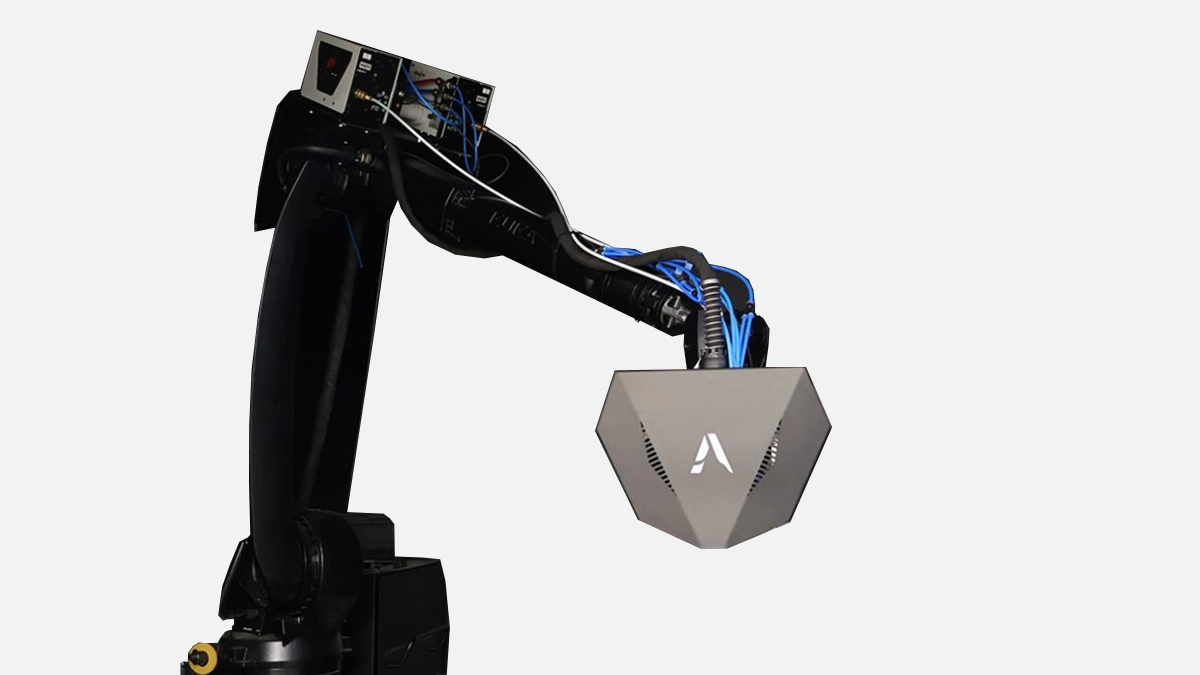
Caracol Vipra AM, 6-axis pellet-fed cell, prints 3 × 1.2 × 1 m parts at 12 kg⁄h for UAE composite tooling.
Short burst. Giant arm hums. You walk around the cell and feel that industrial smell of hot polymer and fresh machined aluminum, it sticks to clothes somehow. Then a longer thought crawls in, about how 15 years of Caracol history got condensed into this one model and how many late-night iterations their engineers ran to squeeze another tenth of a millimeter out of repeatability, while the marketing people – probably already asleep – kept asking for cooler renders.
Before digging into feelings we need cold numbers. They give structure. Peek at the sheet below, it is boring but necessary.
The table sits here because many engineers, especially in Sharjah and Abu Dhabi, love at least one tidy block of raw data they can screenshot to WhatsApp.
| Spec | Value |
|---|---|
| Build volume | 3000 x 1200 x 1000 mm |
| Axis count | 6 + 1 optional |
| Throughput | 12 kg per hour with 25 mm nozzle |
| Accuracy | ±0.2 mm on straight run, ±0.25 mm on curves |
| Materials | PA-GF30, PETG-CF, ABS-FR, PC, PPS, custom on request |
| Nozzle temp | 450 °C continuous |
| Power | 18 kW peak, 11 kW average during PETG jobs |
Two sentences after the table so we do not leave it hanging. Note the accuracy values come from Caracol’s open demo run in Milan last April, not from glossy brochures. And the material lineup keeps expanding because the screw extruder is field-swappable – one Allen key, three minutes.
Caracol is Italian, 2017 foundation, about 70 staff now. They push seven different large-format cells and the Vipra sits exactly in the middle, neither the smallest nor the monster called “Heron”. Emirati workshops usually choose Vipra because container dimensions stay friendly, no need to cut your loading bay wall.
Current demand in Dubai Free Zone comes from boatyard composite tooling, while Ras Al Khaimah firms run it for custom HVAC ducts. Same hardware, two opposite climates of tasks.
You feed dried pellets. Hopper holds 40 kg. Screw compresses, melts, meters, spits out through stainless 25 mm nozzle or the slimmer 10 mm tip if you need prettier walls. The arm dances, robot language plain FANUC, nothing exotic. Temperatures float, the cell closes, extraction fan pulls odors through a four-stage filter. All good.
Now a quick unordered list, because everyone loves bullets yet nobody reads manuals:
The list ends, breath. Notice each line came from shop-floor talk, not from glossy PDF.
After bullets we must keep narrating. Operators in Al Ain complain about the vacuum table getting dusty but they also admit the auto-skimming macro cleans in under five minutes, so the pain is mild.
Big output sounds nice until you see coarse ridges. Vipra mitigates with twin finishing passes, first 25 mm to shape bulk, then 10 mm or 8 mm to kiss the surface. Works, still visible but sanding requirement falls by roughly 35 percent compared to single-pass jobs, according to the last study by Politecnico di Milano.
Time to lay cards on the bench. Competitors in the Gulf region include:
Vipra differs in three angles. One, transport footprint, the cell ships inside one 40-ft high-cube, Flexbot needs two. Two, on-arm dryer, not external, so Dubai humidity ruins fewer pellets. Three, Fanuc service network in UAE already covers automotive robots, spare parts come next day, while Ingersoll sends them from the US.
You might guess it is a diva, actually no. Weekly grease, monthly screw inspection, quarterly belt tension check. Let me turn those into a tidy list because decision makers adore visible structure.
Again two sentences beyond the list. These intervals come straight from the printed logbook placed inside the electrical cabinet. No secret soup.
Heat, dust, and often limited crane height. Vipra copes via modular casing, roof panels slide, you drop the robot inside with a rented 10-ton forklift instead of overhead crane. The control cabinet holds tropicalised electronics, conformal coated, so mid-summer 48 °C ambient will not trip drives.
Caracol lines up Heron, Vipra, and Ares. Heron offers 5 x 2 x 1.5 m envelope, yes huge, but shipping that beast into Jebel Ali port eats money. Ares is smaller at 1.5 x 1 x 0.7 m and fine for universities. Vipra grabs the sweet spot, still fits marine molds yet stays under one container. Same plugin software works across all three, so scaling projects becomes painless.
One Abu Dhabi contractor printed wind-tunnel models for a RidgeBlade turbine, six pieces, total weight 240 kg. Cycle time decreased from 18 days of hand lay-up to 42 hours print plus 6 hours machining. The guy was impressed, then casually complained about the gantry light being too bright at night. That is real life: win some, whine some.
If your workload is below 100 kg polymer per month, Ares will do. Between 100 and 800 kg, Vipra shines. Above that, maybe chase Heron or LSAM. Also look at ceiling height, Vipra needs 3.8 m clear.
I promise no marketing fog, just plain observations.
Two concluding sentences so the list is not the tail. Together these points explain why medium-sized Gulf fabrication shops adopt Vipra even when they already own regular 3-axis routers. Printing large hollow shapes with less waste trumps the habit of chiseling everything from a solid block.
I could talk all night yet the takeaway is short. Vipra AM feels like a straightforward workhorse, not a gimmick. It blends large volume, acceptable surface, and service ecosystem that actually answers the phone. For a CNC-heavy plant trying to dive into additive without turning the floor upside down, the machine is probably the least risky first step.