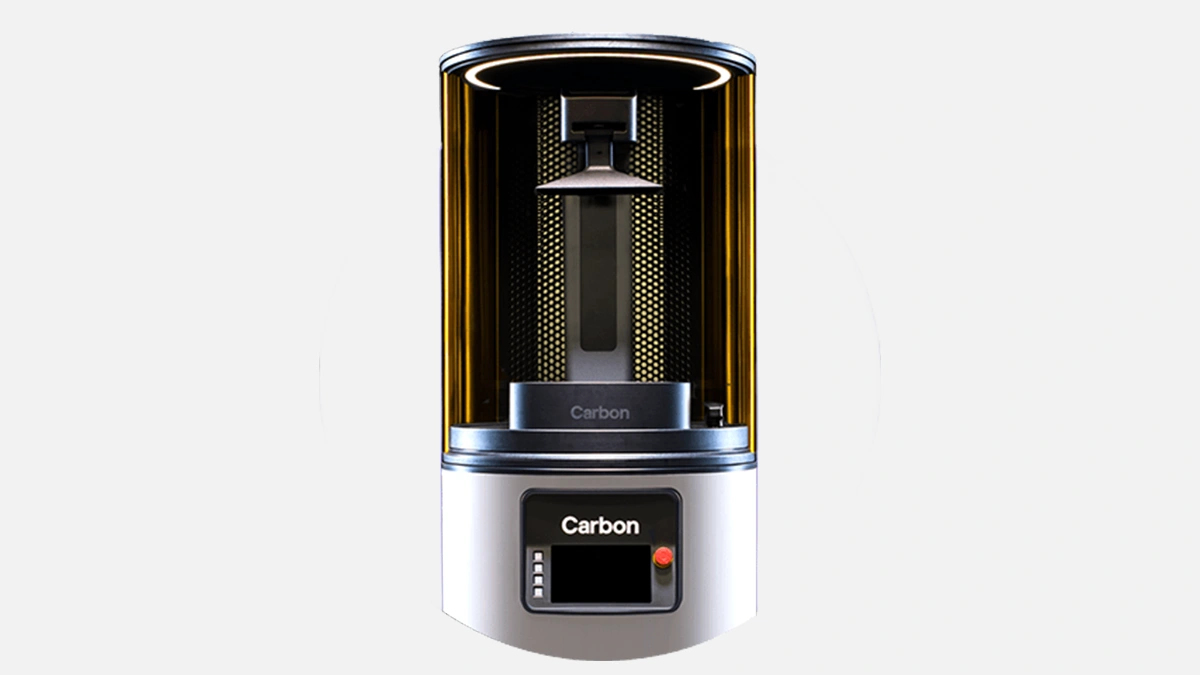
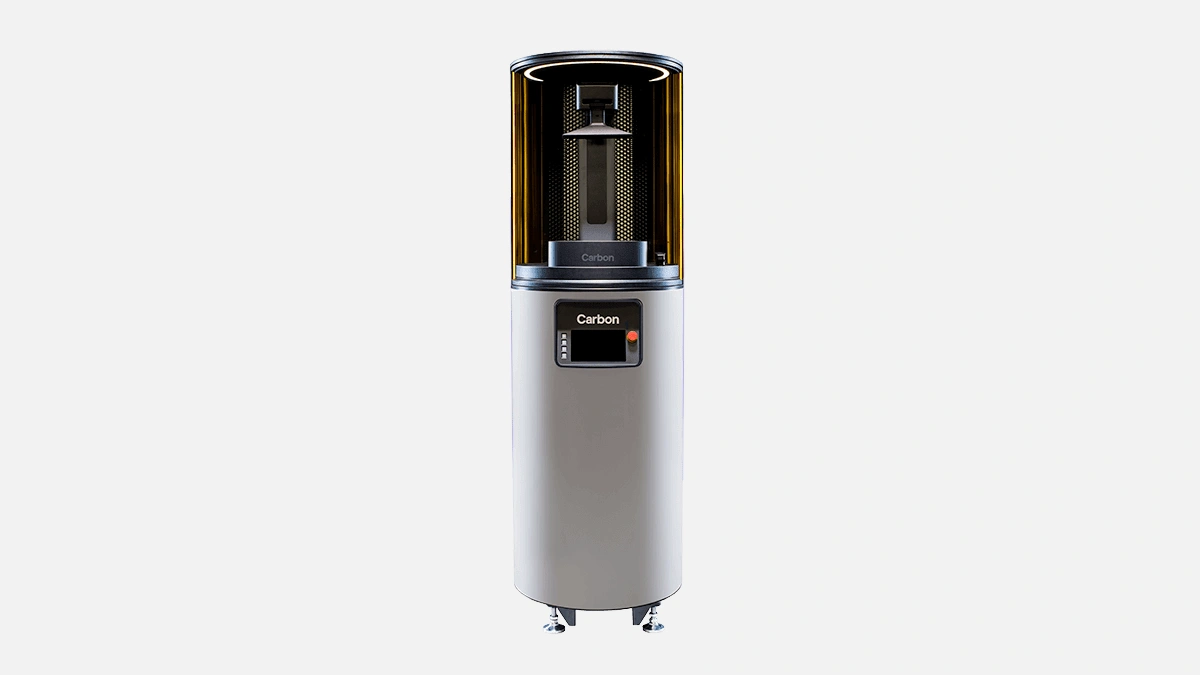
Carbon M2 builds resin parts fast, **75 µm** detail, 189×118×326 mm volume, oxygen-assisted peel for smooth walls
Short intro first. Carbon M2, the tall black tower you have probably spotted in some lab photos, is the second-generation DLS printer from Carbon. I saw it in action at a shop in Sharjah, the operator hit print, grabbed a coffee, came back, the jig was done. Yes, it is still photopolymer, but the way the oxygen-permeable window keeps the resin from sticking looks almost like a trick.
Now, before jumping into gritty details, let me ramble a bit. Carbon started in 2013, pushed the idea of CLIP, rebranded it as DLS, whatever, and since then shipped thousands of units. M2 replaced the older M1 around 2017 and received two minor refreshes, the so-called M2d and M2s, mostly firmware tweaks, same frame.
They call the heart Continuous Liquid Interface Production. The hype name aside, it is basically an LCD-style projector under a fluorinated window that leaks oxygen. That micro layer of oxygen creates a persistent dead zone, resin never fully cures there, so the part lifts without suction. Result, smoother sidewalls, reduced forces on thin walls, fewer support scars. Sounds small, on the shop floor it means you remove the print, toss it in IPA, start the next job, the platform is fine.
Here comes the first list because my thoughts keep jumping.
Take a breath. That certified resin policy brings us to a point UAE customers love to discuss. Regulatory paperwork. Dubai Municipality wants material data sheets, Carbon gives them, stamps included, makes approval easier. Madinat Zayed guys told me they had zero pushback when submitting parts for food contact because the M2 resin library already listed an FDA-similar grade.
Below is a quick spec sheet, nothing fancy yet handy when you pitch the printer to your boss who only believes in spreadsheets.
| Spec | Value |
|---|---|
| Build area | 189 x 118 mm |
| Max build height | 326 mm |
| XY pixel | 75 µm |
| Z resolution | 25-100 µm |
| Growth speed | 1000 mm h |
| Power draw | 1.5 kW |
| Machine footprint | 0.35 m² |
See, the table shows the footprint barely bigger than an office copier. This matters when your production cell is already jammed with mills and lathes. Two short notes. First, the 1.5 kW spike only happens during initial warm-up. Second, the growth speed tag is vertical travel, real-world jobs rarely hit that top line, still I saw dental trays stacking at 400 mm h without artifacts.
I promised raw impressions, here they are. You walk in, resin hopper may need a top up. The new cartridge snaps in like a Nespresso pod, RFID tells the controller what material that is. The GUI is a big touchscreen, Android inside, file transfer via Wi-Fi or LAN, honestly LAN is safer, we once lost Wi-Fi mid-print, machine paused but job survived. Start button tap, window glows, silent hum, fans kick at low pitch. Ten minutes later the first layers peek above the vat, that fast. No break. Part grows, platform lifts, finished, you slide the quick-release handle, part plus supports drop into a stainless basket. Whole interaction under 5 minutes of human time.
Smells? Slight, sweeter than typical SLA. Vent it anyway, Carbon sells a compact scrubber, or just tie into your existing plant duct. Post cure needs UV and 70 °C bake, Carbon Smart Cure box handles both, but any calibrated UV oven can do.
Important to UAE machine shops producing small batch tooling or end-use spare parts. As of 2024 Carbon lists 20 resins. Three rigid cyanate ester blends hold up to 230 °C. Flexible TPU at 70 Shore A feels like molded rubber. The RPU family passes UL94 HB so you can run them in low-voltage housings without extra testing. Good for kiosk manufacturers in Abu Dhabi who print sensor bezels overnight.
Here is another list, because why not, mind still wandering.
– RPU130 – high heat, jigs near ovens
– EPU41 – elastomer seals, good rebound
– FPU50 – fatigue resistant, living hinges
– SIL30 – biocompatible, dental splints
Enough resin talk, back to mechanics.
Carbon ditched the ball screw design typical for SLA and uses a linear servo with magnetic encoder. Acceleration 2 g, quiet, maintenance equals wipe rails weekly. The vat window is consumable, Carbon rates it 50 000 layers average, in cost it sits below the price of a new HSS end mill, not scary.
Power stability in the Gulf can fluctuate, so the integrated UPS buffer keeps the Z axis locked for 90 seconds if mains drop, long enough for your generator to kick in. I witnessed that during a storm in Ras al-Khaimah, print continued like nothing happened.
Enough about Carbon, what about competition. Formlabs Form 3L, similar build area, slower at 140 mm h Z rate, open resin ecosystem but looser tolerance, you tweak every batch. Nexa3D NXE 400, speed monster, larger footprint, price tag bites, plus it draws 3 kW which can trip smaller fused spurs in older industrial estates. Peopoly Phenom, budget choice, decent volume, yet manual calibration each vat swap consumes time.
In short, Carbon M2 sits in the middle, faster than Form 3L, easier install than NXE 400, more industrial safety paperwork than Phenom. If your priority is predictable output without babysitting, M2 feels balanced.
Most UAE shops already run SolidWorks or Fusion 360, export STL, slice in Carbon Composer, push to printer, done. Composer suggests support tree density automatically, I rarely overwrite. The software saves validation logs, handy for ISO 9001 audits. For traceability, each part embeds a serial in the first 5 layers, machine does that by default, inspectors love it. Print farm mode lets you queue jobs across multiple M2 units, Carbon claims some customers run 40 machines on one dashboard. I handled only four at once, UI stayed snappy.
Weekly tasks, wipe mirror glass, vacuum resin crumbs. Monthly, replace air filter core, costs maybe as much as two liters of IPA. Yearly, Carbon field tech visits if you buy that plan, they swap the laser calibration plate, recalibrate Z offset, firmware flash. Mean time to repair measured by users on Reddit sits around 30 hours including spare shipment, because low part count, not my figure, theirs.
You might bump into the bigger M3 Max, same tech, larger bed 308 x 164 x 326 mm, and the compact M1, half height. M2 sits sweet spot, tall enough for pipe couplers yet still single phase power. Upgrade path exists, old M2 owners can trade in for M3 Max, Carbon discounts 25 % of original invoice, good to know.
Quick examples. A Dubai aerospace MRO uses four M2 units for duct end caps, they used to CNC them from ABS, cycle 3 hours, now print 30 minutes no operator time. A Sharjah university prints wind tunnel models weekly, said SLA layer lines were killing their data, DLS solved that due to oxygen zone smoothing. Small prosthetics lab in Fujairah prints SIL30 ear molds overnight, zero rejects this quarter.
I could ramble further but let us wrap. Carbon M2 will not replace your 5-axis mill, obviously, it swaps small runs under 200 parts where tooling is too slow. The build speed, certified resin list, and low manual labor are the three pillars that make it attractive for Gulf manufacturers chasing short lead times.
Bottom line, if your shop churns jigs, housings, ergonomic grips, or custom fixtures, you place an M2 in the corner, network it, forget it, parts keep popping out. That simplicity is the advantage decision makers actually pay for.
We are not done unless we summarize, right. Here is the last list, tiny yet punchy.
End of monologue, time to head back to the shop floor.