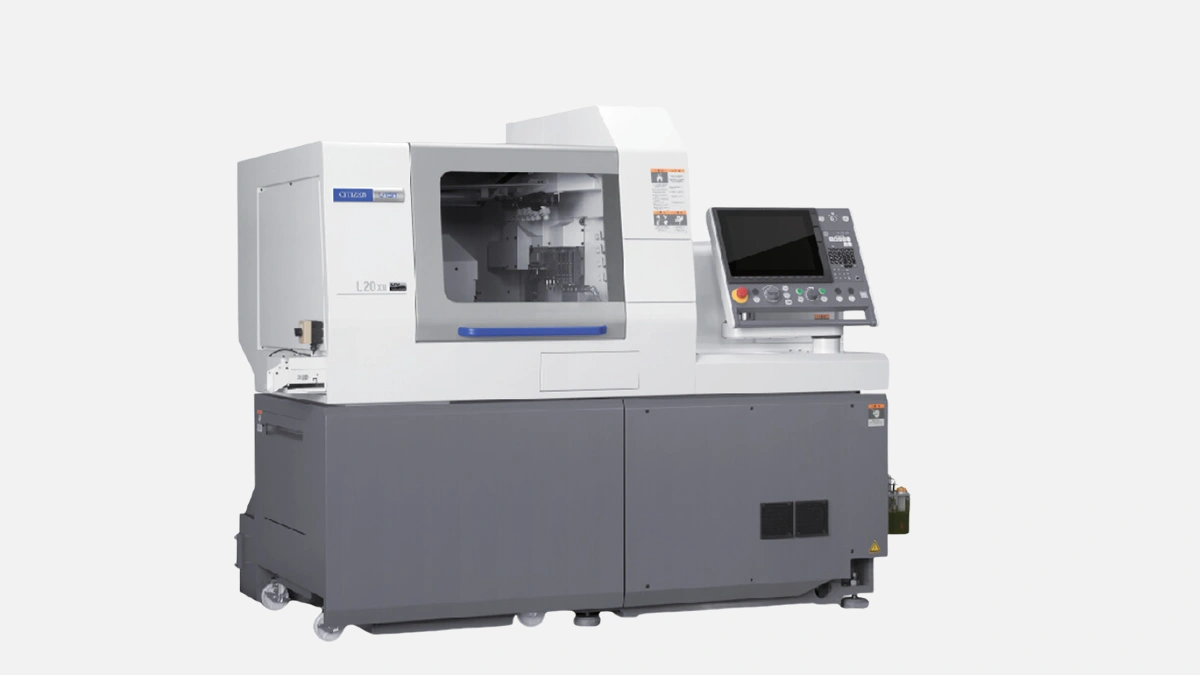
Citizen Cincom L20 Swiss lathe, 20 mm bar, 10 000 rpm, built for hot UAE workshops.
Short intro first. Bar capacity 20 mm, travel fast, cuts clean. Then, suddenly, I drift and remember the hum of an L20 running titanium at a shop in Sharjah, the smell of coolant mixing with desert dust creeping through the bay door, oddly poetic, right. Anyway, real numbers beat nostalgia so back to business.
The headstock slides on sturdy, double-row linear guides. Citizen has been refining that carriage for roughly 35 years, pumping out around 3 800 Cincom units each year according to their annual report, so parts availability is almost boringly reliable, and that is nice. You load 3-meter bar through the magazine, hit cycle start, and the main spindle climbs to 10 000 rpm without drama. A few operators claim on forums that the acceleration feels slower than a Star SR-20, I never noticed but worth flagging.
Hot Gulf shifts wreck alignment if the slideways are flimsy. On the L20 the casting is still Meehanite, chunky, not fancy but it soaks heat. Plus the internal oil-jacket keeps the spindle core close to 30 °C even when the ambient creeps past 45 °C. That gives you fewer size tweaks, especially on precision pins down at ±2 µm. Nice, no brag needed.
Before we drown in prose, numbers on axis reach:
| Axis | Travel mm | Rapid m min |
|---|---|---|
| X1 | 135 | 32 |
| Z1 | 230 | 32 |
| Y1 | 45 | 24 |
| X2 | 105 | 24 |
| Z2 | 230 | 24 |
Two lines above give context, the table spells it out, two sentences below to ground it. Those strokes cover typical medical screws, small hydraulic spools, and random custom fittings you keep getting from petrochemical clients who want fast turnarounds.
Fanuc-based CINCOM system. The screen still looks early-2000s chic, whatever, the macros are pre-loaded, and you can yank data over ethernet straight into your ERP. No semicolons allowed in G-code comments, learned that the hard way, the parser chokes.
I asked three guys, different shops, same region. Their comments piled up, let me shoot them out.
They also whined about the splash guard hinge getting loose. Five-dollar fix, not a hill to die on.
A short breather, coffee sip, continuing.
L20 vs Star SR-20RIV vs Tsugami BO206. I am not painting a marketing banner, just raw contrasts.
That is it, not gospel, but witnessed.
There have been five core revisions since the late 90s. Today you get three catalog variants.
Each shares belts, guide bush, most boards, so stocking spares is painless. If you already run an older L16, the bar feeder and chip conveyor bolt straight on, no adapter plate.
One Abu Dhabi aero-subcontractor reports 1.8 million parts a year, mostly Inconel hose fittings. They shifted from an aging Tornos and watched the scrap rate drop by roughly 22 percent because the Citizen kept concentricity under 5 µm for a whole six-hour stretch between offsets. Not science lab data, just shop floor numbers scribbled on a whiteboard, but still.
Another case, Sharjah job shop, mixed parts. They love the programmable coolant nozzles. They program a macro that swings the jet on-the-fly so they can rough OD then drill deep ID without changing anything by hand. In a climate where walking to the machine is sweaty labor, smaller moves matter.
Citizenship, pun intended, goes wide. Over 70 models exist in Cincom range, but only about 9 critical spare codes are unique to L20 so stocking is cheap. The Japanese plant in Nagano stamps roughly 250 L20s a year, rumor says.
Machining houses here juggle oil-tool stainless, medical titanium, some aerospace aluminum. The L20 handles all three because
Wrap that into a single chassis, you get less babysitting, more unattended hours, power bills stay sane at 6.5 kVA draw on average cycle.
Not claiming magic, though some brochures try. The L20 series simply delivers steady tolerance, fast cycle, and a spares ecosystem thick as shawarma stands on Sheikh Zayed Road. That, plus sensible features like the oil-jacket spindle and the timed lube pump, pushes many GCC shops toward Citizen when the spreadsheet finally rules the meeting.