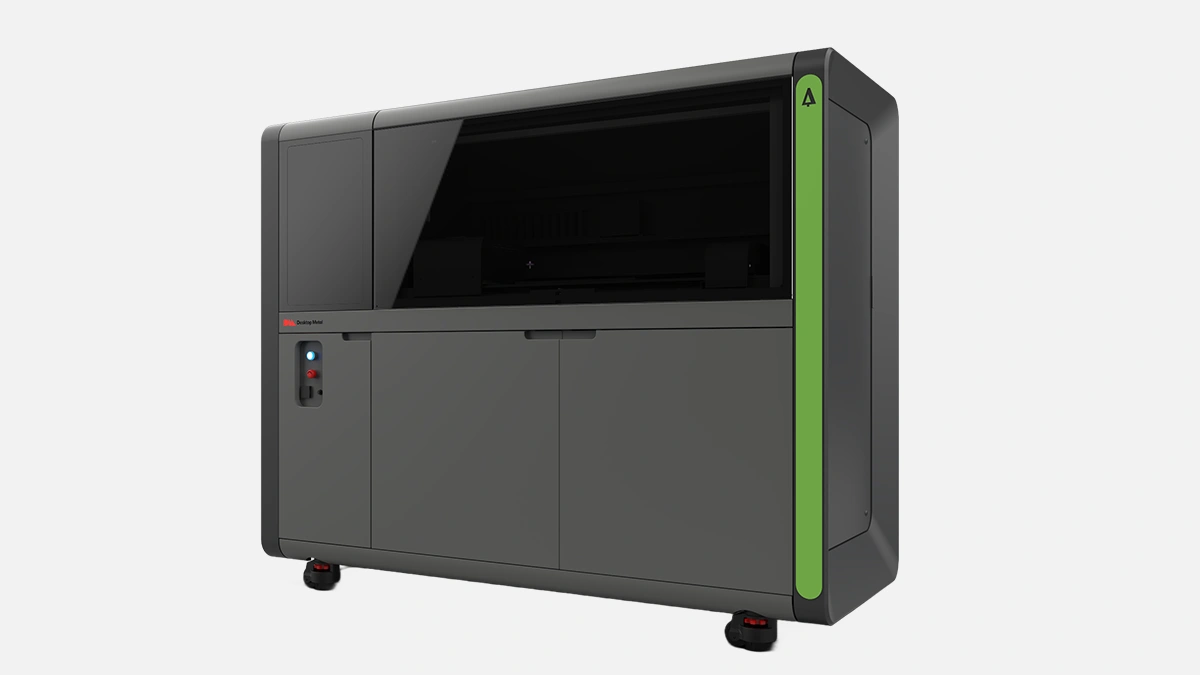
Binder jet metal printer with 350×220×200 mm box, up to 670 cc⁄h, tuned for stainless in Gulf workshops
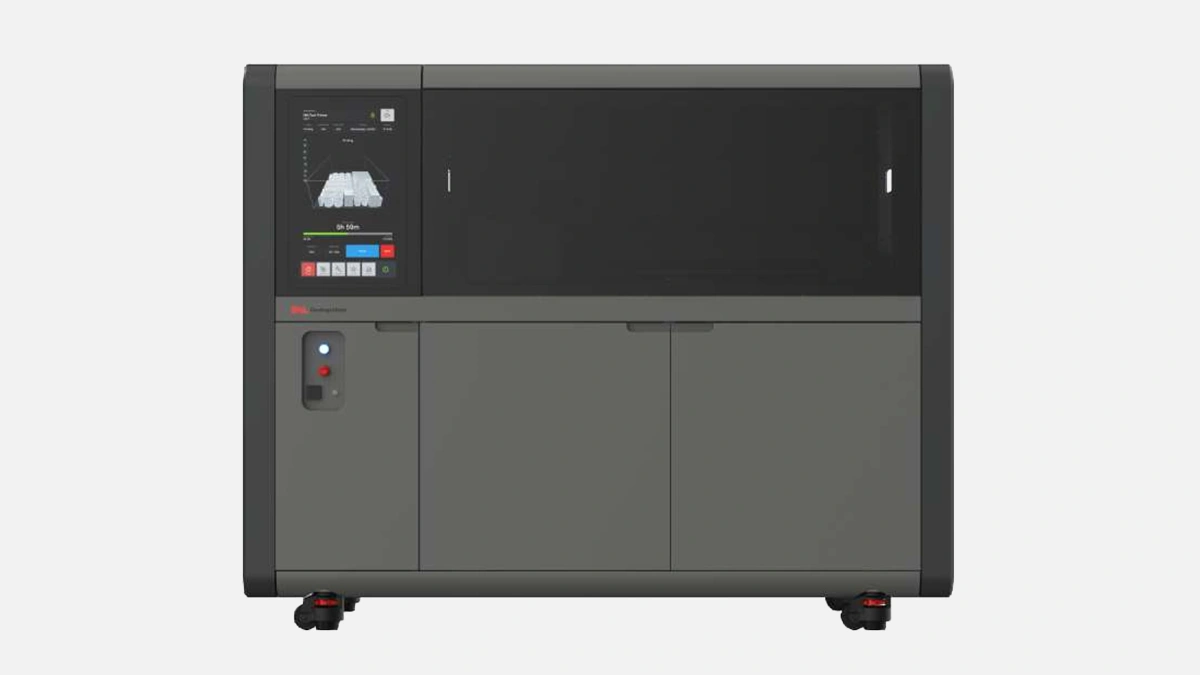
Short breath, then boom the frame fills the shop floor, metal grey sheet-metal skin, glass hatch on the front, you get a vibe of a CNC enclosure but slimmer. The tag says Shop System, fair enough. Desktop Metal has been around since 2015, keeps pushing binder jet rigs, about four families so far and this one sits right in the middle not too tiny, not mammoth.
My first reaction, honest, was is it really production ready or a fancy demo box. Few weeks of digging, talking to a buddy in Sharjah who actually runs the 12 L variant, reading the spec sheets from the manufacturer site, skimming service manuals that leaked to Reddit, and the answer turned out mixed. But let me unpack slowly, jumpy, the way shop talk usually happens.
Binder jetting is basically inkjet on powder. No lasers, no melts, the metal powder stays cool while a liquid binder spits over chosen voxels, later you cure, depowder, sinter, done. The Shop System does exactly that with a binder saturation of around 10 percent though they never state the number publicly, it is hidden in the material profile docs. Why care? Lower saturation means less shrink surprise during sinter, more dimensional repeatability.
I got numbers. Factory brochure claims 1600 dpi resolution in both X and Y, so drop size roughly 16 μm. Layer height adjustable, 35 up to 100 μm. You start thick for prototypes, switch thin when tolerance matters, classic trade-off.
Open the lid, powder recoater puck rides on linear rails, quite beefy. A single box houses five industrial printheads sourced from Ricoh, they say. Each pass lays about 90 mm width, overlapping to cover the 350 mm axis. The build box is a steel bucket, you swap it out like a 5-axis tombstone, push cart included, slick yet heavy, around 32 kg when full of 316L.
Before dumping more tech mumbo let me pause and throw a quick list of parts that actually came out of the Sharjah unit.
Two lines of context first: the shop mostly does stainless fixtures for food processing lines, plus random custom brackets for a petrochemical client. They need corrosion resistance, moderate loads, cosmetic finish not critical.
Now, pros and cons later, let us eyeball the numbers side by side. A table helps, yes a boring one, yet everyone asks for it.
| Feature | Shop System | HP Metal Jet S100 | ExOne InnoventX |
|---|---|---|---|
| Build volume | 350×220×200 mm | 430×309×200 mm | 160×65×65 mm |
| Layer min | 35 μm | 50 μm | 30 μm |
| Speed cc⁄h | 670 | 800 | 120 |
| Binder cart | 10 L | 12 L | 3 L |
| Installed base | 140+ units | < 50 | 600+ |
Two sentences after because tables must not float lonely. What jumps out is speed against InnoventX, almost 5-6x quicker, yet HP’s bigger box slightly edges on throughput. However, HP is still early access, few in the Gulf trust early beta supply chains.
Desktop Metal publishes qualified powders, the Gulf distributor sticks to three grades but more can run via open profile, though you void warranty if you mess badly. Current officially stamped options:
Intro line done, bullet list time.
And yes two more lines to close the list vibe. Powder spec tight, 15–45 μm particle cut, gas atomised only, humidity under 0.1 %.
Another paragraph, keep breathing. The printer alone will not spit ready metal, obviously. Desktop Metal ships a furnace branded Shop System Furnace, an SIS depowder station, liquids curing oven. Furnace pulls 9000 W peak on 415 V three phase or you can feed 240 V twin smaller banks. Argon or forming gas, ramp to 1400 °C depending on alloy. Shrink algorithms baked in, you scan QR on the build box, furnace reads material ID, auto loads schedule, nice quality of life.
Hot dusty environment, Dubai summer 45 °C ambient peaks. The printer spec sheet says keep room under 30 °C. In real life the Sharjah shop uses a spot chiller directed at the intake, drops bay to 28 °C. Filter change every 250 h because dust, they stretched to 300 h but head nozzles clogged so do not repeat.
Power grid story. Single phase 240 V here is stable, but starting current spike triggered earth trip once, they installed soft-start module, solved.
Let me toss a quick markdown list of what bites the wallet regularly, context first line: people underestimate consumables beyond powder.
Sentence after, slightly off topic. Sinter gas is cheaper in UAE than Europe, big plus, argon fill 40 USD at Emirates Gas, lasts three cycles.
Different beast I know yet buyers still weigh it. Binder jet is faster raw deposition, part density lands at 97-99 %, vs 99.8 % on laser melt, still fine for most fixtures. Surface roughness as-printed about 8 μm Ra so you tumble anyway.
Shop System actually splits into 8 L, 12 L and recent 16 L extended Z. Specs mostly scale Z height 200 to 300 mm, binder cart bigger, chassis unchanged. If you expect only small fittings you might buy 8 L save powder standing inventory, print speed stays same since carriage width identical.
Scratching beneath the glossy marketing slide. Powder management messy, you will vacuum stray dust whatever brochure claims. Touchscreen UI responsive but once froze when job exceeded 40 GB slice file, forced reboot, job resumed though first two layers double printed causing ridge, they patched firmware v1.2.9 later.
Heat distortion post sinter unpredictable on thin walls under 0.6 mm, add ribs or accept banana effect. That said, batch repeatability on 5 mm bracket walls excellent, my own caliper logged within ±0.04 mm across ten builds.
Firms doing jigs for aerospace MRO in Abu Dhabi, dental labs not so much cause cobalt chrome not validated yet, universities like NYUAD grabbed one for research, and small-medium machine shops that want to skip EDM for complex internal channels.
Quick bullets, then wrap.
Two lines after. The net outcome is shorter prototype to small series cycle, and a safety net that parts stream continues even if customs clogs global supply lines.
I flip flop a bit. Some days I think a used M290 will still beat it on ultimate density. Other days when a client rings with 1200 identical hose clamps and wants them next week, binder jetting looks like the only sane path, especially with speed north of 600 cc per hour. Desktop Metal did homework, printer footprint small enough for a corner of a CNC hall, and the learning curve, while not trivial, sure shorter than laser powder bed with its argon recirc, optics align, melt pool monitoring.
In the end, pick the Shop System if you already own CNC mills for finishing passes and see metal AM as another bar feeder not as sci-fi glow box. The machine behaves like that, a powder bar feeder, just layer by layer.
That is it, messy yet hopefully grounded. If any line helped you decide, good. If not, ping someone who has one on the floor and sniff the powder yourself, nothing beats nose learning.