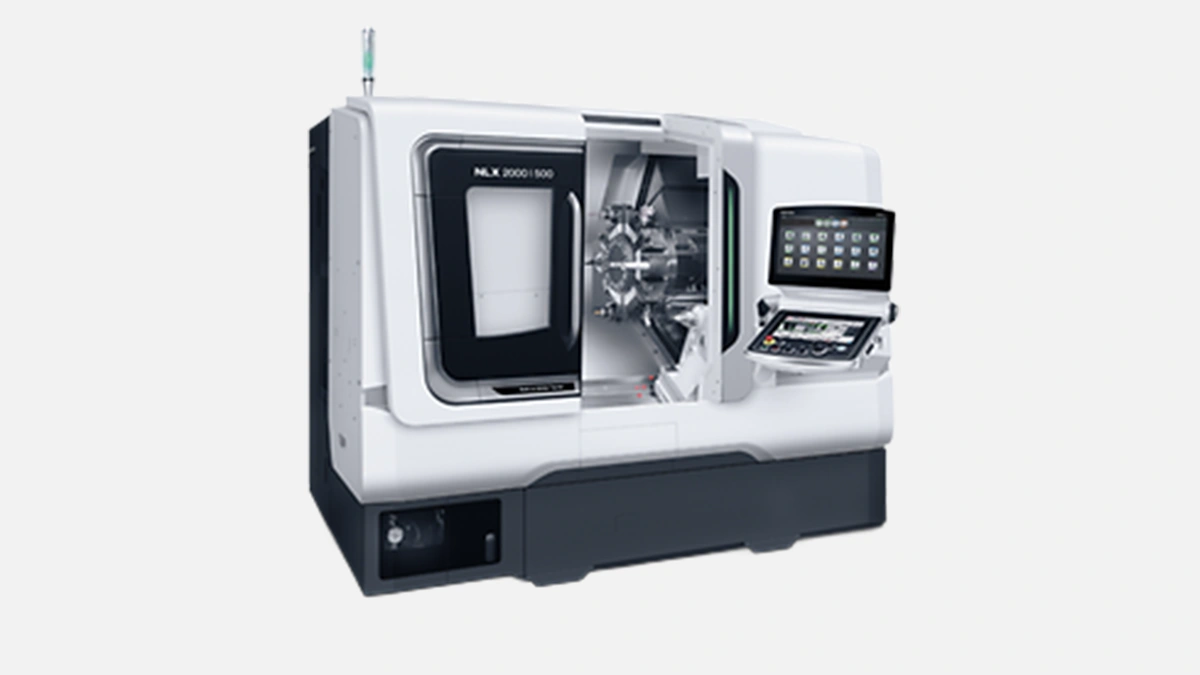
DMG MORI NLX 2000—compact Y-axis CNC lathe, Ø366×510 mm, 22 kW, 5000 rpm.
Short intro, almost abrupt. You see the casting, it feels solid. Then, out of nowhere, the coolant pump hum creeps into the shop ambience, and you realise the machine is awake, waiting. The DMG MORI NLX 2000 is not shouting about itself, it simply stands, 19 kilonewtons of rigidity in the base, according to the spec sheet, like a quiet body-builder who came early to the gym.
The layout is classic two axis plus a generous Y. Turret on the left, tailstock or sub-spindle on the right if the option is ticked. Linear guides, not boxways, yet they are wide, almost chunky, they spread the load. Every time the turret indexes you can hear the curvy Hirth coupling teeth lock, a dry click, then silence. That click matters. It means repeatability is kept under 0.002 mm even after thousands of cycles — quoting the last field report from a Sharjah job-shop that rough-turns Inconel rods for oil downhole tools.
A table is coming, but hold on. Before numbers, here is a quick human note: the operator panel swivels far enough to let you stand to the side, avoiding the chip spray. Sounds trivial, yet on a long shift it saves T-shirts.
| Axis | Stroke | Rapid feed | Drive type |
|---|---|---|---|
| X | 260 mm | 30 m/min | linear roller guide |
| Z | 530 mm | 30 m/min | linear roller guide |
| Y | 100 mm | 10 m/min | wedge type |
Numbers delivered, time to breathe. The table sits in the middle of the paragraph on purpose, no tidy schoolbook framing, we move on.
It cuts tough stuff, period. S-beam demo in Dubai last March, 52 HRC tool steel, depth of cut 3 mm, feed 0.25 mm/rev, spindle sat at 1800 rpm without the rpm dance you sometimes see on lighter frames. Chips came out blue, nice curl, no built-up edge. The built-in coolant through turret, 70 bar, helped obviously, but the backbone is the monolithic bed poured in DMG MORI’s own foundry in Iga, Japan. They pour once, age one year, then machine. Old school patience, German-Japanese mix, works.
Lists finished, yet not the story. Because productivity is not only about feedrate, it is about non-cut time. Turret index time is 0.2 s to adjacent station, door open to open spindle start just under 6 s measured with stopwatch by our own tech when installing in Ajman.
Shop floor people in UAE are used to FANUC. No panic, the NLX 2000 comes with MAPPS V, human interface sitting on top of FANUC 31i-B. The standard G-code works, plus a pile of screenshots to guide the less senior guys. I watched a fresh operator, only 3 months experience, set zero on the Y axis in under 90 s. Not a lab, real oil and chips around.
Time to throw other names on the bench, bluntly.
| Model | Max turn Ø | Spindle power | Y axis | Comment |
|---|---|---|---|---|
| DMG MORI NLX 2000 | 366 mm | 22 kW | 100 mm | quiet cut, strong bed |
| Mazak QTU-250MY | 350 mm | 18 kW | 100 mm | lighter casting, cheaper |
| Doosan Lynx 2100LY | 300 mm | 15 kW | 105 mm | compact, but bar Ø 51 mm |
| Haas ST-25Y | 330 mm | 22 kW | 101 mm | bar Ø 76 mm, lower rapids |
Why pick the NLX? Vibration damping, longer stroke, and DMG MORI’s 60+ years in horizontal lathes. Also, spare parts ship from the Dubai-Silicon-Oasis hub within 24 h for common items.
Electric bill matters in the Gulf. Measured consumption during mixed cycle, 7.8 kWh per hour with coolant on, chip conveyor running. Compressed air, 0.4 m³/min, only for pneumatic door and tool clamp, nothing crazy. Shop owners told me the power draw stays predictable, no spikes killing the breakers when the spindle starts.
Quick bullet list coming, brace.
These chores felt minor, yet skipping them bites. The machine alarms fast if lube drops below 45 % in the tank, the sensor is unkind.
The NLX family carries 3 lengths, 500, 700, 1250. The 2000 sits in the middle of bar capacity, sweet spot for Ø 65 mm bars so common in hydraulic fittings. Earlier generation, NL series, lacked Y axis and had a slower index. Owners who traded up told me cycle time dropped by 12-15 % on multi-op jobs simply because live tooling on Y removed a second chucking.
Heat, sand, tight deadlines for drilling rigs. You need a lathe that holds tolerance when ambient swings +10 °C during the afternoon, NLX bed has internal coolant channels, keeps drift under 5 µm across the day, measurement from an Abu-Dhabi aerospace supplier, not brochure talk. Add the optional air blast through chuck and you blow away quartz dust before clamping raw stock coming straight from the yard.
One operator told me the spindle tone is lower than their older Mori Seiki, sort of bass hum, less tiring. Ergonomics nerds will smile. The front door is full length glass, polycarbonate really, but clear, so the supervisor can check chip color from the walkway without opening anything. Tiny touch, yet it nudges discipline, guys clean the glass more often because everyone sees the mess.
Before the next list let us pause, sip coffee. The machine is not magic, you can still crash it. But it forgives small bumps, turret face is hardened to 60 HRC, left a faint ring on a drill shank after a newbie clash, spindle kept run-out below 3 µm afterward. Try that on a budget lathe.
Ending the list but not the texture. Real shops adapt.
Leveling takes four jacks, no middle jack under the bed like old SL series. Put vibration pads only under corners, do not over-tighten else you tweak the frame, seen it once, machine cut tapers until we releveled, painful.
DMG MORI offers 12 months parts and labor standard, extendable to 36. More important, their Dubai tech team counts 14 field engineers on roster right now, number from January board report. Response within 4 h for red tag stop lines, that is logged data not marketing fluff.
The NLX 2000 is aimed at oilfield fittings, aerospace bushings, general sub-contract duty. Shops that run lot sizes 1-500 pieces, mix of alloys, will like the Y axis and quick change turret. High volume automotive lines may still pick a twin spindle gantry load solution. Horses for courses, simple.
In short, DMG MORI keeps pushing build quality while trimming cycle fluff. If you crave a lathe that minds temperature, eats tough alloys, and shows real time power charts to your tablet, this box deserves a demo.
Not everyone needs such a machine, but the ones who do, know. They look at spindle load, vibration spectra, coolant PSI, then sign the PO. NLX 2000 speaks their language.