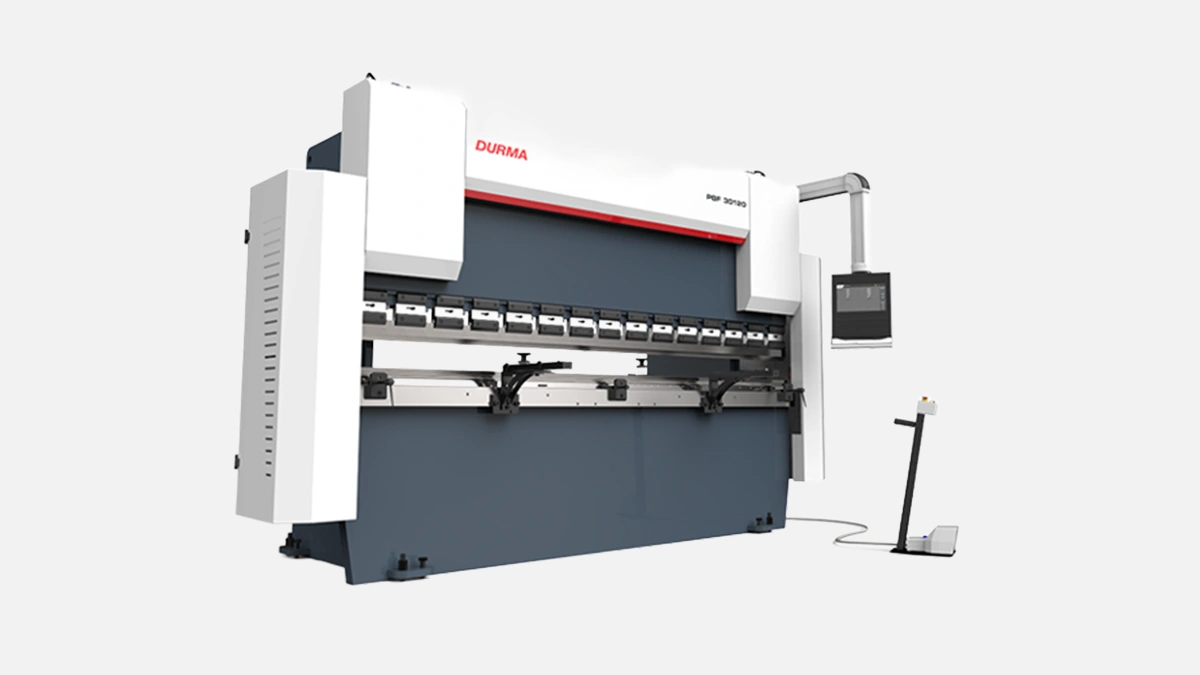
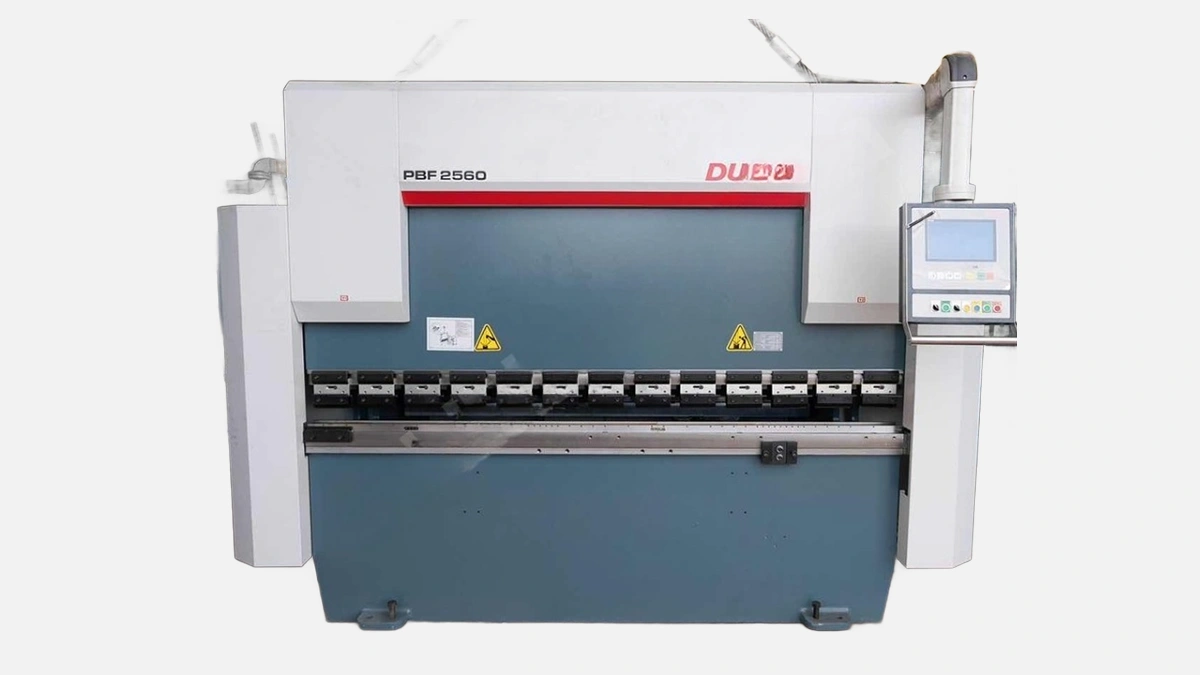
Durma PBF 2560 rolls 2500 mm × 6 mm plates fast, four-roll NC control, ideal for UAE ducting and tank shops.
Fast glance. Steel frame, chunky rolls, no flashy paint tricks, just matte grey and a red Durma badge. Looks like it woke up in a fab shop and wants to flatten something right now. The model code 2560 keeps whispering 2500 mm length, 6 mm plate, nothing mystical there.
Durma sits in Konya, Turkey, stamping out machines since 1956. Rough count, over 8 000 units a year, roughly 14 plate-roll models if you include the three-roll PB series. So, the PBF line is the four-roll sibling, it has gone through 3 hardware revisions, mainly on the hydraulic manifold and the NC panel layout.
Short version, less material waste at the lead edge, quicker squaring, one-pass cones. Long version, go grab coffee.
Before diving deeper, park your eyes on numbers, then come back.
| Parameter | Value |
|---|---|
| Working length | 2500 mm |
| Max mild steel thickness | 6 mm |
| Pre-bend thickness | 5 mm |
| Top roll Ø | 200 mm |
| Side roll Ø | 180 mm |
| Motor power | 7.5 kW |
| Roll speed | 5 m/min |
| Hydraulic pressure | 200 bar |
| Net weight | 4.1 t |
Numbers done, headache gone, carry on.
The main frame is a single weldment, stress-relieved in a furnace, then machined on a floor borer. No fancy claims, just flat mounting pads so the bearings sit square. Top roll is SAE 1045 medium carbon, induction hardened to roughly 50 HRC over 3 mm depth. That hard skin keeps surface pick-up under control when a plate with scale sneaks in. Side rolls slightly softer, lets them flex a hair, grips better.
Durma still sticks to a hydraulic motor on each end of the top roll. Planetary reducer sits right on the roll neck, fewer shafts, fewer greased couplings to fling out. Good for desert heat in Sharjah, less rubber seal drama. The hydraulic pack uses Sun cartridge valves, easy swap if one gets stuck with sand.
Entry level panel, NC Touch 7. Big icons, no deep sub-menus. Operator punches material thickness, diameter target, machine nudges side rolls into calculated position. Ten programs, twenty steps each. If you feel adventurous, Durma offers a Cybelec CYB-Touch upgrade, full color, USB, radius measurement probe, but base unit already ships workable.
Hot afternoon, 3 mm 316 L stainless, you need chimney sections for a roof stack on a hotel kitchen. PBF 2560 grabs a 1250×2500 blank, quick pinch, pre-bend first edge, rolls, spits out a clean cylinder, no flat. No re-rolling, no extra crane moves. Weld, brush, next.
Now swap to 5 mm S355 plate for an oilfield skid tank skin. Same story, just drop line pressure to 160 bar to calm the hydraulic pump, add one extra pass. Still under five minutes per shell. The pace fits medium batch fabrication shops dotted around Jebel Ali free zone.
I wish the factory added a cordless pendant. Walking from the fixed panel to the plate edge for checking the offset feels 1990s. Oil cooler fan is loud too, not ear-bleed, but enough to drown casual chat.
Let us throw the PBF 2560 against two regulars.
So the Durma sits in that sweet middle ground, modest floor space, no exotic spare parts, yet still four rolls. For many managers that is the deal maker.
Inside Durma’s catalog you see PBF 2540, 2550, 2560. Same frame width, only top roll diameter and hydraulic pump flow change. If you mostly bend HVAC ducting, grab the 2540, cheaper, 4 mm material, weighs under 3 t. Heavy fabricators go 2550 for 5 mm, or our 2560 for 6 mm. Same learning curve, same NC panel, so operator retraining is zero.
Each takes less than five passes, weld seam stays under 0.8 mm mismatch because the ends are pre-bent tight.
Change hydraulic oil every 2 000 h or yearly, whichever first, check suction filter, swap return filter. Grease bronze support rollers weekly, easy because fittings sit at waist height. Bearings are standard SKF 222 series, local bearing shops in Abu Dhabi keep them on shelf, downtime fear drops.
7.5 kW might look tiny next to a laser, but plate rolling is steady load. On 8-hour shift it pulls roughly 50 kWh, that is about the same as one mid-size compressor. If you pair the machine with a rooftop solar array you offset most daytime use, decent talking point for ISO-14001 audit.
Machine hums around 68 dB at operator ear thanks to integrated muffler on the hydraulic pack. Still, hand on heart, step back when the sheet snaps at the last curve, the stored elastic energy can pop. Durma ships a light curtain but many shops bypass it, do not.
Family-owned fab shops making ducting, tank wrappers, and light construction frames like the PBF 2560 because it handles the bulk of their steel skew without demanding a climate cell or a Swiss service contract. Big EPC contractors still stick a heavier 12 mm machine in the corner, yet keep this Durma near the TIG stations for stainless shells. That practicality is the quiet advantage people pay for.
Those three points tilt the purchasing meeting when the CFO asks why not go cheaper. You show data, questions fade.