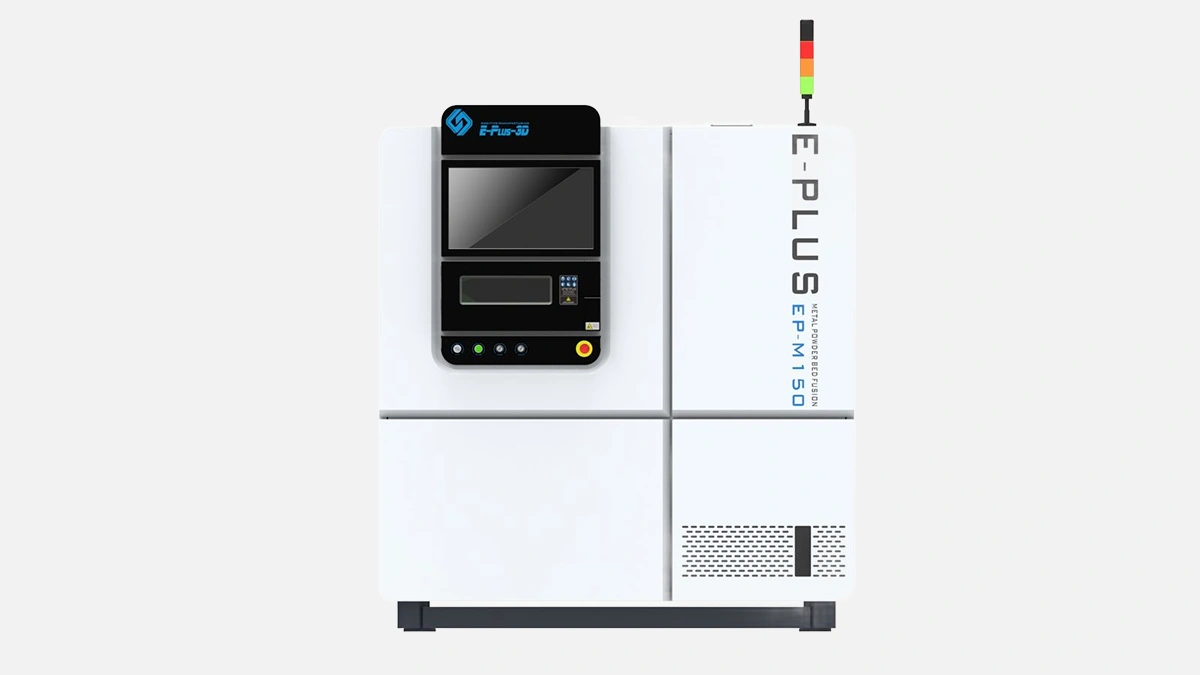
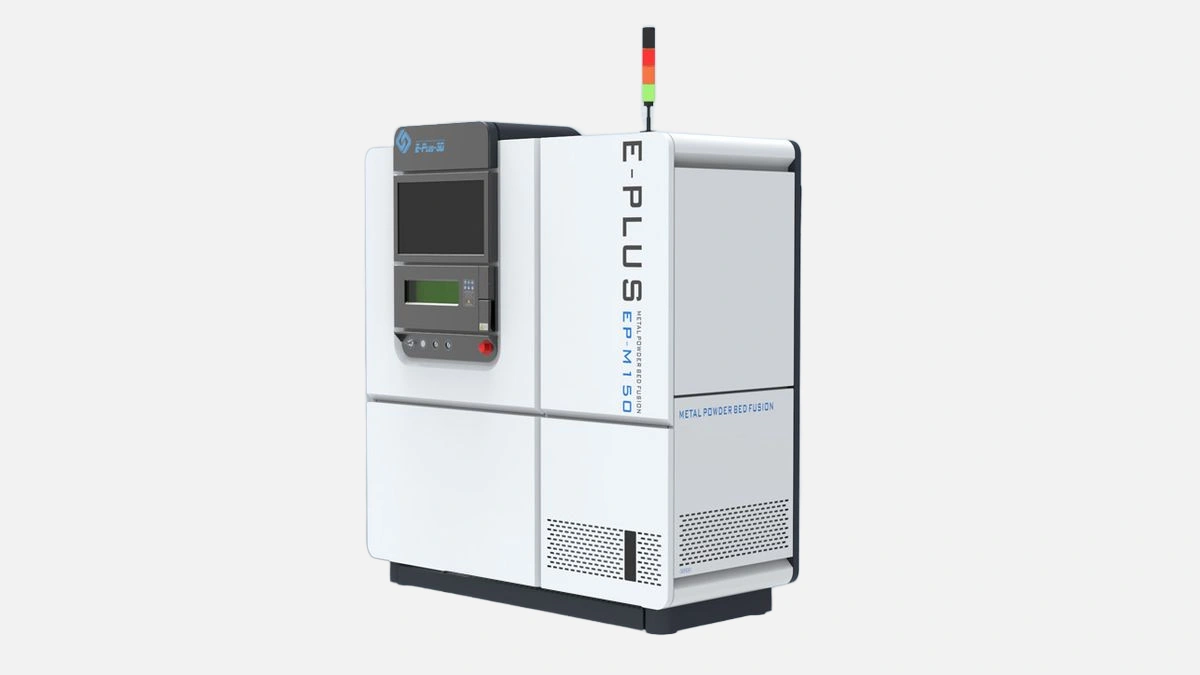
Compact 150 mm metal PBF printer with 200 W fiber laser and sealed build chamber for small-series parts.
Tiny room, loud compressor, the smell of fresh powder metal in the air, you know the vibe. Someone yells over the noise, “Did the new EP-M150 finish that Ti job?” Short nod, print bed lowers, part looks crisp.
And yes, I am jumping ahead already, sorry, let me roll back for a sec.
Everybody in the Gulf keeps talking about scaling aerospace spares, dental frames, even turbo impeller R&D, yet factory floors are crammed. A hulking 600 mm machine is cool until rent hits harder than summer heat in Abu Dhabi. The EP-M150 slips in where a pallet once stood, sips power, yet still eats through stainless or titanium the way a bored operator chews sunflower seeds.
Below I drop a fast side-by-side, because spreadsheets are life, but scrolling through PDFs at 2 AM is not.
| Spec | EP-M150 | EP-M260 | Desktop Lab PBF rival |
|---|---|---|---|
| Build volume | 150×150×100 mm | 260×260×370 mm | 100×100×100 mm |
| Laser power | 200 W | 500 W dual | 120 W |
| Footprint | 1.76 m² | 3.9 m² | 0.9 m² |
| Argon usage | 0.8 L/min steady | 1.5 L/min | 0.6 L/min |
| Typical part density | >99.5 % | >99.7 % | 98–99 % |
| List of alloys | 6+ | 10+ | 4 |
| Powder refresh rate | 30 % | 20 % | 40 % |
See what I just did, kept the numbers blunt, no fluff, move on.
Single-mode fiber, 200 watts at 1 µm wavelength, that is bread-and-butter for 316L, Ti-6Al-4V, In718. If you only ran cobalt chrome dental plates, you might wish for a second beam, but then you are not the audience. Beam diameter tunable with a motorized collimator, so you can chase surface finish on a thin lattice or slam thicker hatch for brackets.
I keep forgetting, yes, there is a water-cooled optical bench, chiller sits below, same module as the EP-M300, parts interchangeable, spare stock easy.
Let me ramble, because folks underestimate gas recirculation. E-Plus has a zig-zag laminar sheet, drops argon across the melt pool, picks up spatter, loops through a dual cartridge filter. We clock <100 ppm O₂ mid-build on an actual sensor, not brochure hype. That matters for Ti tensile strength, if you are shipping parts to DN-EN ISO 5832-3 labs.
You load powder from a sealed cylinder, internal hoover recovers overflow, sieves to 53 µm, and shoves it right back, my technician barely touches the mess. Gloves stay cleaner, lungs too.
Before I drown you in more adjectives, fast list how the shift looks:
Slice in Eplus3D’s EP-Build, or drop an .SLM into Materialise, your call, export job file.
Pre-heat plate to 200 °C for Ti, 80 °C for aluminum, numbers locked in template.
Click start, the door auto-seals, oxygen purge kicks for about 8 min, then laser lights.
Post-print, elevator rises, you unbolt the plate, swap a fresh one, total downtime <15 min if you hustle.
I printed a 90 mm turbine wheel, all blades intact, no stray porosity under CT. Another shop did spinal cages, Ra 8 µm off the bed, one pass in vibratory tumbler and they look showroom. So yes, the surface is not mirror, never will be, but machinists in Sharjah mill critical flanges anyway, stop pretending it is a tragedy.
Most buyers here cross-shop the EP-M150 with EOS M100 and Renishaw AM 125. Short version, E-Plus sells a larger envelope than EOS, cheaper filters than Renishaw, and the slicer license is free, not subscription. Build accuracy, ±0.04 mm in cube tests, roughly on par with German units, so you do not toss parts in the bin because corners bowed.
Filters last 800 h if you keep humidity low. Lens window every 120 h wipe, costs peanuts. The only part that annoyed me was the rotary feed motor coupler, we snapped one at 1 400 h, got a replacement in three days from Hangzhou warehouse, keep a spare, trust me.
The 150 sits at the bottom of a ladder: EP-M260, 300, 450, 650. Same UI, same cartridge powder, bigger everything else. So you can train one crew, then shove them onto a 300 without a redo. Smart for shops scaling in phases, not betting on one monster rig day one.
Dentistry labs pushing 200 CoCr frames a month, oil-and-gas jobbers making small Inconel brackets, R&D centers prototyping combustor mini-swirls, they all fit. If you mostly print hand-sized manifolds for F1 wannabes, skip, get the 300.
Three things I keep telling inquiry calls:
– Machine fits through a 900 mm door, movers love that.
– Power draw peaks 3.5 kW, a single 32 A breaker, no drama.
– OEM ships with a 3-year laser hour warranty (read the fine print).
That is basically it, the rest is chasing good STL files and not forgetting desiccant packs. If you need more numbers, ping me, I probably have them scribbled on a coffee-stained notepad.
The brand punched out metal printers since 2014, over 500 units yearly, four revs of the 150 alone, each time better gas flow and UI tweaks. Buyers pick it because parts keep passing CT, powder waste stays low, and the price tag does not torch the cap-ex budget.
Fin.