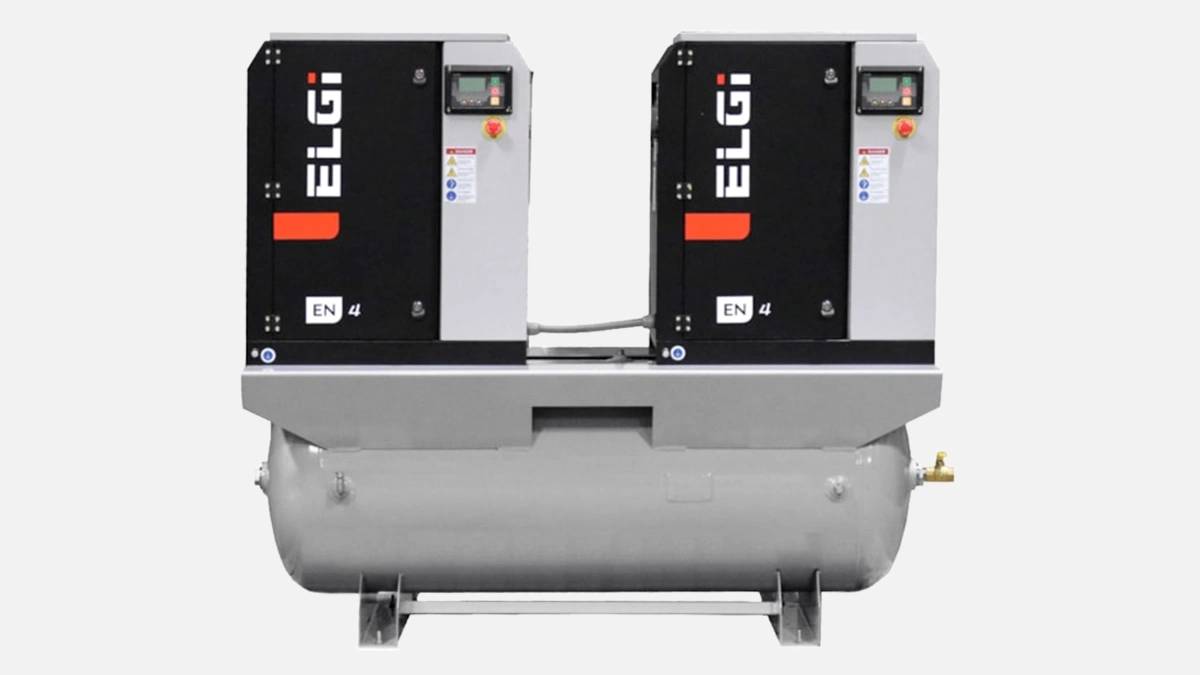
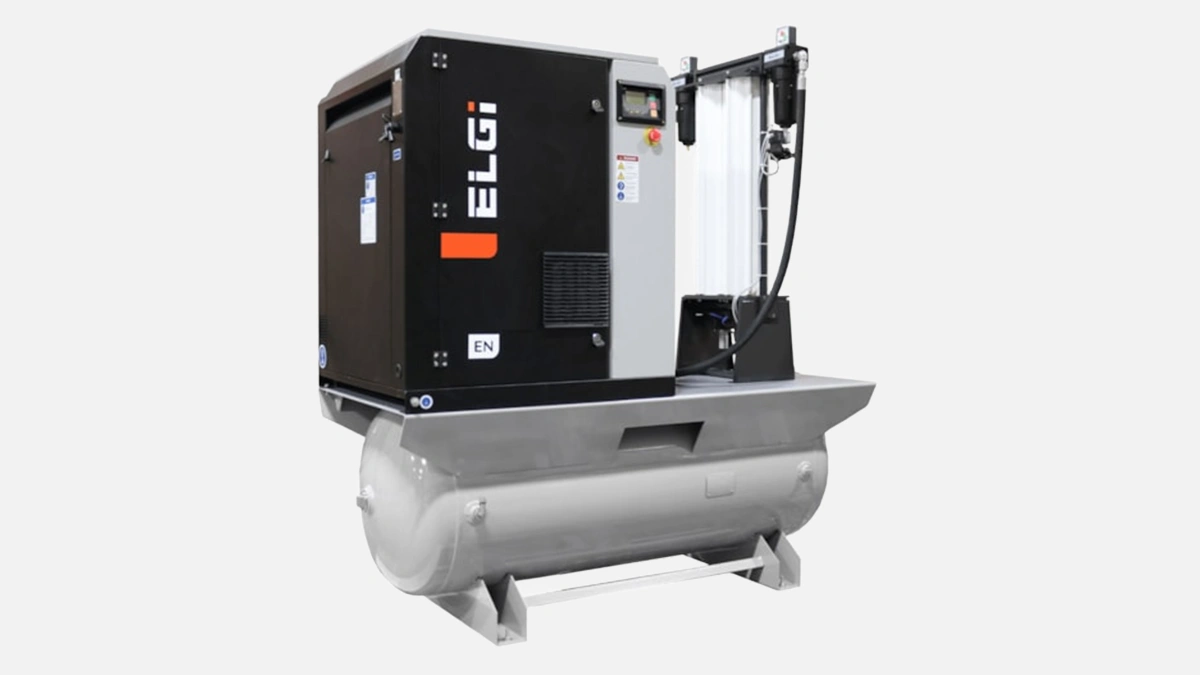
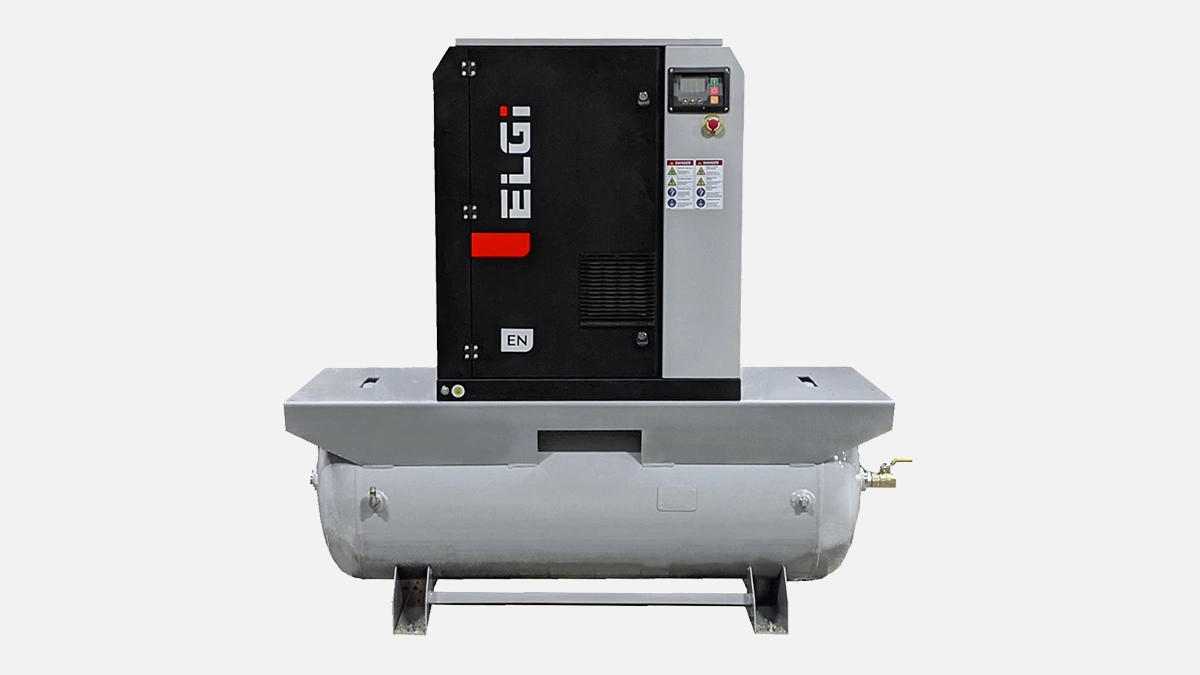
Compact tank-mounted screw compressor with 8 bar pressure, 67 dB noise, covers air demand of two CNC machines in UAE workshops.
Short opening, almost a whisper. This thing breathes air, literally, but it also breathes life into CNC cells that sit under a dusty corrugated roof somewhere between Dubai and Sharjah. The frame looks modest yet hides a rotary screw pair that has been honed for 60 years of ELGi manufacturing history, strange to think how many compressors they already pushed out, roughly 500 000 units per year if you trust the corporate brochure. I am not here to sell dreams, I just watched two of these EN-series boxes run non-stop in a machining hall that chews through 7075 aluminium billets every shift.
First you notice the receiver keg under the element, 200 liter steel shell, powder coated, no fancy stainless sparkle, but it keeps the pressure pulse calm. ELGi gives you belt drive by default, yes belts are old school, still nobody complains because the replacement kit costs peanuts compared with a failed gear set. Other options, star-delta starter, WEG or Siemens motor, simple spin-on separator. Nothing exotic.
Before we go any deeper let me slap a table, just so numbers do not float around in thin air.
| Parameter | Value |
|---|---|
| Motor power | 7.5 kW |
| Working pressure | 8 bar |
| Air delivery | 1.2 m³⁄min |
| Receiver volume | 200 L |
| Noise level | 67 dB(A) |
| Dimensions | 1660 × 750 × 1500 mm |
| Net weight | 390 kg |
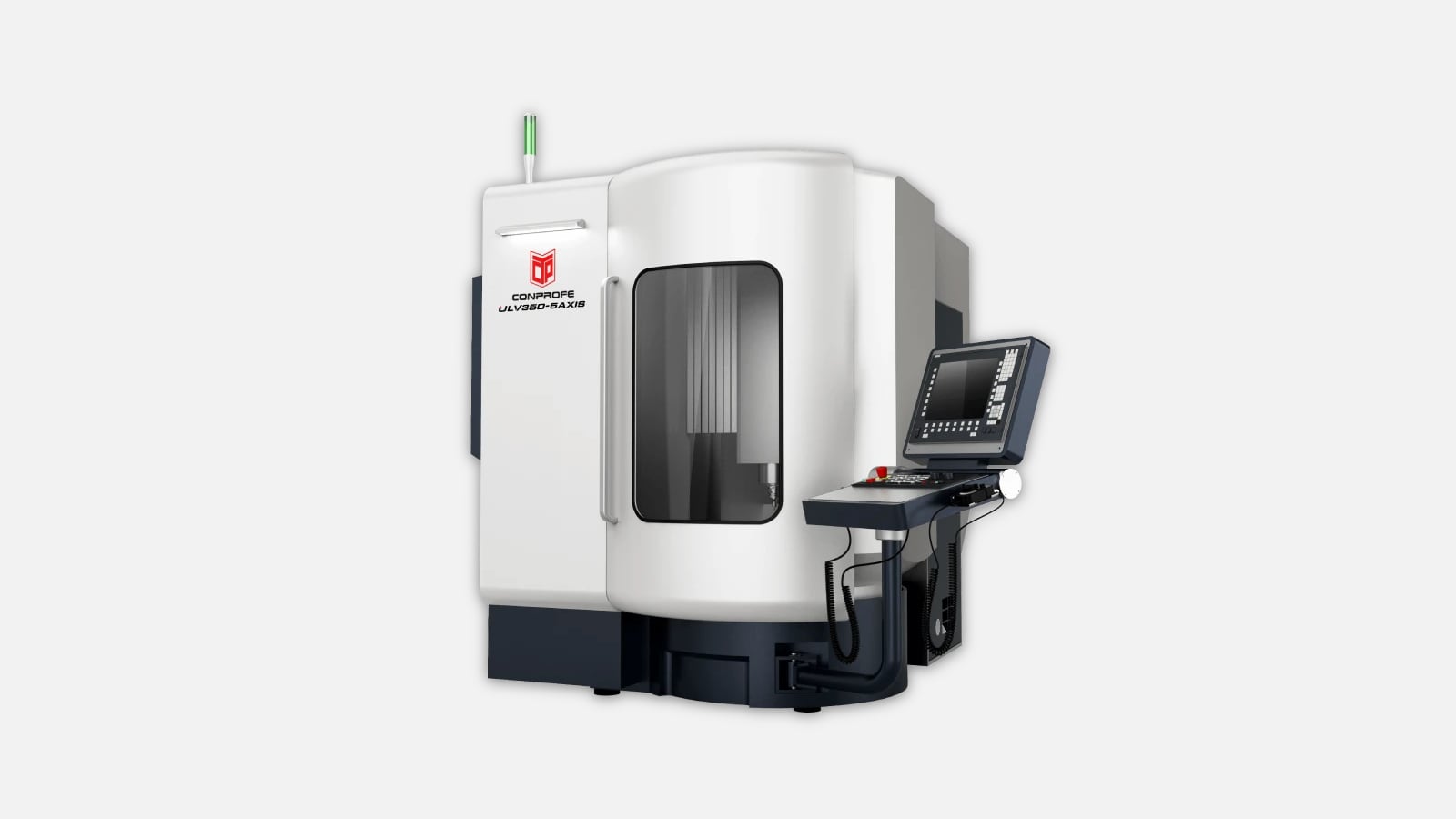
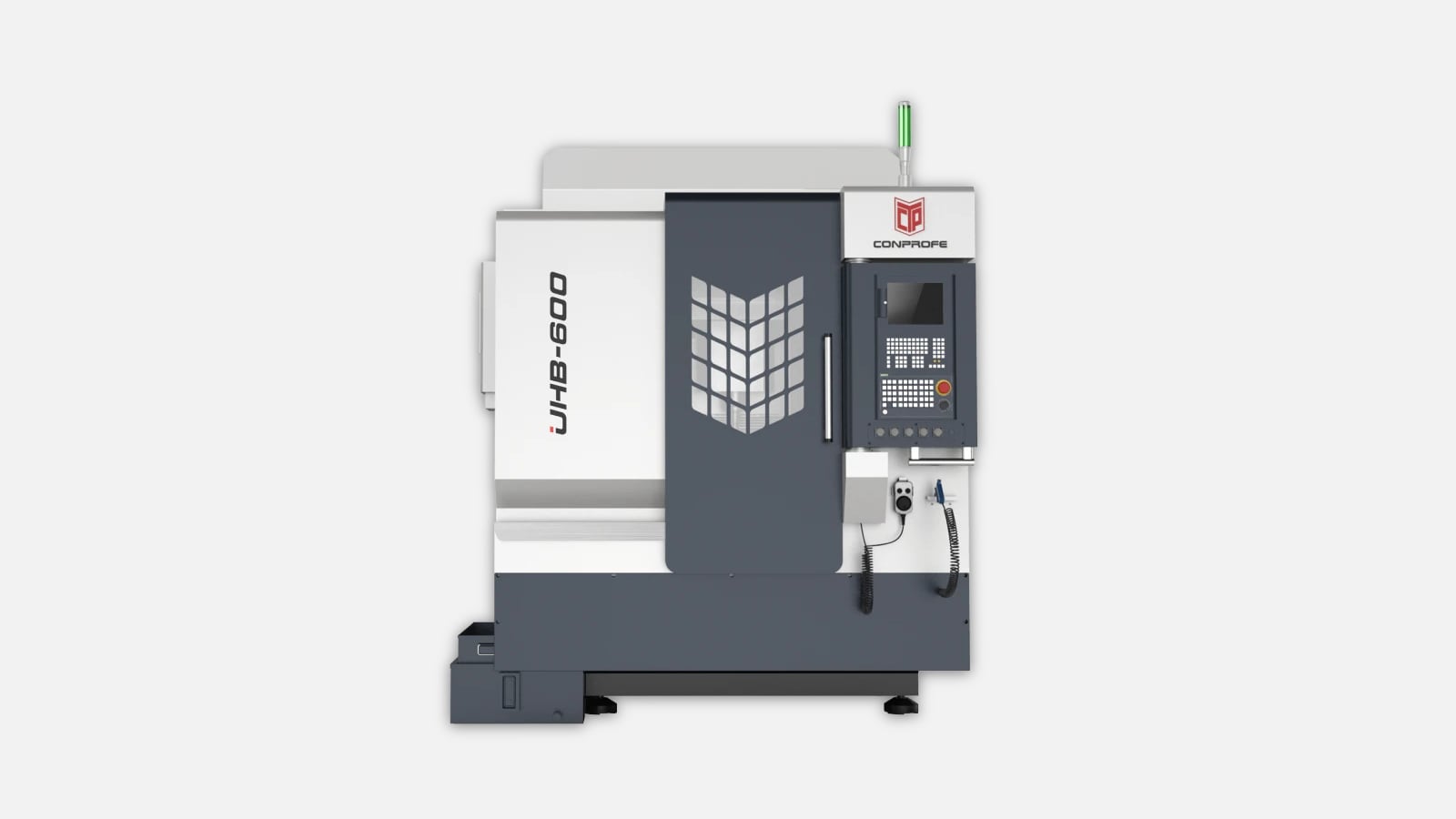
The digits look small on paper, in reality the flow is plenty for a pair of 4-axis VMCs running simultaneously, each calling for roughly 350 l⁄min at 6 bar when the toolchanger fires.
Air in the Gulf carries humidity that laughs at unpainted steel. The EN tank, internal epoxy coating, helps fight rust, still drain valves need love every single shift, or pockets of salty water will drill tiny craters inside. I have seen that movie, spoiler alert, it ends with a pin-hole leak right under the operator’s boots. The cooling fan pushes air sideways, not up, that means you can stack the compressor in a corner along with the chiller if you leave at least 500 mm breathing gap behind it. Ambient in August might hit 48 °С, so derating chart says cut delivery by about 10 percent. People ignore charts, then wonder why a plasma cutter refuses to pierce, do not be that guy.
Two quick bullets, nothing fancy. They capture what really matters when you run a metal shop in Al Quoz:
No, the machine is not bulletproof, you still must change the oil filter every 1000 hours or the separator turns into a soggy mess that spits oil fog downstream. End of rant.
Now I jump sideways. Worth looking at Kaeser SX 6, Atlas Copco GX 7 FF, and Fini CUBE 8. They sit in the same 7–8 kW pocket. Kaeser shouts about Sigma profile, nice but you pay 12–15 percent extra. Copco gives built-in dryer, good idea until the dryer trips in summer heat and chokes the whole line. Fini very cheap, parts travel from Italy slowly, a month feels like eternity when your spindle stands idle. Against that backdrop the EN feels balanced, decent noise, local service, price not rock bottom yet far from premium.
The EN family stretches from EN 5 to EN 45. Tank mounting stops at EN 11 because bigger heads need floor space. If you scale up to EN 15 you gain roughly 2.4 m³⁄min flow yet the frame switches to gear drive, slightly higher maintenance ticket. Below is a bite-size list showing where the cutoffs sit:
Knowing that, many shops simply buy two EN 7 units rather than one bigger block, the redundancy saves the day during unforeseen shutdowns.
Crazy thing, people set and forget. Wrong. The basic schedule fits on the back of a coffee-stained notebook:
Stick to the rhythm and the screws last beyond 50 000 hours, at that point the bearings whistle, you overhaul or scrap, simple as that.
We can wrap opinions into cold statements, yet numbers alone rarely sell. Still, three obvious perks float to the surface.
Enough chatter. The ELGi EN tank mounted screw compressor landed in the UAE market because workshops here want plug-and-run gear, nothing overly clever, just pull air in, squeeze it, push it out, day after day. That pragmatic vibe attracts CNC job shops, fabrication yards, even boutique sand-blasting cabins that cannot stomach oil carry-over. The whole package hits the sweet spot between flow, noise, footprint, and getting parts tomorrow instead of next month. For many owners, that alone seals the deal.