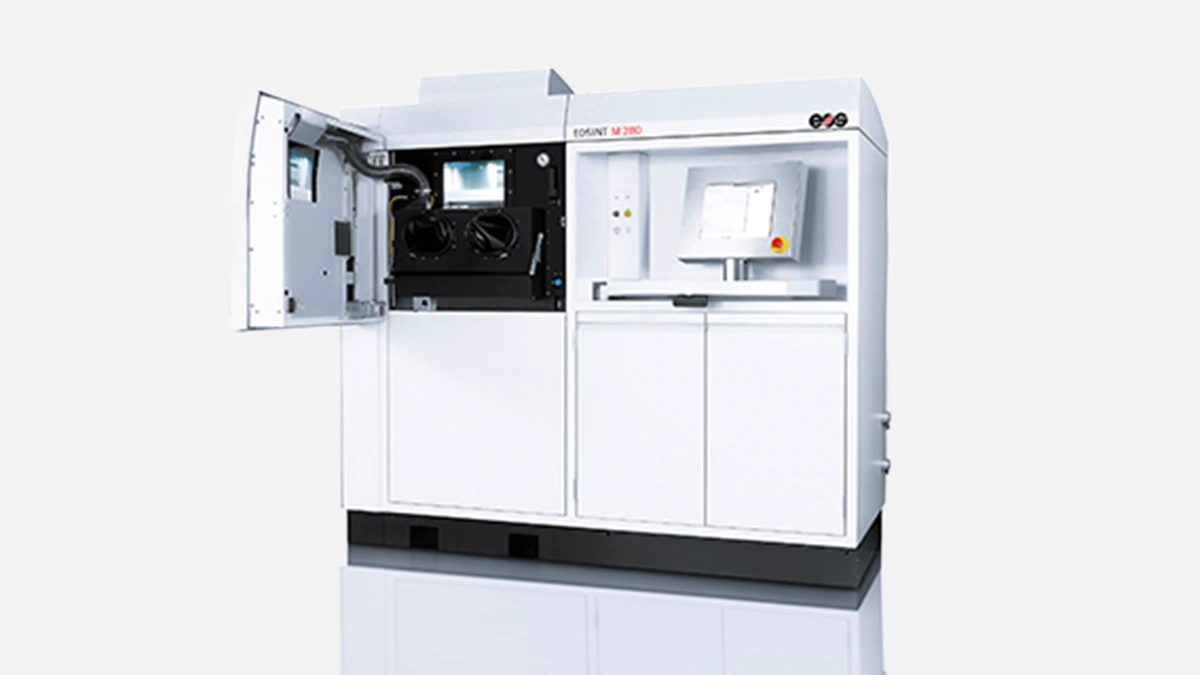
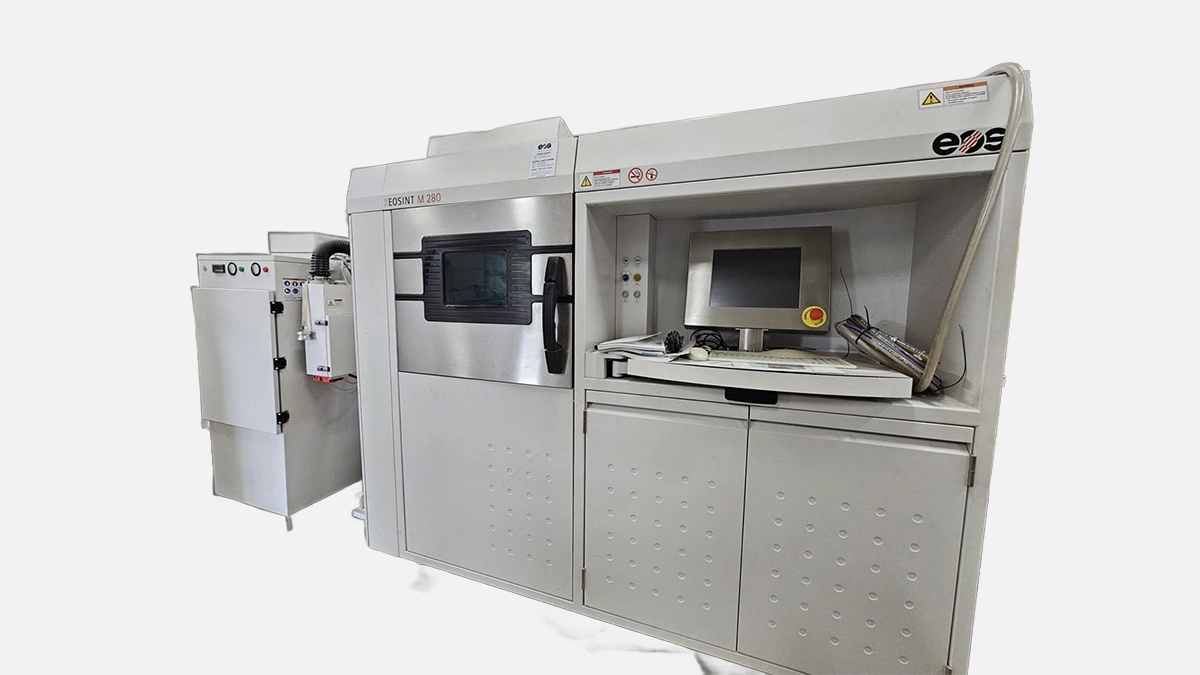
EOS M 280 metal 3D printer, 250×250×325 mm, 400 W laser, gas loop for repeatable builds
Small sentence. Here we go. The M 280 from EOS, yeah that German crew that has been melting powder since the mid 90s, looks bulky, smells like hot metal powder and humming turbines. It is not the newest kid, yet the thing keeps popping up in Dubai parks and Ras Al Khaimah job shops because owners trust it. Facts first, emotions later, or maybe mixed right away, whatever.
I need numbers on one screen, because managers do not scroll, operators do not care, but purchasing guys love sheets. So, table incoming right after this line, brace yourself.
| Spec | Value |
|---|---|
| Build space | 250 x 250 x 325 mm |
| Laser | 400 W Yb fiber |
| Layer range | 20 – 100 µm |
| Axis speed | 7.0 m/s scanning |
| Gas loop | Nitrogen or Argon |
| Footprint | 2750 x 1300 x 2100 mm |
| Weight | 5800 kg |
Cool, right. Do not stare too long, the powder may oxidise.
People see 250 mm and shrug, they think small. Wrong context. A batch of dental frameworks or a lattice heat exchanger for a Formula E team lands perfectly in that cube. UAE subcontractors blend parts vertically, stack them like pancakes. Because the Z reach is 325 mm, you squeeze more layers before hitting overflow. Is it larger than M 290, smaller than M 400, sure, but the ratio between print time and argon consumption stays sweet.
See the two bullets, simple but they save headaches. After running a month in Sharjah a friend logged gas use, roughly 18 percent lower than his bigger twin machine. Nice.
Attention span drops here, yet the laser is the show. Single 400 W, fiber coupled, spot 100 µm. No dual array, no fancy wobble, just consistent energy. Why care? Because alignment stays put for years if the housing is not hammered. Also, service guys in GCC stock spare optics everywhere, easier life. I once watched a tech swap the protective window in 7 minutes, coffee still hot.
Take a breath, laser talk done.
Companies chase alloy catalogs, EOS drops more parameter sets than TikTok drops memes. Stainless 316L for pump bodies, Ti64 for medical screws, AlSi10Mg for drone brackets flying over Abu Dhabi dunes. The machine does not blink, you only swap sieve mesh and hopper. Important twist, argon purge hits 99.995 percent purity, so Ti stays bright, no black crust, less post polish.
Reality check, outdoor is 45°C, indoor you manage 24°C with brutal HVAC, yet powder still clumps. The M 280 uses a heated hopper jacket keeping feed at 35°C so flow stays silky. Operators like that, fewer brush strokes, quicker layer restart after a stop. Powder cycle is closed loop, cyclone filters catch fines, local EHS auditors smile.
Then he walks away, maybe grabs karak tea, machine keeps buzzing.
Two sentences after the list. The goal is zero idle time. Any pause means you still pay Dubai Electricity and Water Authority rate, hard truth.
I promised direct words. So M 280 versus Concept Laser M2 and RenAM 500M. RenAM has 500 W laser, prints slightly faster on thick walls, yet costs in gas more. Concept Laser uses patented segmented build plate, easier depowder but ROI drops if you only do one alloy. EOS answers with the gargantuan library and a service team sitting in Jafza free zone. So the battle goes like this
| Feature | EOS M 280 | Concept Laser M2 | RenAM 500M |
|---|---|---|---|
| Build size | 250 x 250 x 325 | 250 x 250 x 350 | 250 x 250 x 350 |
| Laser | 400 W single | 400 W dual optional | 500 W single |
| Material sets verified | 20+ | 12 | 10 |
| Argon use per hour | 3.2 m³ | 4.1 m³ | 3.8 m³ |
| UAE spare parts lead time | 48 h | 7 days | 5 days |
The numbers pop out, trust your calculator.
M 270 came first, then M 280, after that M 290. The jump? Mostly laser power curve smoothing and improved filter access. If you already run M 270, the powder modules dock to M 280, no extra spend. If you think of M 290, you get a 100 µm taller Z but pay more for dual filter packs. I like the middle child, always have.
Not sugar coating. Filters cost money, around 900 AED each, and you swap every 1200 h depending on alloy. Recoater blade is a polymer, print maraging steel at 80 µm layers and the blade might chip. Keep a spare. Alignment requires a factory jig, yet local techs own it. Good point, downtime rarely crosses one day.
Aerospace tier two suppliers in Al Ain, dental labs tucked in Deira alleys, service bureaus feeding oil and gas rigs with impeller prototypes. Common thread, batches below 500 parts a year, but geometry twisted enough to send machinists crying.
Sitting back, the M 280 feels like a pragmatic workhorse, no neon lights, just metal powder bonding layer by layer. That is why it keeps landing on purchase orders even when newer siblings exist. If your plant chases repeatability, documented parameters, local service, the box checks the boxes, funny loop there.