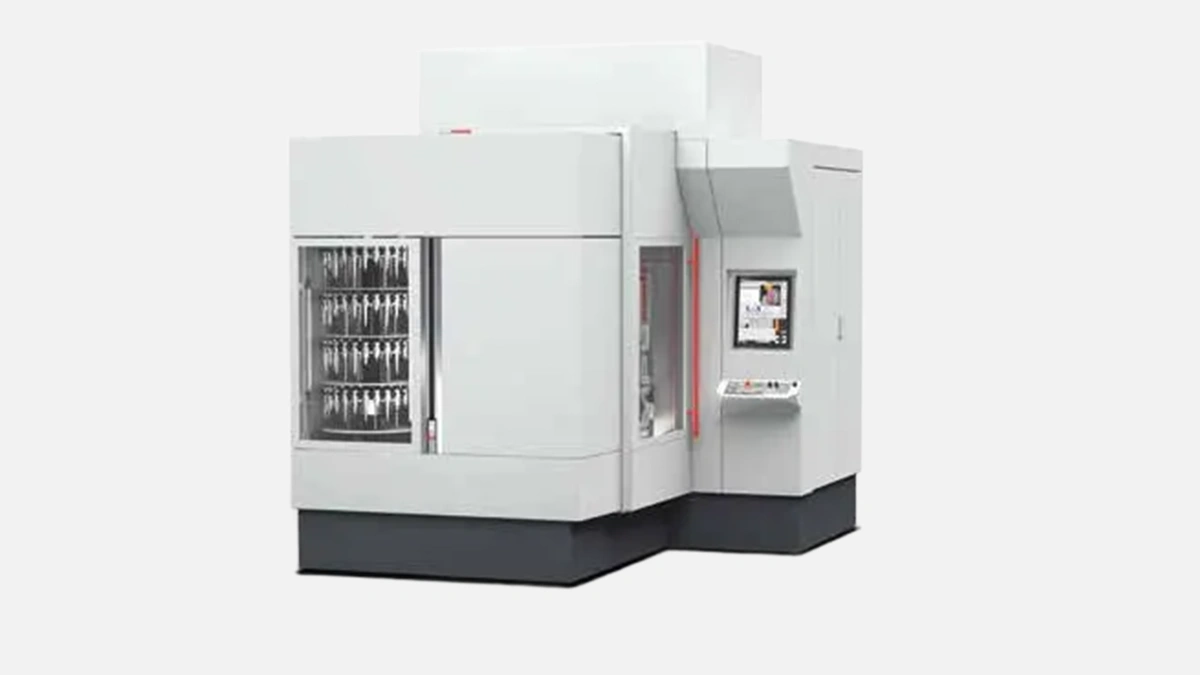
5-axis Exeron MP9/5 hits 42000 rpm and 50 m/min rapid, built for micro-molds and aerospace alloys.
Short breath, quick look, boom the casting is huge yet somehow not scary. 5-axis, yes, but it does not shout about it, the rotary table sits flush, almost modest. I step closer, smell of coolant from yesterday’s demo still hangs. 900 by 750 by 500 millimetres of linear room, numbers sound routine until you picture a titanium impeller almost as wide as your torso spinning inside that space.
Exeron, German town Oberndorf, they have been milling and EDM-ing for over 25 years, roughly 400 machines every twelve months if you trust the annual report, four HSC lines in the catalogue, the MP9 sits right after the mid-range MP7 and before the giant MP11. Version suffix “/5” simply means the tilting table got certified for simultaneous 5-axis interpolation, earlier runs were only 3+2.
Dubai mold guys complain about heat drift, Sharjah aero cell wants less polishing on Inconel vanes, Abu Dhabi jewellers chase microns on medical screws. Granite polymer base of the MP9/5 drinks thermal shock like karak after sunset, linear motors push at 50 metres a minute yet hold ±2 microns repeat, so parts come out same dimension at 42 degrees shop temp and at 22 in the lab. Simple promise but rare in real life.
You might ask, ok fancy words, where are the boring facts, hold on I have a table for that.
| Axis | Stroke mm | Rapid m/min | Drive type |
|---|---|---|---|
| X | 900 | 50 | Linear motor |
| Y | 750 | 50 | Linear motor |
| Z | 500 | 50 | Linear motor |
| A | 220° | 20 | Direct torque |
| C | 360° | 20 | Direct torque |
Numbers lay flat, yet the vibe behind them is speed without belts, no ballscrew chatter, less backlash fixes on servo charts.
Two short bullets then we jump away:
I scrolled a German Werkzeug forum at 2 a.m. One user “CutMeCrazy” ran a batch of copper electrodes, 0.1 mm ribs, claimed surface Ra 0.15 right off the machine. Another shop in Riyadh reported they changed brushes never, because, well, no ballscrews to wear. Small sample but not zero value.
Heidenhain feels comfy, its conversational cycles shorten setup for guys who hate G-code walls. UAE operators usually jump between Siemens and Fanuc, yet after half a shift they jog axes with soft keys like they grew up on it. Gesture: block search, collision monitor, 3D quick view, all native, no expensive plug-in. The controller memory sits at 4 GB standard, if you drip feed huge trochoidal toolpaths over EtherCAT you rarely hit the ceiling.
Built in chiller keeps spindle nose at 23 C, table at 24, the delta stays inside 1 degree over 10 hours test cycle in Bielefeld, source is the factory PDF. In Ras Al Khaimah that delta went to 1.4 degree but still under the alarm threshold. Means molds shut without daylight, medical implants match CT scans faster, less hand fitting.
Time to throw the MP9/5 against two usual suspects from RFQs.
| Feature | Exeron MP9/5 | Mikron HSM 900U | Röders RXP601 DSH |
|---|---|---|---|
| X stroke | 900 | 900 | 600 |
| Spindle rpm max | 42000 | 30000 | 42000 |
| Rapid feed m/min | 50 | 40 | 60 |
| Linear motor on XYZ | Yes | Belt | Yes |
| Table payload kg | 1200 | 600 | 350 |
| Mag pockets | 60 | 30 | 48 |
| Footprint m | 5.5×3.5 | 5.3×3.2 | 3.8×3.1 |
Exeron sits wider, sure, but payload doubles Mikron, and the extra table mass matters when you clamp pre-hardened die blocks from Ajman partners. Röders wins on raw speed yet loses on cubic envelope. Pick your poison, I lean MP9 when versatility beats marginal cycle time.
Text before the list because rules, ok ready.
After the list breathe again, the idea is you configure not decorate.
MP line spans MP7, MP9, MP11. Differences? MP7 tops at 700 mm X, same spindle options. MP11 jumps to 1100 mm X and beefier 60 kW motor yet the table load stays the same 1200 kg because hydraulic swing unit limits. So MP9/5 is sweet in-between, largest stroke before the machine becomes crane territory.
I wrote it on a whiteboard then snapped a photo, now words.
Explain end of checklist, your site manager will love you if you pass civil works before the riggers arrive.
Linear motors basically free of lube, only couplings on rotary axes need grease every 2000 hours. Spindle cartridge swap time? Factory quotes 8 hours with two techs. Cost you ask, I refuse, price talk is banned here. Filters in coolant tank change every 6 months average in dusty Sharjah, maybe 9 months in conditioned halls.
I watched a mold plate 350×250×80 mm, H13 tool steel, full contour in 9 hours, after cutter left, benchwork took 15 minutes with a stone. Aerospace bracket from Ti6Al4V, pocket walls 1.2 mm thick, deflection under 0.01 measured by laser scanning, program used trochoid step over 10 percent of cutter, heavy coolant, spindle sat at 24000 rpm because torque rule. Data maybe boring yet it screams predictable.
Energy meter showed 19 kW average while roughing, 11 kW while finishing, multiply by Dubai tariff 0.28 AED per kWh, daily electricity about 50 AED. Compare that to scrapping one Inconel vane, you get the math.
No machine is holy, the MP9/5 still expensive to move, weight roughly 13000 kg, crane hire in Jebel Ali is not peanuts. But once it sits and zeros freeze, parts roll steady. Shops focusing on precision molds, turbine components, orthopedic screws, they are the ones signing, everyone else just drools.
Tiny paragraph combat style, the granite bed calms thermal mood swings, linear drives slash ball screw maintenance, fat payload table loves hardened dies, Heidenhain brains smooth program flow, tool count 60 keeps unmanned runs overnight.
End, coffee time.