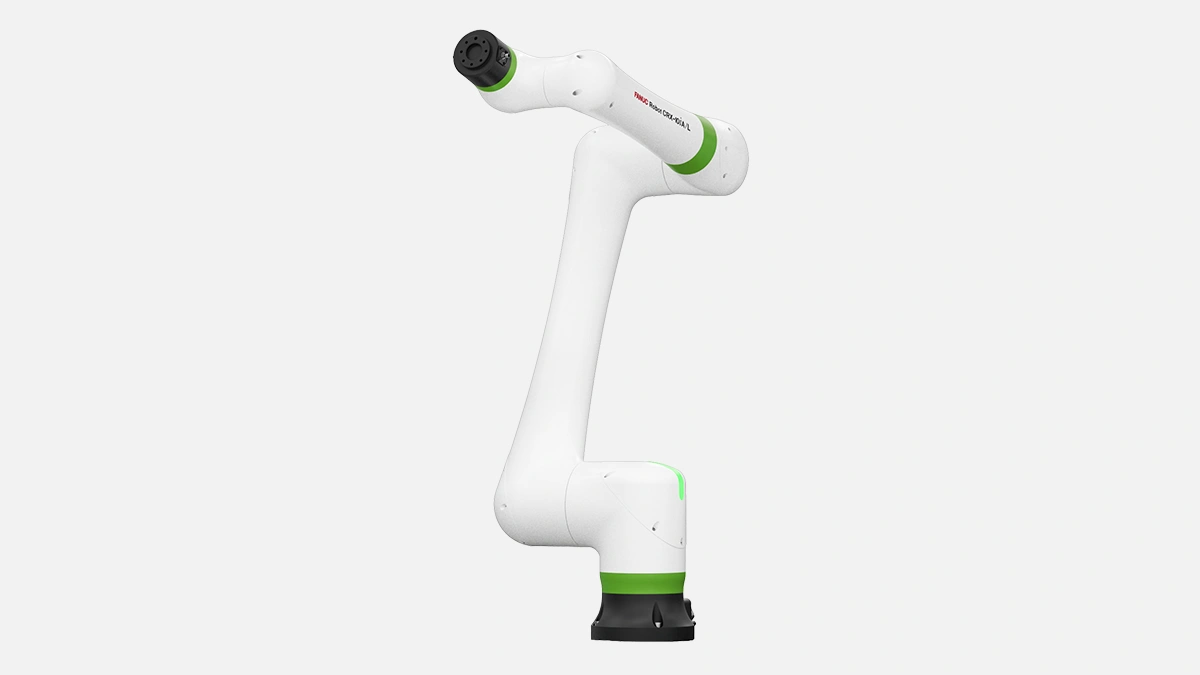
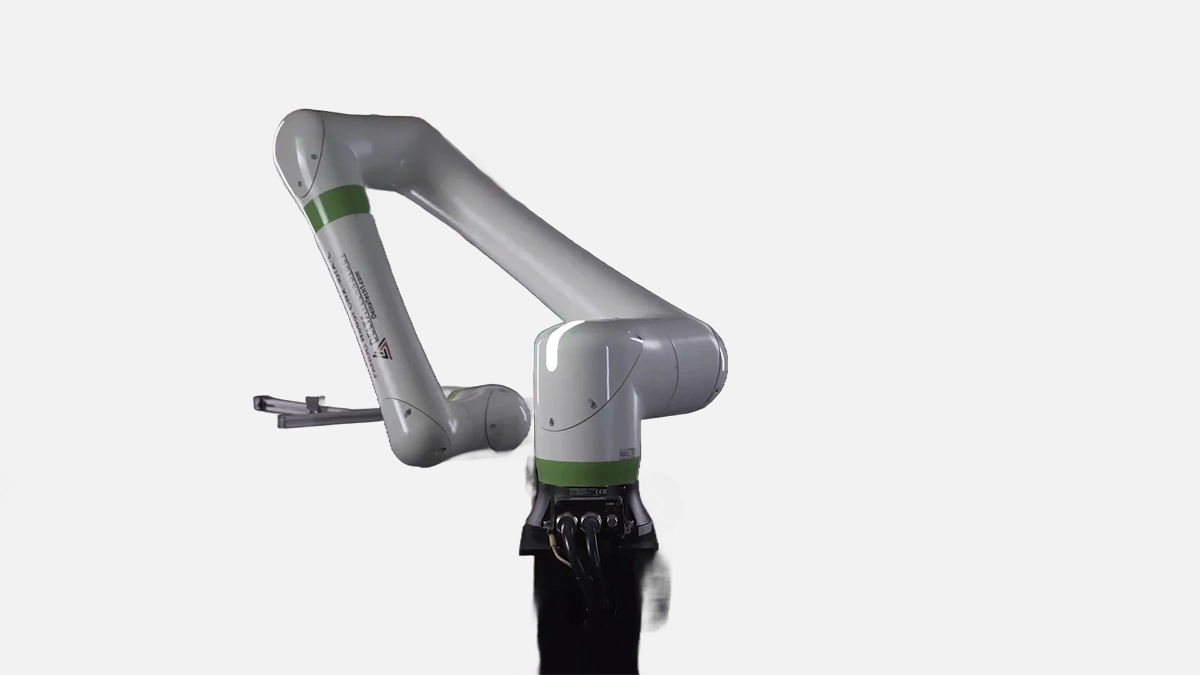
Lightweight FANUC CRX cobots, 10–25 kg payload, teaching-by-touch, IP67 wrist, quick fit for UAE machining cells.
Short line first, almost blunt. Looks white, soft edges, kinda friendly, right. Then you grab the spec sheet and, boom, six axes, payload somewhere between 10 and 25 kg depending on which CRX you pick. The thin hollow arm hides cables so the gripper does not snag. Good, less drama.
I have seen it bolted to a small 3-axis VMC door in Sharjah, just one bracket, no fancy pedestal. The operator, Ahmed, said he taught the arm in fifteen minutes, literally dragging it by hand, recording points, punching OK on the tablet. No PLC guy around, no ladder logic. That story sticks because most shops here drow in paperwork when a new machine lands.
My brain jumps, sorry, but let me throw a quick table before I forget. Two sentences first: numbers matter when you pitch the cobot to the finance folks, they count kilowatt hours and square meters. And the table collects the dry bits so you do not have to dig through PDF after PDF.
| Model | Payload | Reach | Mass | Mounting |
|---|---|---|---|---|
| CRX-10iA | 10 kg | 1249 mm | 39 kg | Floor, wall, overhead |
| CRX-10iA/L | 10 kg | 1418 mm | 40 kg | Same |
| CRX-20iA/L | 20 kg | 1418 mm | 48 kg | Same |
| CRX-25iA | 25 kg | 1889 mm | 60 kg | Same |
Two lines after: weight sits in scooter territory, so you can wheel it around on a trolley if needed, clamp it, run. Not joking, we moved the CRX-10 with two guys and a pallet jack.
That list reads dry, let me spice, the arm does not need grease for eight years according to FANUC bulletin F-1329EN. Less mess on UAE shop floors where dust flies.
Small white box, the R-30iB Mini Plus, sticks under a table. You open the door, standard RJ45, safety relay terminals, 230 V single phase, no weird transformer. Software is still iPendant Touch, same menu tree old FANUC guys know, but now you also get a web UI. Click, upload TP program, done.
Machining lines here run day and night because electricity is cheaper at off-peak and labour costs climb. A robot that sips one kilowatt and never asks for visa renewal feels comfy. You attach a double gripper, run a batch of 600 aluminum blocks, leave at 10 pm, come back morning, pallets full. I saw that at a subcontractor in Jebel Ali, no myth.
Hold on, bullet list incoming, but first, context, because every manager will ask why not Universal Robots or ABB. I toss the thoughts as they come.
After the bullets: None are bad, but CRX slots nicer beside a yellow CNC, same brand, same Ethernet cable, one service team.
People forget the CRX label hides four siblings. Let us zoom.
Lightest, fastest, sweet spot for loading vertical machining centers under 500 kg table load. The long-arm L version grabs parts from the side of a turning center without leaning over coolant bucket.
Double payload, reach same as 10iA/L, sacrifice a tad of speed. Good when you swing cast iron blanks onto a horizontal pallet changer.
The big kid, 25 kg payload, almost 1.9 m reach. UAE folks mount it on a mobile cart to tend two machines in a row, offset by 800 mm. Still collaborative, still no fence if you tune speed.
Ahmed again, he complained the CRX joint-4 cable plug sits awkward, you need thin fingers. Minor nag. Another operator said the tablet sometimes freezes if you spam undo, so save programs, old lesson.
Yet both liked the contact detection, the arm stops quicker than their reflex when you bump it while swapping chuck jaws. That matters, no injury reports, management happy.
Text chunk, hold tight. You unpack crate, bolt base with 4×M10 screws, run power, Ethernet to CNC, map Modbus I/O, import the standard CNC ready template from FANUC library, adjust gripper open/close delay, teach pick and place, set safe zone by dragging arm, record waypoints, check collision guard at 150 N. Done by lunch.
FANUC claims grease refill at 8,000 hours, battery swap at 3 years, that is it. A single O-ring kit costs less than a Friday brunch. You keep a spare in drawer, just in case.
The yellow brand sits in GCC from 1997, over 4,000 robots installed, that datapoint came from their 2022 regional report. It translates to technicians on call, actual humans, not chat bots.
Power tariff off-peak in UAE hovers around 0.28 AED/kWh. CRX average draw stays below 0.6 kW, so night shift bill for 10 hours roughly 1.68 AED. Compare that to an operator overtime rate, difference screams.
Before the bullets a note: these arms gladly host third party stuff through ISO 9409-1-50 flange.
Wrap: any tool under 3 kg mounts fine, the robot carries the rest.
I bounce, sorry, but one final paragraph, because managers love numbers. A CRX feeding a twin spindle lathe pushed output from 55 parts per hour to 73 in a shop near Abu Dhabi, measured across a week, same quality logs. Payback rumor sits below 18 months even after adding a vision camera. Believe or doubt, but the parts keep moving.
That is it, the arm works, not magic, but plenty of value for Gulf machine shops.