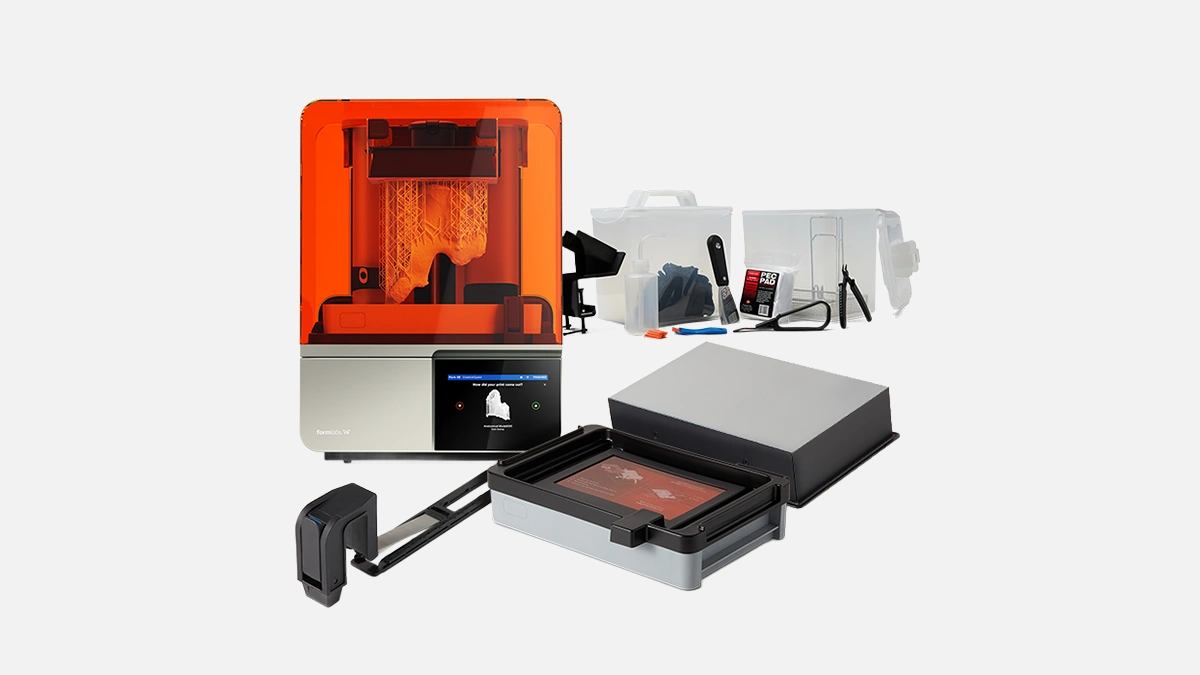
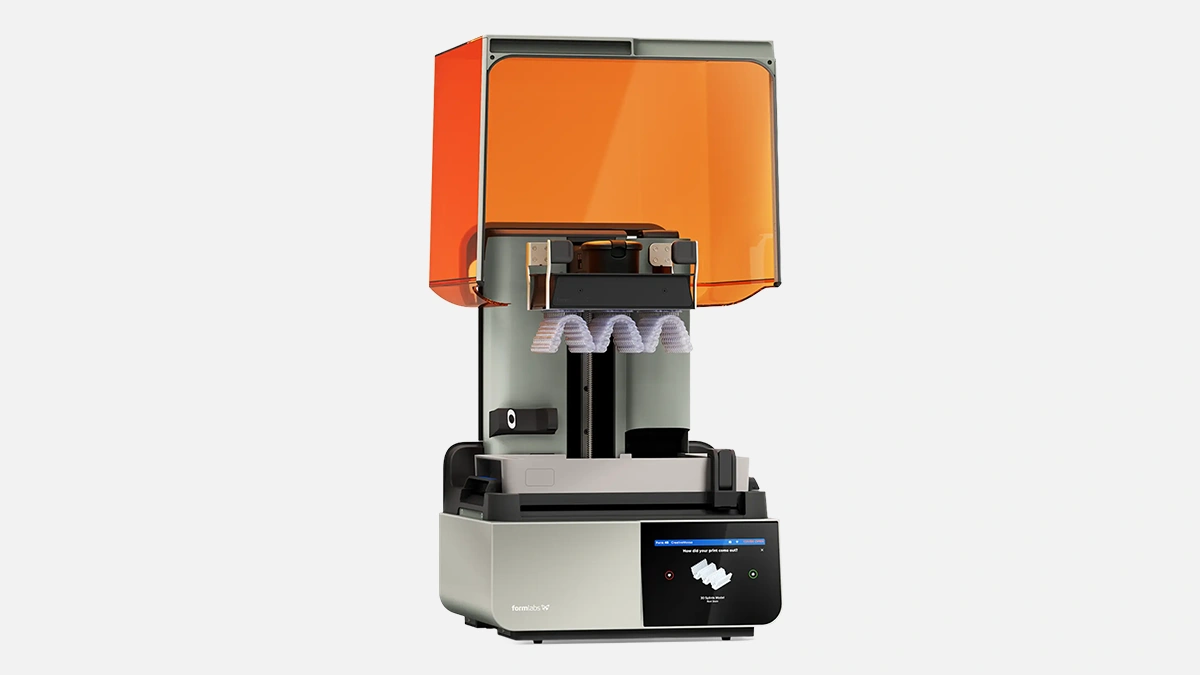
Form 4B prints certified biocompatible parts fast in a compact 200×125×210 mm build area.
Fast printer, small box, lots of hopes. I saw it first at a partner shop in Dubai, coffee still hot, operator half asleep, yet the part came out crisp.
Then, a longer breath. Let’s untangle the numbers.
Formlabs as a brand sits on the market for 12 years already, shipping over 100,000 resin machines. The B in Form 4B means biocompatible focus, think dental trays, surgical guides, hearing aids. Version count? Three internal revisions before public launch, according to an engineer who slipped during a webinar.
Short: masked stereolithography with a custom LED engine. Long: an array of 120 high-power diodes through an LCP shutter projects 405 nm light onto a vat coated with that everlasting flex film. Force on peel stays low, which in plain words keeps parts from ripping.
Yes, the spec sheet screams 25 µm XY, but let’s be real, nobody in job-shop land sets every project to that. Most run 50 or even 100 just to hit the deadline before noon.
Before diving deeper here is a compact table that shops usually stick above the printer on a greasy magnet board.
| Metric | Value | Why you care |
|---|---|---|
| Footprint | 390 x 360 x 550 mm | Fits between the compressor and the tool cart |
| Build height | 210 mm | Dental arches stacked four layers high |
| Vat life | 75 liters average | Lower consumable bills |
| Typical cure time per layer | 1.2 seconds at 100 µm | Near continuous peel, smoother walls |
| Electrical load | 220-240 V, 4 A | No rewiring in older workshops |
That table looks dry, but machinists who actually pay the bills love those columns.
One might shout plastic is plastic, print is print, move on. Reality bites. The 4B carries a medical device file for Class IIa resins, and hospitals in Abu Dhabi already borrowed that certificate for tenders. For a regular sheet-metal fab, what does that mean? Extra revenue stream. Dental labs across the street will outsource trays, you slam them in overnight, rinse, cure, invoice.
Notice the list above is a fraction. The full material roster is 15+ shades and viscosities, and none requires tweaking exposure times, all recipes baked into PreForm. More bullet points? Sure, but breathing room first.
A job comes in, jaw model in STL, mid-level engineer drags it into PreForm, the software auto-nests 4 copies, shows orange islands where supports conflict, you click Repair. Done. Slicer pushes the file via Wi-Fi, printer heats resin to 30 °C because viscosity hates cold rooms, laser fires. Post-print, the new quick-release build plate lever drops the part into a Form Wash station in under 8 seconds. No screws, no swearing.
Enough diary style, back to facts.
Many Emirati job shops run 2 x 8-hour shifts with a skeleton night crew. Assume dental arches at 100 µm layer thickness, volume 10 cm³ each, build plate packs 4 at once. A single plate clocks 1 h 45 min including peel, wipe, UV flood. Multiply, you push 40 arches per day per machine. Metal-cutting revenue eclipses polymer work, but that side hustle adds up, covering consumables and paying for the operator’s lunch.
A head machinist from Sharjah told me he pairs the Form 4B with a five-axis mill: print sacrificial jigs overnight, machine titanium custom caps at dawn, drop them into the printed holder, all tight, no clamp marks. He claims cycle time saved 11% on the Mazak because setup faded to almost zero. Believe him or not, his Instagram proves parts are shipping.
We hear the question every exhibition, so let’s stack numbers, no drama.
| Feature | Formlabs Form 4B | Anycubic Photon M5s | SprintRay Pro S95 |
|---|---|---|---|
| Build volume | 200 x 125 x 210 mm | 218 x 123 x 200 mm | 190 x 119 x 200 mm |
| Certified biocompatible resins | 15+ | 0 | 9 |
| Cloud fleet management | Yes | No | Yes |
| Typical slice prep time | <1 min | 3-4 min | 2 min |
| Service centers in GCC | 2 | none | 1 |
Photon looks cheaper, but without medical validation you lose half the orders. SprintRay tries harder in dentistry yet its ecosystem locks you to their wash-cure chain. Form 4B stays open enough, you can still dunk parts in an ultrasonic tank if you fancy.
Form 4 vs Form 4B. Same chassis, same LCD stack, yet firmware IDs material and logs traceability. 4 (non-B) prints engineering resins, 4B toggles extra heaters and keeps a sterilization log demanded by regulators. If you only do gizmos and fixtures, buy the plain 4. If you sniff at dental money, the B tag is mandatory.
The peel film will eventually cloud, count on 500 hours average. Swapping it takes 12 minutes if you watched the video, double if you did not. Filters in the resin tank trap floaters, rinse weekly or your surface will sandpaper itself. Firmware drops an alert every 100,000 layers. Nice, but I still jot it on a whiteboard.
The list felt too obvious, nonetheless many overlook it until someone waves a customs form.
Tiny resin cartridge door hinge feels toy-ish. Break it, door sensor locks the printer. Spare costs pocket money, downtime costs a job. Also, PreForm auto-generated supports sometimes poke into small bores at 25 µm, forcing manual edit, an annoyance if you batch hundreds of implants.
Yet neither issue stopped shops from ordering second units, at least according to a regional reseller I cannot name.
When a CNC house bolts this printer near the CMM, two things happen. First, inspectors print go-no-go gauges on the fly, chasing tolerance drift before it ruins 1,000 machined pieces. Second, marketing snaps flashy photos for LinkedIn, claiming additive mindset, winning a contract that would otherwise float to Europe. Is that shallow? Maybe. Does it pay the electricity bill? Absolutely.
Form 4B is not magic, it is a diligent desktop box that spits parts while the mill hums in the next bay. The biocompatible certificate widens customer range, the footprint stays humble, the learning curve feels flat. That cocktail explains why dental labs, prototyping bureaus, and yes, metal shops in UAE keep stacking them two high on a trolley, chasing throughput without touching the main breaker.
Enough said, back to chips and coolant.