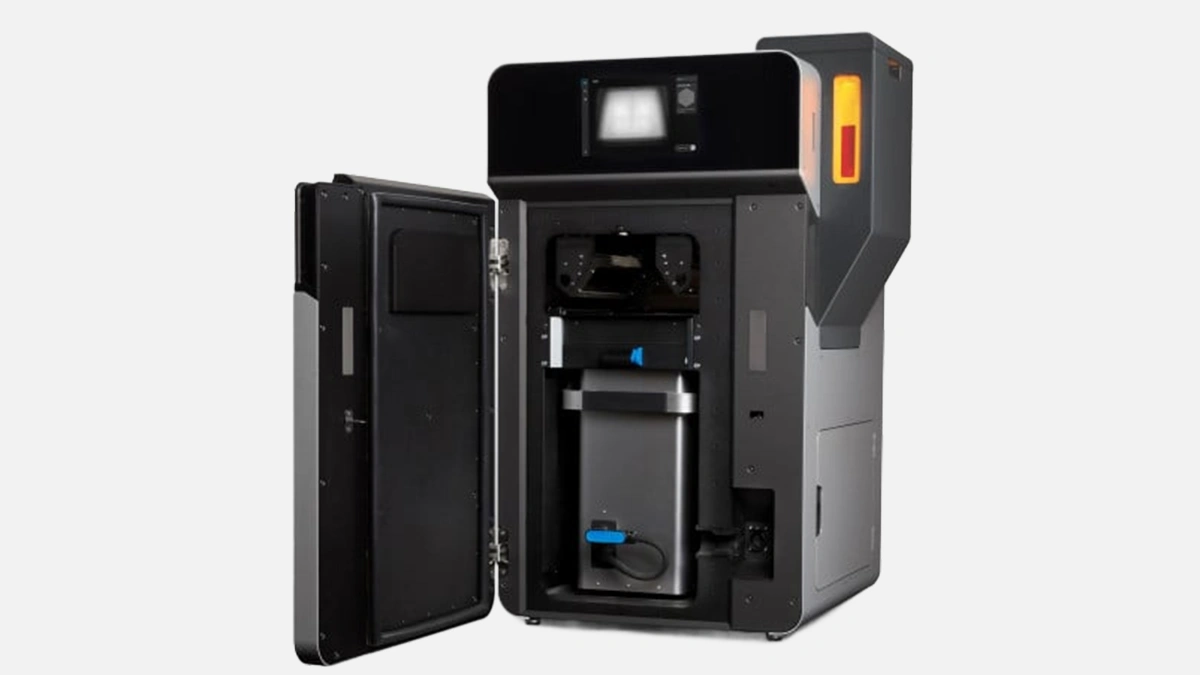
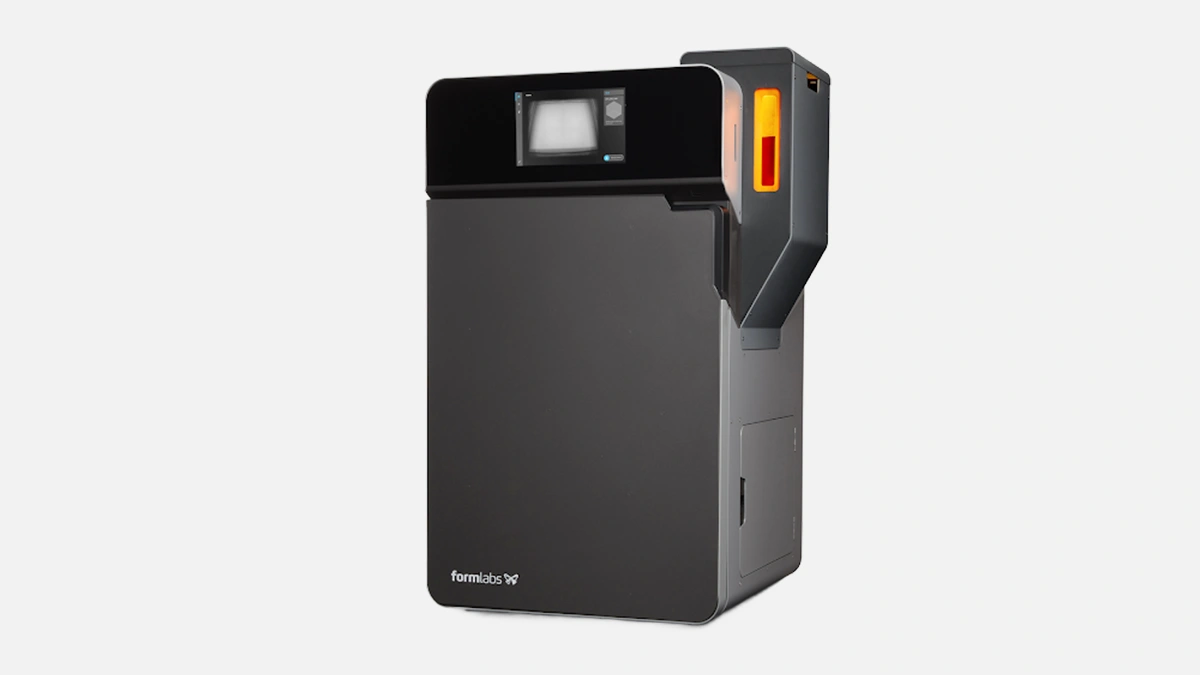
30 W fiber SLS printer with 165×165×300 mm volume, fast 10.4 m/s scan speed.
Formlabs, Boston-based, on the market 12 years already, pumps out roughly 70 000 printers a year, resin and powder both. Fuse family appeared in 2021, the 1+ update in 2022. Third revision firmware rolled out spring 2023. Ok, enough dates.
Print shop guys in Dubai keep asking me, why pick this box over some big industrial sled from EOS or a cheaper Chinese SLS. Short answer, speed and plug-and-play vibe. Long answer below.
Before storytelling, numbers matter. We all quote specs on meetings, right.
| Metric | Fuse 1+ 30 W | Typical mid-tier SLS | Comments |
|---|---|---|---|
| Build volume | 165 × 165 × 300 mm | 200 × 200 × 300 mm | Slightly smaller, but taller parts fit |
| Laser power | 30 W | 15–20 W | More juice, tighter fusing on glass-filled powders |
| Scan speed | 10.4 m s⁻¹ | 5–6 m s⁻¹ | Most of the cycle time saved right here |
| Layer height | 110 µm | 100–120 µm | Pretty standard, parts are crisp enough |
| Footprint | 0.7 × 0.65 m | >1 m side | Fits in a small toolroom |
| Nominal cycle per full bin | 24 h | 30–36 h | Overnight instead of weekend |
We will circle back to those digits in a minute, promise.
You load powder in a hopper, no vacuum needed, gravity and augers do the trick. Preheat to 190–200 °C, powder bed stabilises, laser starts dancing. Noise level, about 50 dB, you can talk next to the unit, just a low-pitch fan hum. The optional inert-gas kit is inside the Expert Package, argon stub on the back, handy for flame-retardant blends that do not like oxygen above 1 %.
The whole loop, print to next print, roughly 90 min human time including brushing. Beats baby-sitting a bigger rig for half a shift.
Powders come sealed in 6 kg cartons, shelf life 24 months. Nylon 12 for jigs, Nylon 11 for flex, glass-filled for fixtures that see torque. The new Nylon 12 FR landed Q4 2023, UAE electrical enclosure shops already quoting it for UL94 V-0 parts. Surface is matte, off-white, quick vibro polish gets it consumer-ready.
Ok, materials covered, what next.
I ran a job of 280 pipe clamps Ø30 mm height 25 mm. Powder load 8.9 kg, laser time 15 h, cool down 3.5 h, total bin to bin 18.5 h. Compare that to my old iSLS rig that chewed the same STL set in 29 h. Energy cost UAE average 0.11 USD kWh, printer pulled 1.8 kW peak during sintering, average 1.2 kW, so electricity punched only 4 USD for the whole run. My CNC mill would burn that in half a day just idling air compressors.
Galvo mirrors need wipe every 150 hours, takes 5 minutes, alcohol pad in the kit. Filter cartridge in the back pulls powder dust, swap at 1000 hours, about 90 AED. Laser factory rated 20 000 hours before 10 % power fade, plenty. Firmware reminds you, cannot skip.
But none of those kill productivity.
Let us pit Fuse 1+ against two names you hear on Gulf tenders, Sintratec S3 and EOS Formiga P 110.
Formiga gives a 200 × 250 × 330 mm box, nice, but the machine weighs 600 kg, needs forklift, and a chiller, not fun in tight mezzanine levels.
Sintratec S3 is compact, yet laser only 10 W, scan speed 5 m s⁻¹, nylon glass blend barely fuses, UAE users report curled edges on 4 mm walls.
Fuse 1+ slots in the middle, footprint coffee-table sized, power on standard 13 A breaker, and still throws parts out faster because of that 30 W beam and higher mirror RPM.
Original Fuse 1 ran a 10 W diode laser, build volume identical, but cycle time almost double. The Plus edition got the fiber source and upgraded PID heaters. Firmware features identical, powders cross compatible. If you already own a Fuse 1, the upgrade kit swaps the optical core in under 3 hours, cost roughly half the delta between the two models, nice for scaling farms.
Dust is the enemy, sand sneaks everywhere. I tell owners place the unit inside a softwall clean corner, cheap and works. Ambient must hold 18–28 °C for chamber PID to stay calm, most facilities already air-conditioned anyway. Power, a single 230 V socket, earth line under 1 Ohm and you are clear.
Height from floor to hopper lip 1050 mm, short staff reach fine. Bin weighs 9 kg full, far below UAE labour ministry single lift limit 25 kg, no complaints from HSE officers. Noise again around 50 dB, you can place it next to Haas VF without shouting.
The routine is boring in a good way, operators love boring.
Powder refresh rate 30–50 % depending on geometry, so cost per kilo ready mix sits 33–41 USD. Parts like drone brackets weighing 18 g land under 0.80 USD raw material, machining same part in 7075 plate was 3.5 USD chips alone before even counting tool wear. Multiply by 500 parts a month and you see why job shops in Sharjah switch to SLS.
CNC cells stay busy with metal cores, repetitive polymer fixtures jump to the printer. Lead time shrinks, spindle hours free up, your OEE KPI looks better without touching a Six Sigma slide deck. Clients get same-day parts, you invoice faster. Simple.
Fuse 1+ 30 W is not magic, it is a solid powder melter built for people who hate fiddling. Formlabs keeps firmware dropping every quarter, spare parts ship out of Berlin hub within 3 days to Dubai, so downtime risk is small. Companies that batch produce low-volume functional nylon parts, think HVAC brackets, lighting housings, duct adapters, buy this thing, run it hard, keep margins fat.