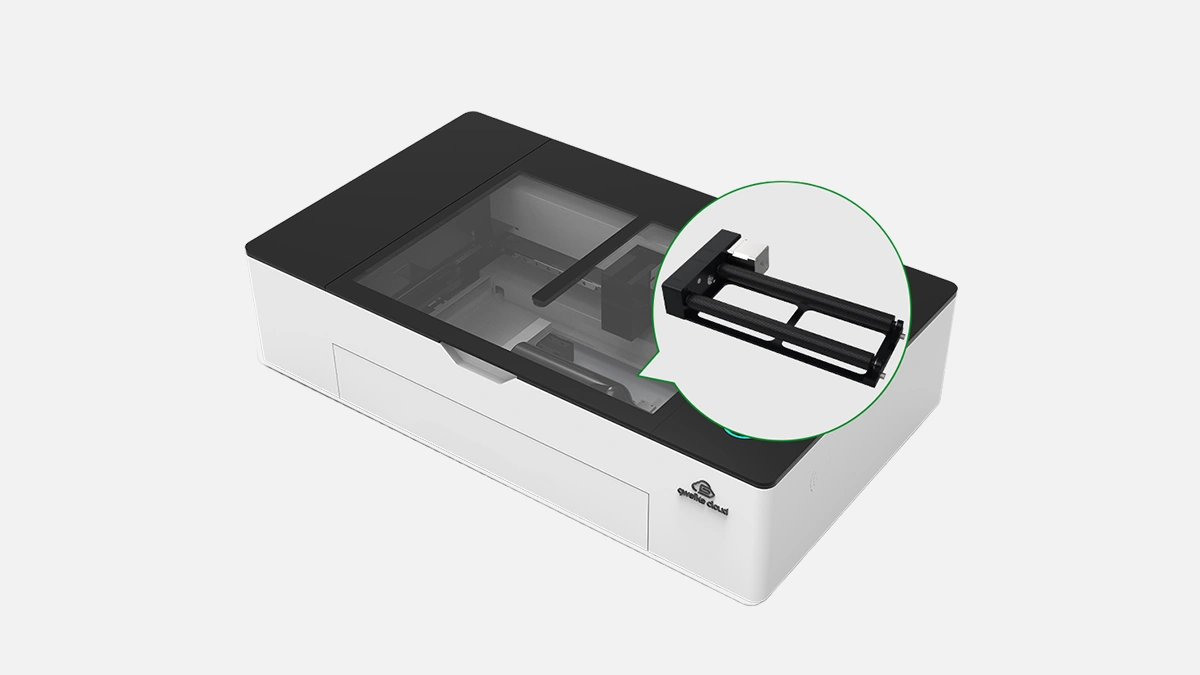
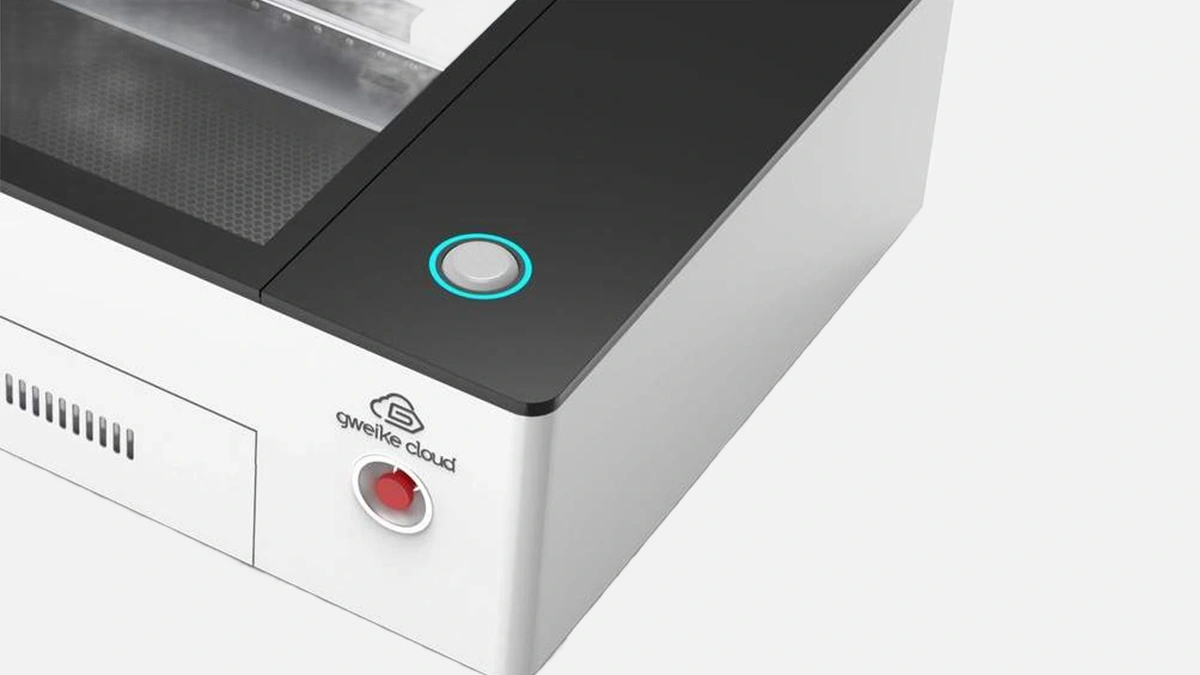
Desktop CO₂ laser with 55 W tube, 510×300 mm bed, slices 10 mm acrylic one pass, perfect for UAE custom part shops
Coffee still hot. Phone buzzing. I glance at the sheet, 55 watts written in bold marker. Small number, big promise. GWEIKE has been pushing CO₂ boxes for roughly 12 years, shipping thousands a year out of Jinan. Cloud line is their desktop bet, three revisions so far, this third one carries the 55-watt glass tube.
Aluminum rails, steel gantry brackets, belt drive on X and Y, lead-screw Z. Sounds normal. The trick is in the preload, they crank the eccentric wheels so backlash drops under 0.02 mm, users on Reddit measured even tighter after swapping to poly-V belts. You feel it when the head shifts from lettering to shading, no wobble, the kerf stays inside 0.15 mm on 6 mm plywood.
Before I forget, here is a compact table some engineers asked for. Keep it on your phone, show it to bosses who still doubt a desktop laser can live next to fiber machines.
| Spec | Value |
|---|---|
| Laser power | 55 W glass CO₂ |
| Working area | 510 × 300 mm |
| Top speed | 600 mm/s engrave |
| Position repeat | ±0.01 mm |
| Cooling | Integrated water loop |
| Tube life | 10 000 h average |
| Footprint | 0.5 m² |
Numbers are dry, so what. Reality check, a shop in Sharjah cut 10 mm clear acrylic at 5 mm/s, one pass, mirror alignment factory stock. Same rig kissed anodized tags at 400 mm/s without ghosting the edges.
Heat, dust, power variance. The three headaches every CNC chief in Dubai rattles about. GWEIKE decided to stick an input regulator inside the power bay, it keeps the tube happy from 180 V up to 250 V feeds, so brownouts at the industrial park do not fry the PSU. Air assist pump pulls outside air through a washable mesh, no foam that clogs in two weeks of desert wind.
Capacity matters. With a bed of 510 × 300 mm you squeeze four typical signage plates in one go. For jig makers that means thirty phone-case blanks per cycle. It is not the giant Trotec bed, but it also fits through a regular office door. You roll it in, plug into 16 A socket, done.
Open the cloud portal, drop an SVG, pick material preset, press Space. GWEIKE keeps the slicer basic, but you still edit order, power, speed. Veterans usually bypass and push G-code from LightBurn because it unlocks true grayscale dithering.
Those two bullets cut setup time. One guy in Al Quoz measured, cardboard packaging stencil batch went from 23 minutes to 9 on first day, simply because he stopped jogging head manually.
Cloud Basic ships with 40 W tube, same frame. Cloud Pro, our hero today, boosts to 55 W and adds the chilled loop. There is a Cloud RF that swaps the glass tube for a 30 W metal RF for finer engraving, but costs more and cuts slower. Most metal job shops here skip Basic, they jump to 55 W because of thicker acrylic demand.
Let us throw it against three names your procurement chat always drops.
GWEIKE sits in between, keeps desktop size, grants extra wattage, lives on parts common to countless Chinese suppliers which means your maintenance budget stays human.
I ran a mixed plate on Monday, notebook handy, here is the raw recap.
The tube cannot slice steel, obviously, but engraving serials on stainless tags is already a win for elevator panel guys.
Hate long manuals, so bullet it.
Ignore these and expect crooked lines plus tube death before 5000 h. Simple.
GWEIKE bundled a spare mirror set and a honeycomb bed without upcharge. Nice surprise, means no downtime when resin gunk finally pits mirror three. The lid camera was mentioned, but note the firmware lets you export a PNG overlay for quoting. Send that PNG to client, show real nest, lock deal faster. Small detail, still useful.
I called three shops.
All three praise the fact they can wheel the unit under office AC instead of sweating near big fiber cutters.
Quick napkin, no finance buzzwords.
Even if you run half time, payout in a couple months, that is why side hustlers love these boxes.
I bash it too. Tube is still glass, you drop the lid, you cry. Autofocus probe sits on spring steel, once it bends you re zero manually. And the onboard cloud needs stable internet, some factories firewall everything, so keep a USB stick ready.
Cloud 55 W sits in that sweet corner, bigger than hobby gadgets, smaller than industrial cabinets. It slices acrylic sheets up to 12 mm with patience, engraves anodized parts faster than a fiber galvo ever would on the same footprint, lives on basic 220 V wall power. That mix pushes many UAE SMEs to grab it as a dedicated plastics station while the big fiber heads chew metal down the hall.
The short list of benefits and who they attract is below.
Flip side, glass tube fragility, cloud login dependency. Weigh those, chances are you still tick yes.