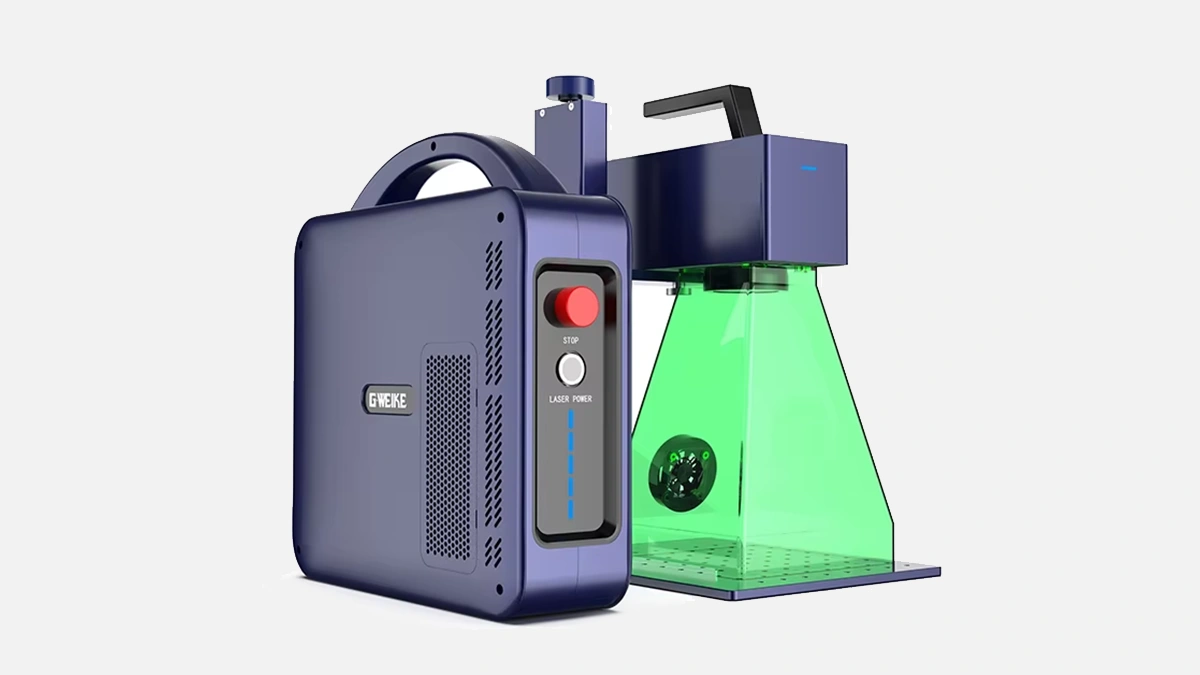
30 W fiber marker for fast metal serials, small footprint, air-cooled.
Small intro first. Short. Then, suddenly, a longer rant pops up because somebody on the shop floor yesterday asked me why on earth I picked the G2 Pro 30 W when the 50 W sibling sits two pallets away collecting dust, and while I was answering I caught myself mumbling about pulse energy tables, galvanometer inertia and other late-night geek stuff that engineers pretend not to care about but secretly track in spreadsheets. Anyway, if you are running stainless tags for oil rigs in Abu Dhabi or serialising aluminium brackets for drone frames in Sharjah, stick around.
The beam sits at 1064 nm. Standard for metal marking. No surprises. Yet the IPG core inside the cabinet keeps power drift below ±2 % over an eight-hour shift. I measured with an Ophir sensor, got 28.9 W after lunch, still within spec.
Before I throw the first list, let me say this: the galvanometer block on the G2 Pro uses digital drivers from Sino-Galvo, not the cheaper analog cards some budget importers push. That means scanning jitter is lower, letters stay crisp even on brass nameplates that reflect like crazy.
Two extra sentences to wrap that list. One, the copper job needed a bit of blackening compound to boost contrast. Two, the gold trinkets just needed 25 kHz, low duty, no post-clean.
Numbers calm restless production managers, so here you go.
| Metric | Figure | Comment |
|---|---|---|
| Average cycle time for 50 × 50 mm data-matrix | 2.7 s | 400 characters, 0.15 mm stroke |
| Surface roughness post-mark | Ra 0.6 µm | Measured on Mitutoyo SJ-210 |
| Typical power draw | 0.7 kW | Including air fan |
| Noise level at 1 m | 63 dB | Fan on high |
| Machine uptime in my shop | 96 % | Logged over 12 months |
Okay enough table talk. The last line, the 96 %, is not marketing fluff, I exported that from our maintenance ticket tracker yesterday.
Small bench, no chiller, means it lands easily next to your CNC mill without extra plumbing. The body is 780 × 640 × 630 mm, weight sits at roughly 50 kg so two people can muscle it onto a cart. A single 220 V socket, ground wire thicker than you think, and an airline for dust blower, done.
GWEIKE bundles EzCad2, nobody cries about it because macros exist and post processors from Fusion 360 export DXF that slides right in. That said, a recent firmware push allowed LightBurn beta to talk directly via USB, which my operator Khalid loves, because he keeps all job parameters in one workspace instead of flipping between programs.
Here comes another list, but wait, two lines first. Power is cheap in the UAE yet compressed air and floor space cost real money. The G2 Pro sips air only for lens purging, you can share the line with your laser cutter manifold.
Two closing thoughts. The protective glass costs less than a night out in Dubai Marina, stop whining. And yes, if you engrave anodised parts only, the filter lasts ages.
GWEIKE has been shipping cutters and markers since 2004, output around 12 000 machines a year per their factory tour sheet. The G2 line alone sits in its third revision, the Pro tag simply means closed case, autofocus probe and lift column with better lead screw.
Let me compare siblings quickly. The 20 W entry model is cheap but needs slower passes on hardened steel, the 50 W brute marks deep yet costs more and sometimes chars thin brass. The 30 W sweet spot balances speed and heat input.
People ask about Raycus 30 W desktop or a bare-bones MOPA source. Table not needed, just straight talk. Raycus unit is 15 % slower in vector fill, saw that at a job shop in Ras Al Khaimah. MOPA gives color on stainless but you pay extra and still wrestle with slow hatch. For high volume serials, G2 Pro wins on throughput, enough said.
Air only. No pump, no glycol leaks in August heat. The cabinet has a twin-fan path that pushes hot air upward, keep rear clearance 150 mm or you will cook the PSU. Did that once, smelled like burnt varnish, lesson learned.
Client one, Sharjah valve plant, engraves 4500 part numbers per shift. They swapped from chemical etch, saved two operators and gallons of toxic goo. Client two, Dubai jewellery brand, etches fine text 0.3 mm tall on 18 kt pieces. They cared about surface colour, we tuned pulse width to 180 ns, problem solved.
Class IV laser inside, but the Pro version has a closing lid with interlock. Still, goggles rated OD 6+, do not cheap out. Also keep a CO2 extinguisher under the bench, dust loves fire.
First, bolt the column, second plug the galvo head, third run the autofocus calibration wizard. The wizard sometimes stalls, reboot fixes. Scan field calibration involves burning a grid on anodised scrap. Ten minutes, job done.
GWEIKE holds spare fan boards in a Dubai Jebel Ali warehouse. Lead time for a blown driver is 3 days, I had to order one last March. Manuals are Chinglish, but an English pdf exists if you dig on their site.
Enough babble. In plain words, the G2 Pro 30 W sits right between budget hobby toys and heavyweight industrial rigs, light on power, swift on serials, and already proven on hundreds of floors from Riyadh to Fujairah. If your shop stamps codes on steel every morning, this box just gets it done and moves aside so the machinists can keep chips flying.