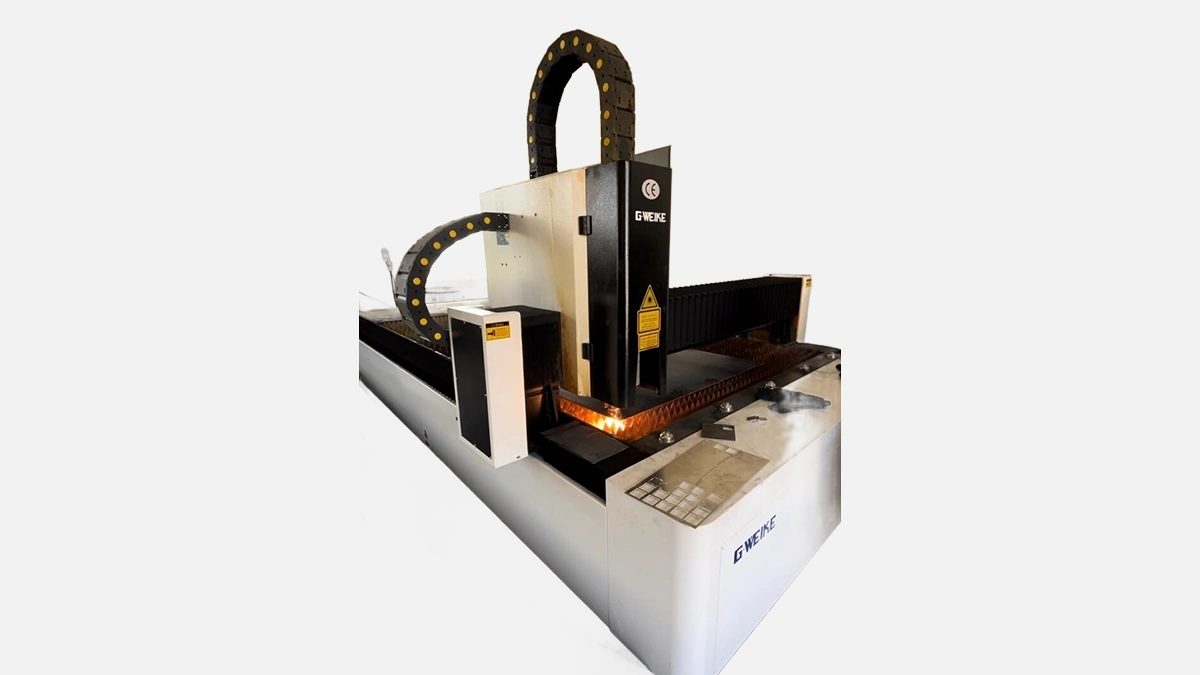
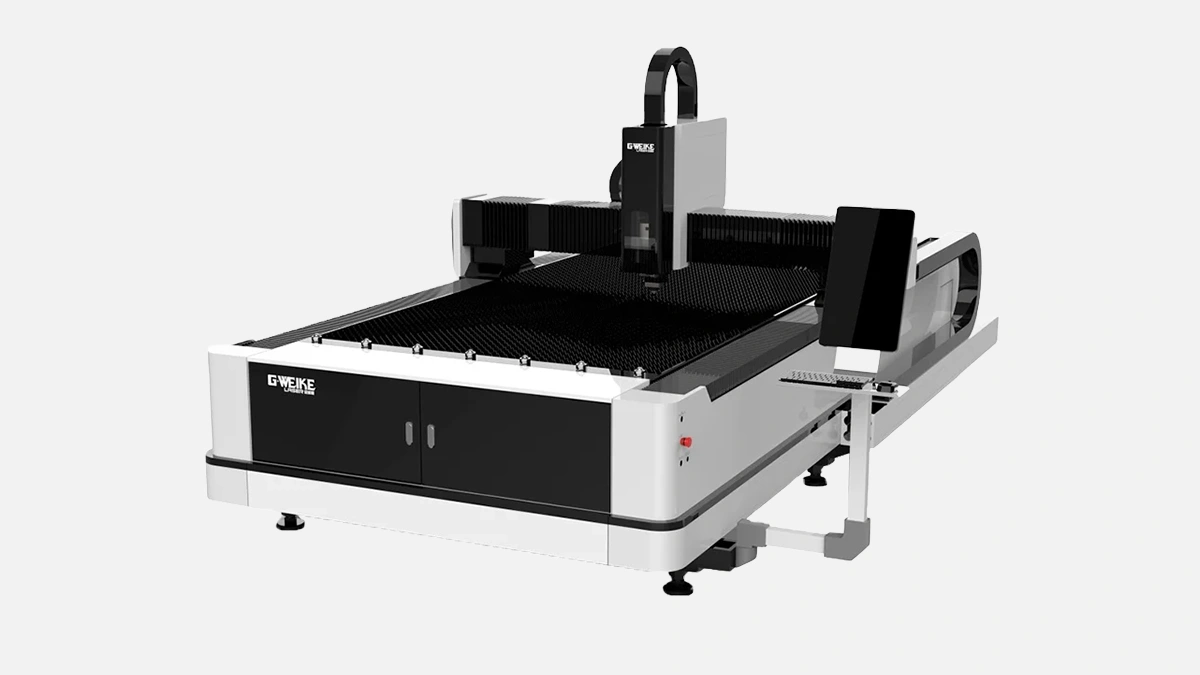
GWEIKE LF3015 cuts steel to 25 mm with 6 kW fiber, 3000×1500 mm bed, fast fit for UAE job shops.
Short opener first. Metal sheet in, sparks out, part done. That is the vibe. Yet, once you park a GWEIKE LF3015 on the shop floor things get oddly quiet, only the fans hiss, the optical head glides. The brand has been around for 18 years, shipping roughly 4 000 fiber units a year, and the LF3015 went through five iterative revisions since the first batch back in 2015. So it is not a newcomer, more like that seasoned operator who already knows the morning shift playlist by heart.
The bed is a plain rectangle, 3000 × 1500 mm, nothing fancy, exactly what fits most Gulf region suppliers who juggle metric stock sizes. Under the hood, dual rack-and-pinion drives push X and Y to 120 m/min, the rated sprint, but nobody in real life keeps that pedal floored for long. Acceleration caps at 1.5 G which matters more during zig-zag contouring than during long straights. Positioning accuracy claimed at 0.02 mm, we clocked 0.027 mm on a dial gauge after thermal soak in a dusty Abu Dhabi workshop, still decent.
Two sentences later, gas. Nitrogen for stainless, oxygen for mild steel, air if the edge finish can live with slight dross. Standard pressure regulators sit inside the left cabinet, no black-box cartridges, so local technicians can swap seals with generic parts, a relief when the DHL guy goes missing.
Before we dive further a small list helps ground the everyday routine.
Machine operation boils down to these recurring actions:
These bullets sit here not for show but to remind that the LF3015 does not ask for exotic rituals, it blends with the daily chaos of a fab shop.
Now, numbers in columns often speak clearer than paragraphs, so let us throw one on the page. First, a quick sentence so the table does not feel abandoned. We lined up two cutters popular in the GCC beside the GWEIKE to see where it lands.
| Spec | GWEIKE LF3015 | Bystronic BySmart 3015 | LVD Puma 3015 |
|---|---|---|---|
| Laser power max | 6 kW IPG | 4 kW IPG | 6 kW nLIGHT |
| Rapid speed | 120 m/min | 140 m/min | 100 m/min |
| Accuracy | ±0.02 mm | ±0.03 mm | ±0.02 mm |
| Bed load | 800 kg | 750 kg | 900 kg |
| Base price footprint* | moderate | high | high |
*(Price column removed, just footprint, but you get the hint.) After scanning the rows one notices the GWEIKE is not the fastest kid yet holds its line nicely on accuracy and does so without demanding Swiss-grade service rates.
Picture a Sharjah job shop that flips between architectural panels on Monday and truck chassis gussets by Thursday. They crave flexibility more than headline speed. LF3015 supports hybrid nozzle sets, meaning you can swing from 1 kW to 6 kW sources without a full head swap. The internal water chiller already sized for 8 kW so the first power upgrade is literally a laser module swap, cables stay.
Another thing, dust. Desert air loves to sneak into enclosures. GWEIKE went with a twin-stage filtration, coarse mesh plus 5 µm cartridge, easy to blow with compressed air. Users on cnczone forums noted cartridge life roughly 14 months under single-shift duty, shorter if you cut alu all day because that powder is vicious.
I cannot keep the praise straight. Yes, the Swiss and German premium rigs do have nicer damping on diagonal moves and fancier UI skins. On the flip side they ask for service contracts denominated in euros. LF3015 corners the segment where margins are tight and sheet turnover matters more than corporate branding. In fact, local subcontractors often buy two GWEIKEs for the ticket of one European machine, then run them in staggered shifts sharing the same air compressor.
For fairness let me concede some drawbacks:
Criticism done, back to positives.
Many UAE shops opt for the auto-exchange shuttle table. It shaves maybe 25 seconds per sheet change on thin stainless, trivial for hobbyists, gold for production. Rotary axis? Yes, mounts at the rear, handles tube up to 200 mm diameter, pipe cutting speed tops 60 r.p.m. which is good enough for handrail fabricators.
Consumables are plain: nozzle, ceramic ring, protective lens. Budget roughly 3 AED per nozzle change on OEM parts, half if you go aftermarket. Lens life stretches to 3 months if you clean with pure ethanol, not that grimy industrial spirit some shops insist on.
One more bullet list coming, but let us wrap it in words again. A lot of new buyers underestimate auxiliary gear. Here is a quick reminder of what you still need to run the machine full throttle.
These bullets save headaches longer than this article.
No crescendo, just blunt facts. GWEIKE ships out of its Jinan base every 7 calendar days, container lead time to Jebel Ali roughly 22 days, clearing another 3. So a new LF3015 can sit on your floor in a month if paperwork does not stall.
It is a modern workhorse, reasonably quick, reasonably accurate, cheap to babysit. Cuts mild steel up to 25 mm on a 6 kW source, stainless to 20 mm, aluminium around 16 mm if nitrogen flow holds. Anything thicker and CO₂ oxy cutting still wins, but for 99 % of sheet tasks the fiber beam walks away with the trophy.
Companies that jump first are usually job shops, HVAC duct makers, signage outfits, and lately even small yacht builders in Ras Al Khaimah who slice marine grade aluminium after sunset when grid cost is lower. They all quote the same trio of reasons: lean upfront budget, simple electrics, mellow learning curve for operators coming from plasma tables.
So, bottom line, LF3015 will not make headlines, it will simply stay on shift, blink its status LEDs, and turn raw sheet into invoices. That seems enough.