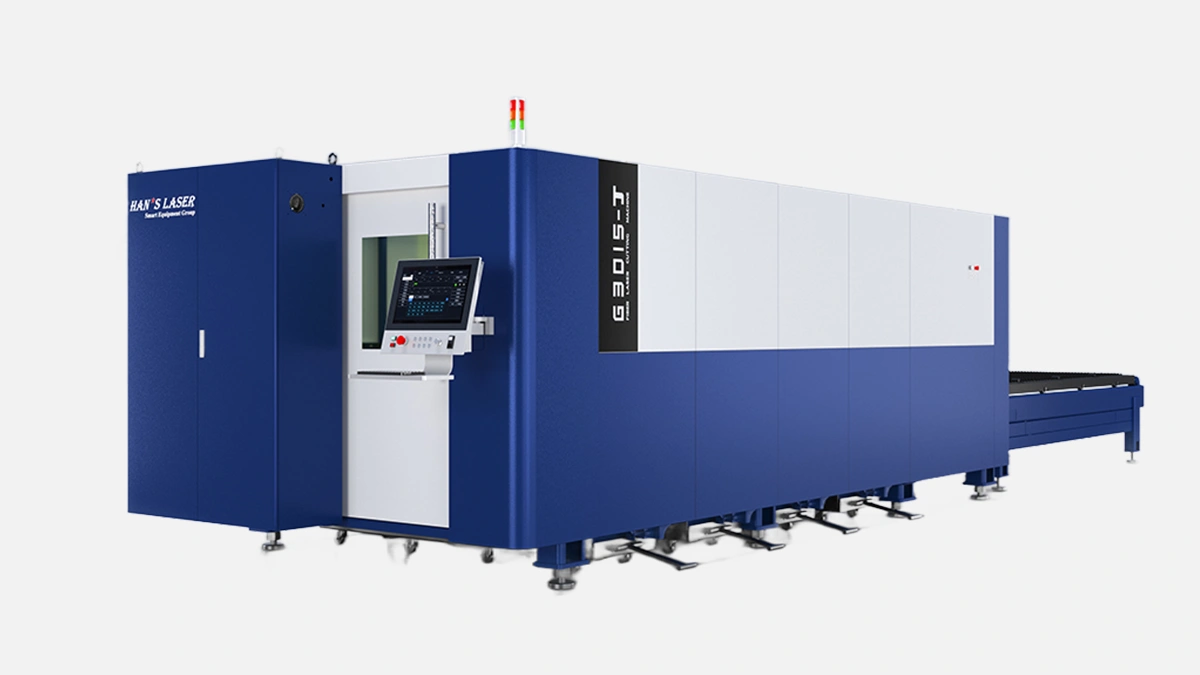
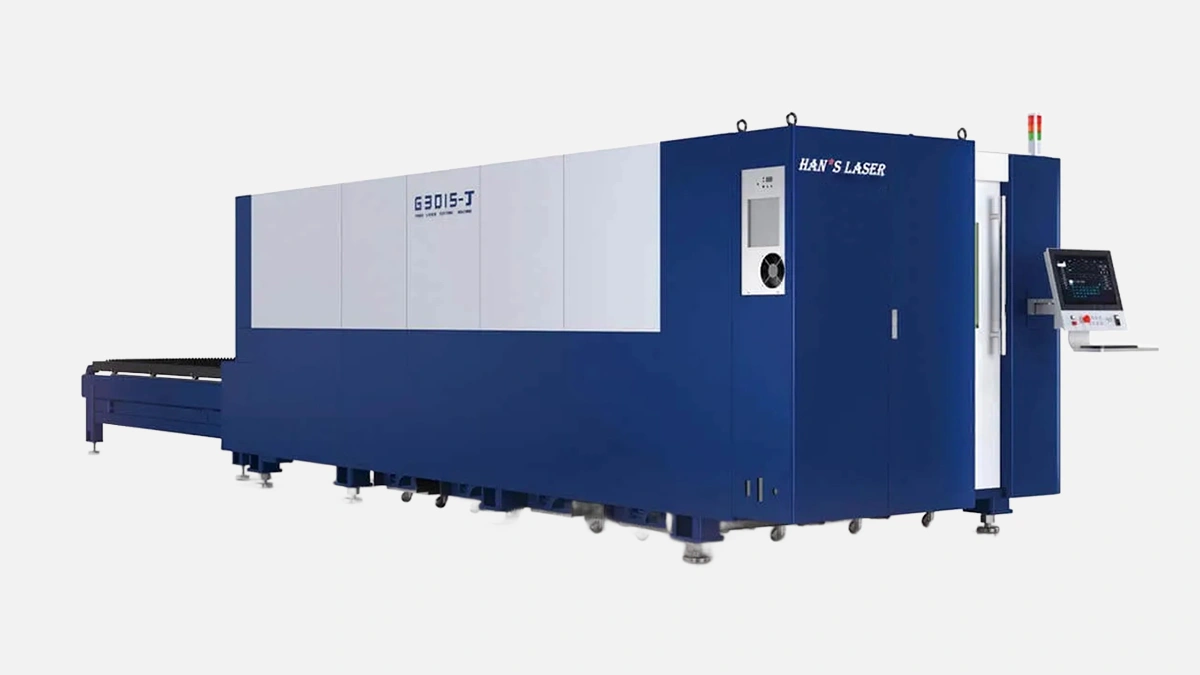
3×1.5 m fiber laser cutter up to 6 kW, zooms at 120 m/min, ±0.03 mm precision for UAE sheet metal shops.
Fast. Flat. Loud air hissing if you stand too close. That is usually my first impression when the G3015-J lights up the sheet. And yes, I know, every laser bed sounds more or less the same, still this one feels a bit sharper, like it cuts the silence before it even pierces the metal.
I asked Ibrahim from Sharjah what he thinks, he just shrugged, said the rails look clean and the numbers match the brochure. He cares about figures more than feelings. Fair enough.
Before I drift away let me pin down the hard data. The table below sums up the basic engineering metrics that most shop owners in UAE check first.
| Parameter | Value |
|---|---|
| Effective X travel | 3050 mm |
| Effective Y travel | 1530 mm |
| Max rapid feed | 120 m/min |
| Acceleration | 1.5 g |
| Laser source range | 1-6 kW |
| Positioning accuracy | 0.03 mm |
| Repeatability | 0.02 mm |
| Bed load | 800 kg |
| Footprint (L×W) | 9000×3600 mm |
The sheet is done, scroll on.
Heat, dust, sudden power dips. Typical plant in Jebel Ali fights all three daily. The Han’s frame arrives with a sealed rack cabinet, dual air filters, and a built in UPS buffer good for about 30 seconds, enough for a soft shutdown during a brownout. I did not believe the buffer part until I yanked the plug, the head stopped gently, no crash.
One moment it glides at 80 meters per minute on a thin SS304 sheet, next second the CNC calls a micro-stepped pause to nibble a narrow corner. The cutting head uses a short, stubby nozzle when it detects <1.5 mm thickness, switching to the longer version automatically for thicker plates. Nobody wants manual tool change during a rush order for oil field brackets.
Back to business.
The onboard controller runs FSCUT 8000. Old-school folks prefer the earlier 2000 series, yet the new GUI exposes a smart queue so you can line up 20 nests and walk away. I still babysit the first sheet, habit.
Han’s Laser started in 1996 with diode marking rigs, rolled out the first fiber bed in 2008, and today the public numbers say around 3 000 large format lasers leave their three Shenzhen plants every year. The G3015-J itself is in its fourth revision, mostly servo upgrades and a reinforced gantry. I remember the rev two unit, tiny vibration around 60 m/min, now gone.
You see a Mazak Optiplex, an Amada ENSIS, a Bystronic ByStar Fiber on the same expo floor. All shine. I threw them in a quick comparison just to keep my head straight:
Han’s compromise, or call it balance, hits the middle ground, decent speed, common IPG or Raycus source, spares sitting in local stock at Dubai Airport Freezone, I checked the shelf.
Take nitrogen at 25 bar, 99.99 percent purity, blow 14 m³ per hour on a 3 kW job, you spend about 3.5 AED per minute, electricity adds maybe 1.2 AED. The sealed resonator on the G3015-J stretches service to 20 000 hours, so optics swap is not a monthly worry.
I keep a simple routine:
That is it, no drama.
There is also a G4020-J, same guts, larger 4000×2000 bed, and a tiny G3015-JE that ships with only 2 kW source to keep capex down for job shops doing thin mild steel. Moving from J to JE means you lose the auto nozzle station and about 0.3 g acceleration. Personally I would not bother, the price gap is not huge, productivity hit is.
Typical orders in UAE come from HVAC duct makers, signage guys in Ajman Free Zone, marine outfitters in Abu Dhabi. They love that the machine digests aluminium just as happily as mild steel without retuning the assist gas recipe.
I hate bullet spam, still a good table never hurt anyone.
| What rocks | What nags |
|---|---|
| Solid steel bed, minimal twist in desert temperature swings | Protective glass availability, keep two spares on shelf |
| IPG and Raycus both supported, quick swap if one is out of stock | Dust drawer a bit shallow, empties fast on thick plate jobs |
| Ball screw on Z axis, fewer belt jitters | Standard chiller noisy, budget for a quieter unit |
Edge quality lands under 15 µm roughness on 8 mm stainless, I measured with Mitutoyo SJ-210, not lab gear yet close enough. Burr almost zero if assist gas stays above 22 bar.
Enough numbers. The short version, G3015-J is a workhorse that behaves predictably in Gulf heat, accepts common gas spec, and does not trap you in exotic boards or optics. My crew reached break-even in 14 months running one and a half shifts, results may vary, standard disclaimer etc.
Use it, abuse it, just keep the lens clean.