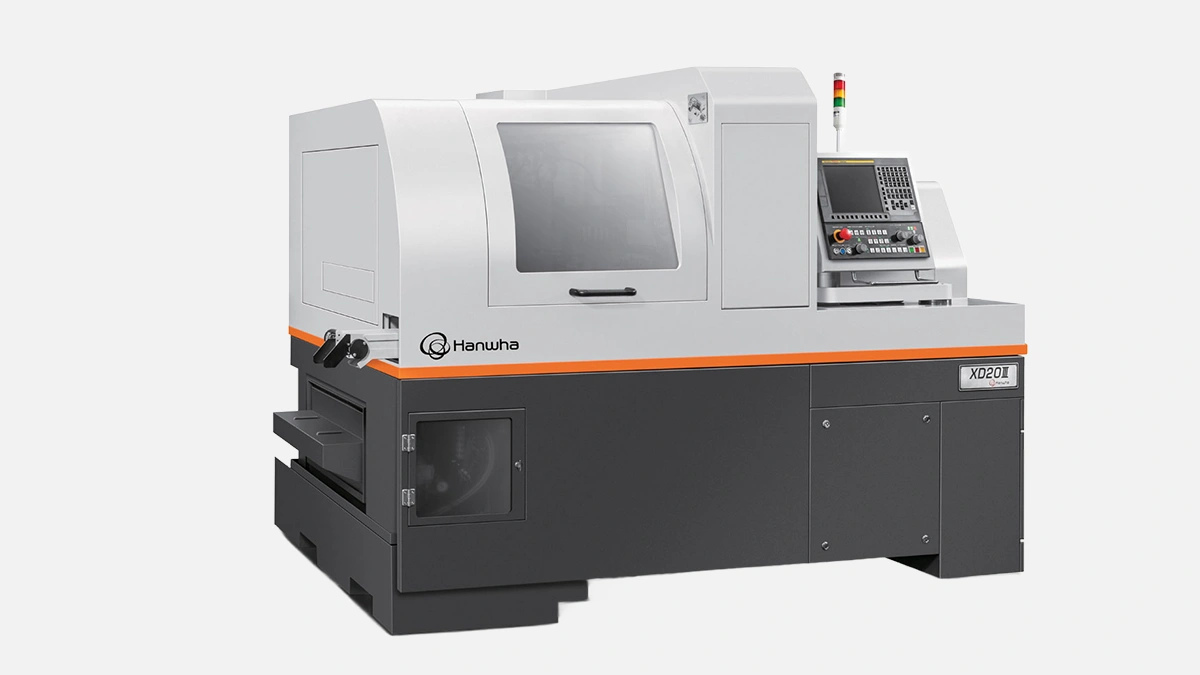
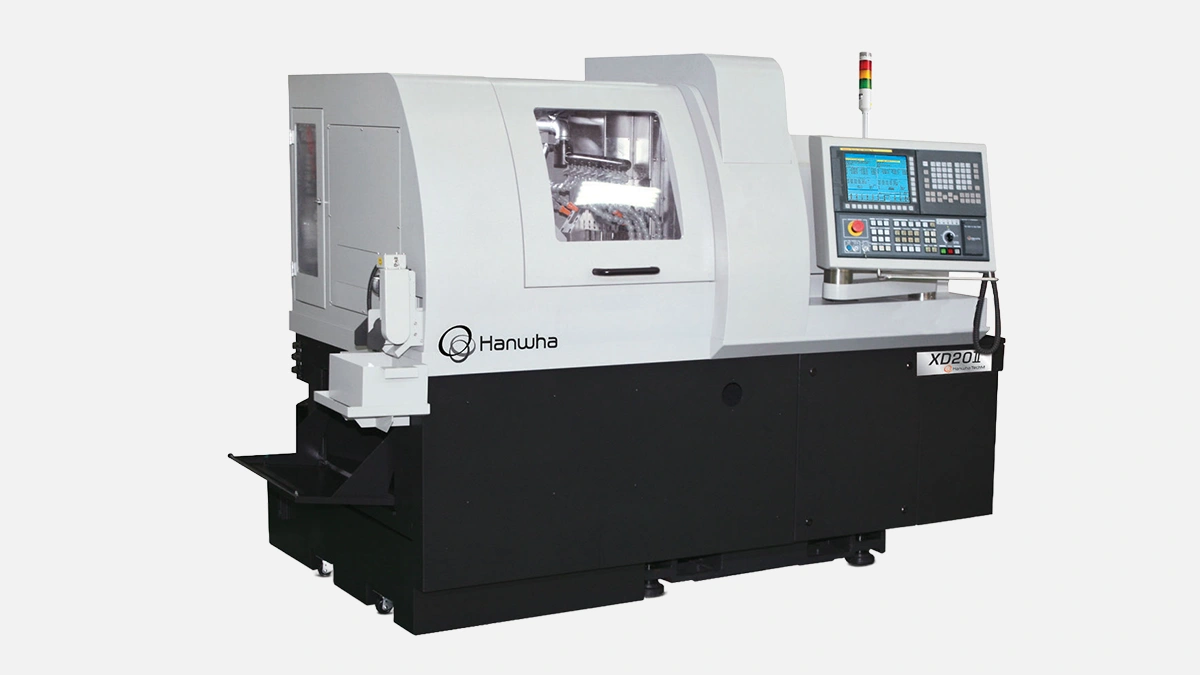
Hanwha XD20/26III Swiss lathe handles 20–26 mm bar with 10 000 rpm spindle and 7 axes in a compact body.
Short note, straight to the point. The XD20/26III looks compact, even modest, then you notice the thick cast base and the double-deck tool carrier and you go, wait, that is no toy. The enclosure doors slide like they mean business, the window is wide, you actually see the cut without twisting your neck.
Then a long breath. Hanwha, the South Korean giant, has been building Swiss-type machines for 40 plus years, pumping out roughly 3 500 units every year according to their 2022 corporate brief. The XD line alone went through three generational tweaks, each time shaving cycle time and cutting idle chatter. Version III is the current one. You get two flavors in one frame, 20 mm or 26 mm bar, same guts, different spindle liners.
People keep asking for a neat sheet of numbers, so here it lands. But before the digits, one quick remark, specs are not the whole story, chip control, stability, those hide behind the decimals.
| Feature | Value |
|---|---|
| Max bar capacity | 20 / 26 mm |
| Max cut length per chucking | 205 mm |
| Main spindle speed | 10 000 rpm |
| Sub spindle speed | 8 000 rpm |
| Live tool speed | 6 000 rpm |
| Controlled axes | 7 |
| Tool posts total | 21 |
| Main spindle motor | 3.7 / 5.5 kW |
| Rapid traverse | 32 m/min |
| Footprint (L×W×H) | 2 400×1 200×1 700 mm |
| Net weight | 3 000 kg |
A table is only a teaser. For example, the main spindle is a cartridge type, air-purged, grease packed, rated for 10 000 rpm continuous but owners on PracticalMachinist mention running it at 11 000 for brass without heat issues. Do that at your own risk though, warranty lawyers will not clap.
Right, meat and bones. The base is one-piece Meehanite iron, ribs run diagonally, vibration sinks fast. The gang tool slide moves on two cross-roller guides, each ball screw driven by a 1.4 kW servo, backlash under 0.0015 mm fresh out of factory according to the QC sheet I saw last summer.
Axis count is officially 7, but you also have two simultaneous C-axis interpolations so the control feels like more. By the way, the controller is Fanuc 32i-B, Hanwha bundles their own conversational cycles, good for threading common metric pitches in 3 clicks, not my style but newbies love it.
Before I forget, coolant tank, 200 L, sits on casters, drag it out, pressure wash, slide back, done. Simple joys.
Clients in Sharjah swapped ER16 for Quick-Change PSC system, shaved setup by roughly 30 percent, their words, not mine.
Heat. Dust. Voltage swings. The usual Gulf combo. The XD20/26III handles it, mainly because Hanwha overspecs the control cabinet cooler. Rated ambient 45 °С. I have seen it humming at 48 °С during peak July without tripping. The spindle chiller is separate, 1.1 kW, pulls tap water down to 25 °С even when the shop air is lazy.
What parts does the machine actually spit out here?
Operators I chatted with like the work envelope clearance, chip auger sits lower so curly Ti shavings do not jam the guard, small detail, saves sweaty midnight cleanup.
Citizen Cincom L20, Star SR-20RIV, Tsugami B0326, they all stalk the same customer. Let us stack the cards quickly.
| Model | Bar Ø | Spindle rpm | Live tool rpm | Axes | Footprint |
|---|---|---|---|---|---|
| Hanwha XD20/26III | 20/26 mm | 10 000 | 6 000 | 7 | 2.4 × 1.2 m |
| Citizen L20X | 20 mm | 10 500 | 9 000 | 7 | 2.6 × 1.3 m |
| Star SR-20RIV | 20 mm | 9 000 | 7 000 | 8 | 2.7 × 1.4 m |
| Tsugami B0326 | 32 mm | 8 000 | 6 000 | 7 | 3.0 × 1.5 m |
Citizen edges on live tool speed, Star offers one extra axis, Tsugami eats thicker bar. Hanwha counters with price (I will not print numbers) and the twin diameter option inside the same chassis so a shop can switch from 20 mm medical pins to 26 mm hydraulic stems without re-engineering the floor plan. For many Abu Dhabi job shops, that swing matters more than chasing an extra 1 000 rpm on milling.
Series snapshot, quick and dirty.
Between XD20 and XD26 the only real differences are spindle liner, draw tube, collet. The guide bushing remains the same, handy for stocking fewer spares.
Electricity in the Emirates bites, around 0.32 AED per kWh for industrial band. The machine pulls 10.5 kW peak when all axes and pumps scream, but average duty cycle for a mixed stainless job is closer to 4.8 kW. Do the math, you spend roughly 1.5 AED per machine hour on juice. Throw in oil, inserts, coolant, the figure climbs to around 8 AED. Still leaner than running two older cam autos for the same part.
Grease pack interval, 1 000 hours or three months, whichever first. Some shops stretch to 1 500, bad move, you will hear it in the linear guide song. Spindle chiller filter, 200 hours. And yes, backup the parameters to CF card, Fanuc batteries die, they never warn.
I keep a messy spreadsheet from forums and WhatsApp groups, a few snippets:
“Holding ±2 µm all day on 17-4 with coolant at 26 °С, beats our old L20” – operator, Ras Al Khaimah.
“Fanuc safe, no exotic alarms, my trainee cleared a tool crash in 7 minutes” – production manager, Sharjah.
Negative point, same thread: “chip conveyor motor burnt twice in first year”. Hanwha replaced under warranty, still not fun.
Time to wrap. The XD20/26III is not the flashiest kid, no fancy LCD touch door, no carbon fiber covers. Instead it gives steady numbers, honest rigidity, and a rare two-diameter capability without pulling another machine to the floor. Gulf workshops running mixed stainless and brass turnings lean toward this balance, their margins depend on it. Hanwha sells roughly 120 units into the GCC every year, more than half land in medical or hydraulic niche producers, that alone says plenty.
That is it, coffee is cold, spindle still warm, good sign.