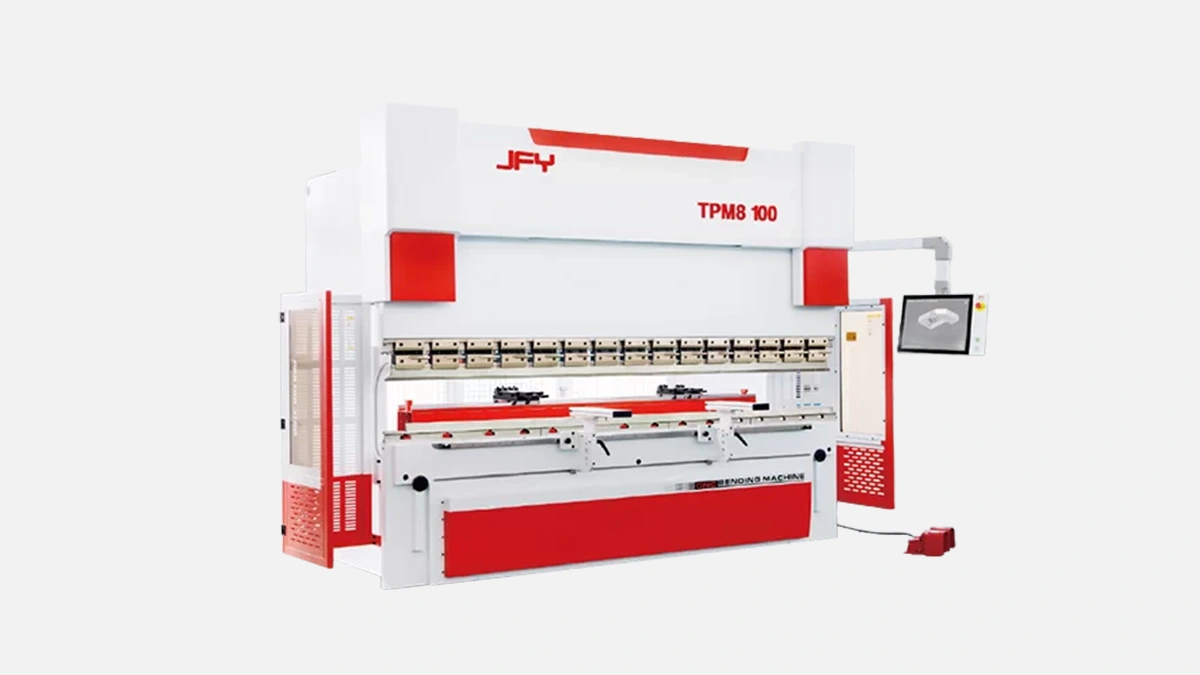
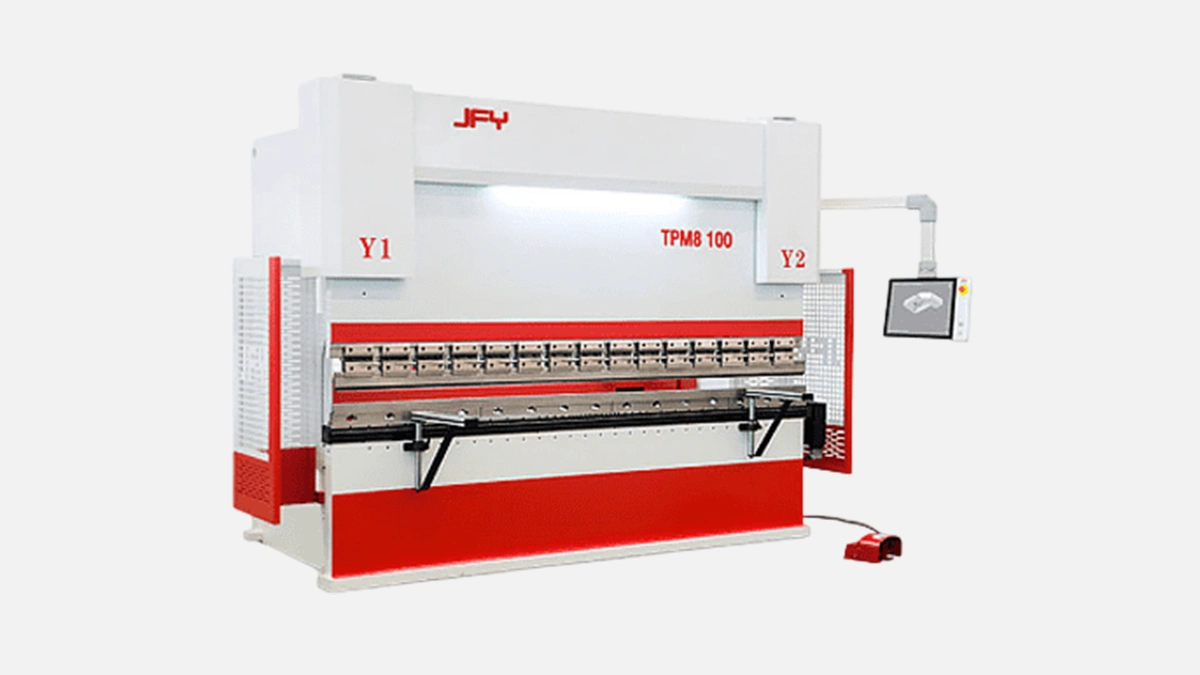
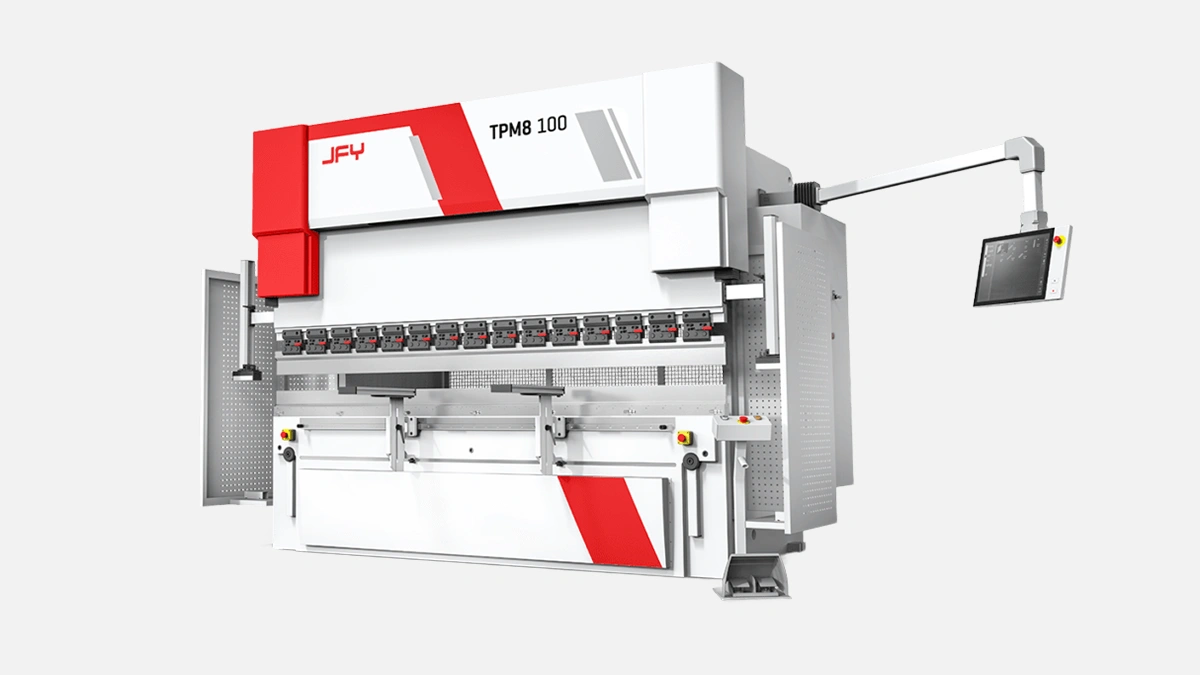
160 t, 3200 mm CNC press brake with ±0.01 mm repeatability for UAE metal shops
Short burst first. Steel body, blue paint, smells like hydraulic oil. You look at the badge and, boom, 25 years of JFY history stare back. The TPM8 sits there, calm, knowing it can push up to 160 tonnes on a bad day.
Now a longer thought sneaks in, almost like a late coffee in the control room, where the operator keeps half an eye on the Delem DA-66T screen, half an ear on the compressor humming somewhere in the background, wondering if the new batch of 3-millimetre stainless will need crowning tweaks or if the factory default curve is good enough, spoiler, it usually is, but never trust the first piece.
Before I start listing, let me ramble. JFY belongs to the TRUMPF Group since 2013, the Germans own a majority, the Chinese keep the grit. They roll out roughly 3000 bending machines a year from Yangzhou, at least according to the last corporate brochure, nobody in the shop doubts the number because the loading dock is always stacked.
Below, a small table, just to keep facts from floating away.
| Item | TPM8-160/3200 | Comment |
|---|---|---|
| Press force | 160 t | hydraulic, two cylinders |
| Bending length | 3200 mm | useful length under tools |
| Stroke | 200 mm | adjustable in PLC |
| Open height | 480 mm | daylight, die change comfort |
| Fast approach | 180 mm/s | empty descent |
| Working speed | 10 mm/s | under load, repeatable |
| Back-gauge axes | X R | modular up to Z1 Z2 |
| Controller | DA-66T | 15-inch touch |
| Oil volume | 250 L | mineral VG-46 |
The numbers above, plain and boring, hide a simple reality, the thing just bends parts day after day, no drama.
Humidity, desert dust, random power dips, you name it, Gulf workshops see it all. The TPM8 frame is welded, stress-relieved, machined in one shot then jig-ground, so the neutral axis stays put even when ambient jumps from 22 to 42 °C between night shift and noon. Oil cooler, by the way, kicks in at 35 °C so cylinders do not blister seals.
Before I lose the thread – three factories around Sharjah already run TPM8 lines. They feed HVAC boxes, mild steel 1.2 mm, 90-degree bends all day, about 600 hits an hour on two-meter blanks. They claim downtime under 2 hours per quarter, mostly filter swaps.
Two lines, then a list, promise. You walk around the back, find the back-gauge rails. They glide on HIWIN linear guides, no play, no drama. The servo pack is tucked under a sheet-metal hood you unscrew with a 10 mm wrench.
I pause, breathe, notice the smell of cut coolant from the punch area next door. Fine, back to prose. The above bullets might read like brochure fluff, still, every operator I talked to keeps the quick-clamp latched, even on short run prototypes, because time is coffee, coffee is life.
People ask, why not Amada HFE or Durma AD-Servo. I tried to put it blunt. Amada ships from Japan, spare parts wait 6 weeks in UAE, Durma is Turkish, cheaper on sticker but fans scream over 80 dB. JFY TPM8 lands in the middle, price wise, yet spares sit in Dubai Free Zone warehouse under TRUMPF label, delivery next day, that alone saves schedules. Also, the DA-66T interface matches what techs already know from TruBend 3000 series, cross-training happens in half a shift.
TPM8 is not one machine, it is a row. You get 110/2600, 160/3200, 220/4000, 300/5100. Frame height, cylinder bore, motor size scale up, but drives, HMI and back-gauge modules stay identical, so the maintenance shelf holds one set of boards. That matters when a Ras-al-Khaimah plant runs mixed capacities under one roof.
Context first. A newly minted fabricator asked me what sneaky features people forget to mention during demo. I answered right away yet, for clarity, here is the burst.
No more bullets, enough. The air in the room hums.
Early shift powers up, the pump spins to 1500 rpm, pressure hits 210 bar in under 5 seconds. Operator loads the DXF, post file lands via Wi-Fi, machine runs auto referencing Y1 Y2, back-gauge slaps twice, clear audio cue. First bend, quick check with caliper, 0.02 mm off, system nudges via angle sensor, next part lines up. Half way through coil change, guy from QA shows up, scribbles, leaves. The story repeats, nothing spectacular, which, ironically, is what managers pay for.
Filters every 1000 hours, oil every 4000 hours, cylinder seals after 12 million cycles if charts hold. Spare kit cost stays under one percent of CAPEX yearly, at least on the Sharjah figures.
You may crave brushed aluminum panels or full electric drives like the Salvagnini P4, fair, tech never rests. Still, when the order list shows 20 000 HVAC corners due next Thursday and the forklift beeps outside, you want something that clamps, pushes, releases, repeat. TPM8 does exactly that.
The blend of TRUMPF electronics and Chinese heavy casting offers a steady ride, spare parts live close, training is short, the frame holds calibration even when the desert sun cooks the roof. Shops from Abu Dhabi to Ras-al-Khaimah lean on these machines mainly because they keep working while you grab a karak tea.