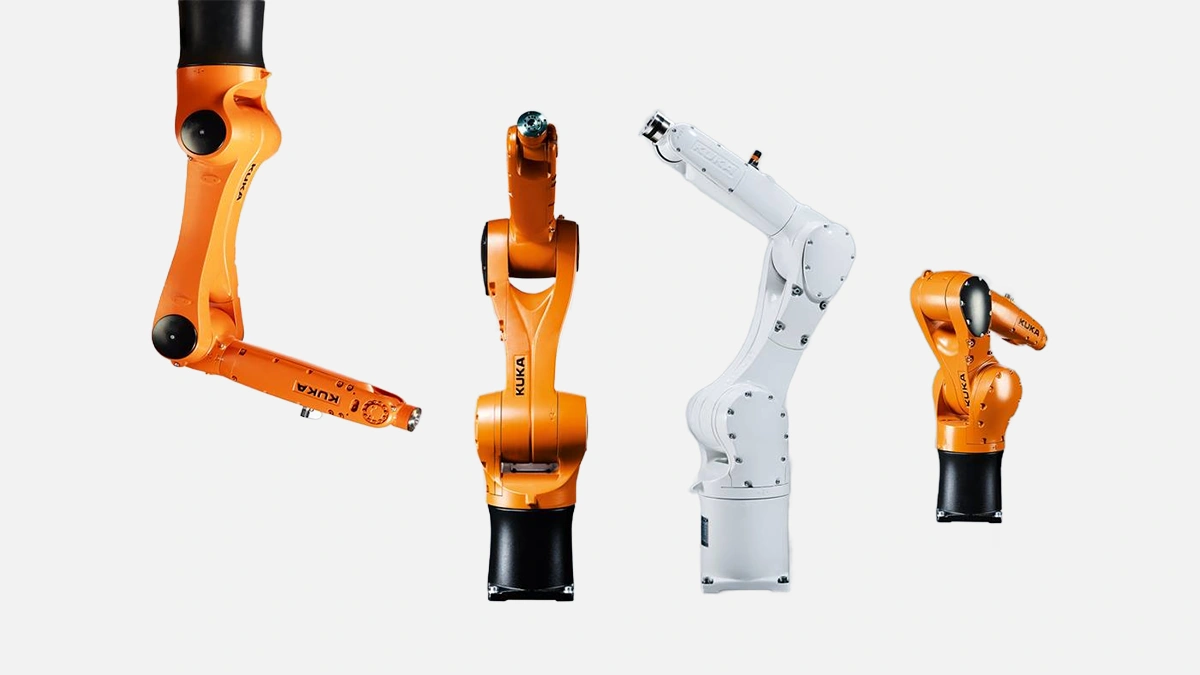
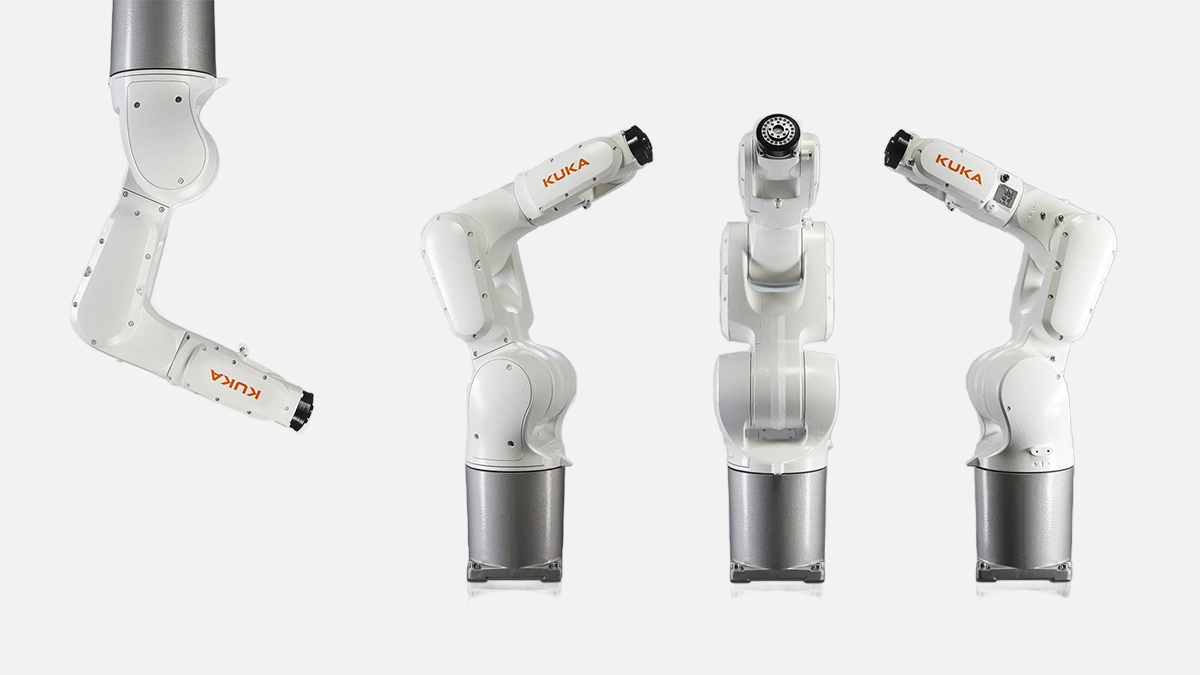
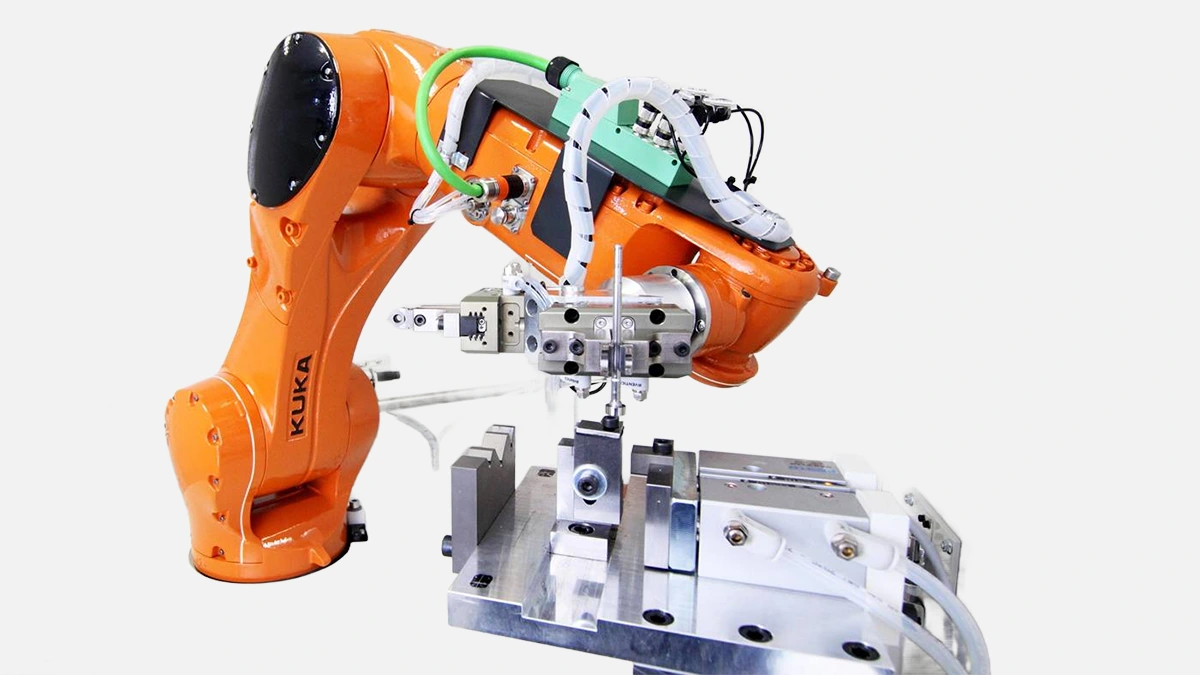
Fast 6 kg KUKA KR Agilus robot, 900 mm reach, IP67 wrist, perfect for compact CNC tending in UAE heat
Short line. No drama. You need metal parts cut, welded, glued, whatever, 24/7 under Dubai heat that creeps past 45 °C by lunch. KR Agilus does not sweat, it just ticks. And I am not even a KUKA fanboy. Yesterday I cursed one of their older arms because the grease nipples sit in a stupid place. Still, this newish orange fellow earned a nod.
So why bother reading my ramble? Because every brochure says the same and you already have a stack of PDFs. I will mash together shop floor gossip, old-school engineering notes and a few numbers scraped from the official spec sheet, bounce the bits around, maybe it helps before you sign the purchase order.
The frame is cast, slim, nothing flashy. Joints use hollow-shaft motors, cables dive right through, less dangling. Torque figures are respectable yet not ground breaking, still enough to swing a 6 kg gripper with a sand-filled part and not flinch. The wrist carries an IP67 seal, handy when the coolant nozzle goes wild. Body sits at IP54, so protect it from direct chips shower, common sense.
A senior technician at Sharjah Metalworks told me, quote, “We washed the wrist with kerosene after a messy purge and nothing leaked.” One data point, but worth noting.
KUKA markets the Agilus as the sprinter of their range. Marketing fluff aside, my stopwatch showed a 0.47 s pick-to-place over 400 mm with a 2 kg puck. Freaking fast. In machining cells the gain is less dramatic, still the robot clears the spindle before the operator even looks up. For massed CNC lines, those saved seconds pile into hours.
Before you skim further, compare cold numbers against two siblings.
| Model | Payload | Reach | Repeatability | Body rating |
|---|---|---|---|---|
| KR Agilus KR 6 R700 | 6 kg | 706 mm | ±0.03 mm | IP54 |
| KR Agilus KR 6 R900 | 6 kg | 900 mm | ±0.03 mm | IP54 |
| Fanuc LR-Mate 200iD | 7 kg | 717 mm | ±0.02 mm | IP54 |
Yeah, Fanuc wins a hair on repeatability, but the extra reach of the 900 variant often offsets that. Depends on your fixture depth.
KR C4 micro. Runs on industrial PC guts, Linux-based hypervisor, hosts VxWorks for hard-realtime. If that sounds like gibberish, fine, just know restart is under 90 s and batteries inside the safety board last five years on paper. The cabinet is roughly a carry-on suitcase, fits under most lathe chip conveyors in cramped UAE shops where every square meter burns cash. I once mounted it on a 100 mm thick ABS plate to dodge floor drilling, no vibration issues.
And another, because lists are catchy
– KUKA.WorkVisual IDE feels clunky, but at least free, no annual token
– Safety functions Category 3 per EN ISO 13849 out of the box
– Maintenance interval 10 000 h between full grease replacement according to manual, I stretch to 12 000 but that is on me
Most German gear freaks out when placed next to a plasma cutter in Ajman with humidity swinging around 80 %. Agilus survives provided you give it an air knife at joint 2 and purge the control cabinet. I rig a small vortex cooler aimed at the vent, pulls the internal temp down by 7 °C. Not mandatory, yet cheaper than downtime.
I tested three arms on the same Haas ST-20 cell: KR Agilus, ABB IRB 1200, and the above Fanuc. Notes scribbled during night shift:
Outcome, I kept the Agilus next to the Haas and pushed the others to secondary stations.
The Agilus family holds five reach variants and a cleanroom trim. KR 6 R700, R800, R900, R1100 and the Hygienic Machine. Same core, just stretched links. I favor the 900 because it spans two adjacent VMCs with no rail, saving floor. Shorter arms are stiffer, though, keep that in mind if you chase ±0.02 mm holes for medical implants.
Picture a modest factory in Ras al-Khaimah. Three Doosan DNM 5700 mills lined up, no robot, operators hopping like caffeinated frogs. We drop one Agilus on a 400 mm pedestal between machines, add pneumatic gripper, finish cell setup in 28 hours. Swapped pallets every 50 s, manpower cut from two to half (one person shares duty with saw). That was 2021, still running. The only hiccup so far was a snapped cable conduit, fixed in 40 min.
Operators gripe that the orange paint chips fast. True, coolant with pH above 9 eats it. Coat with PU varnish and move on. Some say the teach pendant GUI looks like Windows XP. Yep, aesthetics stuck in early 2000s, but who cares once cycle counters roll.
So, budget time accordingly.
I am tired of brochures yelling about abstract productivity. Straight talk: Agilus pays off on three concrete fronts.
Stack those, saving overtime hours becomes visible even to finance.
Below bits come from my dog-eared notebook
| Task | Factory interval | Field tip |
|---|---|---|
| Wrist grease change | 10 000 h | I sample at 9 000 if duty is near maximum load |
| Drive battery swap | 12 000 h | Replace when voltage drops below 23 V |
| Resolver calibration | Only after crash | Run full test yearly anyway |
You need a nimble six-axis that just plugs and works in rough Gulf conditions, Agilus checks the box. Not perfect, but none are. If your parts weigh under 6 kg and reach under 900 mm is fine, grab it, wire it, forget it.
KUKA has been building robots for 50 plus years, rolls out roughly 25 000 units annually, Agilus counts already third hardware revision. That track record reassures procurement teams who fear babysitting prototype hardware.
That is it, I am off to brew coffee. Call it a day or scroll back to the table if numbers beat words.