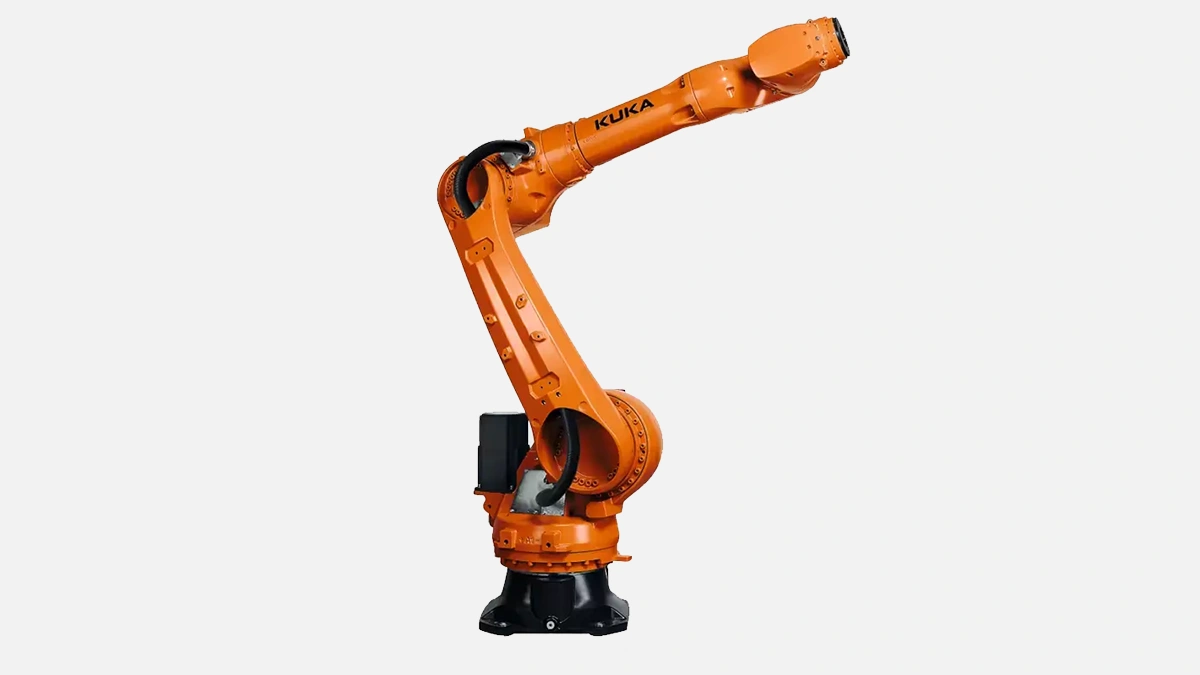
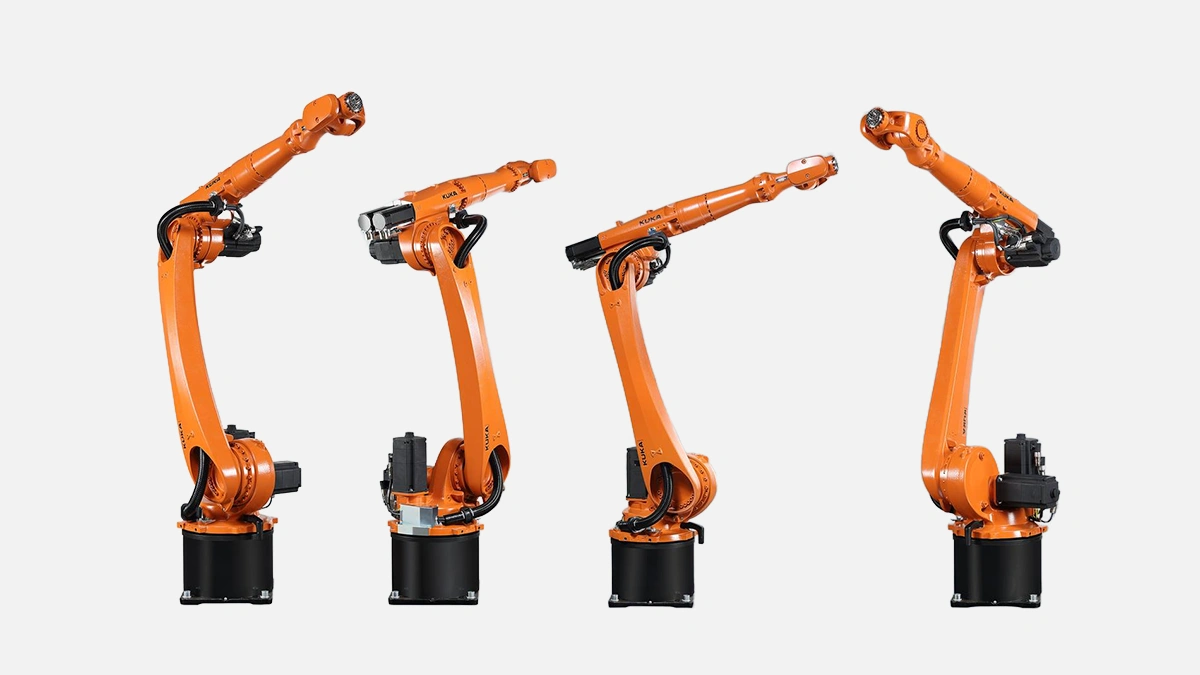
KUKA KR CYBERTECH 6-axis robot, 16 kg payload and 1610 mm reach, compact base for tight UAE shops.
Two lines, short, sharp. The orange arm pops in my head, buzzing quietly.
Sometimes I stare at the KR CYBERTECH and wonder, how did they pack 6 axes into a body that lean. You touch the casting, it feels cold, then warm once the motors kick. Noise level stays below 70 dB, my phone app confirmed it last night while the shop was otherwise silent, yes I was working late again, typical story.
KUKA has been in the robot game since 1973, they ship roughly 14 000 units every year, the CYBERTECH family alone sits in the middle of eleven lines they maintain. Current generation is the third revision, previous two were KRC2-based, so if you see an old cabinet in classifieds, that is why.
Before the coffee gets cold, have a peek at the table. Two sentences in, so the reader knows what is coming.
| Axis | Working range | Max speed | Gear type | Brake |
|---|---|---|---|---|
| A1 | ±185° | 156 °/s | spur | yes |
| A2 | -155° to +35° | 156 °/s | spur | yes |
| A3 | -120° to +155° | 156 °/s | harmonic | yes |
| A4 | ±350° | 322 °/s | harmonic | yes |
| A5 | ±120° | 322 °/s | harmonic | yes |
| A6 | ±350° | 500 °/s | harmonic | yes |
Looking at those values my maintenance guy once joked, the wrist spins faster than the ceiling fan in the office, and that fan is set to high most days in Dubai heat. Different context yet strangely accurate.
Official data says 16 kg but we all know shops that push it a little. A buddy in Sharjah hung a 19 kg polishing head on it, still within torque limits if you slow down A4 and A6. Would I sign off that on a warranty form, nope, but it ran three months non-stop on stainless door panels, surface looked mirror clean.
Two lines first. The arm likes tight spaces. I have wedged it between a laser cell and a saw, clearance maybe a hand’s width.
I pause here, take a sip, remember to breathe. That list could be longer, yes, yet three bullets are enough for now. The point is, UAE rents are brutal, square meters hurt your wallet, compact gear matters.
And right after the list, let me drop a tiny observation, the teach pendant flex cable never drags on the floor if you hang it on the magnetic hook that ships in the crate, small perk, still counts.
Hot air, dust, sometimes salty humidity when the wind comes from the gulf. Gear fails if seals are flimsy. The KR CYBERTECH arm carries IP65 as standard, wrist bumps to IP67, so grit from abrasive waterjet next door does not sneak in. I wiped the arm after a week of abrasive blasting, paint still bright orange. My neighbor with a generic arm repainted twice in the same period, you do the math.
KUKA KRC4 uses inline forms, you pick Pick-And-Place template, feed points, done. Still, if you live in Structured Text land, open WorkVisual, type your loops, download, watch it fly. I fought the first hour with German-English mix in the menus, then muscle memory kicked, now I jump menus blindfolded, well almost.
Two sentences, scene set. The arm talks ProfiNet or EtherCAT out of the box, Fieldbus card changes in 7 minutes if you keep Torx keys in the drawer.
You guessed it, another list closed, let us press forward. The energy point matters, DEWA bills bite, less kW equals less shouting from finance.
The CYBERTECH tag covers KR 8, KR 12, KR 16 and KR 22, the digits show nominal payload. Same reach, same base, only motor-gear scaling changes. Swapping models in simulation is one click, so if you outgrow the 16 kg just order a 22 kg top half, base and cables remain. Neat trick, downtime stays below a day.
Let us be blunt, nobody buys in vacuum, we all compare. Quick rundown, table later maybe, now words. Fanuc M-20iB offers 25 kg payload but reach shorter, 1811 mm vs KUKA 1610 mm, also fanuc wrist only IP54 unless you pay extra seals. ABB IRB 1600 has similar reach yet repeatability sits at ±0.05 mm, marginal difference, still when you machine aerospace sockets that extra 0.01 mm equals fewer scrapped parts. My pick stays KUKA because mounting orientation freedom saved me steel in the frame, materials cost did not vanish but shrank.
Grease, belts, fans. That is it. First major service at 10 000 hours, grease change on A1-A3 took me and one apprentice two hours including coffee break. Spare parts show up from KUKA Dubai hub by next day for most SKUs, rare gears a week from Augsburg.
I roll in at 7 AM, power up, warmup program spins joints 5 cycles, temperature hits 50 °C fast because ambient already 32 °C. Robots need consistency, so the warmup is life insurance for tolerances. After that the cell starts feeding laser cut blanks, the arm loads the 5-axis mill, grabs finished part, drops on gauge station, rinse and repeat until 19:30, sometimes later. We measure CpK every Friday, numbers float around 1.84, comfortably above spec.
Two rows, good enough. Words first, table second, then more words.
| Model | Payload | Reach | Protection | Controller |
|---|---|---|---|---|
| KUKA KR CYBERTECH | 16 kg | 1610 mm | IP65/IP67 | KRC4 |
| Fanuc M-20iB | 25 kg | 1811 mm | IP54 | R-30iB Plus |
| ABB IRB 1600 | 10 kg | 1450 mm | IP54 | IRC5 |
Table ends, yet the thought lingers, pick the one that fits your layout, not the biggest number on datasheets, seen too many engineers chase figures then fight integration headaches.
Enough tech talk, last paragraph, promise. KR CYBERTECH delivers that sweet spot of speed, reach and compact base, which explains why sheet metal shops in Dubai Investment Park and precision machine houses in Abu Dhabi Musaffah keep ordering batches. It slots into high-mix low-volume cells, handles aluminum or mild steel alike, and if you respect the 16 kg mark the bearings will outlive your lease.