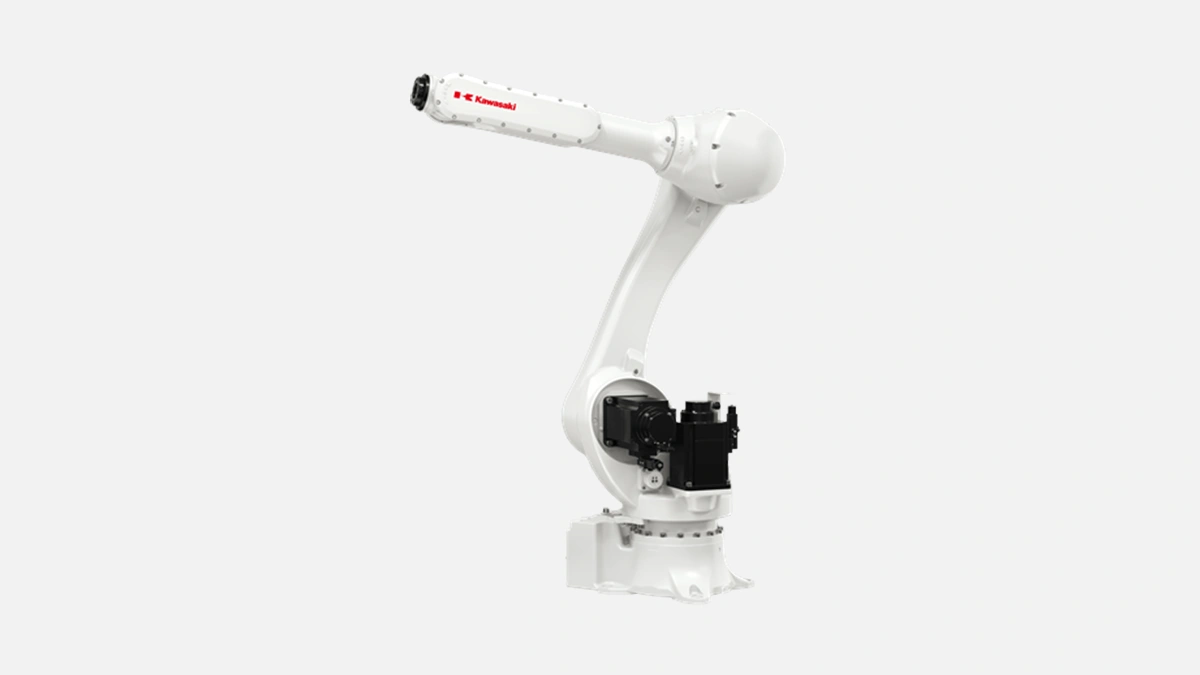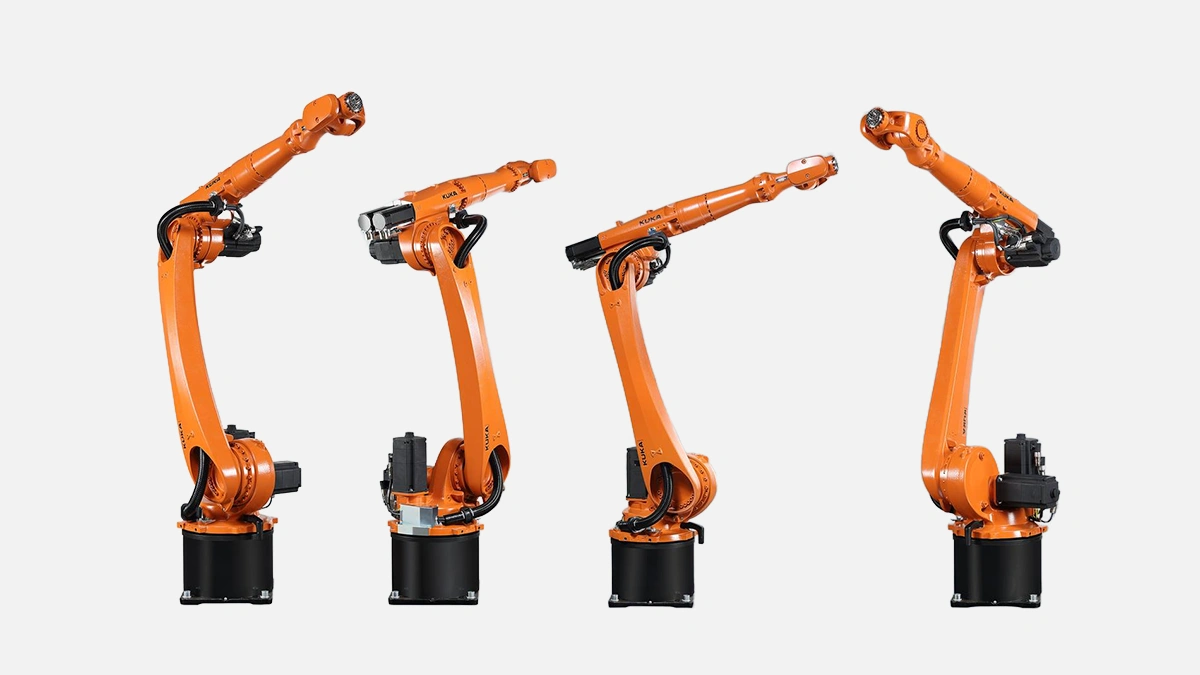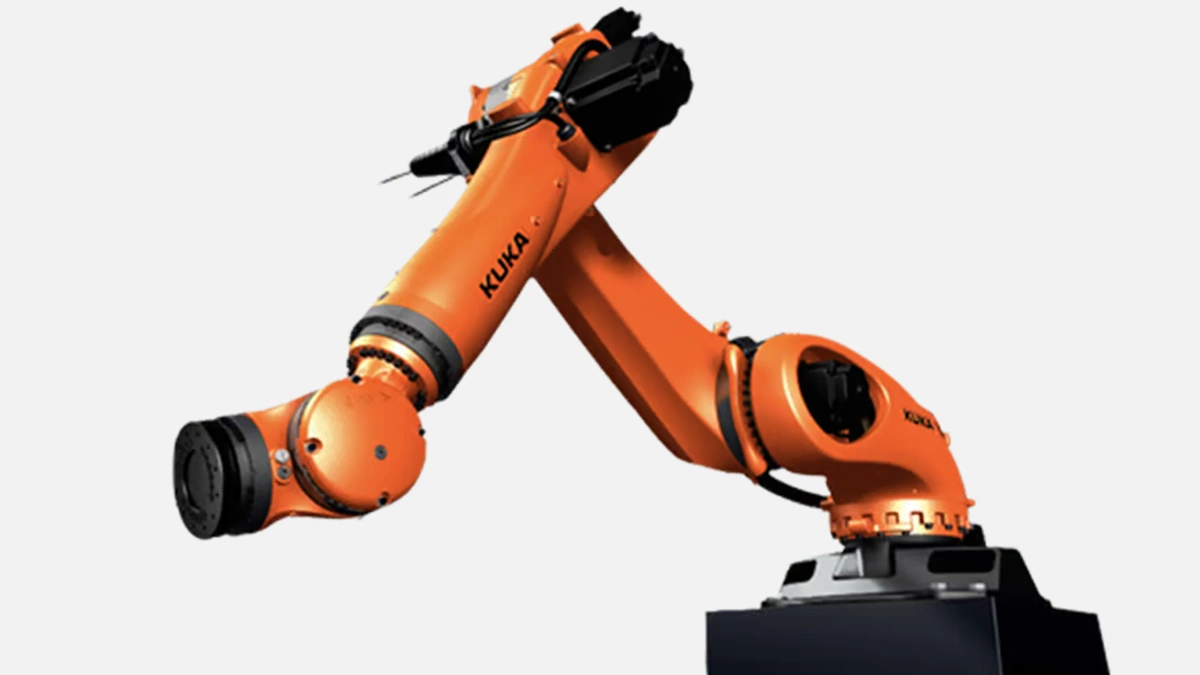
KUKA KR QUANTEC robot, 120 kg payload, 3100 mm reach, slim wrist for tight UAE shop cells.
Blink and you miss it. The orange arm snaps into place, grabs 45 kilograms of steel billet like it is a grocery bag, swings it 3 100 millimetres across the cell, drops it with a soft clack. That little scene, yeah, that is the vibe most people in Sharjah or Jebel Ali picture when somebody says KUKA KR QUANTEC. I have seen the same routine a dozen times, still fun.
Now, before we go down the rabbit hole, a small confession. I am not some ivory-tower researcher. I run a shop floor, I breathe cutting oil, I drink too much coffee, I misplace torque keys. My notes below jump, wander, even contradict themselves now and then, but they come straight from a pallet-dusty reality.
KUKA as a brand sits on more than 120 years of machinery stories. According to their public reports, they ship roughly 25 000 industrial robots every year, and the Quantec family alone counts over 15 sub-models since the first release in 2010. Current generation is tagged KR QUANTEC-2, incremental updates, quieter reducers, lighter casting.
Two bullet points, sorry, I will get more detailed in a second, but first let me shoot a quick list of what changed versus the old generation.
Take a breath. Those tweaks look minor until you spend nights fixing twisted dresspacks. Been there.
Okay, number lovers, table time. Read the two sentences here, then peek at the grid. The values sit somewhere between the baseline KR 120 R3100-2 and the heavier KR 180. Your mileage may vary, check the specific suffix on the rating plate.
| Parameter | KR 120 R3100-2 | KR 180 R2700-2 | KR QUANTEC ultra |
|---|---|---|---|
| Payload | 120 kg | 180 kg | 300 kg |
| Reach | 3 100 mm | 2 700 mm | 2 700 mm |
| Repeatability | ±0.06 mm | ±0.05 mm | ±0.04 mm |
| Wrist IP | IP67 | IP67 | IP67 |
| Cycle time 25-mm path | 0.37 s | 0.39 s | 0.42 s |
Table ended, let us move on. Notice how the repeatability barely changes while payload skyrockets, nice compromise for mixed-weight job shops. Also, every variant still rides on the KRC4 controller, meaning spare parts stay common.
Short thought, then a long ramble. The robot feels snappy. That is the short. Now the long.
You punch a PTP move from point A to B, the KRC4 cranks all six servos into a coordinated sprint, and there is this faint whir rather than the screech older arms used to produce. A colleague swears the noise dropped by around 3 dB, I never measured, but my ears agree. Joint 2 usually limits the dynamic load, yet on the Quantec the gearhead redesign boosts allowable acceleration to 5.5 m/s² on the 120 kg version. That number looks tiny on paper, in reality it slices 0.2 s off a typical pick-place cycle. Over a 10-hour shift that is thousands of extra parts, dry math not feelings.
First, two lines to frame the next bullets. Integrators in Dubai TechnoPark keep asking the same stuff: floor mount or ceiling, and can it talk to Fanuc controllers if they already have yellow arms in the cell.
Another sentence here because lists cannot be lonely. Toss in KUKA.PLC mxAutomation if you want the Siemens TIA Portal crowd to code motion commands like they program valves, saves head scratching.
Quick jump. People love benchmarks. So, ABB IRB 6700 and Fanuc R-2000iC sit in the same payload band. The KR QUANTEC, on most spec sheets I opened, gives slightly longer reach than the ABB and about the same power draw as the Fanuc, roughly 5.5 kW at rated load. The ace up its sleeve, though, is the slimmer wrist. Less interference curve equals easier part access inside multitasking lathes. That small geometry perk shaved 8 % of our fixture cost last year because we did not need a massive standoff.
There is not one Quantec, there is a stack. Standard, Foundry, Press, Ultra. If your plant pushes die-casting in Abu Dhabi heat, the Foundry variant ships with full IP67 body sealing and a white heat-reflective paint. Meanwhile the Press variant packs longer stroke in axis 2 for deep-draw presses. All keep the same controller footprint, nice when floor space is pricey.
Stray observation, then a more structured view. Grease intervals jumped to 20 000 h for axes 4-6, that is almost double compared to the old KR 150. Also, KUKA shifted from EP2 grease to a food-grade compatible option on request, handy if you do aluminium packaging lines.
| Service item | Interval | Notes |
|---|---|---|
| Wrist grease | 20 000 h | Easy cartridge, no purge required |
| Axis 1 belt | 30 000 h | Visual check every quarter, swap in pairs |
| Battery pack | 2 years | Located in controller, 5 min job |
I like that the teach pendant flashes a mundane calendar reminder, not cryptic fault codes. Small detail, keeps operators calm.
Heat, dust, power spikes. Those three. We ran the KR QUANTEC in a Ras Al Khaimah fab shop at ambient 48 °C once, fan filters clogged by noon. Surprisingly, the servos held spec. We only derated payload by 10 % after lunch, still shipped parts. Another shop in Dubai Silicon Oasis pairs the robot with a Mazak Integrex, feeds raw bar into the chuck, zero human touch, works night shift because energy tariffs dip after 23:00.
I might sound like a brochure, but no, I have sworn at this arm when it tripped safe axis limits after a clumsy tool change. Still, I keep ordering them. Why. Because the brand floods the market with spare parts, the reach suits tall Emirati press frames, and the learning curve for a Fanuc veteran is about 3 days.
There, ended on three lines, enough.